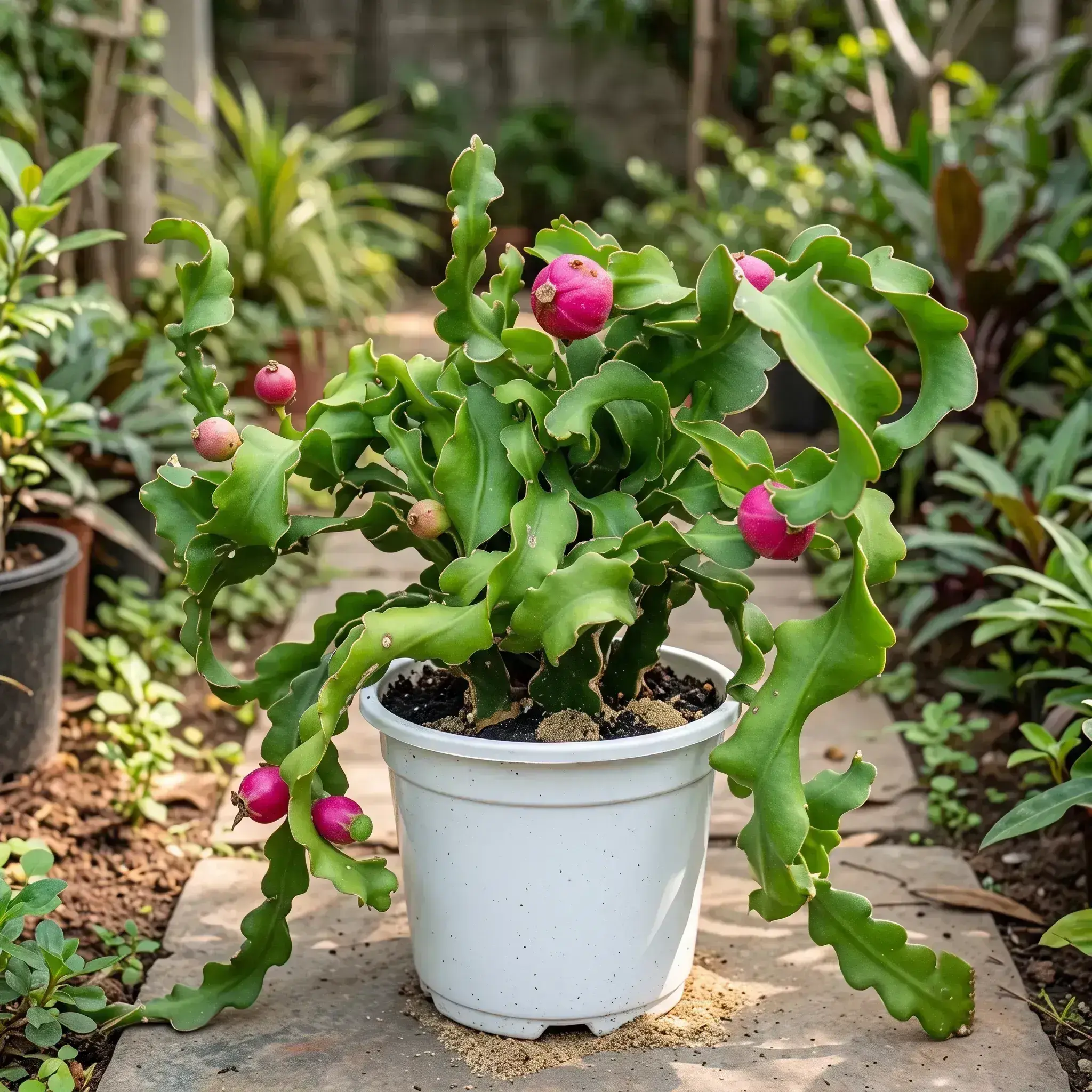
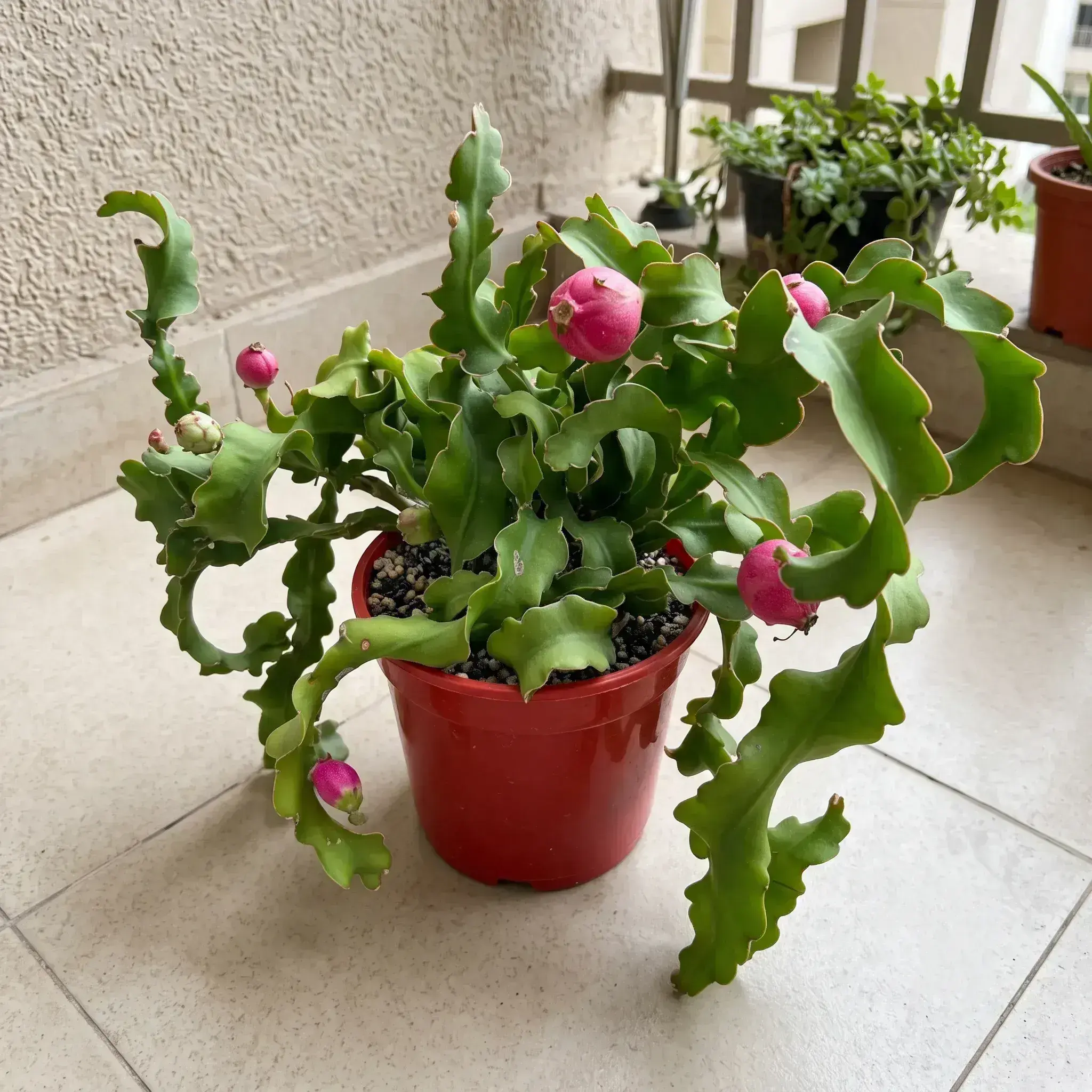
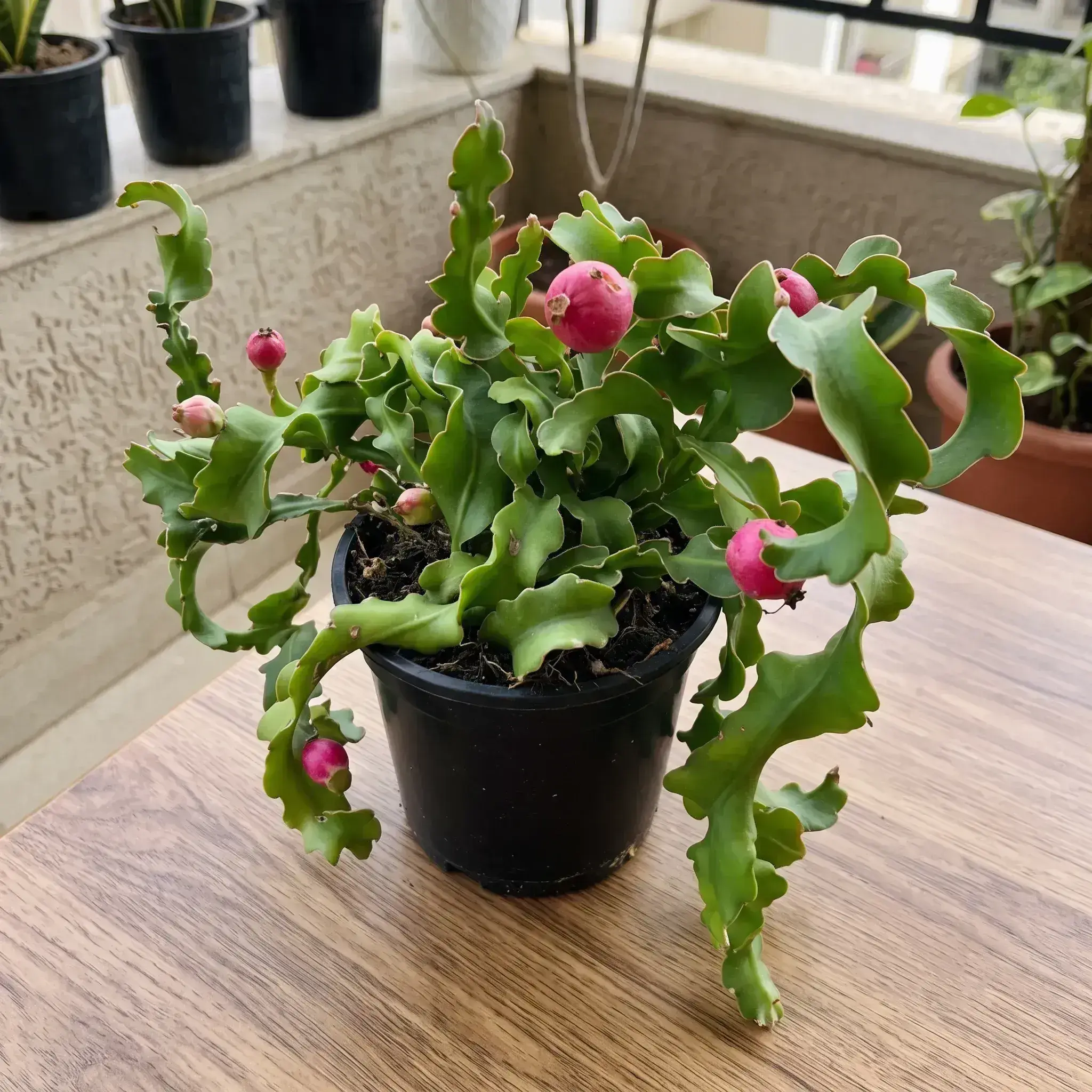
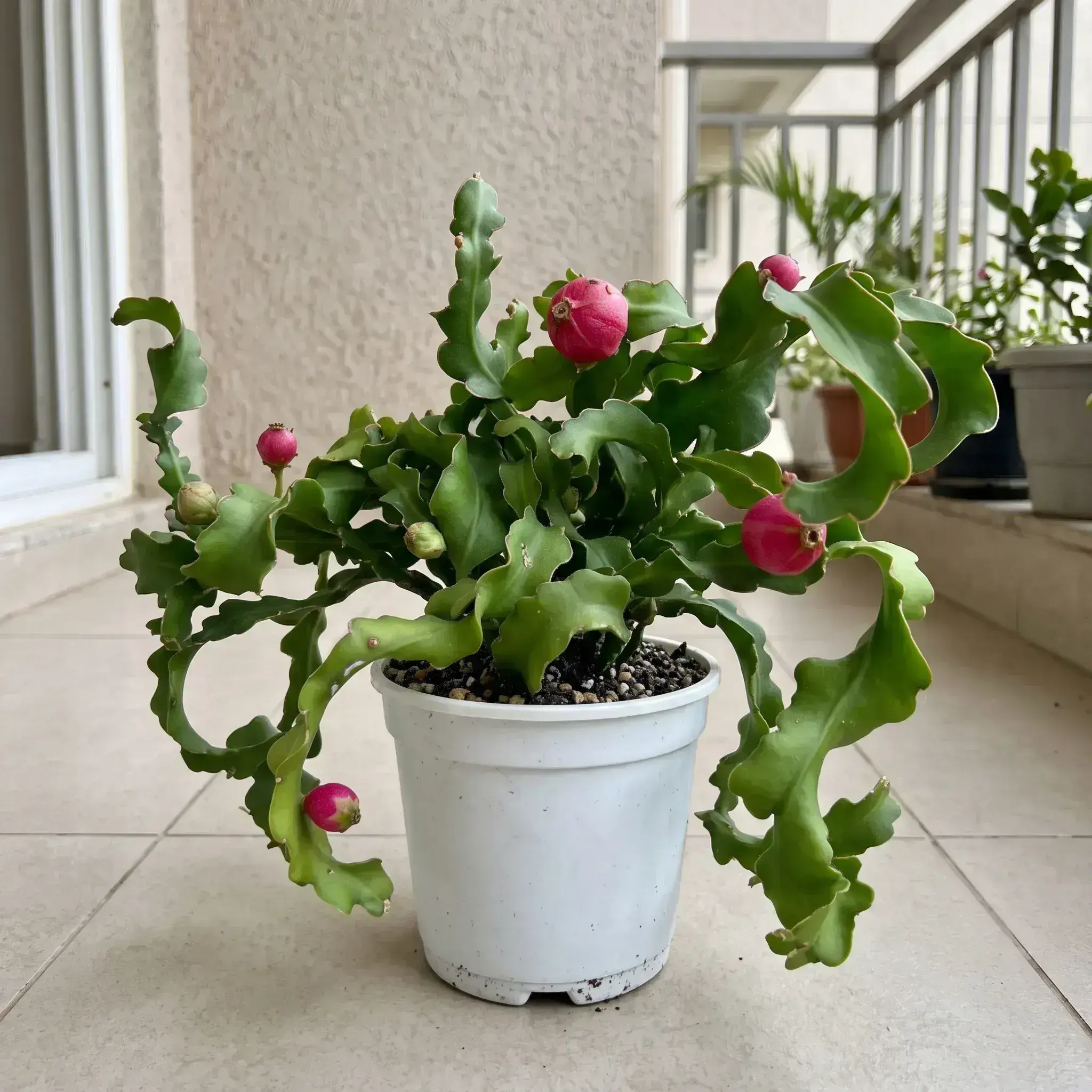
Hybrid Mini Dragon Fruit Cactus Live Plant in Pot for Home Garden & Office
🌵 About the Mini Dragon Fruit Cactus Plant
Dragon fruit belongs to the cactus family Cactaceae. The commonly grown white-fleshed dragon fruit is traditionally known as Hylocereus undatus, while Kew currently accepts the name Selenicereus undatus and lists Hylocereus undatus as a synonym.
This mini potted plant is ideal for gardeners who want to start growing a dragon fruit cactus from a young plant and enjoy its unusual green segmented stems, large night-opening flowers and potential edible fruit as the plant matures.
🌱 Attractive Cactus Growth
Dragon fruit has a distinctive appearance unlike ordinary upright cacti.
It develops thick, green, three-angled or ribbed stems with scalloped edges, giving the plant a unique tropical-cactus appearance. RHS describes dragon fruit as a vigorous branching cactus with thick jointed stems.
The young plant looks attractive in a decorative pot and can later be trained to climb a suitable support.
🍈 Future Edible Dragon Fruit
One of the biggest attractions of dragon fruit is its edible fruit.
Depending on the variety, dragon fruit can develop colourful outer skin with contrasting flesh. The exact fruit colour, size, flavour and production depend on the specific variety or hybrid supplied.
Kew records Selenicereus undatus as a species used for food, while RHS notes that pollinated flowers can be followed by reddish-pink edible fruits.
Important: A young mini plant will not necessarily produce fruit immediately. Fruiting depends on plant maturity, variety, climate, sunlight, pollination and overall growing conditions.
🌸 Large Night-Blooming Flowers
Mature dragon fruit plants can produce large, attractive and fragrant flowers that open at night.
RHS describes the flowers as large and fragrant, reaching around 30 cm across in the species profile.
The night-opening flowers are one of the most fascinating features of this cactus and can make the mature plant a beautiful addition to a garden.
☀️ Sunlight Requirements
Dragon fruit performs best in a bright, sunny location.
For healthy growth:
- Provide plenty of sunlight.
- Choose an open balcony, terrace or garden location.
- Good sunlight supports strong stem growth.
- Avoid keeping the plant permanently in deep shade.
- Gradually acclimatize a newly delivered plant to strong direct sunlight.
University of Florida IFAS recommends full or almost full sun for good growth and fruit production.
For extremely hot locations, some light afternoon protection can help prevent excessive heat stress, particularly for a recently delivered young plant.
💧 Watering Requirements
Although dragon fruit is a cactus, it is not best treated like a completely dry desert cactus. It benefits from appropriate moisture during active growth, while waterlogged soil should be avoided.
Follow this routine:
- Check the soil before watering.
- Water when the upper layer has started to dry.
- Water thoroughly around the root zone.
- Allow excess water to drain completely.
- Never leave the pot standing in water.
- Reduce watering during prolonged rainy or cool periods.
The exact watering frequency depends on temperature, pot size, soil, sunlight and season.
🌱 Soil & Potting Mix
Use a loose, fertile and very well-draining cactus or succulent-style growing medium.
A suitable mix can contain:
- Quality potting soil
- Compost or well-decomposed organic matter
- Cocopeat
- Perlite
- Coarse sand or grit
Dragon fruit can grow in a range of soils, but University of Florida IFAS specifically recommends well-drained soil and notes that plants perform well in soils with good organic matter.
🪴 Growing in a Pot
The mini dragon fruit cactus can be started successfully in a container.
For container growing:
- Use a pot with drainage holes.
- Avoid oversized containers that remain wet for long periods.
- Use a well-draining growing medium.
- Place the pot in a bright location.
- Allow excess water to escape freely.
- Repot into a larger container as the plant develops.
- Provide a strong support when the stems become longer.
RHS recommends well-drained growing conditions for dragon fruit.
🌿 Support & Training
Dragon fruit is a climbing or scrambling cactus, so a mature plant benefits from a strong support system.
Suitable supports include:
- 🪵 Strong wooden posts
- 🌿 Trellis
- 🧱 Garden structures
- 🪴 Strong vertical supports
- 🌱 Concrete or metal posts
- 🌸 Pergola-style supports
Train the young stems gradually and avoid tying them too tightly.
A strong support becomes increasingly important as the plant develops heavier branches and eventually produces fruit.
✂️ Pruning & Maintenance
Pruning can help keep dragon fruit manageable and encourage a suitable structure.
You can:
- Remove damaged stems.
- Remove weak or overcrowded growth.
- Guide healthy stems toward the support.
- Maintain a manageable canopy.
- Remove unwanted growth when necessary.
Always use clean pruning tools and handle the cactus carefully.
🍈 Fruiting Requirements
Fruit production depends on several factors:
- 🌱 Plant maturity
- ☀️ Sunlight
- 🌡️ Temperature
- 💧 Water management
- 🌿 Nutrition
- 🌸 Flowering
- 🐝 Pollination
- 🌱 Specific variety or hybrid
Some dragon fruit types may benefit from hand pollination, particularly when natural night pollinators are absent. RHS notes that flowers may need hand pollination when fruit is desired under cultivation.
Therefore, growing a healthy plant does not guarantee fruit production in every location.
🏡 Home Garden Use
The Mini Dragon Fruit Cactus is a fascinating choice for home gardeners.
It can be grown in:
- 🏡 Home gardens
- 🌿 Balcony gardens
- ☀️ Sunny terraces
- 🪴 Large decorative pots
- 🌱 Kitchen gardens
- 🌸 Patio areas
- 🌿 Fruit-plant collections
Its unusual cactus structure makes it both an ornamental plant and a potential fruit plant.
🏢 Office & Workplace Use
A small potted dragon fruit cactus can also be used as a decorative plant around an office, provided it receives sufficient natural light.
Suitable locations include:
- Bright office balconies
- Sunny terraces
- Outdoor office gardens
- Reception garden areas
- Courtyards
- Window areas with strong natural light
For a typical indoor office desk with limited sunlight, dragon fruit is not an ideal low-light plant. A bright outdoor or very sunny location is much more suitable.
🌿 Easy-to-Start Fruit Plant
The mini form makes it convenient for gardeners who want to begin with a young dragon fruit plant rather than immediately handling a large established specimen.
As the plant grows, it can gradually be moved into a larger container and trained onto a suitable support.
This makes it an interesting long-term gardening project:
🌱 Young Plant → 🌿 Strong Stems → 🌸 Night Flowers → 🍈 Dragon Fruit
🌵 Why Choose Hybrid Mini Dragon Fruit Cactus?
- Unique cactus appearance
- Young compact live plant
- Potential edible fruit when mature
- Large fragrant night-opening flowers
- Suitable for sunny home gardens
- Can be grown in containers
- Suitable for terrace gardens
- Interesting plant for gardening enthusiasts
- Can be trained on a support
- Excellent addition to fruit-plant collections
- Attractive ornamental cactus
- Suitable for warm climates
🪴 Healthy Live Plant in Pot
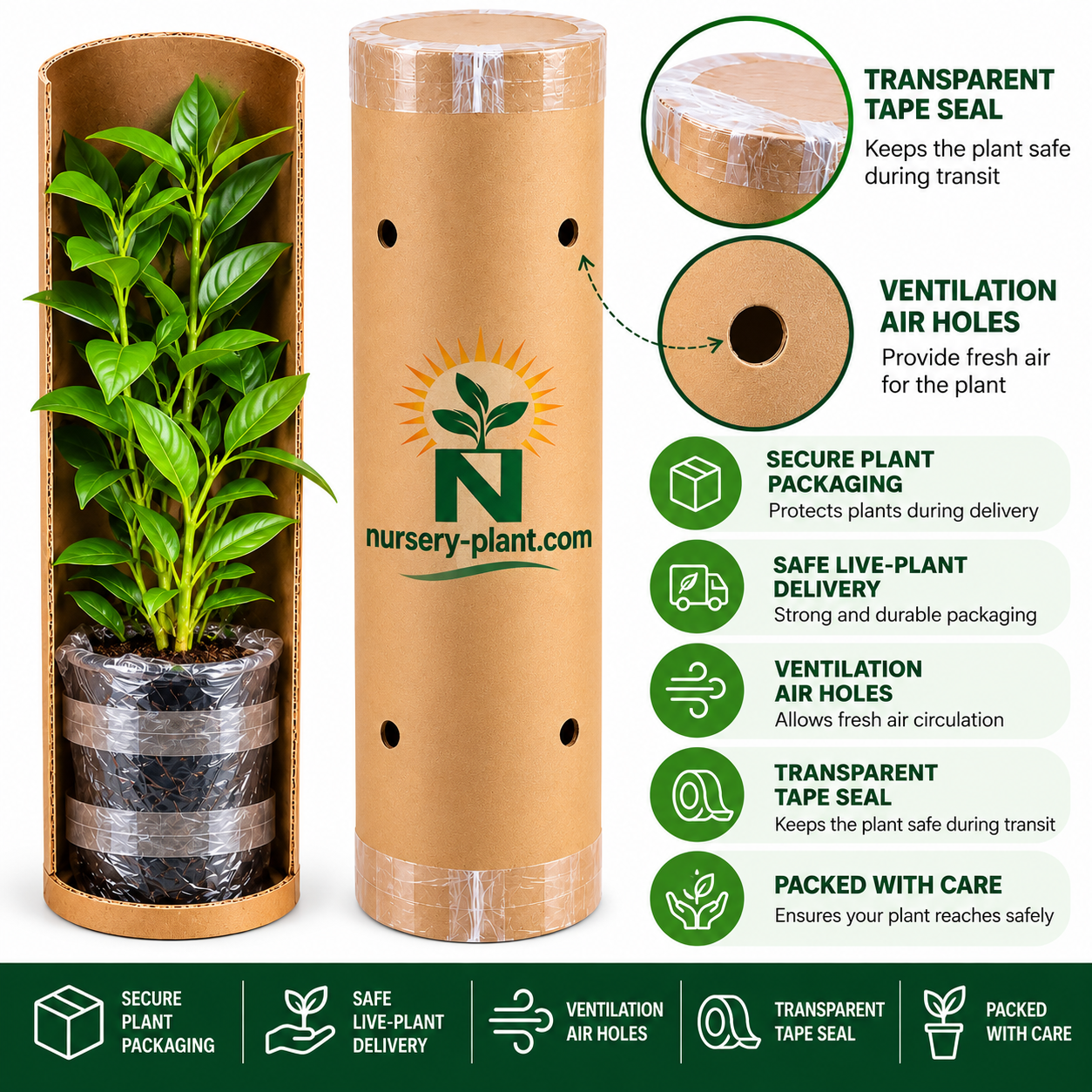
You will receive a healthy live Hybrid Mini Dragon Fruit Cactus plant in a pot, carefully prepared for delivery.
Because this is a living plant, plant height, stem length, number of branches, thickness, colour and overall shape may naturally vary from the product photographs.
Flowers and fruits will not necessarily be present at the time of delivery. Fruit production requires a mature plant and suitable growing conditions, and depends on the specific variety, pollination, climate and care.
During transportation, minor movement or bending of young stems may occur. After receiving the plant, place it in a bright location, check the soil moisture and allow the plant time to acclimatize.
🔬 Botanical Information & Further Reading
- Common names: Dragon Fruit, Pitaya, Pitahaya
- Traditional botanical name: Hylocereus undatus
- Current accepted botanical name: Selenicereus undatus (Haw.) D.R.Hunt
- Family: Cactaceae
- Plant type: Climbing / scrambling cactus
- Flower: Large, fragrant, night-opening
- Fruit: Edible dragon fruit
- Native range: Mexico to Honduras
For current botanical classification, see Royal Botanic Gardens, Kew – Selenicereus undatus. Kew currently accepts Selenicereus undatus and lists Hylocereus undatus as a synonym.
For detailed cultivation information, see University of Florida IFAS Extension – Pitaya (Dragonfruit) Growing, including information about sunlight, soil, planting and fruit production.
For information about flowers, fruit and growing conditions, see the Royal Horticultural Society – Dragon Fruit.
For additional botanical information and distribution, see Kew Plants of the World Online – Selenicereus undatus.
🌱 Bring Home Your Mini Dragon Fruit Cactus
Start your own dragon fruit growing project with the Hybrid Mini Dragon Fruit Cactus Live Plant in Pot.
Its unique cactus stems, beautiful night-blooming flowers and potential edible fruit make it an exciting choice for home gardens, sunny balconies, terraces and plant collections.
Give it good sunlight, well-drained soil, careful watering and a strong support as it grows, and enjoy watching your young dragon fruit cactus develop over time.
For More Information Visit: Nursery-Plant.Com
For Contact Visit:Contact Us
For Shopping Visit: Shop Page


Reviews
There are no reviews yet.