Nilmonilota Plant | Nilmoni Lota Flower Plant for Home Garden
🌿 About the Nilmoni Lota Flower Plant
The plant is commonly known internationally as Queen’s Wreath, Purple Wreath or Sandpaper Vine. Its accepted botanical name is Petrea volubilis. The Royal Botanic Gardens, Kew – Plants of the World Online recognizes Petrea volubilis as an accepted species in the family Verbenaceae.
The University of Florida IFAS describes Queen’s Wreath as a tropical flowering vine with drooping lavender-colored flowers and rough, sandpaper-like leaves.
Note: Common names can vary between regions and nurseries. The botanical identity of the plant described here is based on Petrea volubilis.
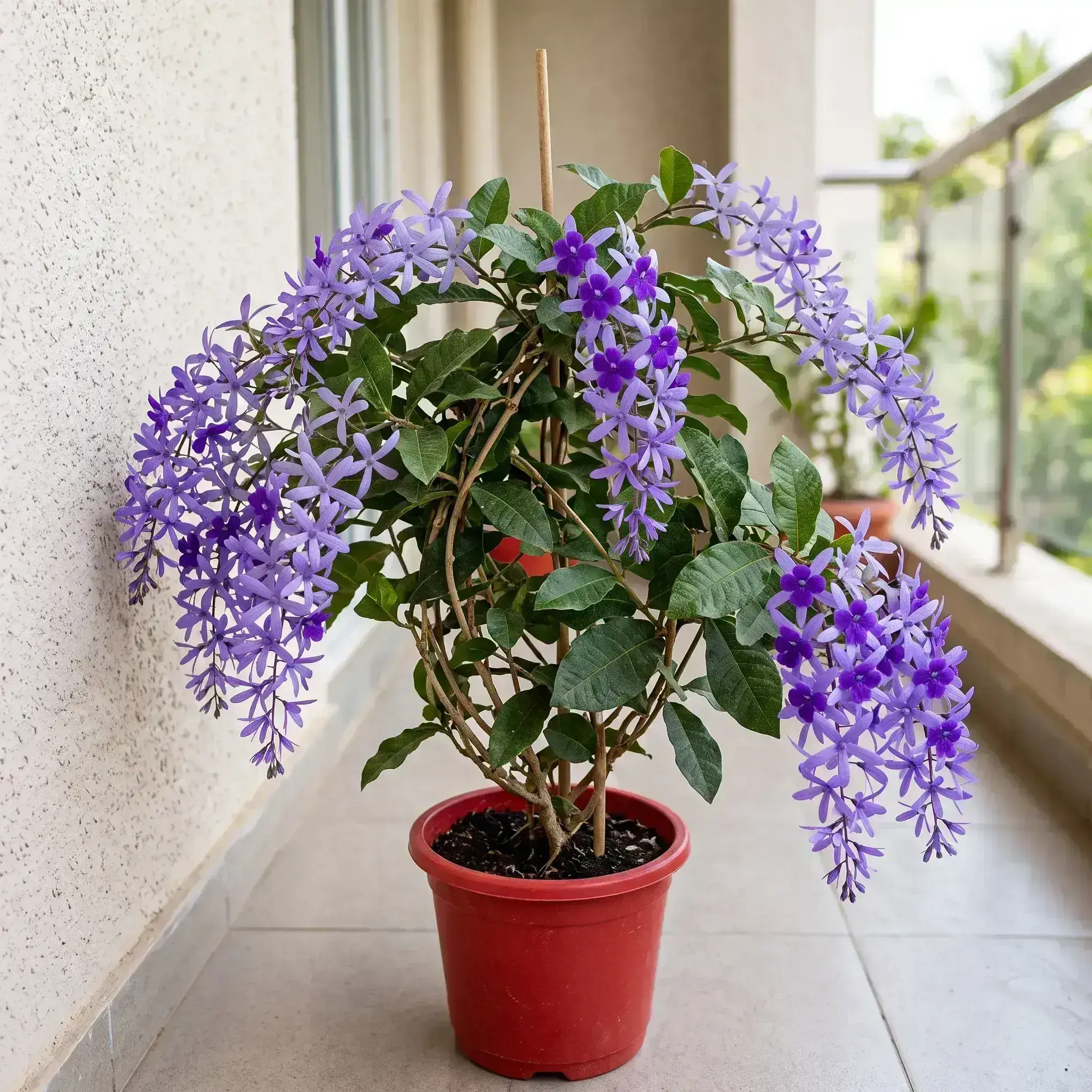
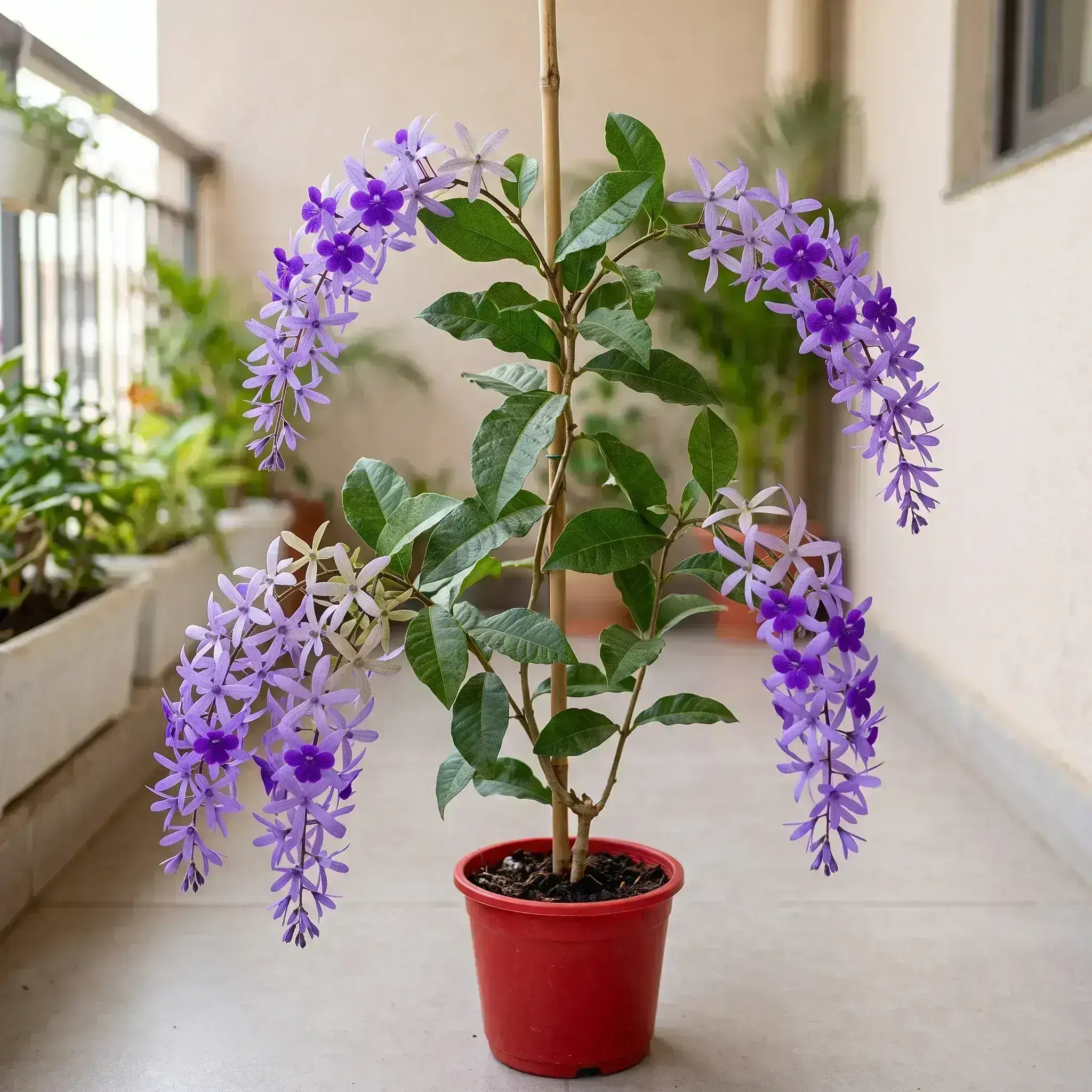
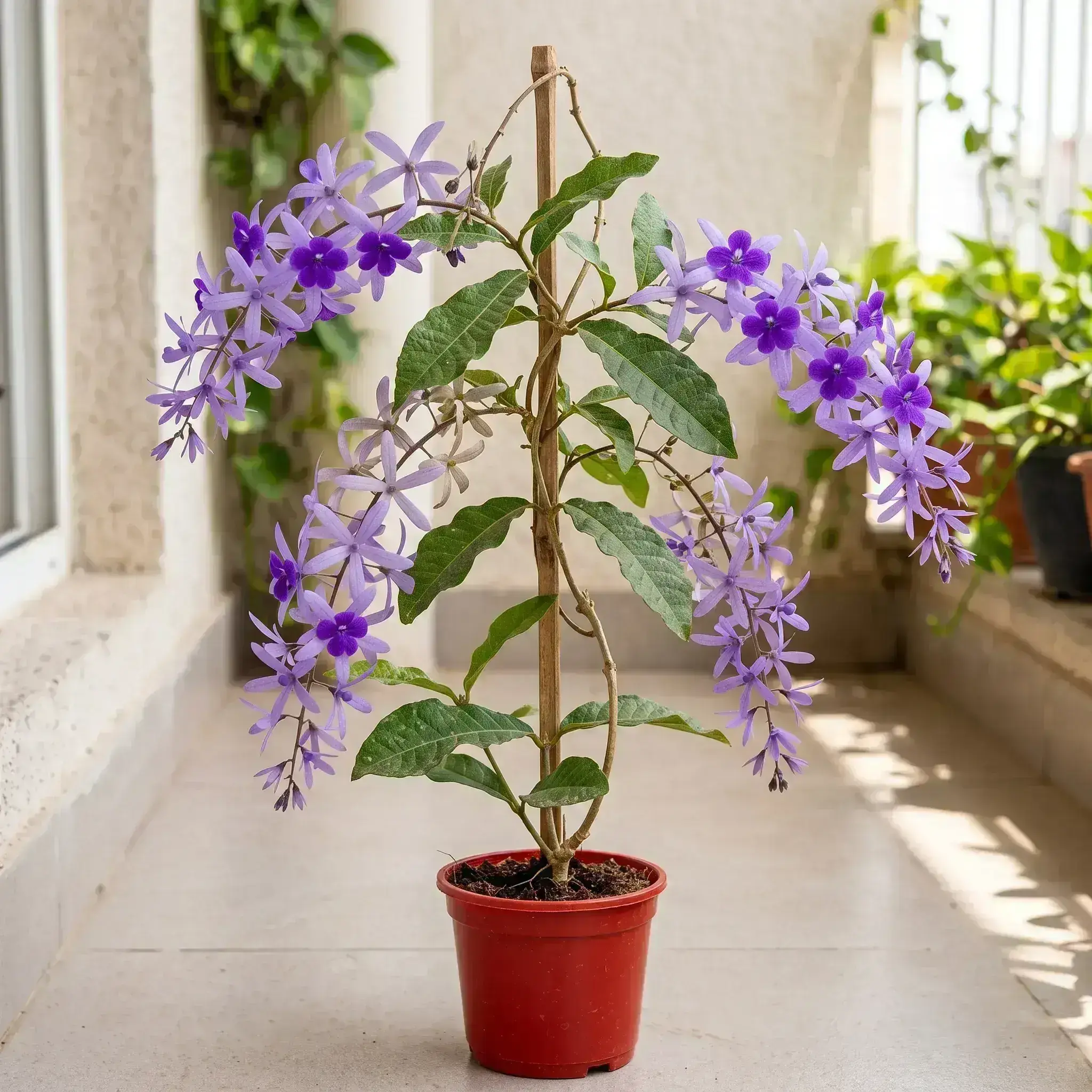
💜 Beautiful Purple-Blue Flower Clusters
The main attraction of Nilmoni Lota is its showy purple, blue or mauve flowers.
The flowers are produced in elongated clusters that can hang gracefully from the branches, creating a beautiful cascading effect. When the plant is in full bloom, these flower clusters can create an impressive display around a trellis, fence, pergola or garden entrance.
Kew records the flowers of Petrea volubilis as purple, blue or mauve, while the University of Florida describes the flowers as drooping lavender-colored clusters.
🌱 Plant Characteristics
- Common Name: Nilmoni Lota
- Other Names: Nilmonilota, Queen’s Wreath, Purple Wreath, Sandpaper Vine
- Botanical Name: Petrea volubilis
- Family: Verbenaceae
- Plant Type: Flowering woody climber
- Growth Habit: Climbing, scrambling and spreading
- Flower Colour: Purple, blue or mauve
- Foliage: Green with a rough-textured surface
- Suitable For: Home gardens, terraces, balconies, fences and pergolas
- Main Attraction: Long clusters of attractive flowers
Kew describes Petrea volubilis as a scrambling shrub or liana native to tropical and subtropical America.
The species is also recognized by the University of Florida IFAS as a shrub, subshrub and vine.
🍃 Sandpaper-Like Green Leaves
Another distinctive feature of Nilmoni Lota is its rough-textured foliage.
The leaves have a stiff, somewhat sandpaper-like surface, which is why the plant is commonly called Sandpaper Vine.
The University of Florida Gardening Solutions specifically notes the rough texture of the leaves and explains the origin of the Sandpaper Vine common name.
The dark green foliage also provides an attractive background for the colorful flowers.
☀️ Light Requirements
Nilmoni Lota performs best in a bright, sunny location.
For good growth and flowering:
- Provide several hours of sunlight.
- Choose a bright outdoor location.
- Morning and filtered sunlight can be useful in very hot conditions.
- Avoid keeping the plant permanently in deep shade.
- Give the plant enough space to spread and climb.
Good sunlight is particularly important if you want to encourage flowering.
For outdoor cultivation, choose a location where the plant receives plenty of natural light while avoiding conditions that cause severe heat or water stress.
💧 Watering
Water the plant regularly while it is becoming established.
A simple watering routine:
- Check the soil before watering.
- Water thoroughly when the upper layer begins to dry.
- Allow excess water to drain away.
- Avoid keeping the roots continuously waterlogged.
- Monitor moisture more frequently during hot and dry weather.
Established plants can tolerate some periods of dryness, but consistent moisture and good drainage are helpful for healthy growth.
🪴 Soil & Potting Mix
Nilmoni Lota grows well in fertile, moisture-retentive but well-draining soil.
A suitable garden or container mix can include:
- Garden soil
- Compost or well-rotted organic matter
- Cocopeat
- Perlite
- Coarse sand
Good drainage is important because permanently waterlogged soil can create unfavorable root conditions.
For container growing, always select a pot with adequate drainage holes.
🌿 Climbing Support
Nilmoni Lota is a climbing and scrambling plant, so providing a strong support structure can help create a beautiful garden display.
Suitable supports include:
- Trellis
- Garden arch
- Pergola
- Fence
- Large plant frame
- Balcony support
- Suitable wall-trained structure
Train the young stems gently around the support as they grow.
This allows the plant to develop a more organized shape and makes the flowering clusters more visible.
✂️ Pruning & Training
Regular training and occasional pruning can help control the plant’s size and maintain an attractive shape.
Pruning can be used to:
- Remove weak growth
- Remove damaged branches
- Control excessive spreading
- Maintain the desired shape
- Encourage a neat flowering display
- Train the plant over a trellis or arch
Avoid excessive pruning when the plant is carrying flower buds if you want to preserve the upcoming flowering display.
🌸 Flowering
Nilmoni Lota is primarily grown for its beautiful flowering display.
The University of Florida notes that Queen’s Wreath can flower multiple times a year, with particularly abundant flowering during suitable warm-season conditions.
Flowering performance can vary depending on:
- Plant maturity
- Sunlight
- Temperature
- Watering
- Nutrition
- Pruning
- Local climate
Therefore, a newly delivered plant may not be flowering immediately, especially if it is young or has recently experienced transportation stress.
🦋 Attractive Garden Flowering Plant
The colorful flowers make Nilmoni Lota an attractive addition to a flowering garden.
Its cascading flower clusters can be used to create visual interest around:
- Garden entrances
- Pergolas
- Trellises
- Fences
- Arches
- Patios
- Balconies
- Terrace gardens
The plant combines attractive foliage with seasonal flowering, making it useful as a decorative climbing plant.
🏡 Where Can You Grow Nilmoni Lota?
Nilmoni Lota is particularly suitable for outdoor spaces where it can receive good sunlight and room to climb.
It can be grown near:
- Home garden fences
- Garden gates
- Pergolas
- Trellises
- Arches
- Compound walls
- Balconies
- Terraces
- Patios
- Large containers
- Garden pathways
Its long flowering clusters can create an attractive vertical garden effect.
🪴 Growing Nilmoni Lota in a Pot
Nilmoni Lota can be grown in a large container when provided with adequate support.
For successful container growing:
- Choose a large pot with drainage holes.
- Use fertile, well-draining soil.
- Provide plenty of natural light.
- Install a trellis or suitable support.
- Water according to soil moisture.
- Feed during active growth.
- Train the stems as they develop.
- Prune when necessary to control size.
Because this is a climbing plant, a small pot may eventually restrict its growth. Repot into a larger container when necessary.
🌡️ Temperature & Climate
Nilmoni Lota is a warm-climate ornamental plant and is best suited to warm, frost-free conditions.
It performs well with:
- Warm temperatures
- Good sunlight
- Adequate moisture
- Well-drained soil
- Protection from severe cold
The plant’s natural range is tropical and subtropical America, according to Kew.
In areas that experience cold weather, container-grown plants can be moved to a more protected location.
🌱 Fertilizer
Feed Nilmoni Lota during active growth with a balanced fertilizer suitable for flowering ornamental plants, following the manufacturer’s recommended dosage.
Moderate feeding can support:
- Healthy new shoots
- Leaf development
- Branch growth
- Flower production
Avoid excessive fertilizer application. Follow the recommended dosage on the fertilizer package.
🌿 Why Choose Nilmoni Lota?
- Beautiful purple-blue and mauve flower clusters
- Attractive tropical flowering climber
- Distinctive sandpaper-textured foliage
- Excellent plant for home gardens
- Suitable for trellises and garden arches
- Can be grown in large containers
- Suitable for balconies and terraces
- Attractive vertical garden plant
- Excellent ornamental landscaping choice
- Adds colorful seasonal interest to outdoor spaces
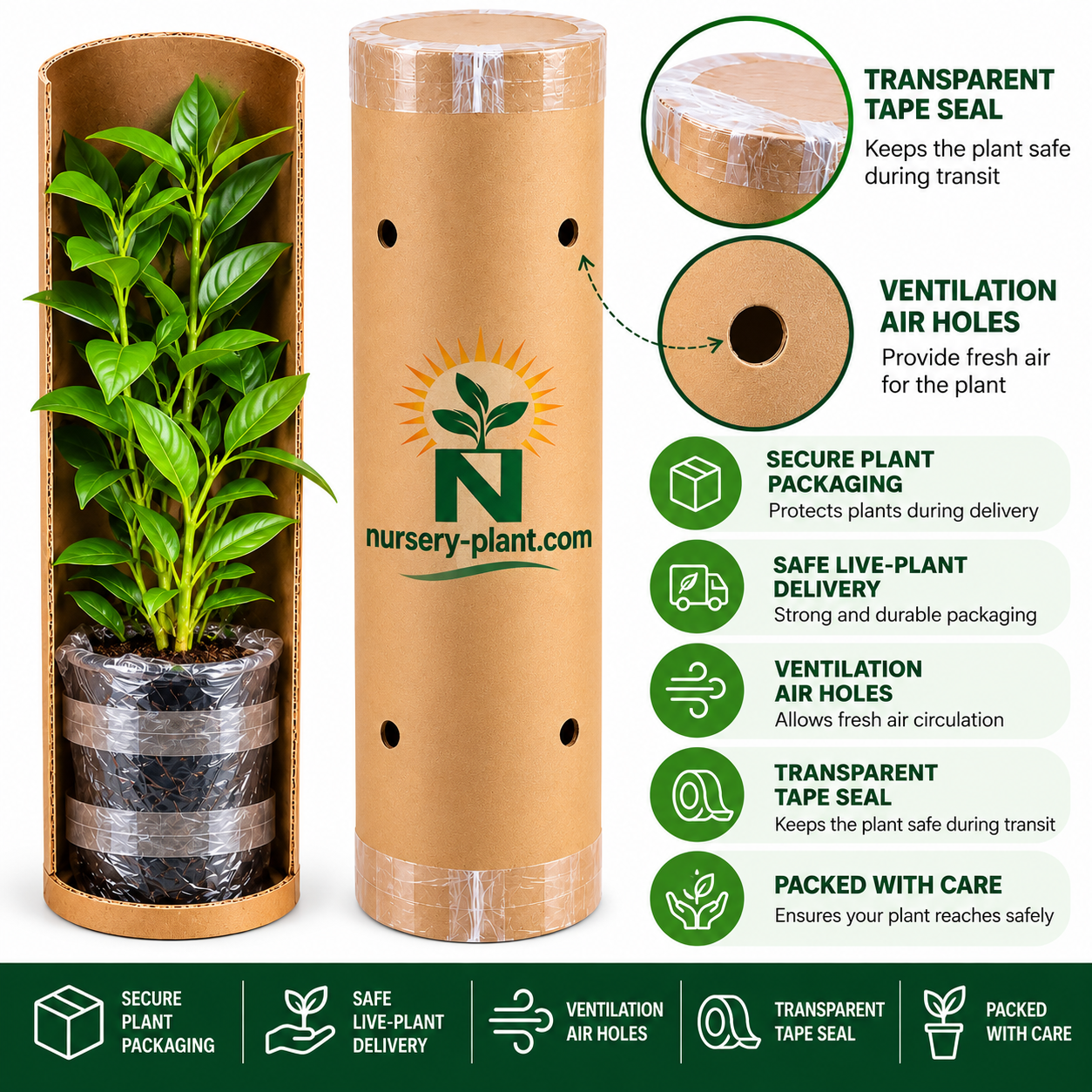
🚚 Healthy Live Plant Delivery
This product is supplied as a live Nilmonilota / Nilmoni Lota flowering plant.
Because plants are living organisms, natural differences may occur in:
- Plant height
- Number of leaves
- Vine length
- Branching
- Flower buds
- Flowering stage
- Overall plant shape
A plant may not be flowering at the exact time of delivery. Flowering depends on plant maturity, season, sunlight, temperature and growing conditions.
Minor leaf drooping or temporary stress can also occur during transportation.
After delivery, place the plant in a suitable bright location, check the soil moisture and allow it some time to adjust to its new environment.
📚 Botanical Information & Further Reading
For additional information about Petrea volubilis, you can refer to these reputable botanical and horticultural resources:
- Royal Botanic Gardens, Kew – Plants of the World Online — accepted scientific name and botanical classification.
- University of Florida IFAS – Queen’s Wreath — flowering, foliage and general horticultural information.
- University of Florida IFAS Assessment – Petrea volubilis — botanical and growth-habit information.
- Kew – Petrea genus — genus-level botanical information.
- Wikipedia – Petrea — general reference information about the genus.
- Wikipedia – Verbenaceae — general information about the plant family.
💜 Bring Home Nilmoni Lota
Add a beautiful flowering climber to your garden with the Nilmonilota / Nilmoni Lota Flower Plant.
Its attractive purple-blue flowers, textured green foliage and climbing habit make it a beautiful choice for home gardens, trellises, pergolas, balconies, terraces and garden entrances.
Order your Nilmoni Lota live flower plant from Nursery-Plant.com and add a colorful tropical flowering climber to your home garden.
For More Information Visit: Nursery-Plant.Com
For Contact Visit:Contact Us
For Shopping Visit: Shop Page


Reviews
There are no reviews yet.