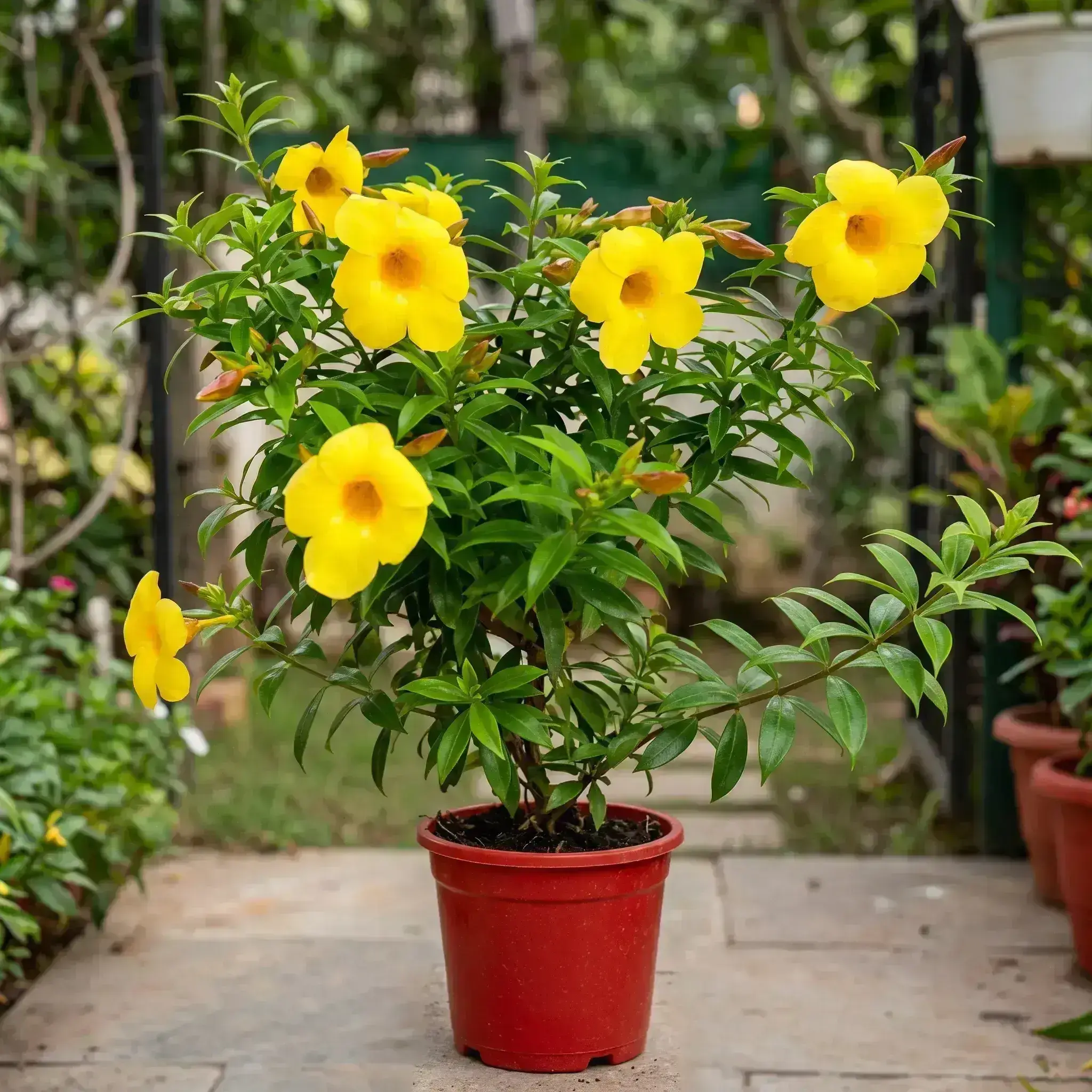


Yellow Allamanda Creeper Healthy Flowering Plant for Garden, Home & Office
🌼 About the Yellow Allamanda Creeper
The accepted botanical name is Allamanda cathartica L., belonging to the Apocynaceae family. Kew recognizes Allamanda cathartica as an accepted species native to tropical South America and widely cultivated in tropical regions around the world, including India.
Its combination of vibrant flowers, evergreen foliage and climbing growth makes it an excellent choice for creating a colourful feature around a trellis, fence, pergola or garden support.
🌿 Attractive Glossy Green Foliage
Yellow Allamanda produces glossy, leathery green leaves arranged along its climbing stems.
The dark green foliage creates an attractive contrast with the bright yellow flowers, giving the plant a lush tropical appearance.
Kew describes Allamanda cathartica as a vigorous climbing plant with evergreen leaves arranged in whorls and bright yellow flowers.
🌼 Beautiful Golden-Yellow Trumpet Flowers
The most attractive feature of this plant is its large golden-yellow trumpet-shaped flowers.
The flowers can become quite prominent against the dark green foliage and are especially attractive when the plant is grown in a sunny location.
RHS describes the flowers as bright yellow and trumpet-shaped, with flowering occurring in summer and autumn under its listed growing conditions.
In warm tropical and subtropical climates, flowering behaviour can vary according to sunlight, temperature, water, nutrition and pruning.
☀️ Sunlight Requirements
Full sun is ideal for Yellow Allamanda.
For strong growth and good flowering:
- Provide several hours of direct sunlight.
- A sunny garden, terrace or balcony is suitable.
- Morning and afternoon sunlight can encourage vigorous growth.
- Avoid keeping the plant permanently in deep shade.
- Gradually acclimatize a nursery-grown plant if moving it into strong direct sunlight.
RHS recommends full sun for Allamanda cathartica.
🪴 Growing as a Creeper
Yellow Allamanda is a vigorous climber and benefits from structural support.
You can train it over:
- 🌿 Garden trellises
- 🧱 Walls with suitable support
- 🌳 Pergolas
- 🪵 Plant arches
- 🏡 Fences
- 🌱 Balcony supports
- 🪴 Large garden containers
Provide a sturdy support as the plant develops. RHS also recommends providing support for climbing stems in cultivation.
💧 Watering Requirements
Allamanda prefers moist but well-drained soil, particularly while actively growing.
Follow this simple routine:
- Check the soil before watering.
- Water thoroughly when the upper layer begins to dry.
- Allow excess water to drain away.
- Do not keep the roots continuously waterlogged.
- During hot weather, check container plants more frequently.
- Reduce watering during cooler periods when the soil remains moist for longer.
RHS recommends moist but well-drained growing conditions for Allamanda cathartica.
🌱 Soil & Potting Mix
Use a fertile, moisture-retentive but well-draining soil mix.
A suitable container mix can include:
- Quality garden soil or potting soil
- Compost or well-decomposed organic matter
- Cocopeat
- Perlite or coarse sand
- Other suitable drainage material
Avoid heavy soil that remains saturated for long periods.
For plants grown in pots, always choose a container with adequate drainage holes.
🌡️ Temperature & Climate
Yellow Allamanda is a warm-climate tropical plant and performs best in warm conditions.
It is particularly suitable for:
- Tropical gardens
- Subtropical gardens
- Warm balconies
- Sunny terraces
- Sheltered patios
- Frost-free outdoor locations
Protect the plant from frost and prolonged cold conditions. RHS classifies Allamanda cathartica as a tender plant requiring frost-free conditions.
💦 Humidity
Warm and humid conditions are generally favourable for this tropical plant.
For healthy growth:
- Keep the plant in a warm location.
- Avoid prolonged exposure to very dry conditions.
- Provide good air circulation.
- Do not keep the foliage constantly wet.
- Avoid placing container plants directly in strong cold air-conditioning airflow.
🌿 Fertilizer
Regular feeding during active growth can support vigorous foliage and flowering.
Use a balanced fertilizer suitable for flowering ornamental plants according to the manufacturer’s instructions.
For container-grown plants:
- Feed during active growth.
- Follow the recommended dosage.
- Avoid excessive fertilizer.
- Water appropriately after feeding.
- Reduce feeding when growth slows.
RHS recommends balanced liquid fertilizer during active growth for cultivated Allamanda forms.
✂️ Pruning & Shaping
Regular pruning can help maintain the plant’s size and encourage a more attractive shape.
You can:
- Remove dead or damaged growth.
- Trim excessively long shoots.
- Guide stems onto a trellis.
- Maintain the desired size.
- Remove unwanted or crossing branches.
- Prune after periods of strong growth when necessary.
Always use clean pruning tools.
Wear gloves while pruning, because Allamanda produces milky sap that can irritate the skin and eyes. RHS specifically identifies the plant as potentially harmful if eaten and notes that its sap can irritate skin and eyes.
🏡 Garden & Landscape Use
Yellow Allamanda can create a strong tropical look when trained over a suitable support.
It is suitable for:
- 🌿 Garden trellises
- 🏡 Boundary gardens
- 🌱 Pergolas
- 🌼 Flowering walls
- 🪴 Large containers
- 🌴 Tropical-style gardens
- 🌞 Sunny terraces
- 🌿 Balcony gardens
RHS lists Allamanda among plants suitable for patio and container planting, subtropical gardens, and wall-side borders.
🏠 Home & Office Use
Although Yellow Allamanda is primarily an outdoor flowering plant, it can be used around homes and office properties where there is sufficient sunlight.
Suitable locations include:
- Home gardens
- Office gardens
- Sunny balconies
- Terraces
- Patios
- Building entrances
- Garden pathways
- Outdoor seating areas
It is not a typical low-light indoor houseplant. To flower well, it needs strong light and warm conditions.
🌼 Flowering Performance
Flowering depends on several factors, including:
- Sunlight
- Temperature
- Watering
- Fertilization
- Plant maturity
- Pruning
- Overall growing conditions
A plant grown in good sunlight and warm conditions is more likely to produce strong vegetative growth and flowering than one kept in deep shade.
🌱 Container Growing
The supplied pot makes the plant convenient for gardeners who want to begin with container cultivation.
When growing Yellow Allamanda in a pot:
- Use a container with drainage holes.
- Provide a sturdy climbing support.
- Place it in full sun.
- Use fertile, well-draining soil.
- Water regularly according to soil moisture.
- Feed during active growth.
- Prune and train the stems as required.
As the plant develops, it may eventually require a larger and stronger container.
⚠️ Plant Safety
Important: Yellow Allamanda should be handled carefully.
RHS identifies Allamanda cathartica as harmful if eaten and notes that the plant’s sap can irritate the skin and eyes.
Keep the plant away from young children and pets that may chew plant material. Wear gloves when pruning or handling broken stems, and wash your hands after working with the plant.
🌿 Why Choose Yellow Allamanda Creeper?
- Bright golden-yellow trumpet flowers
- Beautiful glossy green foliage
- Evergreen tropical appearance
- Excellent flowering garden plant
- Suitable for trellises and pergolas
- Can be grown in containers
- Ideal for sunny balconies and terraces
- Suitable for warm Indian climates
- Beautiful for garden landscaping
- Attractive choice for tropical-style gardens
- Supplied as a healthy live plant with pot
🪴 Healthy Flowering Plant with Pot
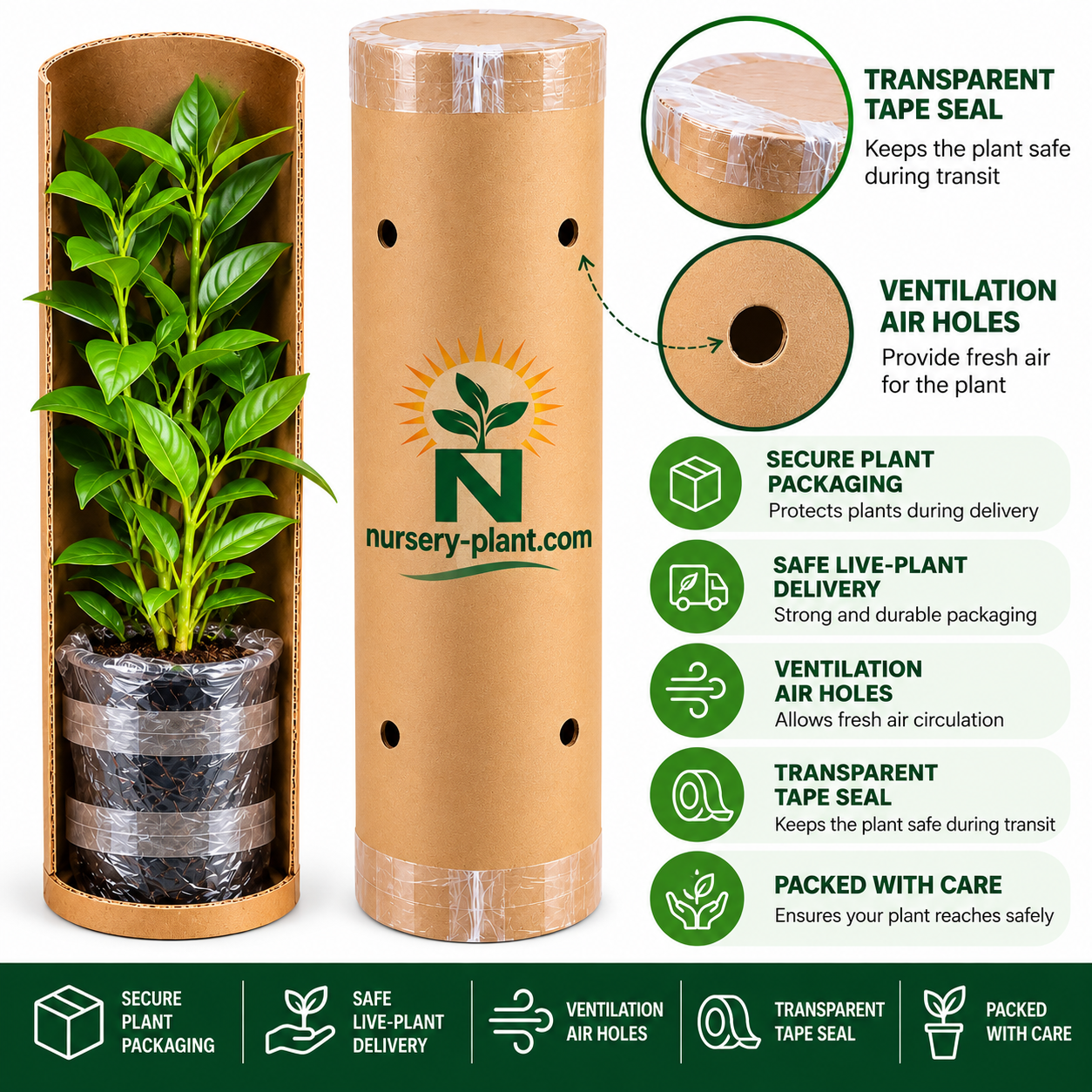
You will receive a healthy live Yellow Allamanda Creeper plant with pot, prepared for delivery.
Because this is a living plant, plant height, number of branches, leaf density, flower buds and overall shape may naturally vary from the product photographs.
Flowering at the time of delivery is not guaranteed because flowers and buds naturally change with season, transport and growing conditions.
During transportation, minor leaf movement, bending or temporary stress may occur. After receiving the plant, place it in a bright sunny location, water according to the soil condition and allow it time to acclimatize.
🔬 Botanical Information & Further Reading
- Botanical name: Allamanda cathartica L.
- Family: Apocynaceae
- Common names: Yellow Allamanda, Golden Trumpet, Golden Trumpet Vine, Cup-of-Gold
- Plant type: Evergreen tropical flowering climber/shrub
- Growth habit: Climbing / scrambling
- Flower colour: Golden yellow
- Main use: Ornamental flowering plant
- Suitable cultivation: Garden, terrace, balcony and container
For verified botanical classification and distribution, see Royal Botanic Gardens, Kew – Plants of the World Online: Allamanda cathartica.
For growing requirements, flowering, pruning and container information, see Royal Horticultural Society – Allamanda cathartica.
For information about the larger-flowered cultivated form Allamanda cathartica ‘Hendersonii’, see RHS – Golden Trumpet ‘Hendersonii’.
🌱 Bring Home Your Yellow Allamanda
Add a bright tropical touch to your garden with the Yellow Allamanda Creeper Healthy Flowering Plant with Pot. Its golden-yellow trumpet flowers, glossy green foliage and climbing habit make it an attractive choice for trellises, pergolas, balconies, terraces and sunny garden spaces.
With full sunlight, regular watering, fertile well-drained soil and suitable climbing support, this beautiful flowering plant can become a colourful feature of your garden.
For More Information Visit: Nursery-Plant.Com
For Contact Visit:Contact Us
For Shopping Visit: Shop Page


Reviews
There are no reviews yet.