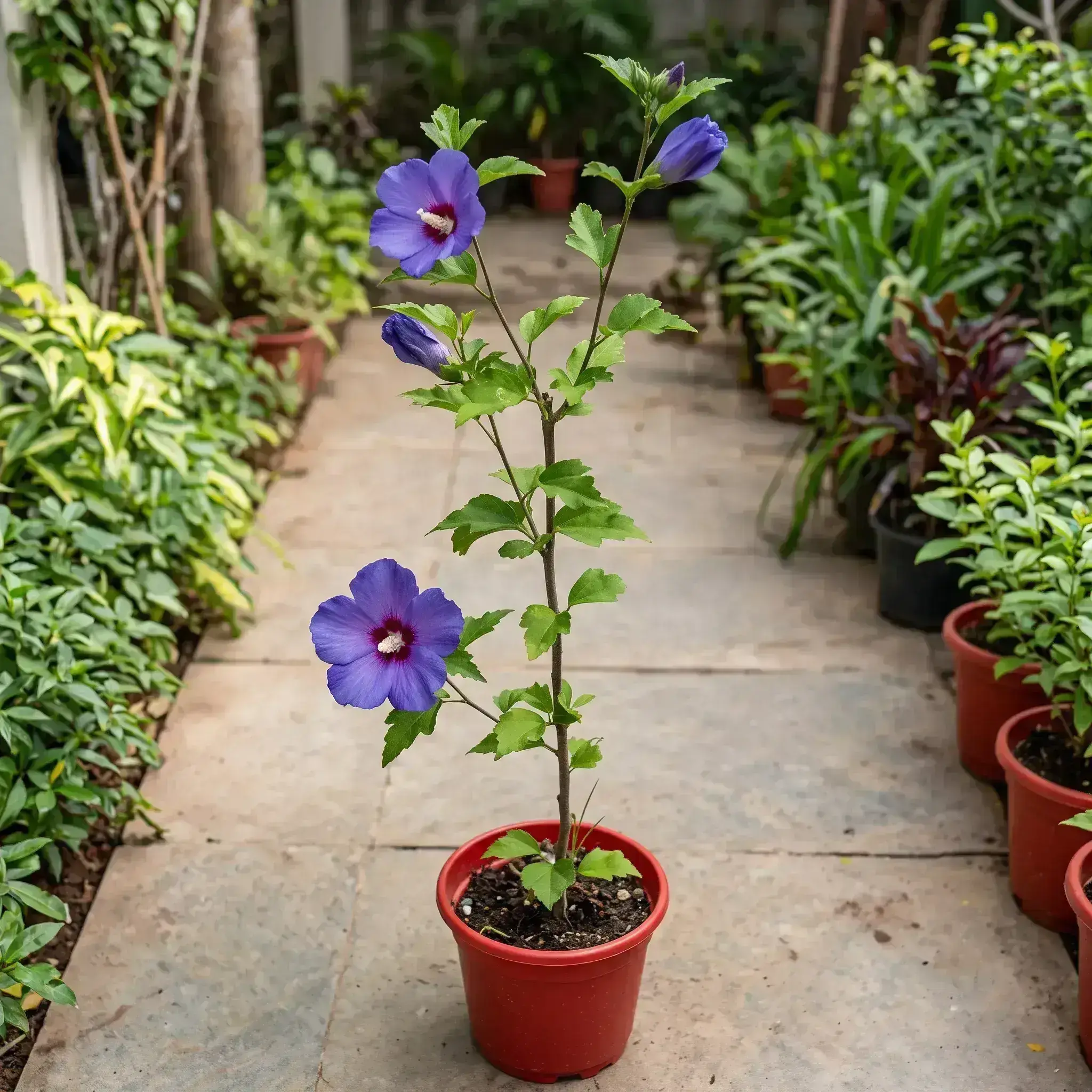
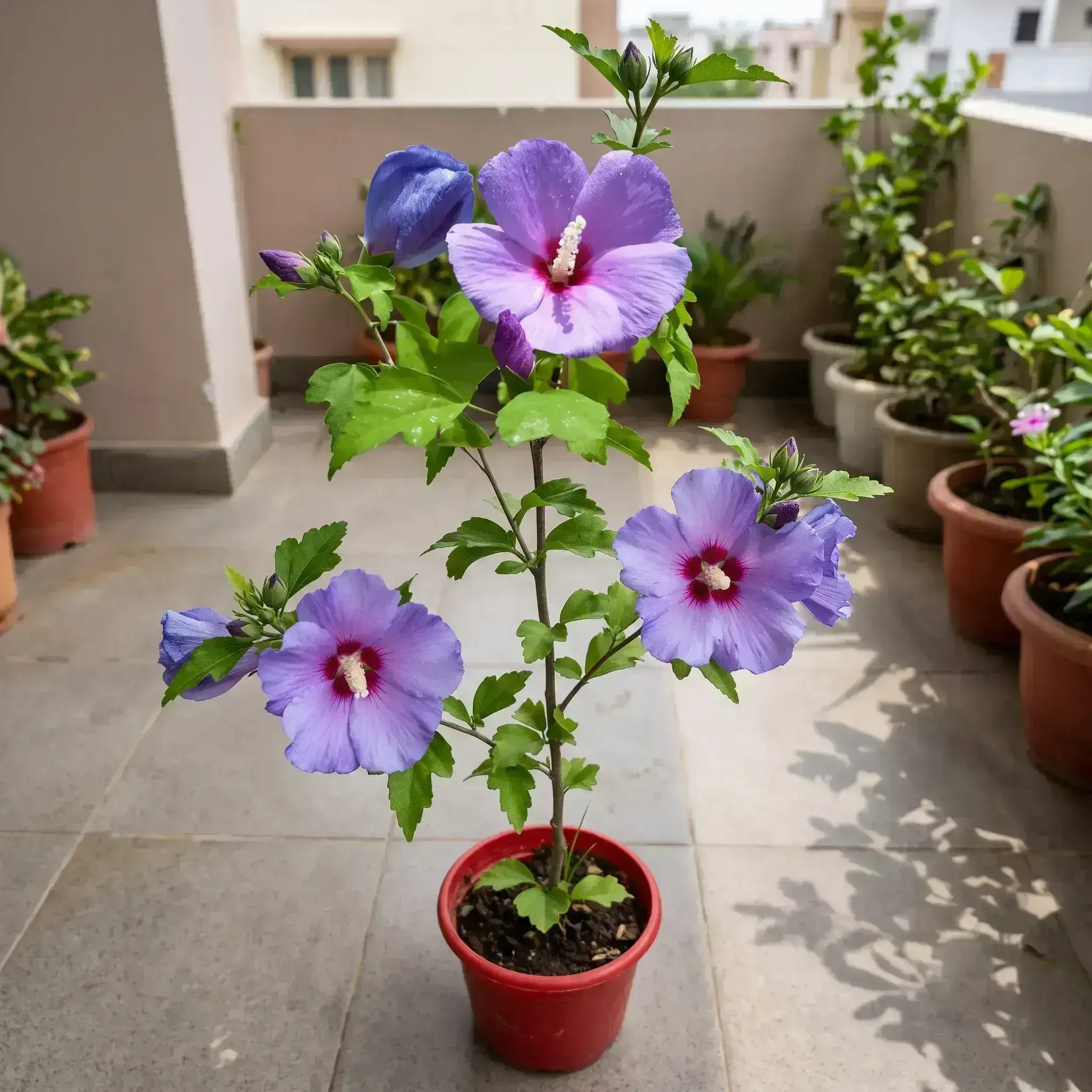
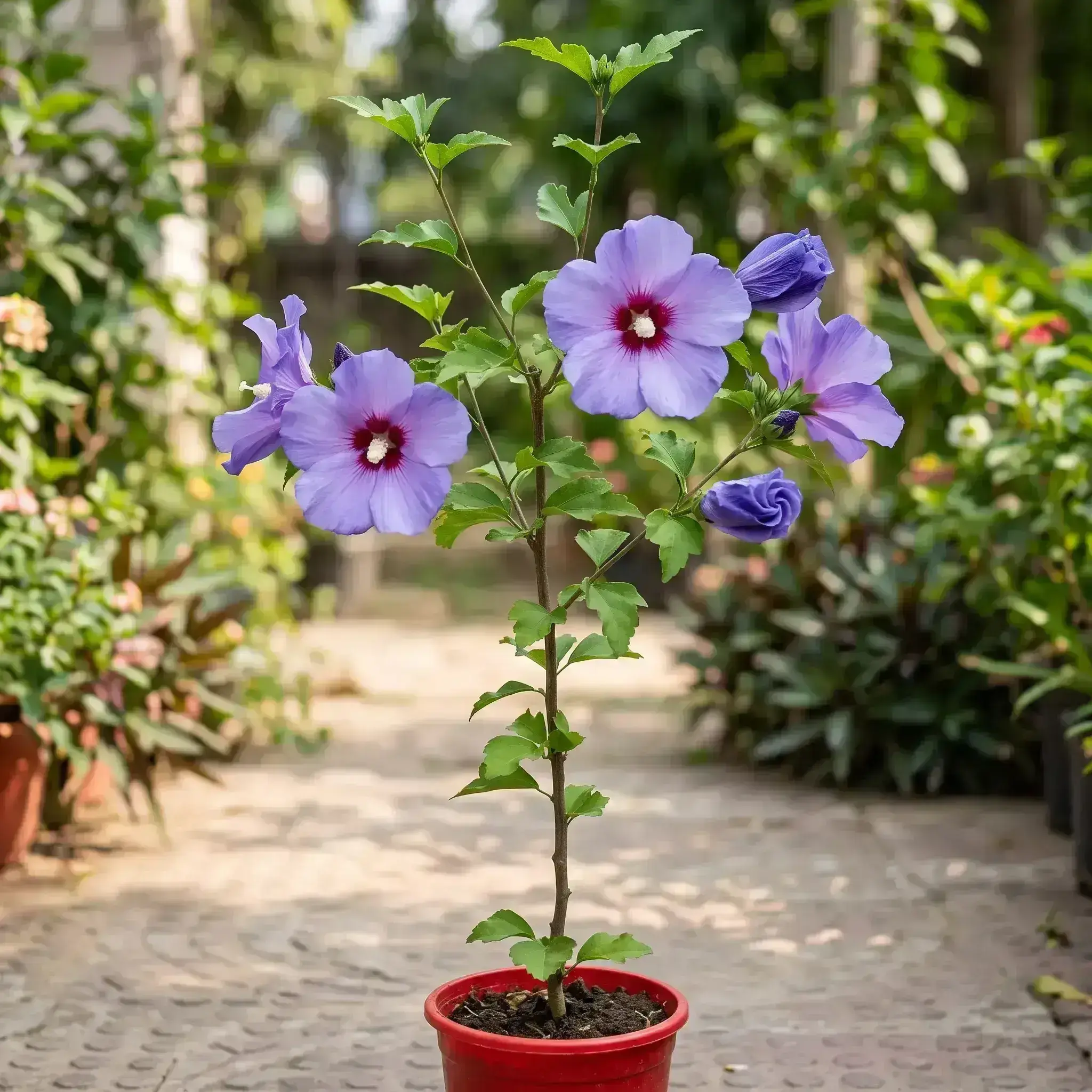
Indian Blue Hibiscus Healthy Flower Plant
🌿 About the Indian Blue Hibiscus Plant
The plant commonly known as Blue Hibiscus is often identified as Alyogyne huegelii. Kew currently recognizes Alyogyne huegelii as an accepted species in the Malvaceae family. It is an evergreen shrub native to southern Western Australia and South Australia.
Although it is commonly called Blue Hibiscus, it belongs to the genus Alyogyne, not Hibiscus. The name reflects the plant’s attractive hibiscus-like flowers.
💙 Beautiful Blue & Lilac Flowers
The main attraction of this plant is its large, colourful, hibiscus-like flowers.
Depending on the variety and growing conditions, flowers can appear in attractive shades of:
- 💙 Blue
- 💜 Lilac
- 🌸 Blue-purple
- 🌿 Soft violet tones
The flowers create a beautiful contrast against the plant’s green foliage and can become an eye-catching feature in a sunny garden.
RHS describes Alyogyne species as evergreen shrubs producing solitary, hibiscus-like flowers in the leaf axils.
🌱 Attractive Evergreen Shrub
Blue Hibiscus develops into an attractive bushy evergreen shrub when grown under suitable conditions.
Its foliage and branching structure make it useful even when the plant is not flowering.
It can be grown as:
- 🌿 Garden shrub
- 🌼 Flowering border plant
- 🪴 Container plant
- 🏡 Patio plant
- 🌱 Terrace garden plant
- 🌸 Flowering feature plant
RHS lists Alyogyne huegelii as an evergreen, bushy plant that can reach approximately 1–1.5 metres in height and spread under its listed conditions.
☀️ Sunlight Requirements
Full sunlight is important for healthy growth and flowering.
For best results:
- Place the plant in a sunny garden location.
- Provide several hours of direct sunlight.
- Morning and afternoon sunlight are beneficial.
- Avoid keeping it permanently in deep shade.
- Give newly delivered plants time to gradually adjust to strong sunlight.
RHS recommends full sun for Alyogyne huegelii and notes that it performs best in a sheltered position.
💧 Watering Requirements
Blue Hibiscus prefers well-drained soil and should not remain waterlogged.
Follow this simple watering routine:
- Check the soil before watering.
- Water when the upper layer has started to dry.
- Water thoroughly around the root area.
- Allow excess water to drain away.
- Avoid keeping the roots continuously saturated.
- During hot weather, check container plants more frequently.
Once established, Alyogyne huegelii can tolerate relatively dry conditions. RHS lists the plant as having drought resistance.
🌱 Soil & Potting Mix
Use a fertile, loose and well-draining growing medium.
For container cultivation, a suitable mix can contain:
- Quality garden soil or potting soil
- Compost or organic matter
- Cocopeat
- Perlite
- Coarse sand or another drainage material
The most important requirement is good drainage.
RHS recommends free-draining compost for container cultivation and well-drained soil for outdoor planting.
🌡️ Temperature & Climate
Blue Hibiscus is suited to warm and sunny conditions.
For best growth:
- Keep the plant in a warm location.
- Protect it from frost.
- Avoid prolonged freezing conditions.
- Provide shelter from extremely cold winds.
- Container-grown plants can be moved to a protected location during unusually cold weather.
RHS recommends growing Alyogyne huegelii outdoors in well-drained soil and full sun where temperatures do not fall below freezing.
💦 Humidity & Air Circulation
The plant does not require excessively humid conditions when grown outdoors in a suitable climate.
Good practices include:
- Maintain good air circulation.
- Avoid constantly wet foliage.
- Do not overcrowd plants.
- Keep the soil well drained.
- Provide protection from prolonged cold and very wet conditions.
A sunny, open and sheltered location is generally suitable.
🌿 Fertilizer
Feed the plant during active growth with a balanced fertilizer suitable for flowering ornamental plants.
A simple routine:
- Follow the fertilizer manufacturer’s recommended dosage.
- Feed during active growth.
- Avoid excessive fertilizer.
- Reduce feeding when growth slows.
- Water appropriately after fertilizing.
Moderate feeding can support healthy foliage and flowering without encouraging excessively soft growth.
✂️ Pruning & Shaping
Regular pruning can help maintain a compact, bushy and attractive shape.
You can:
- Remove dead or damaged branches.
- Trim overly long shoots.
- Remove weak or crossing growth.
- Maintain the desired size.
- Encourage branching.
- Remove spent flowers when appropriate.
Use clean and sharp pruning tools to reduce unnecessary plant damage.
RHS lists Alyogyne huegelii under a pruning group and provides pruning guidance for maintaining cultivated plants.
🌼 Flowering
Flower production depends on several factors, including:
- ☀️ Sunlight
- 🌱 Plant maturity
- 💧 Watering
- 🌿 Nutrition
- ✂️ Pruning
- 🌡️ Temperature
- 🪴 Container conditions
A plant grown with good sunlight and suitable drainage is more likely to develop strong flowering growth.
Because this is a living plant, the presence of flowers or buds at delivery can vary according to season and plant condition.
🪴 Growing in a Pot
The plant can be maintained in a container, making it suitable for gardeners with limited outdoor space.
For container cultivation:
- Use a pot with drainage holes.
- Choose a well-draining growing medium.
- Place the pot in full sunlight.
- Water according to soil moisture.
- Feed during active growth.
- Prune when necessary.
- Repot when the roots become crowded.
RHS specifically lists Alyogyne huegelii among plants suitable for patio and container planting.
🏡 Garden, Home & Office Use
Indian Blue Hibiscus can add a distinctive flowering accent to outdoor spaces around homes and offices.
It is suitable for:
- 🏡 Home gardens
- 🌿 Flower borders
- 🪴 Balconies
- 🌱 Terraces
- 🏢 Office gardens
- 🌼 Patio areas
- 🌿 Courtyards
- 🪴 Container displays
For best flowering, keep the plant in a sunny outdoor location rather than a dark indoor room.
🌸 Attractive Landscaping Plant
The combination of evergreen foliage and blue/lilac flowers makes this plant useful for creating a colourful garden feature.
It can be planted:
- Along garden borders
- Near entrances
- Beside pathways
- In patio containers
- Around terraces
- In courtyard gardens
- As a flowering shrub in mixed plantings
Its unusual flower colour can provide variety alongside plants with white, yellow, pink or red flowers.
🌿 Why Choose Indian Blue Hibiscus?
- Beautiful blue to lilac-blue flowers
- Attractive hibiscus-like blooms
- Evergreen ornamental shrub
- Suitable for sunny gardens
- Can be grown in containers
- Excellent patio and terrace plant
- Attractive landscaping plant
- Suitable for warm climates
- Can tolerate relatively dry conditions once established
- Distinctive flower colour
- Supplied as a healthy live flowering plant
🪴 Healthy Live Flower Plant
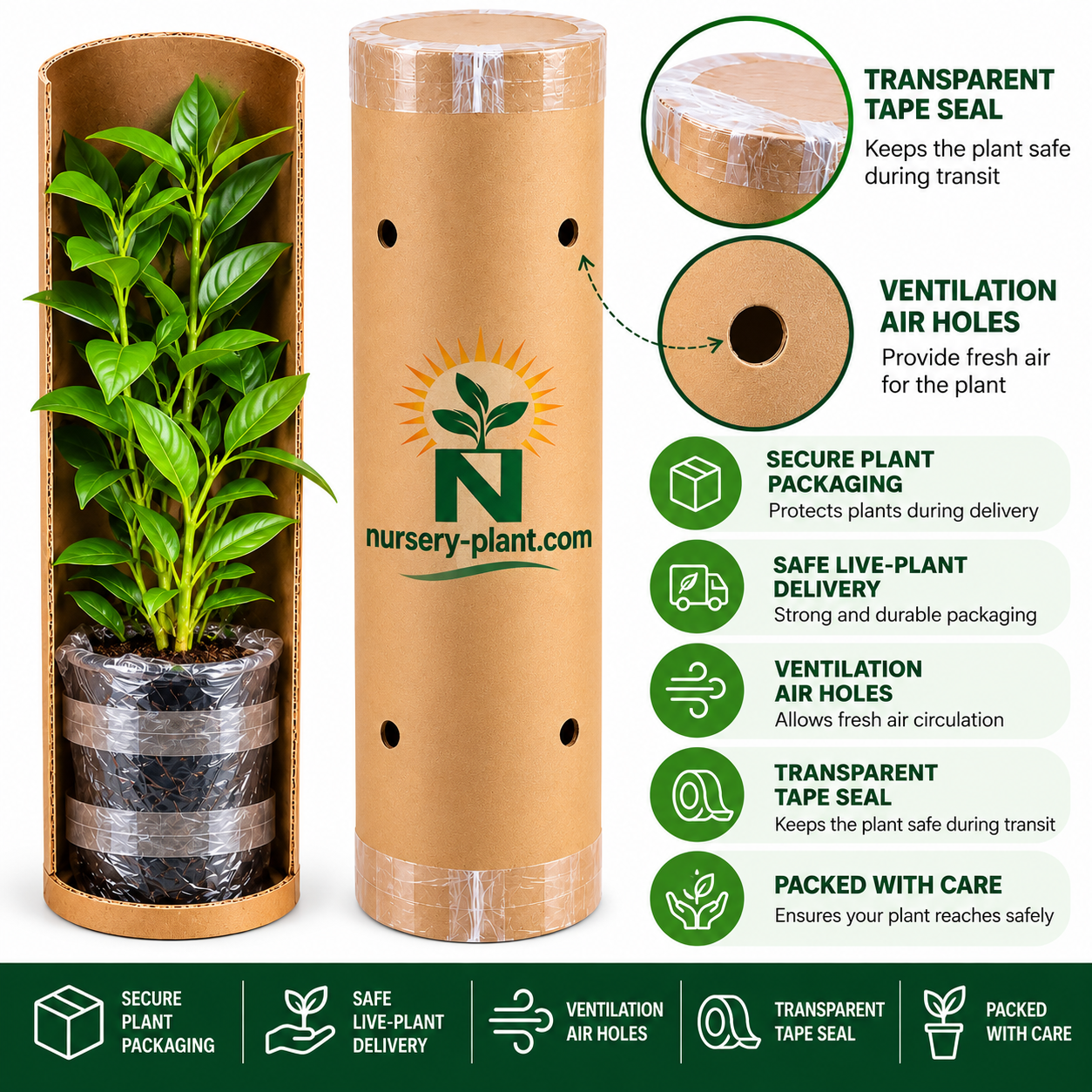
You will receive a healthy live Indian Blue Hibiscus plant, prepared for delivery.
Because this is a living plant, plant height, number of branches, foliage density, flower buds, flower colour intensity and overall shape may naturally vary from the product photographs.
Flowering at the time of delivery is not guaranteed, as flowering depends on season, maturity, sunlight and growing conditions.
Minor leaf movement, bending or temporary stress can occur during transportation. After receiving the plant, place it in a suitable sunny location, water according to the soil condition and allow it time to acclimatize.
🔬 Botanical Information & Further Reading
- Common name: Blue Hibiscus
- Nursery name: Indian Blue Hibiscus
- Botanical name: Alyogyne huegelii (Endl.) Fryxell
- Family: Malvaceae
- Plant type: Evergreen flowering shrub
- Growth habit: Bushy shrub
- Flower type: Hibiscus-like
- Flower colour: Blue, lilac-blue or blue-purple
- Main use: Ornamental flowering and container plant
For verified botanical classification and native distribution, see Royal Botanic Gardens, Kew – Plants of the World Online: Alyogyne huegelii.
For cultivation, sunlight, soil and container information, see Royal Horticultural Society – Hibiscus huegelii / Alyogyne huegelii.
For an accepted cultivated form, see RHS – Alyogyne huegelii ‘Santa Cruz’.
For botanical comparison, Kew also recognizes the true species Hibiscus syriacus, a separate Hibiscus species that can have blue, pink or purple flowers.
🌱 Bring Home Your Indian Blue Hibiscus
Add a distinctive splash of blue and purple colour to your garden with the Indian Blue Hibiscus Healthy Flower Plant. Its evergreen foliage, hibiscus-like flowers and attractive bushy growth make it a beautiful choice for sunny gardens, balconies, terraces, patios and container displays.
With full sunlight, well-drained soil, appropriate watering and regular light pruning, this ornamental flowering plant can become an attractive feature in your garden.
For More Information Visit: Nursery-Plant.Com
For Contact Visit:Contact Us
For Shopping Visit: Shop Page


Reviews
There are no reviews yet.