
String of Hearts Plant – Chain of Hearts (Ceropegia woodii) Plant
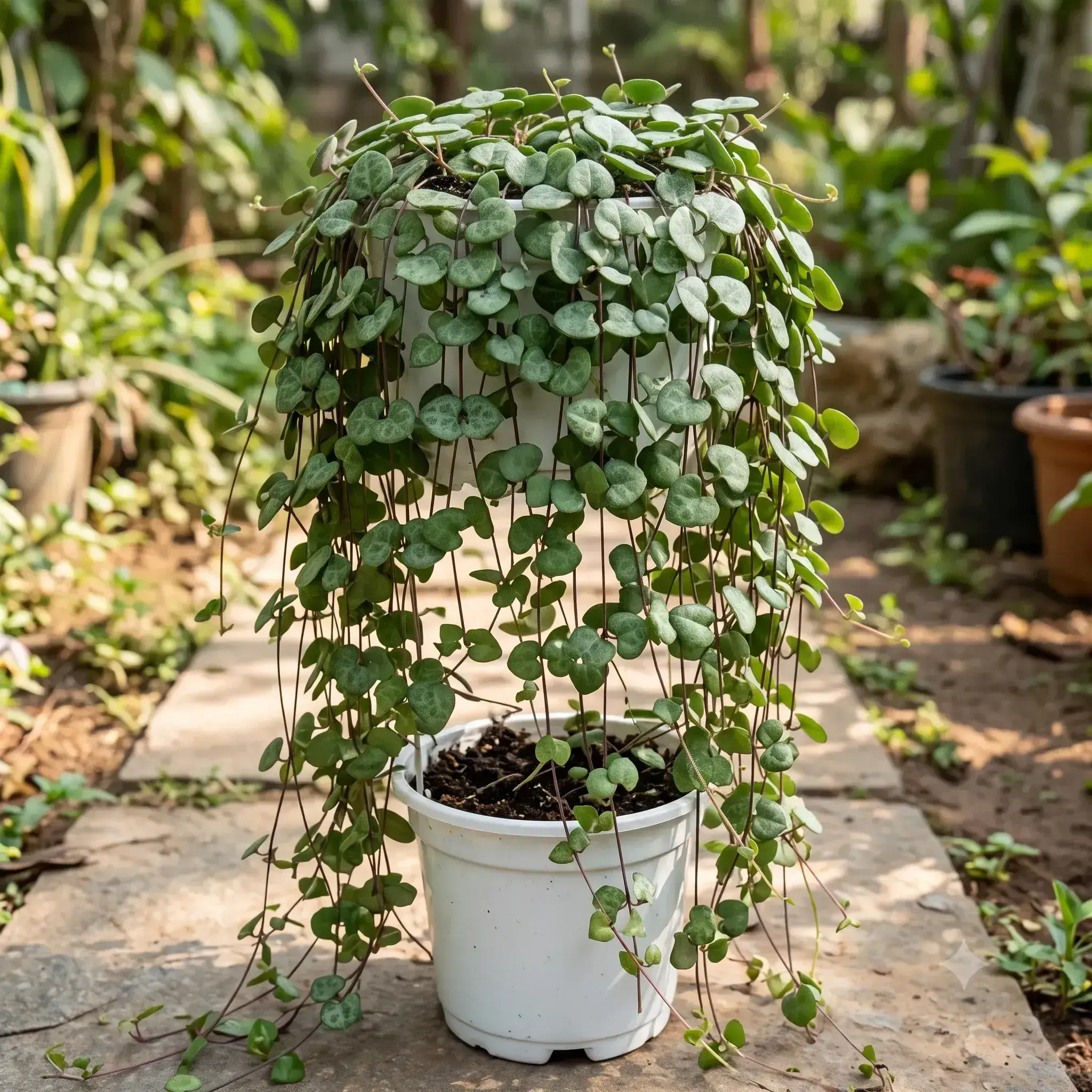
The String of Hearts Plant (Ceropegia woodii) Also called Chain of Hearts, Rosary Vine and Sweetheart Vine, a charming trailing ornamental plant known for its delicate heart-shaped leaves and long cascading stems.
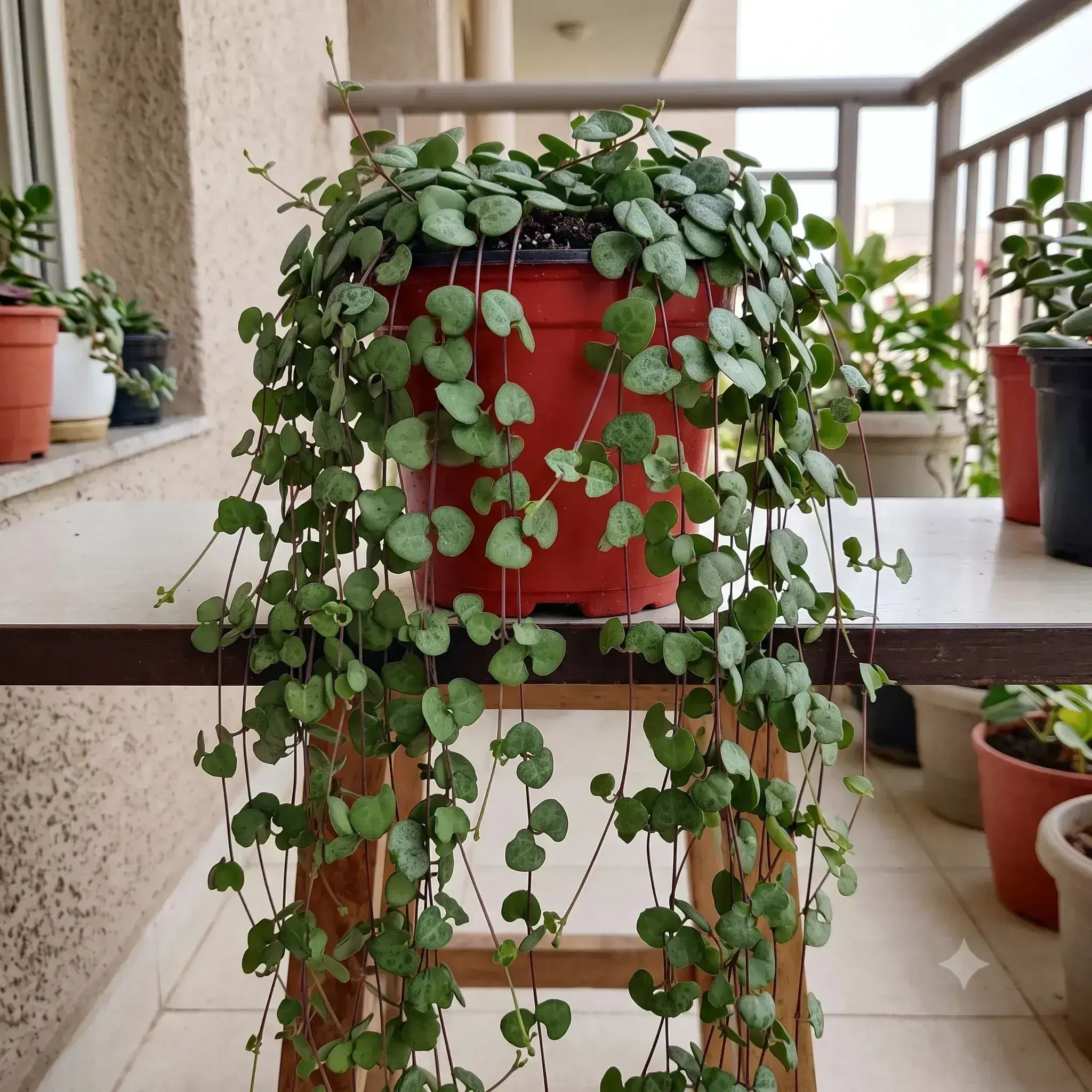
this attractive plant features small green leaves with beautiful silver markings and purple undersides. Its graceful hanging vines make it an excellent choice for hanging baskets, balcony gardens, decorative shelves and indoor plant displays.
String of Hearts is a succulent-like perennial that stores water in its fleshy leaves and underground tubers. It is relatively easy to maintain when provided with bright light, well-draining soil and careful watering.
Plant Highlights
- Common Name: String of Hearts, Chain of Hearts, Rosary Vine, Sweetheart Vine
- Botanical Name: Ceropegia woodii
- Family: Apocynaceae
- Origin: Southern Africa, including South Africa and Zimbabwe
- Plant Type: Trailing, tuberous perennial
- Growth Habit: Cascading or climbing vine
- Leaf Shape: Small, heart-shaped leaves
- Leaf Colour: Green with silver patterns and purple undersides
- Light Requirement: Bright indirect light and gentle sunlight
- Water Requirement: Low to moderate
- Maintenance: Low to moderate
- Best For: Hanging baskets, balconies, shelves, patios and home gardens
About the String of Hearts Plant
String of Hearts is a popular ornamental plant native to Southern Africa. It is admired for its unusual heart-shaped foliage and delicate trailing stems.
The leaves grow in pairs along thin, purplish stems. Their upper surfaces are usually green with attractive silver or grey patterns, while the undersides often display a purple shade.
Small bead-like tubers can develop along the stems near the leaf nodes. These tubers help the plant store energy and can also be used for propagation.
Appearance and Growth
The main attraction of String of Hearts is its long, cascading stems covered with small heart-shaped leaves.
- Leaves have attractive heart-shaped outlines.
- Silver patterns create a decorative appearance.
- Purple undersides add extra colour.
- Thin stems naturally hang over the sides of containers.
- Small aerial tubers may develop along the vines.
- Mature plants can produce long trailing stems, often around 1 metre or more.
The plant grows beautifully in hanging containers, where its vines can hang freely.
Flowers and Flowering Season
String of Hearts produces unusual tubular flowers with a distinctive lantern-like appearance.
The flowers are generally pink, purple and pale green. They have a swollen base and a narrow tubular structure with a small crown-like top.
Flowering is more common in mature plants receiving suitable light and growing conditions. Flowers may appear during warmer growing periods, but flowering is not guaranteed.
Sunlight Requirements
String of Hearts grows best in bright indirect light.
- Place it near a bright window or balcony.
- Provide gentle morning sunlight when possible.
- Avoid sudden exposure to strong afternoon sunlight.
- Rotate the pot occasionally for balanced growth.
- Avoid dark corners with insufficient natural light.
Too little light can make the stems thin and stretched, with large gaps between the leaves. Excessive direct sunlight can scorch the foliage.
Watering Requirements
String of Hearts stores water in its leaves and tubers, so it does not need frequent watering.
Follow these guidelines:
- Allow the growing medium to dry before watering again.
- Water thoroughly when the soil has dried.
- Allow excess water to drain completely.
- Never leave the pot standing in water.
- Avoid keeping the roots continuously wet.
During the humid monsoon season in India, water less frequently if the soil takes longer to dry.
Best Soil for String of Hearts
This plant requires a loose, airy and well-draining growing medium.
A suitable potting mixture can include:
- 40% light potting mix
- 30% perlite or pumice
- 20% coarse sand or horticultural grit
- 10% well-decomposed compost
A good-quality cactus and succulent mix can also be used with additional perlite or pumice.
Avoid heavy garden soil that holds excessive moisture.
Temperature and Indian Climate
String of Hearts prefers warm conditions and good airflow. It can be grown in many parts of India, including West Bengal, with suitable protection.
For better growth:
- Keep it in a bright, sheltered location.
- Protect it from continuous monsoon rain.
- Avoid waterlogged soil.
- Provide good air circulation.
- Protect it from harsh afternoon summer sunlight.
- Avoid permanently damp and poorly ventilated locations.
A covered balcony or bright indoor location is often suitable during heavy rainfall.
Fertilizer Requirements
String of Hearts does not require heavy feeding.
- Apply diluted balanced liquid fertilizer during active growth.
- Feed lightly, approximately once a month when actively growing if needed.
- Avoid excessive nitrogen fertilizer.
- Do not fertilize plants suffering from root rot or other stress.
- Reduce feeding when growth slows.
Growing String of Hearts in Hanging Baskets
String of Hearts is especially attractive in hanging baskets because its thin stems naturally cascade downwards.
For best results:
- Choose a hanging pot with drainage holes.
- Use a lightweight succulent potting mixture.
- Place the basket in a bright location.
- Allow the stems to hang freely.
- Protect delicate vines from strong winds.
- Check soil moisture before watering.
It can also be grown in decorative pots placed on shelves or elevated stands.
Best Places to Keep This Plant
String of Hearts is suitable for:
- Balcony gardens
- Hanging baskets
- Indoor plant shelves
- Bright windowsills
- Covered patios
- Decorative wall planters
- Home garden displays
- Succulent collections
Its cascading stems make it particularly attractive when displayed above eye level.
Pruning and Maintenance
Regular pruning is not necessary, but occasional trimming can help maintain a fuller appearance.
- Remove dry or damaged stems.
- Trim excessively long vines when needed.
- Use clean scissors for pruning.
- Handle the delicate stems carefully.
- Use healthy cuttings for propagation.
You can also place some healthy vines back onto the soil surface to encourage rooting and create a fuller-looking pot.
Propagation
String of Hearts can be propagated through stem cuttings and the small aerial tubers that develop along its vines.
Method 1: Stem Cuttings
- Select a healthy stem with several leaf nodes.
- Cut a suitable section using clean scissors.
- Place the cutting in a well-draining growing medium.
- Keep the medium lightly moist, not wet.
- Provide bright indirect light.
- Allow roots to develop before moving the plant.
Method 2: Aerial Tubers
- Look for small bead-like tubers along the stems.
- Place a tuber against the surface of a suitable growing medium.
- Keep the medium lightly moist.
- Allow the tuber to develop roots.
- Once established, separate it from the original vine if still attached.
Propagation is generally easier during active growth.
Common Problems and Solutions
1. Yellow Leaves
Yellowing may be caused by overwatering, poor drainage or natural ageing. Check the soil and roots.
2. Falling Leaves
Sudden environmental changes, watering problems or physical damage can cause leaves to fall. Check the plant’s growing conditions.
3. Long Stems with Large Gaps
This usually indicates insufficient light. Move the plant gradually to a brighter location.
4. Soft or Mushy Stems
Excessive moisture can cause stem and root rot. Remove affected sections and improve drainage.
5. Dry or Wrinkled Leaves
The plant may need water, but check the soil first. Damaged roots can also prevent proper water absorption.
6. Mealybugs
Small white, cotton-like insects may appear around leaves and stems. Inspect the plant regularly and use an appropriate plant-safe treatment if necessary.
Is String of Hearts Suitable for Indoor Growing?
Yes. String of Hearts is a popular trailing plant for bright indoor spaces.
Place it near a window where it receives sufficient natural light. Hanging baskets and elevated shelves are especially suitable for displaying its cascading stems.
Avoid dark rooms without adequate natural light. Good airflow and careful watering are important for healthy growth.
Safety and Handling
String of Hearts is grown mainly as an ornamental plant. Do not consume its leaves, stems or tubers. Keep the plant away from young children and pets who may chew on ornamental plants.
Live Plant Delivery Information
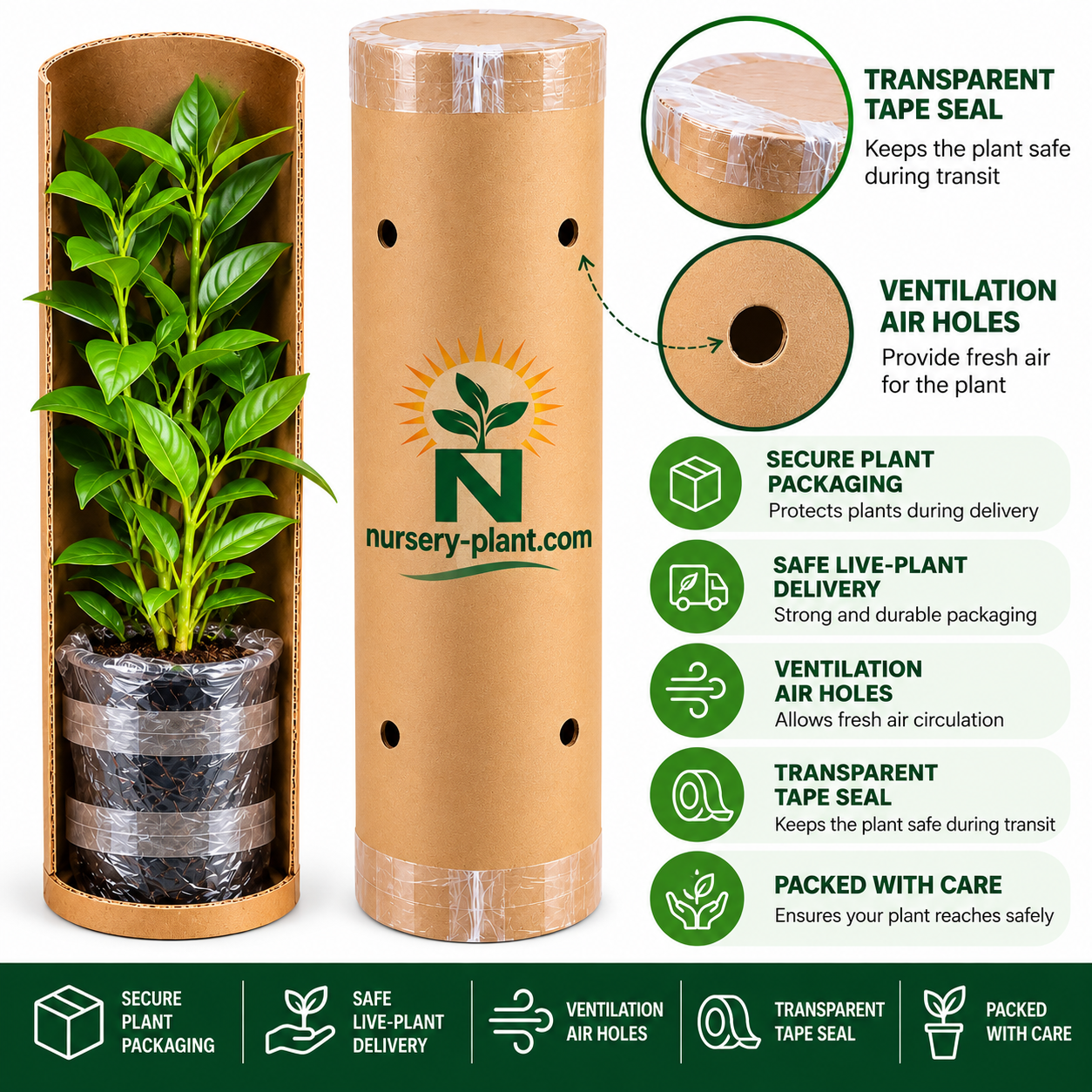
We carefully select and pack live plants for delivery. Since String of Hearts is a natural living plant, the vine length, number of leaves, foliage colour and overall fullness may vary slightly from the product photograph.
Some leaves may become loose during transportation because the stems are delicate.
After receiving your plant:
- Unpack it carefully.
- Handle the stems gently.
- Place it in a bright, airy location.
- Avoid immediate heavy watering.
- Protect it from harsh afternoon sunlight.
- Allow the plant to adjust to its new environment.
Why Choose the String of Hearts Plant?
String of Hearts is a beautiful choice for anyone who enjoys trailing plants and decorative greenery. Its heart-shaped leaves, silver markings and cascading vines create a graceful natural display.
Whether placed in a hanging basket, balcony garden or bright indoor corner, this plant can add charm and greenery to your home.
With bright light, well-draining soil and careful watering, String of Hearts can become a lovely long-term addition to your plant collection.
Botanical Information & Further Reading
- Royal Horticultural Society – Ceropegia woodii
- Kew Science – Plants of the World Online: Ceropegia woodii
- University of Wisconsin Extension – String of Hearts
- South African National Biodiversity Institute – Ceropegia linearis subsp. woodii
- North Carolina State Extension – Ceropegia woodii
- eFlora of India – Ceropegia woodii
Frequently Asked Questions
1. What is the botanical name of String of Hearts?
Its accepted botanical name is Ceropegia woodii. It is also known as Chain of Hearts and Rosary Vine.
2. Is String of Hearts a succulent?
Yes. It is a succulent-like, tuberous trailing plant with fleshy leaves that store water.
3. Can String of Hearts grow indoors?
Yes. It grows well indoors near a bright window with sufficient natural light.
4. Does String of Hearts need direct sunlight?
It prefers bright indirect light and benefits from gentle morning sunlight. Avoid sudden exposure to harsh afternoon sunlight.
5. How often should I water String of Hearts?
Water when the growing medium has dried. Watering frequency depends on temperature, humidity, pot size and drainage.
6. Is String of Hearts suitable for hanging baskets?
Yes. Its long, trailing stems make it an excellent choice for hanging baskets and elevated planters.
7. Can String of Hearts grow in West Bengal?
Yes. Protect it from continuous monsoon rain, waterlogged soil and harsh afternoon sunlight.
8. Why are the leaves turning yellow?
Yellow leaves may indicate overwatering, poor drainage or natural ageing. Check the soil moisture and roots.
9. Does String of Hearts produce flowers?
Yes. Mature plants can produce unusual tubular flowers in pink, purple and pale green shades.
10. How can I propagate String of Hearts?
It can be propagated using healthy stem cuttings or the small aerial tubers that develop along the vines.
11. Why are there large gaps between the leaves?
This commonly happens when the plant does not receive enough light. Move it gradually to a brighter location.
12. Does String of Hearts need frequent repotting?
No. It generally grows well in a slightly crowded pot. Repot only when necessary, preferably during active growth.
For More Information
Visit: Nursery-Plant.Com
For Contact Visit:Contact Us
For Shopping Visit: Shop Page


Reviews
There are no reviews yet.