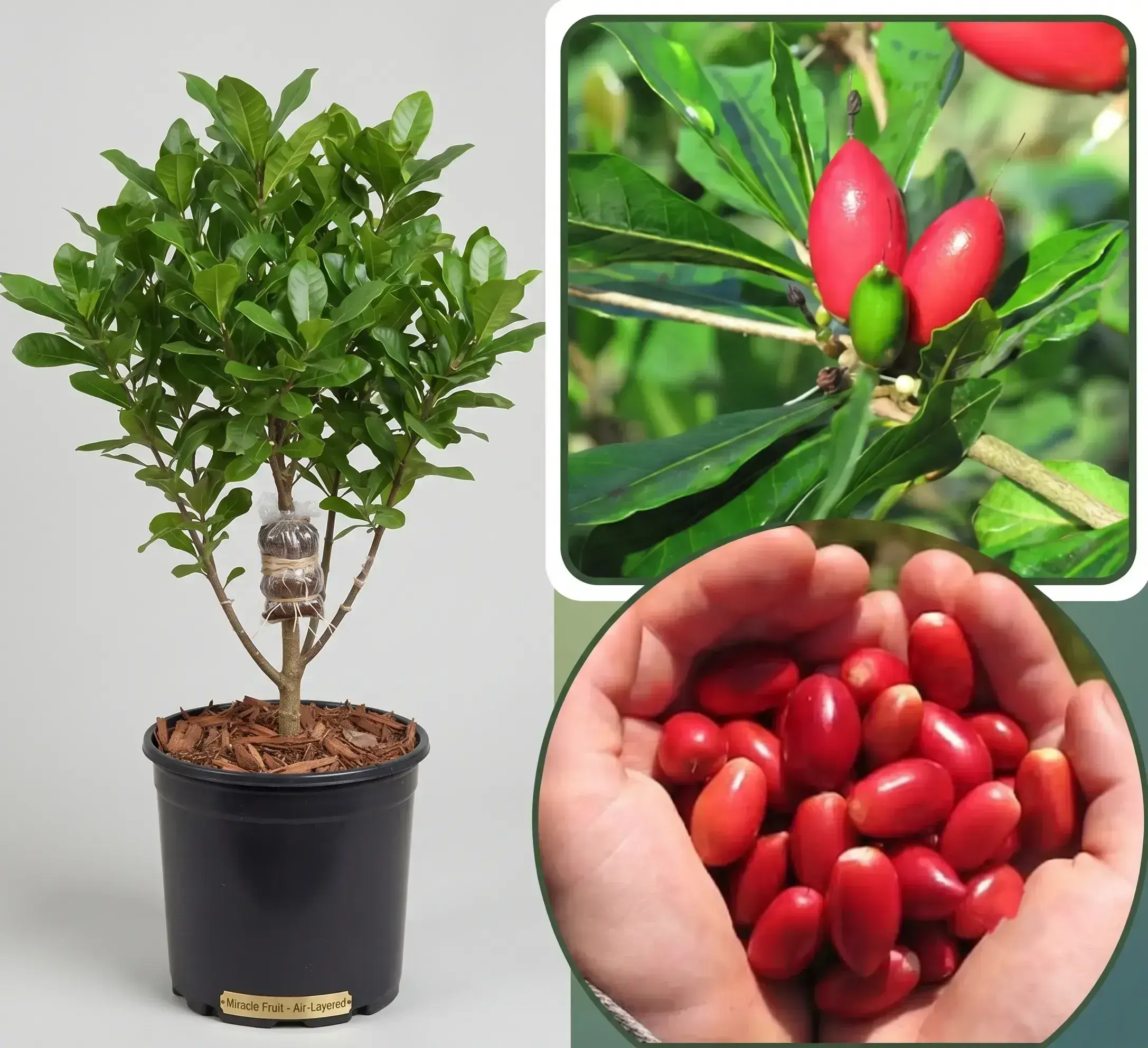

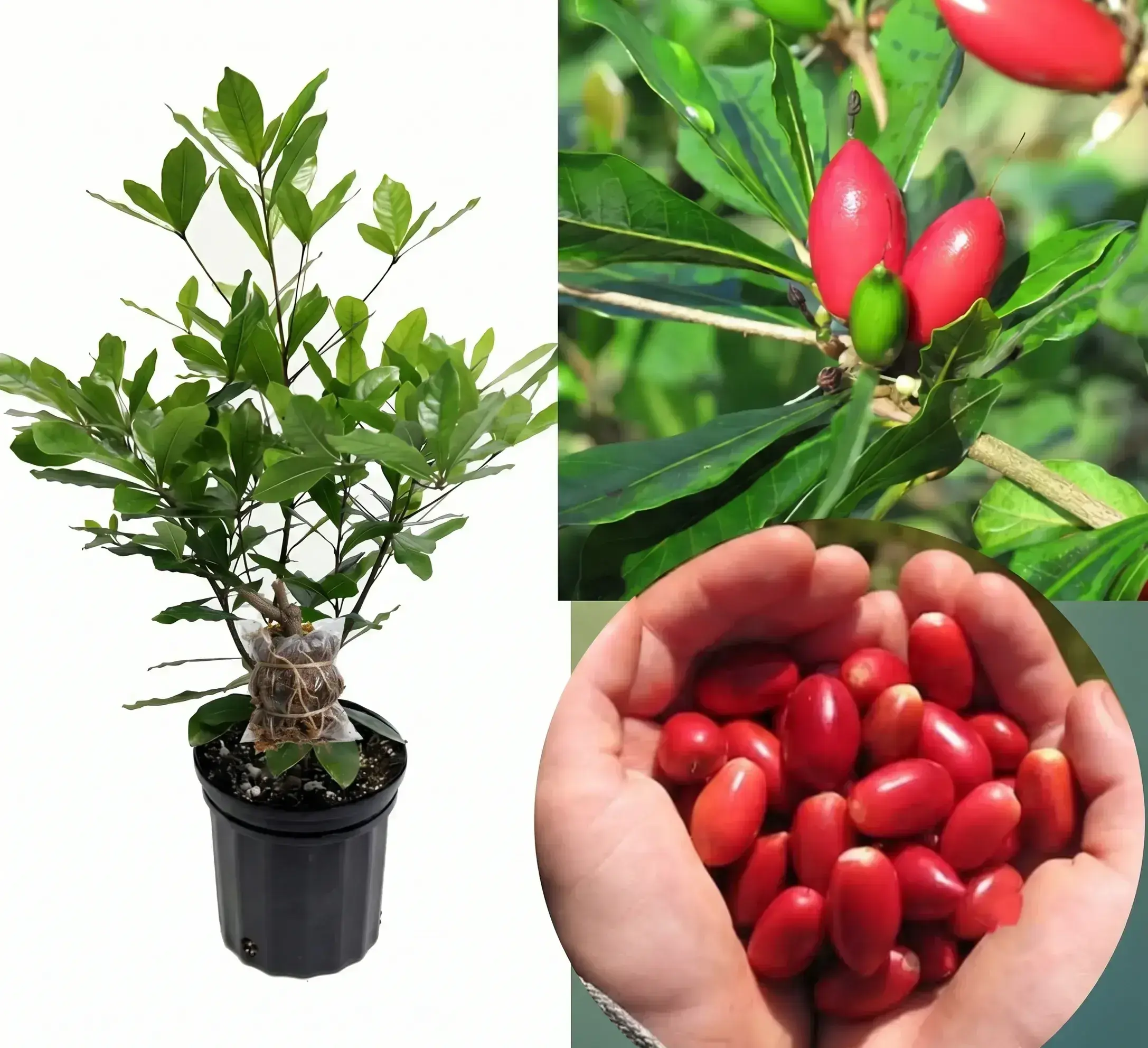

Miracle Fruit Plant | Mberry plant (Synsepalum dulcificum) Magic Berry Tree
The Miracle Fruit Plant, botanically known as Synsepalum dulcificum, is one of the most fascinating exotic fruit plants for a home garden. Also called Miracle Berry or Miraculous Berry, this evergreen tropical shrub is famous for its unusual effect on taste perception.
The plant belongs to the Sapotaceae family and is native to western and west-central tropical Africa. Kew currently accepts Synsepalum dulcificum as the correct botanical name and describes it as a shrub or small tree that grows primarily in wet tropical environments.
The small red berries themselves are not famous because of an exceptionally sweet flavour. Instead, their pulp contains a protein called miraculin, which temporarily changes how the tongue perceives acidic or sour foods. After eating the ripe berry, sour foods such as lemon can temporarily taste sweet. UF/IFAS Extension describes this distinctive “sour-to-sweet” effect and notes that it can last roughly 15 minutes to an hour.
This listing is for a layering-propagated live plant. Layering is a vegetative propagation method in which roots are encouraged to develop on a stem while it remains attached to the parent plant before being separated and established as an independent plant.
Because miracle fruit naturally prefers warm, humid and acidic growing conditions, it can be an interesting exotic fruit plant for Indian gardeners, particularly where warm conditions can be maintained. In areas with alkaline soil, dry conditions or cooler winters, container cultivation can provide better control over the growing environment.
🌱 Plant Characteristics
- Common Name: Miracle Fruit, Miracle Berry, Miraculous Berry
- Botanical Name: Synsepalum dulcificum
- Family: Sapotaceae
- Plant Type: Evergreen tropical shrub/small tree
- Propagation: Layering
- Native Range: West and West-Central Tropical Africa
- Fruit: Small red berry
- Special Feature: Contains miraculin, a taste-modifying protein
- Growth Habit: Bushy evergreen shrub
- Flowers: Small white flowers
- Sunlight: Full sun to partial shade
- Soil: Acidic, fertile and well-drained
- Water: Regular moisture without waterlogging
- Humidity: Prefers warm, humid conditions
- Container Suitable: Yes
- Garden Use: Exotic fruit garden, terrace, patio and container garden
RHS lists Synsepalum dulcificum as a member of the Sapotaceae family native to tropical West Africa, while Kew records its wider native range across western and west-central tropical Africa.
🍒 Miracle Fruit Berries
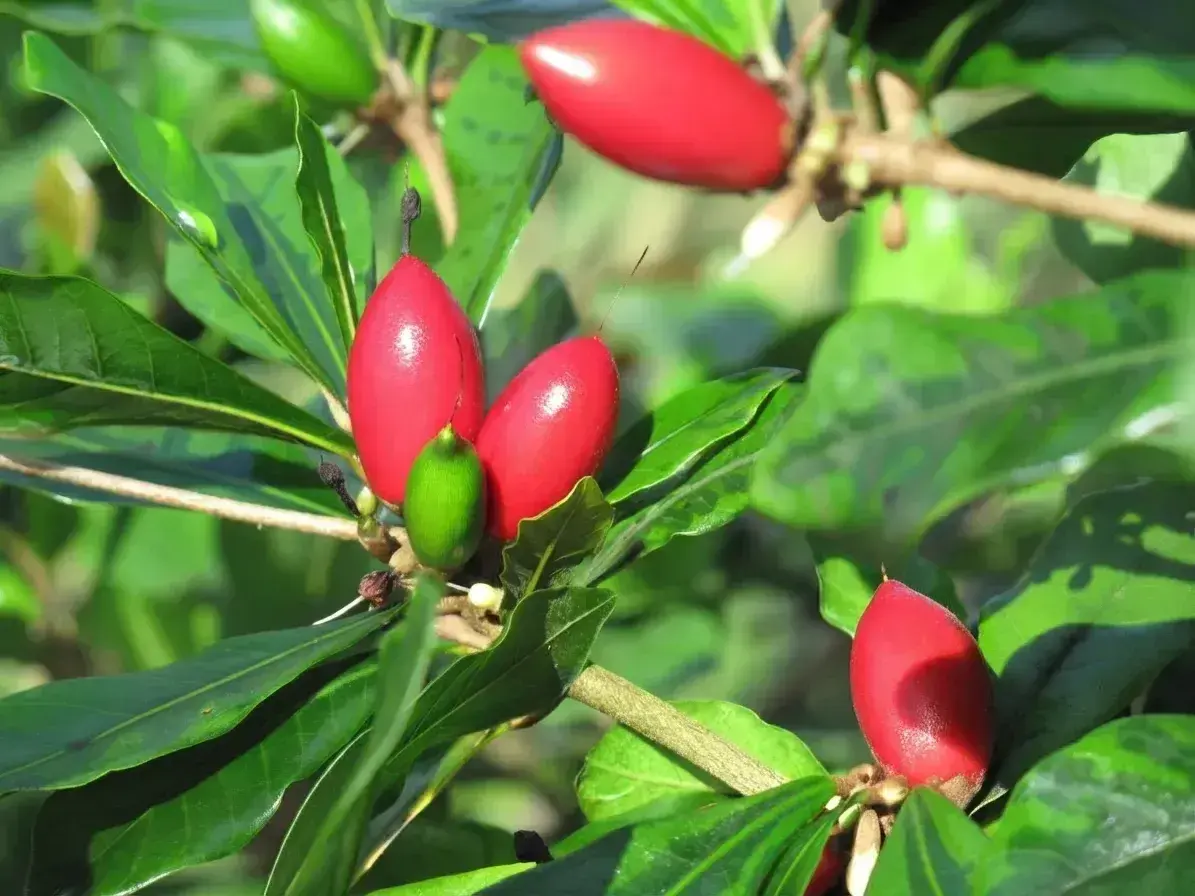
The fruit is a small red berry, generally oval to oblong in shape, containing relatively little pulp around a comparatively large seed.
UF/IFAS describes the berries as small red fruits, with the fruit containing a thin layer of flesh surrounding the seed.
The remarkable feature is not the appearance of the berry but its taste-modifying property.
When ripe miracle fruit pulp coats the tongue, miraculin interacts with taste receptors. Afterward, acidic foods may temporarily be perceived as sweet.
For example, after eating the ripe berry, a slice of lemon or lime may taste dramatically sweeter than it normally would.
This makes the plant particularly interesting for:
- Exotic fruit collections
- Home gardeners
- Children and adults interested in unusual plants
- Fruit-tasting experiences
- Patio gardens
- Botanical collections
- Tropical and subtropical gardens
✨ The “Miracle” Taste Effect
The special property of miracle fruit comes from miraculin, a glycoprotein found in the fruit pulp.
Miraculin does not simply make the berry itself taste extremely sweet. Instead, it temporarily changes the way the tongue perceives acidic flavours.
UF/IFAS explains that miraculin causes sour flavours to register as sweet and reports an effect lasting approximately 15 minutes to one hour, depending on circumstances.
A simple way to experience the plant is:
- Allow a ripe berry to develop fully.
- Eat the pulp while avoiding the seed.
- Gently move the pulp around the tongue.
- After the pulp has coated the mouth, taste a sour food such as lemon.
- Notice the temporary change in flavour perception.
The strength and duration of the effect can vary.
This effect should be understood as a temporary taste-modifying phenomenon, not as a medical treatment or health cure.
🌸 Flowers & Fruit Development
Miracle fruit produces small white flowers, generally in small clusters. These flowers can develop into the characteristic red berries under suitable growing conditions.
UF/IFAS describes the plant as a slow-growing evergreen bush with small white flowers followed by small red berries.
Young plants may need substantial time to become mature enough for reliable fruit production.
UF/IFAS gardening guidance suggests beginning to look for fruit when plants reach around three years of age, with production potentially increasing as plants mature. This is a cultivation reference rather than a guarantee for every nursery plant.
Fruit development depends on:
- Plant age
- Propagation quality
- Climate
- Temperature
- Sunlight
- Humidity
- Soil acidity
- Water management
- Nutrition
- General plant health
Fruiting is not guaranteed immediately after delivery and depends on plant age, variety, climate, sunlight, nutrition, water management and growing conditions.
☀️ Sunlight Requirements
Miracle fruit can grow in full sun to partial shade.
UF/IFAS recommends a location ranging from full sun to partial shade, while other cultivation guidance indicates that the plant can perform well with some protection from intense conditions.
For Indian home gardens, a bright location with filtered protection during the hottest part of the day can be useful, especially for young plants.
Good options include:
- Morning sun with afternoon protection
- Bright filtered sunlight
- Partial shade beneath suitable trees
- A bright terrace with some protection from extreme afternoon heat
Avoid suddenly moving a nursery-grown plant into intense direct sunlight for the entire day. Gradual acclimatisation can help reduce leaf stress.
💧 Watering
Miracle fruit prefers consistent moisture, especially during active growth, but the soil should still drain properly.
Water when the upper portion of the growing medium begins to dry, while avoiding prolonged saturation.
Important watering practices:
- Keep the root zone evenly moist.
- Do not allow the plant to become severely dry for long periods.
- Increase watering during hot and dry weather.
- Reduce watering when rainfall is heavy.
- Ensure the container drains freely.
- Never allow the pot to remain in stagnant water.
UF/IFAS recommends supplemental irrigation during dry periods and notes that miracle fruit requires special growing conditions.
🪴 Soil & Potting
Soil acidity is one of the most important points when growing miracle fruit.
The plant prefers acidic soil, with UF/IFAS recommending a pH around 5.0.
This is different from many ordinary garden plants.
A suitable container medium should be:
- Acidic
- Organic-rich
- Moisture-retentive
- Well-drained
- Loose enough for healthy roots
A commercial acidic/acid-loving plant mix can be useful.
Avoid alkaline soil and excessive use of materials that significantly raise soil pH.
For Indian gardeners, container cultivation can be especially useful because it allows much better control over soil acidity.
🌱 Fertilizer & Nutrition
Miracle fruit benefits from regular nutrition during active warm-season growth.
UF/IFAS recommends applying an appropriate fruit fertilizer during the warm parts of the year.
For home gardening:
- Use fertilizer formulated for acid-loving plants or fruit plants.
- Follow the manufacturer’s recommended dose.
- Avoid excessive fertilizer application.
- Maintain adequate organic matter.
- Monitor the plant’s leaf colour and growth.
- Avoid strong fertilizer applications to newly transplanted or stressed plants.
Because the plant prefers acidic conditions, avoid repeatedly using fertilizers or soil amendments that unnecessarily increase soil pH.
🌡️ Temperature & Humidity
Miracle fruit is a tropical plant and is not frost tolerant.
UF/IFAS specifically notes that miracle fruit is not frost tolerant and grows well in warm subtropical conditions.
For Indian cultivation, warm and humid areas are generally more suitable than cold or very dry regions.
During unusually cool weather:
- Protect young plants from cold winds.
- Move container plants to a sheltered position.
- Avoid cold, saturated soil.
- Maintain bright light.
- Do not expose the plant to frost.
In very hot and dry locations, additional humidity and partial afternoon protection can help reduce stress.
🌱 Layering Propagation Information
This product is described as a layering plant.
Layering is a form of vegetative propagation. Instead of growing a completely new plant from seed, roots are encouraged to develop on a stem while it remains connected to the parent plant.
Once sufficient roots have formed, the rooted section can be separated and grown as an independent plant.
Potential advantages of vegetative propagation include:
- More predictable characteristics than seed propagation
- Avoiding some of the variability associated with seedlings
- Earlier establishment compared with very young seed-grown plants in some situations
However, propagation method alone does not guarantee immediate fruiting.
The supplied plant still needs time to establish an independent root system after separation, transportation and planting.
🏡 Home Garden Suitability
Miracle fruit is an excellent conversation plant for gardeners who enjoy unusual and exotic fruit species.
It can be grown in:
- Home gardens
- Terrace gardens
- Balconies
- Patios
- Courtyards
- Greenhouses
- Large containers
- Tropical and subtropical fruit collections
Its compact evergreen appearance makes it attractive even when it is not carrying berries.
The plant can be particularly interesting for families because the taste-changing effect provides an educational and memorable fruit-tasting experience.
🪴 Container / Terrace Gardening
Container cultivation is often a practical approach for miracle fruit because it allows better control of soil acidity, drainage, watering and temperature.
UF/IFAS specifically recommends container cultivation in regions where soil conditions or cold weather can create problems because containers make it easier to control the growing environment.
For terrace gardening:
- Choose a container with adequate drainage.
- Use an acidic, well-draining potting mix.
- Keep the soil consistently moist but not waterlogged.
- Place the plant in bright light.
- Protect it from extreme afternoon heat when necessary.
- Feed during active growth.
- Maintain suitable humidity.
- Repot gradually as the plant develops.
Do not use ordinary alkaline garden soil without checking whether it is appropriate for this acid-loving plant.
✂️ Pruning & Maintenance
Miracle fruit is naturally a bushy evergreen plant.
Light pruning can be used to:
- Maintain a compact shape
- Remove dead or damaged branches
- Improve access for harvesting
- Encourage manageable branching
- Keep container plants within a practical size
UF/IFAS notes that annual pruning can encourage maximum fruiting in established plants.
Avoid severe pruning immediately after delivery. Allow a newly transported plant to recover and establish before undertaking major shaping.
🌳 Space Requirement
Kew describes Synsepalum dulcificum as a shrub or small tree, while UF/IFAS describes it as a slow-growing evergreen bush that can reach considerable size in favourable conditions.
Container-grown plants are generally easier to maintain at a manageable size.
For ground planting, allow sufficient room for:
- Branch development
- Root growth
- Air circulation
- Harvesting
- Maintenance
Do not judge the eventual size of the plant solely from the height of the nursery plant supplied.
🐛 Common Plant Care Problems
Miracle fruit is generally considered a relatively manageable plant when grown in suitable conditions, but pests can occasionally appear.
UF/IFAS identifies mealybugs and mites as potential pests.
Check regularly for:
- Mealybugs
- Mites
- Scale-like insects
- Leaf discolouration
- Stress caused by unsuitable soil pH
- Root problems caused by excessive water
Good air circulation, correct watering, suitable acidity and regular observation are important parts of preventive care.
🍒 Harvesting & Using Miracle Fruit
Harvest berries only when they are properly mature and have developed their characteristic red colour.
The edible portion is the thin pulp around the seed.
To experience the taste-modifying effect, gently chew the fruit pulp and move it around the tongue. The seed should not be swallowed.
Afterward, acidic foods may taste temporarily sweet.
A simple tasting experience can include:
- Lemon
- Lime
- Tamarind
- Sour fruits
- Other acidic foods
The effect is temporary and naturally fades.
Miracle fruit is particularly interesting as a sensory and botanical experience, rather than simply as a conventional fruit eaten for bulk.
⚠️ Important Note About the “Miracle” Effect
The name Miracle Fruit refers to its unusual taste-modifying effect.
The berry contains miraculin, which temporarily modifies the perception of sour or acidic foods.
This description does not claim that miracle fruit treats diabetes, cancer, obesity, digestive problems or any other disease.
Research into miraculin and its potential food applications is ongoing, but a plant product should not be marketed as a medical treatment based solely on these properties.
If you have a medical condition, dietary restriction or medication-related concern, consult an appropriately qualified healthcare professional before using unusual foods for a therapeutic purpose.
📦 Live Plant Delivery & Natural Variation
This is a live layering-propagated plant, so its appearance may naturally differ from product photographs.
At the time of delivery, the plant may show:
- Slight leaf yellowing
- Temporary drooping
- Minor leaf shedding
- Different leaf size
- Different plant height
- Different branching
- Temporary transport stress
- Seasonal changes in foliage
Changes in temperature, humidity, light and watering after delivery can temporarily affect the plant’s appearance.
Product photographs are representative. The actual plant supplied may differ in height, branching and foliage density while remaining a healthy live plant.
After delivery, unpack carefully and allow the plant to gradually adjust to its new environment.
🌱 Why Choose This Plant?
- 🍒 Rare and fascinating exotic fruit plant
- ✨ Produces the famous Miracle Berry
- 👅 Contains naturally occurring miraculin, responsible for the temporary sour-to-sweet effect
- 🌿 Evergreen tropical shrub with attractive foliage
- 🌱 Layering-propagated plant
- 🪴 Suitable for container and terrace gardening
- 🌡️ Interesting choice for warm Indian climates
- 🌱 Acid-loving plant for gardeners interested in unusual fruit species
- 🏡 Excellent addition to an exotic home-fruit collection
- 🔬 Provides an interesting botanical and taste experience
- 🍋 Makes sour foods temporarily taste sweet after eating the ripe berry
🌿 Botanical Information
Botanical Name: Synsepalum dulcificum (Schumach. & Thonn.) Daniell
Family: Sapotaceae
Common Names: Miracle Fruit, Miracle Berry, Miraculous Berry
Plant Type: Evergreen tropical shrub/small tree
Native Range: West and West-Central Tropical Africa
Propagation in this listing: Layering
Fruit: Small red berry
Special Compound: Miraculin
Flowers: Small white flowers
Sunlight: Full sun to partial shade
Soil: Acidic, fertile and well-drained
Preferred Soil pH: Around 5, according to UF/IFAS guidance
Water: Regular moisture without prolonged waterlogging
Humidity: Moderate to high preferred
Container Growing: Highly suitable where soil or temperature control is needed
Primary Use: Exotic fruit, botanical collection and taste-modifying fruit experience
Kew currently accepts Synsepalum dulcificum as the correct species name and places it in the family Sapotaceae. Its native range is recorded as western and west-central tropical Africa.
🔗 Botanical Information & Further Reading
- Kew Science – Synsepalum dulcificum — Accepted botanical name, family, native range and taxonomic information.
- RHS – Synsepalum dulcificum — Horticultural plant profile and basic botanical information.
- UF/IFAS Gardening Solutions – Miracle Fruit — Practical information on fruit, miraculin, sunlight, acidic soil, watering and cultivation.
- UF/IFAS Extension – Growing Miracle Fruit for Specialty Crop Production — Detailed research-based cultivation information for Synsepalum dulcificum.
- UF/IFAS – Miracle Fruit Research — Research background on miraculin and fruit-bearing potential in subtropical production.
- UF/IFAS – New Plants for Florida: Tropical Fruit — University extension resource covering tropical fruit research including miracle fruit.
Growing note: Miracle fruit is a warm-climate, acid-loving exotic fruit plant. For Indian home gardens, maintaining suitable acidity, regular moisture, good drainage and protection from unsuitable cold conditions is particularly important. With proper care, this unusual plant can become an attractive and fascinating addition to a home fruit collection.
For More Information
Visit: Nursery-Plant.Com
For Contact Visit:Contact Us
For Shopping Visit: Shop Page


Reviews
There are no reviews yet.