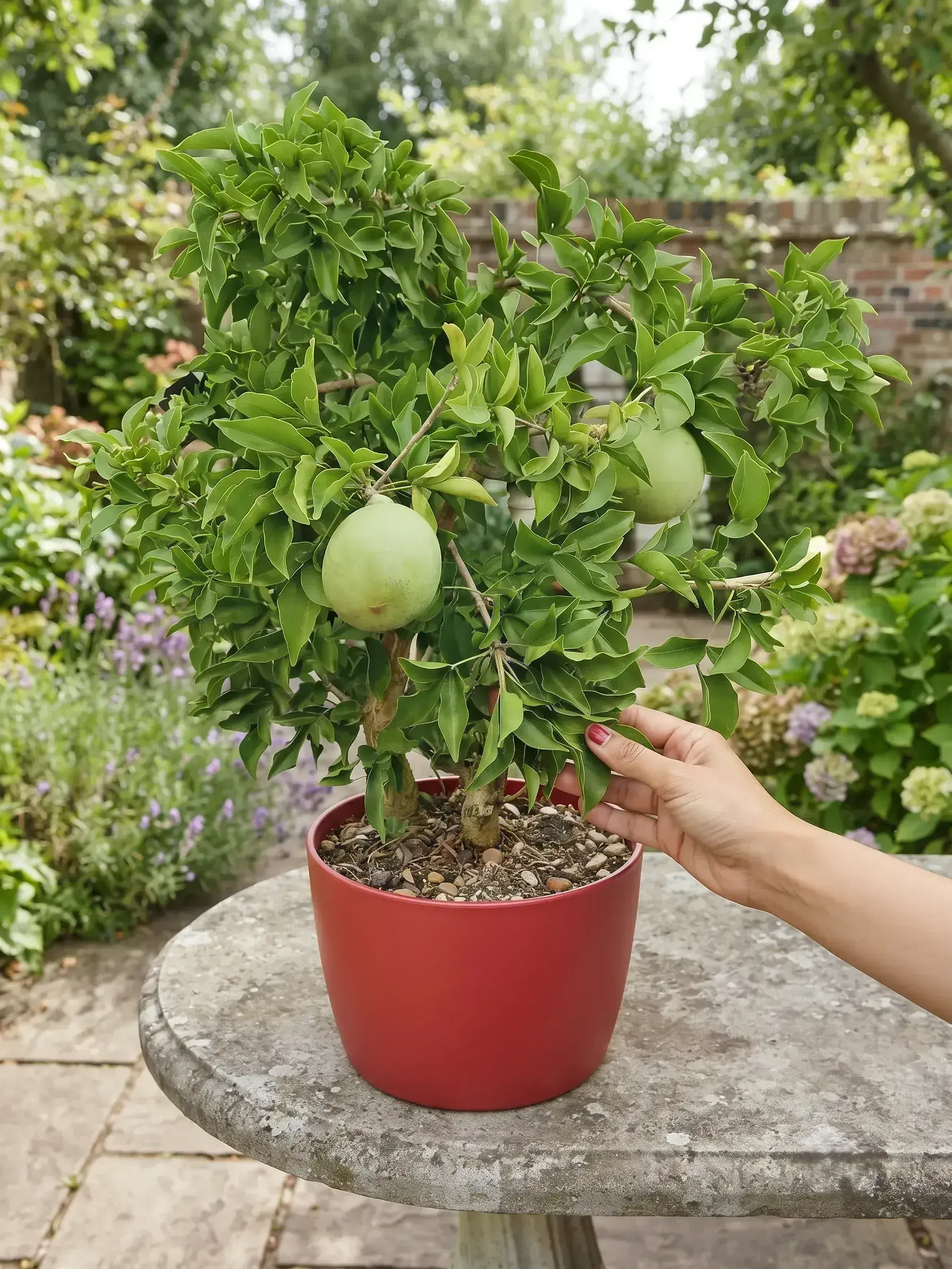


Bael Plant (Grafted) Bel Fruit Plant – 1.5kg–2kg Fruits for Home Garden
🌿 About the Plant
Bael, commonly called Bel, Bela or Bilva in India, is an important traditional fruit tree scientifically known as Aegle marmelos (L.) Corrêa. It belongs to the Rutaceae family, the same botanical family that includes citrus plants.
Kew’s Plants of the World Online recognises Aegle marmelos as the accepted scientific name and records its native range across the Indian subcontinent, including India, Bangladesh, Nepal, Pakistan and the West Himalaya. It is a tree associated primarily with tropical conditions.
Bael is valued for its distinctive hard-shelled fruit, fragrant pulp and long history in Indian horticulture and traditional food culture. The ripe fruit can be used to prepare bel sherbet, drinks, preserves, marmalade and other traditional preparations.
This product is offered as a grafted Bael plant. Vegetative propagation such as grafting and budding is important for maintaining selected bael planting material because seedling plants can vary considerably. ICAR-CIAH notes that seed propagation does not reliably maintain true-to-type characteristics and identifies budding and grafting among the vegetative propagation methods used for bael.
The product is marketed with an expected fruit size of approximately 1.5–2 kg. This size range is possible for some improved bael selections, but the exact fruit size of an individual plant depends on its cultivar, age, nutrition, climate and growing conditions.
🌱 Plant Characteristics
- Plant type: Fruit-bearing tree
- Botanical name: Aegle marmelos (L.) Corrêa
- Family: Rutaceae
- Common names: Bael, Bel, Bela, Bilva, Bengal quince, Indian bael
- Propagation: Grafted/vegetatively propagated plant
- Growth habit: Woody tree with a spreading canopy
- Leaves: Green, aromatic, usually divided into three leaflets
- Flowers: Small, greenish-white to pale flowers
- Fruit: Large, round to oval fruit with a hard shell and aromatic pulp
- Climate: Tropical and subtropical conditions
- Uses: Fresh pulp, beverages, sherbet, preserves and traditional food preparations
Kew records the species as a tree that can reach around 10 metres or so, sometimes with spines. Its fruit has a hard shell and orange-red fleshy pulp according to botanical descriptions.
A young grafted plant may look small when delivered, but it should not be treated as a permanently miniature tree.
🍈 Fruits
Bael is especially valued for its distinctive fruit.
The fruit generally develops a hard, woody shell that protects the edible pulp inside. Depending on the selection and maturity, the pulp can range from yellow to orange and has a characteristic aroma and sweet flavour when ripe.
Bael fruit is commonly used for:
- 🥤 Bel sherbet
- 🍹 Traditional fruit drinks
- 🍯 Preserves
- 🍊 Marmalade
- 🍬 Fruit-based preparations
- 🌿 Traditional food preparations
ICAR has developed and evaluated improved bael selections with substantially different fruit characteristics.
For example, ICAR-CIAH reports Thar Gauri with fruit weight of approximately 1.37–1.45 kg, while Thar Divya is reported with fruit weight of approximately 1.51 kg.
Therefore, a 1.5 kg class bael fruit is scientifically plausible for certain improved selections, but it should not be interpreted as a guaranteed minimum fruit weight for every plant sold as “Bael”.
The actual fruit size of your plant will depend on its genetic selection, maturity, nutrition, water supply and growing environment.
☀️ Sunlight Requirements
Bael performs well in bright sunlight and warm outdoor conditions.
For home cultivation:
- Choose an open location with good direct sunlight.
- Avoid heavy shade from buildings or large trees.
- Provide adequate sunlight throughout the growing season.
- Maintain enough open space around the canopy.
- Container-grown plants should also be kept outdoors in a bright sunny location.
Bael is known for its adaptability to relatively dry conditions, although adequate moisture is important during establishment and active growth.
ICAR-CIAH has developed several bael varieties specifically evaluated under arid and semi-arid conditions, demonstrating the crop’s suitability for challenging warm climates.
💧 Watering
Bael is more drought-tolerant than many common fruit trees once established, but young grafted plants should receive regular care.
Follow these practical steps:
- Check the soil moisture before watering.
- Water thoroughly when the upper soil begins to dry.
- Give enough water to moisten the root zone.
- Allow excess water to drain away.
- Increase watering during prolonged hot and dry weather.
- Reduce additional irrigation during periods of heavy monsoon rainfall.
- Avoid keeping the roots continuously waterlogged.
A young grafted plant needs more consistent moisture than an established tree.
In areas of India receiving heavy monsoon rainfall, make sure the planting site does not remain waterlogged for long periods.
🪴 Soil & Potting
Bael is adaptable to different soil conditions, but good drainage is important.
For a container-grown young Bael plant, a practical mixture can contain:
- Garden soil
- Well-decomposed compost
- Vermicompost
- Cocopeat
- Coarse sand or another drainage-supporting material
The growing medium should retain sufficient moisture while allowing excess water to escape.
Use a strong container with adequate drainage holes.
For permanent ground planting, choose a location with sufficient soil depth and drainage. Incorporating mature organic matter can improve soil structure where necessary.
TNAU’s nursery information for Aegle marmelos documents the species as a hardy tree and provides information on its nursery production and growing requirements.
🌱 Fertilizer & Nutrition
Bael benefits from balanced nutrition, particularly when grown for fruit production.
Suitable options include:
- Well-decomposed farmyard manure
- Compost
- Vermicompost
- A balanced fruit-tree fertilizer
- Potassium-containing fertilizer where appropriate
- Micronutrients where a genuine deficiency is identified
Apply organic manure around the root zone rather than directly against the trunk.
For commercial fertilizers, always follow the manufacturer’s recommended dosage.
Avoid excessive nitrogen fertilizer. Excessive vegetative growth does not automatically produce better fruiting.
For a grafted tree, good nutrition should be combined with sufficient sunlight, appropriate irrigation and suitable pruning.
🌼 Flowering & Fruit Development
Bael develops flowers before fruit formation. Fruit development can take a considerable period, and the exact time varies with cultivar and environmental conditions.
Factors affecting fruit development include:
- Plant age
- Grafted cultivar
- Climate
- Sunlight
- Water availability
- Nutrition
- Pruning
- Pollination and fruit retention
- General plant health
Some improved bael varieties developed by ICAR are described as precocious bearers, meaning they can begin bearing relatively early under suitable conditions.
For example, ICAR-CIAH reports that Goma Yashi begins bearing from the second year in in-situ patch-budded plants.
ICAR also reports Thar Srishti as a precocious-bearing bael variety that starts flowering and fruiting in the third year under the documented production conditions.
This demonstrates that grafted or budded bael can fruit earlier than mature seedling trees, but it does not establish a universal one-year fruiting guarantee for every nursery plant.
Fruiting is not guaranteed within one year after delivery. Early fruiting depends on the age and maturity of the graft, cultivar, climate, sunlight, nutrition, water management and growing conditions.
🏡 Home Garden Suitability
Grafted Bael is an interesting choice for gardeners who want a traditional Indian fruit tree with attractive foliage and distinctive fruit.
It can be grown in:
- 🏡 Home gardens
- 🌳 Backyards
- 🌱 Fruit gardens
- ☀️ Sunny outdoor spaces
- 🌾 Farm gardens
- 🌿 Traditional Indian gardens
- 🪴 Large containers while young
Bael is particularly suitable for warm parts of India and can tolerate relatively dry conditions after establishment.
It can also be an interesting choice for gardeners who want a fruit plant associated with India’s traditional food and cultural heritage.
🪴 Container / Terrace Gardening
A young grafted Bael plant can be maintained in a large container, particularly during its early years.
For terrace cultivation:
- Choose a large and sturdy container.
- Ensure several effective drainage holes.
- Use fertile, well-draining soil.
- Place the plant in strong sunlight.
- Water according to soil moisture.
- Feed moderately during active growth.
- Prune when necessary to maintain a suitable structure.
- Repot or refresh the growing medium when roots become crowded.
Bael is a tree, so long-term container cultivation requires more space and maintenance than ordinary small ornamental plants.
A container can restrict growth to some extent, but it does not guarantee permanent dwarf size.
For long-term fruit production and natural development, open-ground planting with adequate space is generally preferable.
✂️ Pruning & Maintenance
Pruning can help develop a balanced tree structure and maintain manageable growth in a home garden.
Useful practices include:
- Remove dead or damaged branches.
- Remove weak or poorly positioned shoots.
- Maintain a balanced canopy.
- Remove unwanted basal shoots.
- Remove shoots emerging below the graft union.
- Train the young tree to develop a suitable framework.
- Avoid unnecessary heavy pruning.
Because this is a grafted plant, inspect the graft union periodically.
If vigorous shoots appear below the graft union, remove them because they may originate from the rootstock rather than the desired grafted variety.
🌳 Space Requirement
Bael should be planted with its future size in mind.
Kew describes Aegle marmelos as a tree reaching around 10 m or so under suitable conditions.
Before planting, consider:
- Distance from your house
- Distance from boundary walls
- Canopy space
- Root-zone space
- Nearby electrical lines
- Future shade
- Access for pruning
- Space needed for harvesting
- Air circulation
Do not plant a young Bael tree directly beside a building simply because the nursery plant is currently small.
For a home garden, choose an open location where the tree can develop without becoming a problem later.
🌱 Special Cultivation Notes
Grafted Bael Plant
Grafting is particularly useful for selected bael planting material.
ICAR’s bael production technology explains that seedling progenies can be variable and are generally not true-to-type, while vegetative methods such as budding, grafting, layering and root suckers can be used to produce true-to-type planting material.
This makes a grafted plant a practical choice when the objective is to maintain characteristics associated with a selected mother plant.
After planting:
- Keep the graft union above the soil.
- Do not bury the graft joint.
- Remove shoots developing below the graft.
- Protect the young plant from physical damage.
- Support it if necessary in exposed locations.
About the 1.5–2 kg Fruit Claim
The product is marketed with an expected fruit size of approximately 1.5–2 kg.
This is within the range documented for some improved bael selections. ICAR reports:
- Thar Divya: approximately 1.51 kg fruit weight
- Thar Gauri: approximately 1.37–1.45 kg fruit weight
- Thar Srishti: approximately 1.55 kg fruit weight
However, the exact cultivar of the plant supplied under a generic “Grafted Bael” product name has not been specified. Therefore, the 1.5–2 kg figure should be considered an expected/marketed fruit-size range rather than a guaranteed minimum.
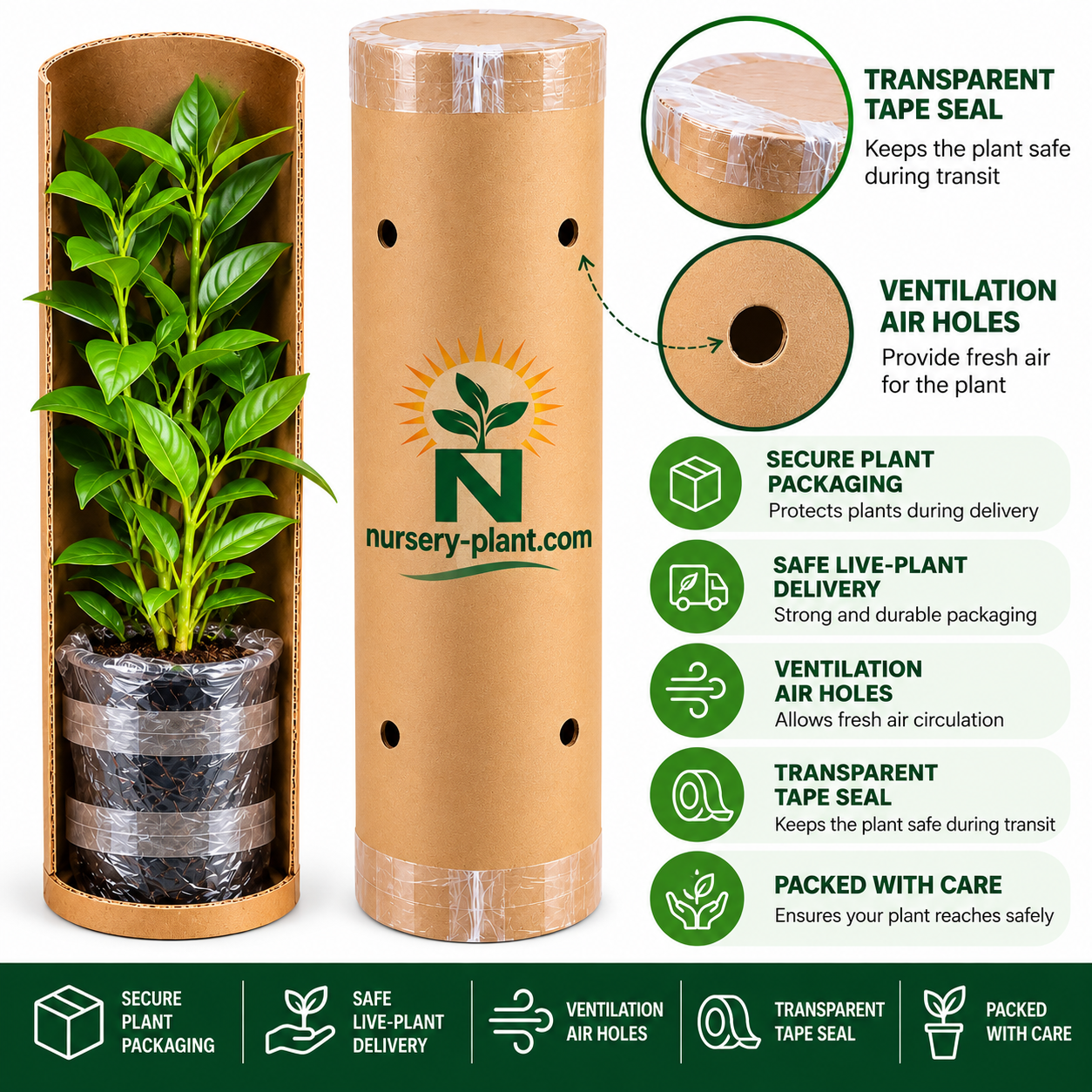
📦 Live Plant Delivery & Natural Variation
This is a live grafted plant, so natural variation in appearance is expected.
Depending on the season, plant age and transportation conditions, it may arrive with:
- Slight leaf yellowing
- Temporary drooping
- Minor leaf shedding
- Different height
- Different leaf size
- Different stem thickness
- Different branching
- Transportation stress
Changes in sunlight, temperature, humidity and watering during shipping can temporarily affect the appearance of a live plant.
The delivered plant may therefore not look exactly like the product photograph. Product photographs show the general plant and fruit characteristics, while individual plants naturally vary according to age and growth stage.
After delivery, place the plant in a suitable location and allow it to acclimatise.
⚠️ Important Note
The phrase “fruit came under 1 year” should not be interpreted as a guaranteed fruiting period.
Grafted or budded Bael plants can fruit earlier than seedling trees, and ICAR has documented early-bearing bael selections. However, the timing depends on the specific cultivar, age of the grafted plant, maturity of the planting material and growing conditions.
Similarly, 1.5–2 kg is not a guaranteed fruit weight for every fruit. ICAR has documented improved selections with fruit weights around this range, but different bael varieties can produce substantially different fruit sizes.
🌱 Why Choose This Plant?
- 🍈 Traditional Indian Bael fruit plant
- 🌱 Grafted planting material
- 🇮🇳 Well suited to Indian home gardens
- ☀️ Performs well in sunny locations
- 🌳 Hardy fruit tree once established
- 🍹 Fruit suitable for traditional sherbet and food preparations
- 🏡 Suitable for spacious home gardens
- 🪴 Can be maintained in a large container while young
- 🍈 Some improved selections can produce large fruits
- 🌿 Interesting addition to a traditional fruit garden
🌿 Botanical Information
- Botanical Name: Aegle marmelos (L.) Corrêa
- Family: Rutaceae
- Common Names: Bael, Bel, Bela, Bilva, Bengal quince, Indian bael
- Variety/Cultivar: Grafted Bael; exact cultivar not specified
- Plant Type: Fruit-bearing woody tree
- Propagation: Grafted/vegetatively propagated
- Growth Habit: Spreading tree, sometimes with spines
- Flower: Small, pale greenish-white flowers
- Fruit: Large, hard-shelled fruit containing aromatic edible pulp
- Native Range: Indian subcontinent
- Suitable Growing Conditions: Warm tropical and subtropical conditions, good sunlight, adequate moisture during establishment and well-drained soil
🔗 Botanical Information & Further Reading
For accepted botanical name, family, native distribution, morphology and scientific classification, see Kew – Plants of the World Online: Aegle marmelos.
For Indian Bael varieties, fruit weight, yield and improved selections, see ICAR – Landmark Varieties.
For detailed information on Bael varieties including Thar Gauri, Thar Bhavya and other selections, see ICAR-Central Institute for Arid Horticulture.
For Bael production technology, grafting, budding and true-to-type vegetative propagation, see the ICAR-CIAH Bael Production Technology technical bulletin.
For information about Goma Yashi Bael and its adoption in Indian cultivation, see ICAR’s farmer-success documentation.
For Bael nursery production, botanical characteristics and traditional uses, see the Tamil Nadu Agricultural University AgriTech Portal.
For a general, customer-friendly overview of Bael, its names, fruit and traditional uses, see Wikipedia – Aegle marmelos.
For More Information Visit: Nursery-Plant.Com
For Contact Visit:Contact Us
For Shopping Visit: Shop Page


Reviews
There are no reviews yet.