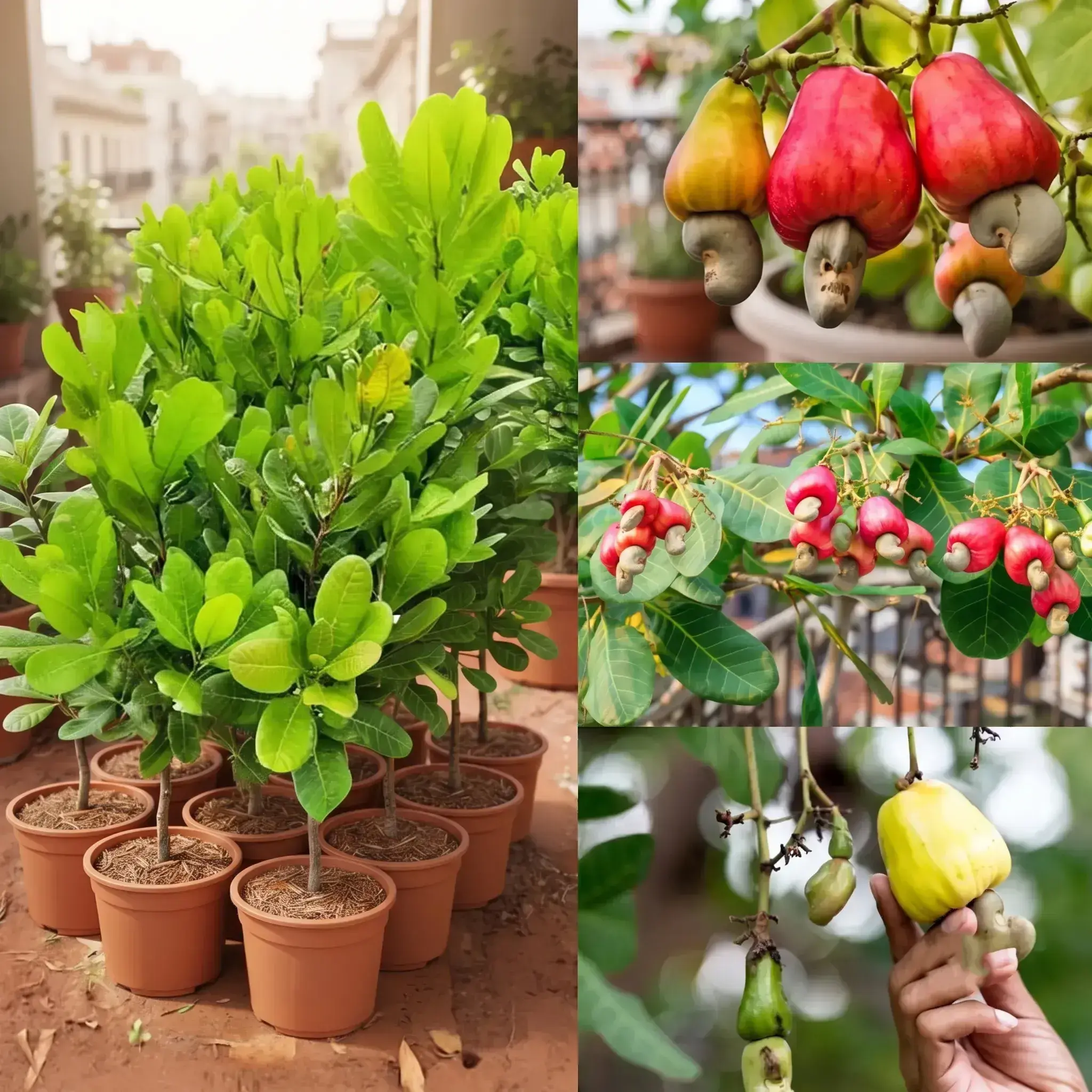
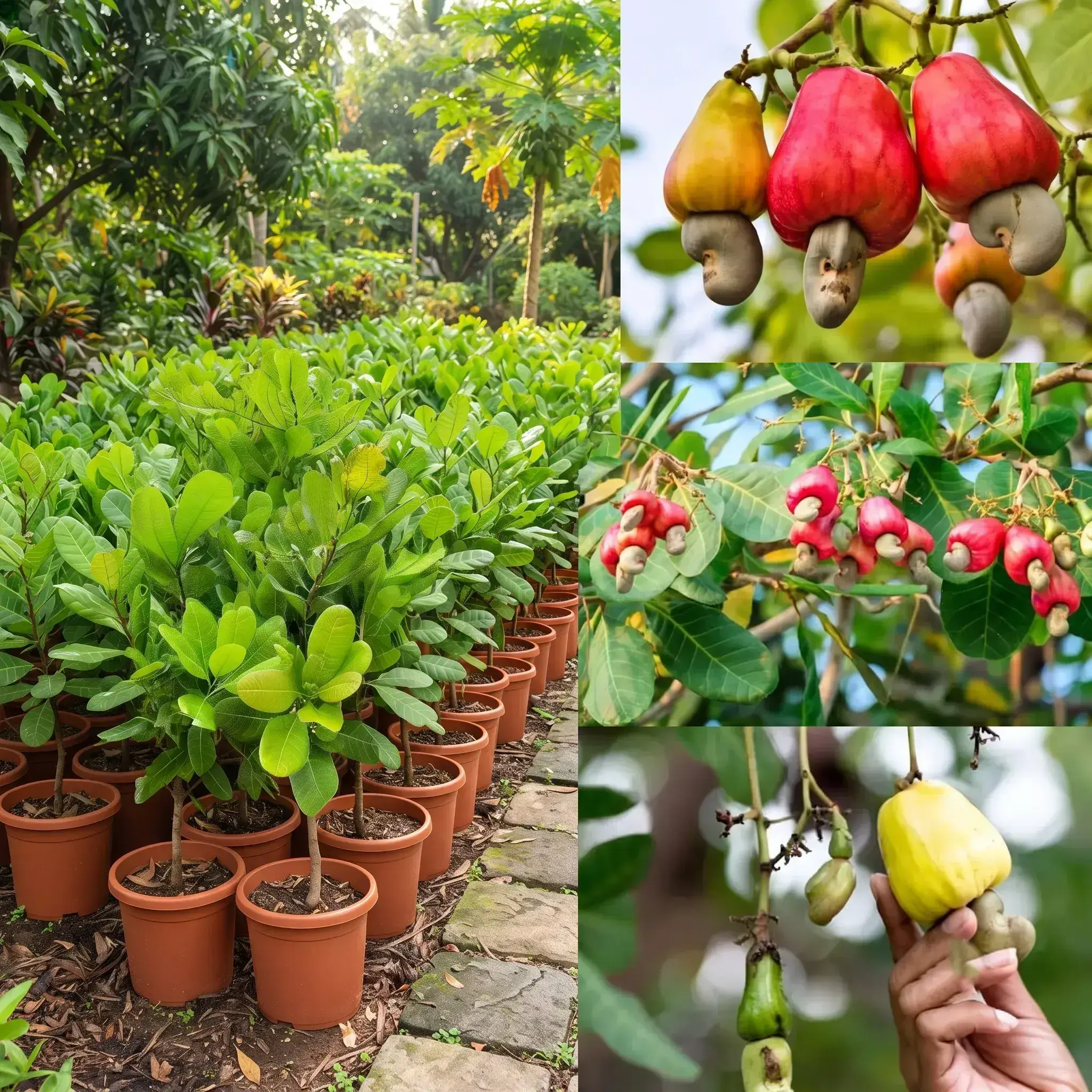
Kaju Cashew Nut Fruit Plant (Anacardium occidentale) – Healthy Tropical Tree
🌱 About the Kaju Cashew Plant
The Kaju Cashew Nut Plant, botanically known as Anacardium occidentale L., is a popular tropical fruit and nut-bearing tree grown for its cashew nuts and cashew apples.
Cashew belongs to the Anacardiaceae family. Kew’s Plants of the World Online recognizes Anacardium occidentale as the accepted botanical name. The species is native to tropical South America and is now widely cultivated in tropical regions, including India.
This live plant is a useful choice for gardeners, fruit enthusiasts and farmers looking to establish a cashew tree in a suitable warm climate.
🥜 Cashew Nut & Cashew Apple
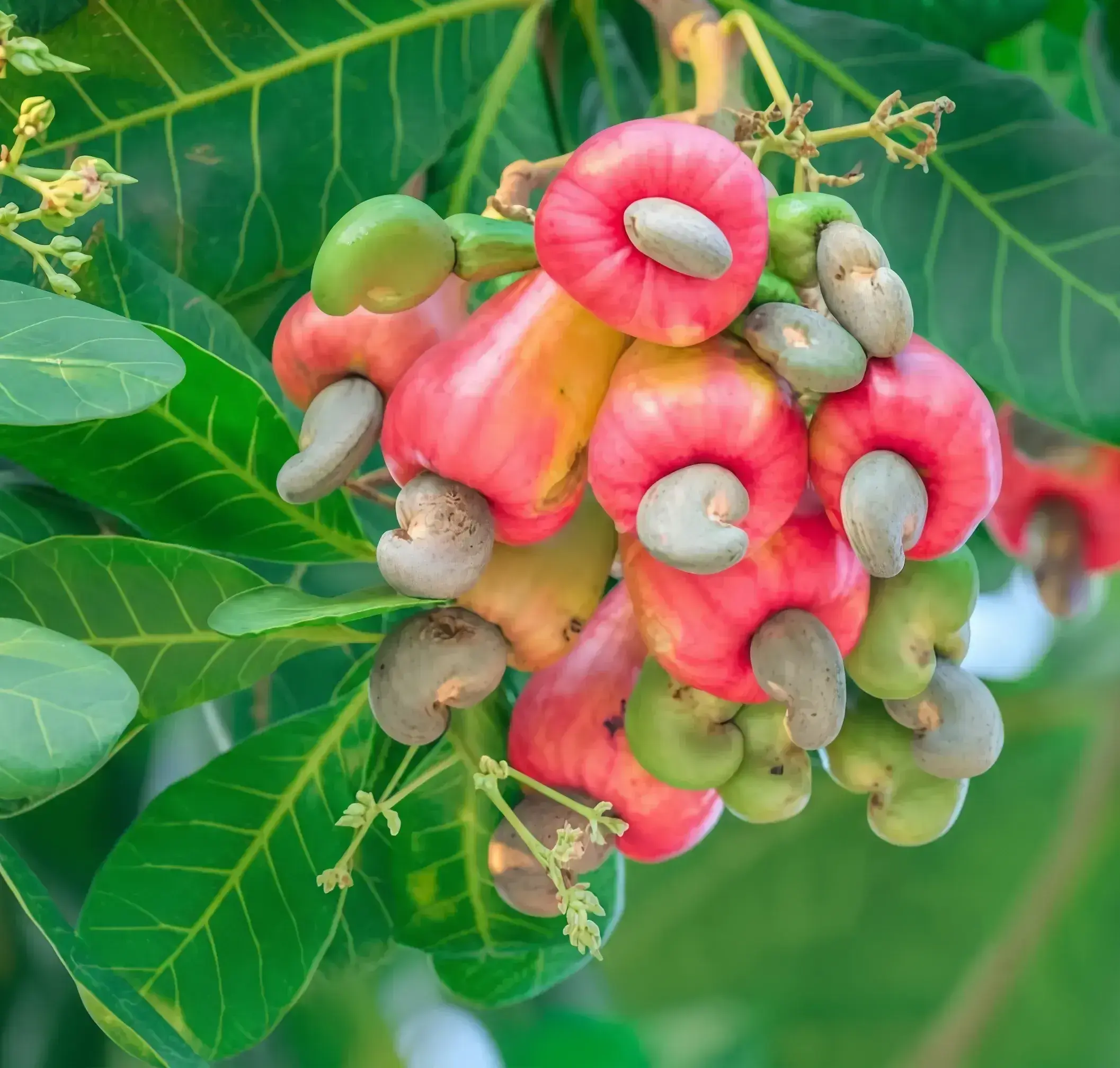
The cashew tree is unusual because the familiar cashew nut develops attached to the bottom of the fleshy cashew apple.
The edible cashew nut is actually the seed contained inside the hard shell, while the swollen fleshy part is known as the cashew apple. Kew describes the fruit as a kidney-shaped drupe borne on a fleshy, swollen fruit stalk.
When mature, the cashew apple can develop yellow, orange or reddish colouring, depending on the plant and growing conditions.
🌿 Attractive Tropical Tree
Cashew is an evergreen tropical tree with:
- 🍃 Broad, leathery green leaves
- 🌱 Strong branching growth
- 🌼 Small flowers arranged in terminal clusters
- 🍎 Fleshy cashew apples
- 🥜 Valuable cashew nuts
- 🌳 A spreading tree form
Kew records cashew as a tree that commonly grows in seasonally dry tropical environments and is widely cultivated in tropical countries.
☀️ Sunlight Requirements
Cashew is a sun-loving tropical fruit tree and performs best in an open location with plenty of sunlight.
For home cultivation:
- Provide full sunlight whenever possible.
- Choose an open garden location with good air circulation.
- Avoid deep shade.
- Young plants should be gradually acclimatised when moved from nursery shade to strong outdoor sunlight.
- Good sunlight is particularly important when growing the plant for flowering and fruit production.
💧 Watering
Water regularly while the young plant is becoming established.
A simple routine:
- Check the soil before watering.
- Water deeply when the soil begins to dry.
- Allow excess water to drain away.
- Avoid continuously saturated soil.
- Provide additional water during prolonged hot and dry periods.
- Once established outdoors, avoid excessive irrigation where natural rainfall is sufficient.
Cashew is relatively adaptable, but good drainage is important, particularly in areas receiving heavy rainfall.
🪴 Soil Requirements
Cashew can grow in different soil types, but well-drained soil is particularly important.
Recent ICAR information notes that cashew performs well in well-drained brown forest soils, red sandy loam and light coastal soils, with an ideal soil pH around 5.5–7.5.
For home gardening, use soil that is:
- Well drained
- Moderately fertile
- Rich in organic matter
- Free from prolonged waterlogging
Avoid planting cashew in locations where water remains stagnant around the roots.
🌱 Fertilizer & Nutrition
A young cashew plant benefits from balanced nutrition during active growth.
You can provide:
- Compost
- Well-decomposed organic manure
- Vermicompost
- Balanced fruit-tree fertilizer
- Micronutrients when required
For commercial farming, fertilizer programs should be based on soil conditions, tree age and local agricultural recommendations rather than applying the same quantity to every plant.
🌳 Space & Garden Location
Cashew eventually develops into a tree with a wide-spreading canopy, so choose its location carefully.
For ground planting:
- Select an open sunny area.
- Keep adequate distance from buildings.
- Avoid planting directly beside walls or narrow pathways.
- Provide sufficient room for the canopy to expand.
- Maintain appropriate spacing between multiple trees.
Kew sources describe cashew trees reaching several metres in height, with some documented forms growing around 10–12 metres or more under suitable conditions.
🏡 Can Cashew Be Grown at Home?
Yes. A young cashew plant can be grown in a home garden or large container, particularly during its early growth stage.
For long-term fruit production, however, ground planting is generally more practical because cashew develops into a substantial tree.
Suitable locations include:
🌳 Backyard Garden:
Excellent when adequate space and sunlight are available.
🌱 Farm or Orchard:
Suitable for tropical and subtropical regions where the local climate supports commercial cashew cultivation.
🏡 Large Home Garden:
A good option for gardeners interested in growing their own tropical fruit and nut trees.
🪴 Large Container:
Possible for young plants, but the container must be large enough and have excellent drainage.
🌼 Flowering & Fruit Development
Cashew produces flowers in clusters, followed by the development of the characteristic cashew apple and attached nut.
A young nursery plant may require time to become established before flowering and fruiting.
Fruit production depends on:
- Plant age
- Variety or cultivar
- Climate
- Sunlight
- Soil
- Water management
- Nutrition
- Pollination
- General tree health
Therefore, fruiting is not guaranteed immediately after purchase.
🌱 Cashew for Farming
Cashew is an important tropical nut crop and is cultivated commercially in several parts of India.
For commercial planting, farmers should select locally recommended varieties, use appropriate spacing and follow regional agricultural recommendations.
ICAR’s recent farmer advisory lists recommended cashew varieties including Vengurla-4, Netra Jambu-1, Bhaskar, Ullal-1, Ullal-2, Ullal-3, Chintamani-1 and Chintamani-2, with recommended planting windows and spacing varying by type.
This product should not be assumed to be one of those specific released varieties unless the nursery label explicitly identifies it.
🌿 Pruning & Maintenance
Young cashew plants can benefit from formative pruning to develop a strong structure.
Remove:
- Dead branches
- Broken branches
- Weak shoots
- Unwanted basal growth
- Crossing branches
For grafted plants, if applicable, remove unwanted shoots emerging below the graft union so that rootstock growth does not compete with the desired plant.
🌧️ Rain & Drainage
Cashew can tolerate a range of tropical conditions, but poor drainage can create problems.
In areas with heavy monsoon rainfall:
- Avoid low-lying waterlogged locations.
- Maintain good soil drainage.
- Use appropriate raised planting areas where necessary.
- Mulch around the plant while keeping mulch away from direct contact with the trunk.
- Follow local soil and moisture conservation practices for orchard cultivation.
ICAR notes that soil and moisture conservation can be particularly important for cashew grown in areas exposed to heavy rainfall and soil erosion.
🥜 Important Cashew Nut Safety Note
The raw cashew nut inside its hard shell should not be eaten directly. Proper commercial processing and roasting are required before cashew kernels are normally consumed.
The cashew plant also belongs to the Anacardiaceae family, which includes several plants capable of causing skin reactions in susceptible individuals. Handle plant material carefully if you have known sensitivities.
📦 Live Plant Delivery & Natural Variation
This is a live plant, so its appearance can naturally differ from the product photograph.
You may notice:
- Slight differences in plant height
- Variation in leaf size
- Different numbers of leaves
- Minor leaf yellowing
- Temporary leaf drooping
- Differences in stem thickness
- Small differences in branching
Transportation can temporarily stress a live plant because of changes in light, temperature, humidity and watering.
After receiving the plant, place it in a suitable bright location and allow it to gradually acclimatise.
🌱 Why Choose a Kaju Cashew Plant?
- 🥜 Popular tropical nut-bearing tree
- 🍎 Produces cashew apples as well as nuts
- 🌿 Attractive evergreen foliage
- ☀️ Excellent choice for sunny tropical gardens
- 🌳 Suitable for home gardens and farms
- 🏡 Can be established in a home fruit garden
- 🌱 Interesting plant for fruit-tree collections
- 🇮🇳 Well suited to suitable Indian tropical growing regions
🌿 Botanical Information
- Botanical Name: Anacardium occidentale L.
- Family: Anacardiaceae
- Common Names: Cashew, Cashew Nut, Kaju, Cashew Tree
- Plant Type: Tropical evergreen fruit/nut tree
- Main Products: Cashew nut and cashew apple
- Native Range: Tropical South America
- Cultivated Range: Widely cultivated in tropical regions, including India
🔗 Botanical Information & Further Reading
For the accepted scientific name, family and distribution of cashew, see Kew – Plants of the World Online: Anacardium occidentale.
For detailed botanical descriptions of the flowers, fruit, leaves and cashew apple, see Kew – Anacardium occidentale General Information.
For information on the Anacardium genus and its tropical distribution, see Kew – Anacardium.
For recent Indian information on cashew varieties, planting and cultivation, see ICAR – Indian Farming.
For current farmer-oriented recommendations on cashew varieties and planting practices, see ICAR – Kharif Agro-Advisories.
For soil and moisture-management information relevant to cashew cultivation, see ICAR – Soil & Moisture Conservation.
For More Information Visit: Nursery-Plant.Com
For Contact Visit:Contact Us
For Shopping Visit: Shop Page


Reviews
There are no reviews yet.