Black Jade Snake Plant – Dracaena trifasciata for Home & Garden
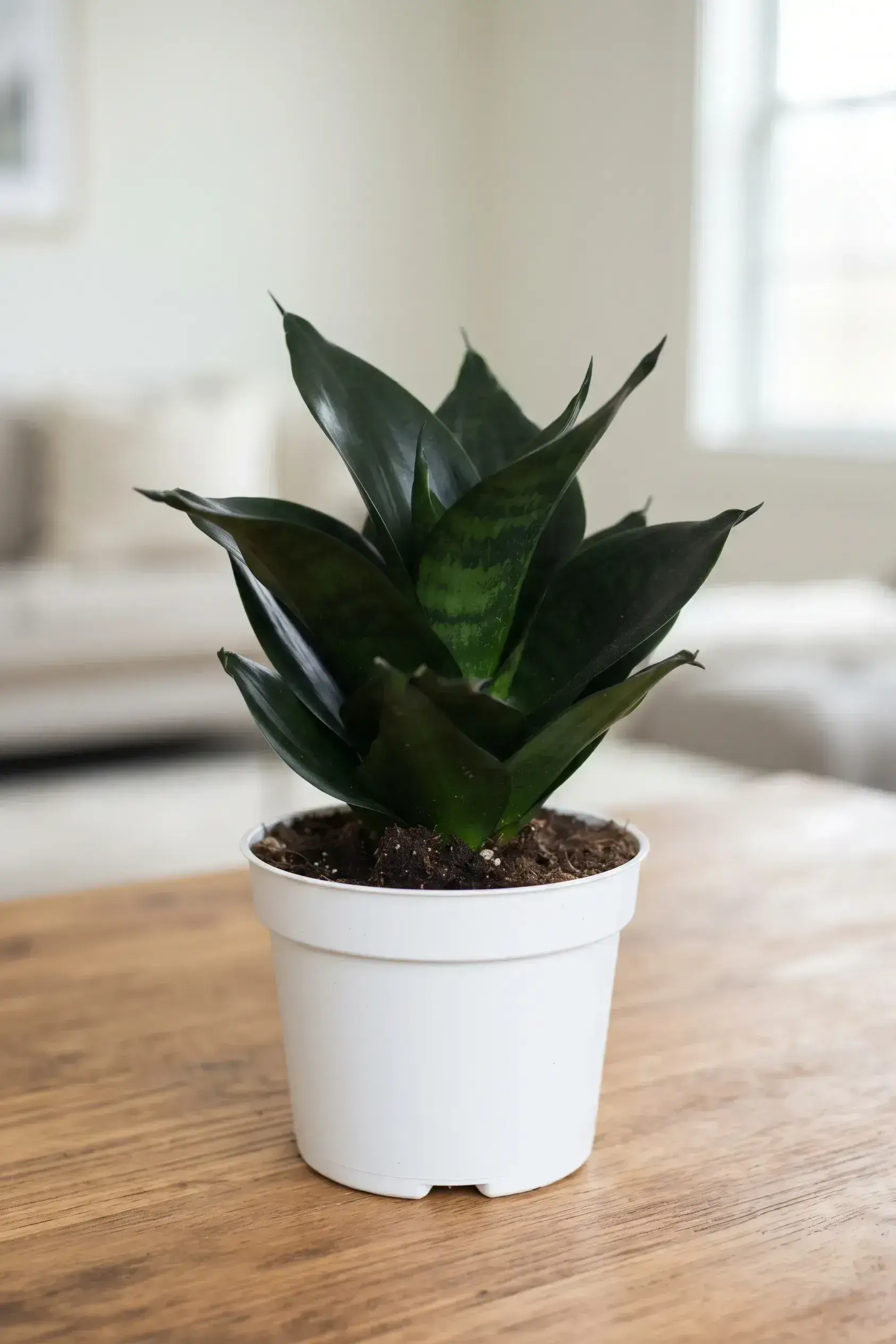
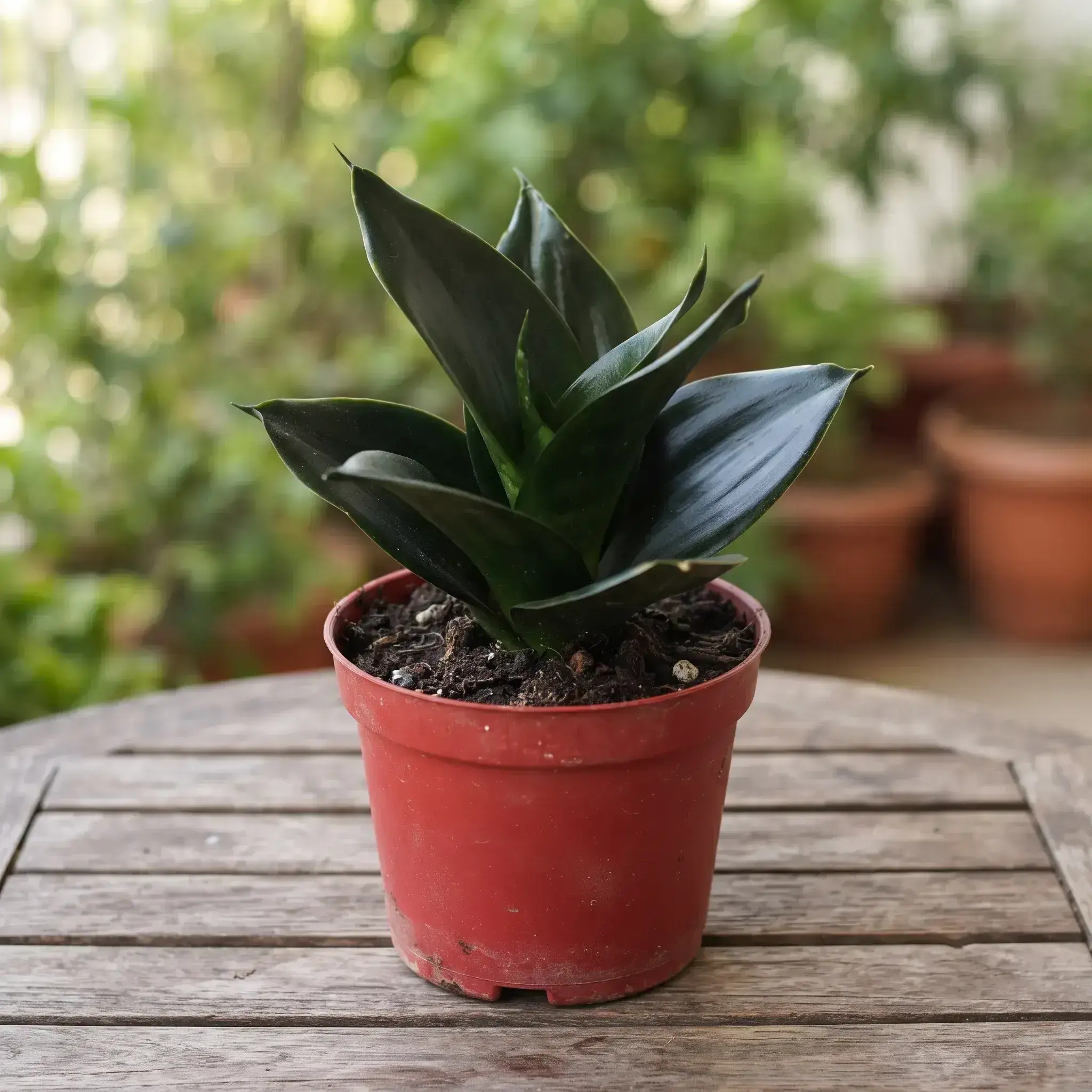
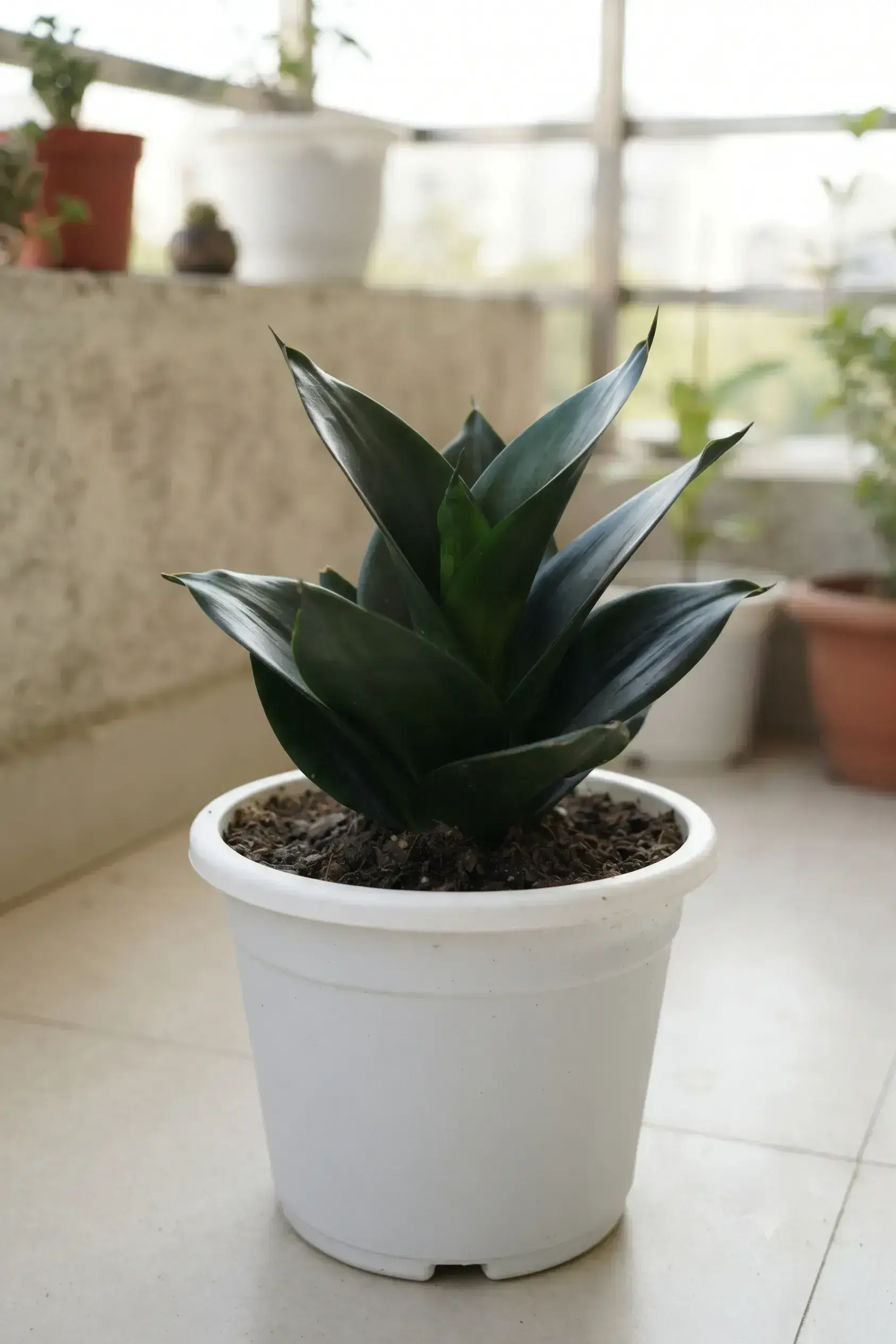
The Snake Plant Also Known As Black Jade Snake Plant (Dracaena Trifasciata), a popular ornamental foliage plant admired for its deep-green, upright, sword-shaped leaves.
Commonly known as Snake Plant or Mother-in-Law’s Tongue, this hardy tropical plant is valued for its attractive appearance, low watering requirements and ability to adapt to different light conditions. Its upright growth makes it suitable for decorative pots, balconies, patios, office spaces and home gardens.
The botanical name is Dracaena trifasciata, previously known as Sansevieria trifasciata. The Black Jade name is used in the nursery trade for dark-green forms of Snake Plant. The exact cultivar should be confirmed before assigning a formal cultivar name.
Plant Highlights
- Common Name: Black Jade Snake Plant, Snake Plant, Mother-in-Law’s Tongue
- Botanical Name: Dracaena trifasciata
- Former Botanical Name: Sansevieria trifasciata
- Family: Asparagaceae
- Plant Type: Evergreen succulent perennial
- Foliage Colour: Deep green to dark green
- Leaf Shape: Upright, sword-shaped leaves
- Growth Habit: Erect and clump-forming
- Light Requirement: Bright indirect light to partial shade
- Water Requirement: Low to moderate
- Best For: Home, office, balconies, patios and garden containers
About the Black Jade Snake Plant
The Snake Plant is native to tropical West and West-Central Africa. It is widely grown around the world as an ornamental foliage plant.
Black Jade Snake Plant is appreciated for its dark-green leaves and strong upright appearance. Its thick, fleshy leaves store moisture, allowing the plant to tolerate periods of dry soil.
The plant grows from underground rhizomes, which gradually produce new shoots around the base. Over time, these shoots develop into a fuller clump.
Appearance and Growth
The Black Jade Snake Plant has stiff, upright, sword-like leaves with pointed tips. Its dark-green foliage creates a neat, architectural appearance that works well in modern home and garden decoration.
Depending on the plant’s age and growing conditions, the leaves can become tall and form a dense cluster. New shoots may appear around the mother plant, gradually increasing the size of the clump.
Its upright growth habit makes it suitable for narrow spaces and decorative floor pots.
Sunlight Requirements
Snake Plants are adaptable and can grow in different light conditions. However, bright indirect light generally supports healthier growth.
- Bright indirect sunlight is ideal for indoor growing.
- Partial shade is suitable for outdoor locations.
- A little gentle morning sunlight can be beneficial.
- Avoid sudden exposure to strong afternoon sunlight.
- Plants kept in very low light may grow more slowly.
For Indian homes, a bright room near a window or a shaded balcony can be a suitable location.
Watering Requirements
The Black Jade Snake Plant requires less water than many other common ornamental plants because its thick leaves store moisture.
- Allow the potting soil to dry completely before watering again.
- Water thoroughly when the soil is dry.
- Allow excess water to drain from the pot.
- Never leave the plant standing in water.
- Reduce watering during cooler or low-light periods.
During the Indian monsoon, be especially careful with watering. Frequent rainfall and wet soil can cause root and rhizome rot.
Important: Overwatering is one of the most common reasons Snake Plants develop soft leaves and root problems.
Soil and Potting Mix
Snake Plants need a loose, well-draining potting mix. Their roots and rhizomes do not tolerate prolonged waterlogging.
A suitable potting mixture can include:
- Garden soil for structure
- Coarse sand for drainage
- Perlite or pumice for better aeration
- A small amount of compost for nutrients
A cactus or succulent potting mix can also be suitable.
Choose a pot with drainage holes. A moderately snug pot is generally preferable to an excessively large container.
Temperature and Humidity
The Black Jade Snake Plant prefers warm conditions and adapts well to normal indoor humidity.
- Protect it from prolonged cold exposure.
- Keep it away from cold air-conditioning airflow.
- Avoid sudden temperature changes.
- Normal household humidity is generally suitable.
- Provide good ventilation when growing outdoors.
It is well suited to warm Indian climates, provided the soil does not remain excessively wet.
Fertilizer and Plant Nutrition
Snake Plants are slow-growing and do not require heavy feeding.
- Add a small quantity of compost during the growing season.
- Use a diluted balanced fertilizer if needed.
- Follow the fertilizer manufacturer’s recommended dosage.
- Avoid excessive fertilizer application.
- Reduce feeding during periods of slow growth.
Too much fertilizer can damage roots and cause leaf problems.
Growing Black Jade Snake Plant in Pots
This plant is particularly suitable for container gardening because of its upright growth and relatively small space requirements.
- Select a pot with drainage holes.
- Use a well-draining succulent potting mix.
- Choose a stable container for taller plants.
- Place it in bright indirect light or partial shade.
- Allow the soil to dry between watering.
- Repot when the roots and rhizomes become crowded.
Terracotta pots can be useful because they allow the potting mix to dry more quickly.
Growing Snake Plant in Home Gardens
Black Jade Snake Plant can be grown outdoors in suitable warm conditions. It is attractive in garden borders, shaded corners and decorative containers.
Popular uses include:
- Balcony and terrace gardens
- Entrance decoration
- Outdoor plant arrangements
- Office and reception areas
- Covered patios
- Decorative garden pots
- Indoor plant collections
Avoid planting it in locations that remain waterlogged during heavy monsoon rainfall.
Pruning and Maintenance
Snake Plants require very little pruning.
- Remove damaged or yellow leaves near the soil surface.
- Use clean, sharp pruning tools.
- Remove dry plant debris around the base.
- Avoid cutting healthy leaves unnecessarily.
- Handle the pointed leaf tips carefully.
If the plant becomes overcrowded, it can be divided during repotting.
Propagation
Black Jade Snake Plant can be propagated through rhizome division and leaf cuttings.
Propagation through division:
- Remove the established plant carefully from its pot.
- Identify the natural divisions and underground rhizomes.
- Separate a section with healthy roots and at least one growing shoot.
- Plant the division in a suitable well-draining potting mix.
- Keep it in bright indirect light.
- Water lightly and allow the soil to dry between watering.
Propagation through leaf cuttings:
Healthy leaves can also be cut into sections and rooted in a suitable propagation medium. However, leaf cuttings from variegated cultivars may not retain the original leaf pattern. Division is generally a better choice when preserving the appearance of the parent plant is important.
Common Problems and Solutions
Yellow Leaves: Often caused by overwatering or poor drainage. Allow the soil to dry and check the roots.
Soft or Mushy Leaves: May indicate root or rhizome rot due to excessive moisture. Remove affected parts and correct the watering routine.
Brown Leaf Tips: Can occur because of environmental stress, physical damage or watering problems. Review the growing conditions.
Slow Growth: Snake Plants naturally grow slowly, especially in low light. Provide brighter indirect light if growth is unusually weak.
Leaning Leaves: May occur when the plant receives uneven light or becomes unstable in its pot. Rotate the pot occasionally and use a stable container.
Mealybugs: Inspect leaf bases and undersides. Remove small infestations carefully and use an appropriate plant-safe treatment if necessary.
Is Black Jade Snake Plant Suitable for Home and Office?
Yes. The Black Jade Snake Plant is a popular choice for home and office decoration because of its upright shape, attractive dark-green foliage and low watering requirements.
It can adapt to indoor light conditions and is suitable for decorative floor pots, shelves and bright corners. It can also be grown outdoors in shaded or partially sunny areas.
Although it tolerates low light, brighter indirect light generally supports better growth.
Safety and Toxicity
Snake Plant contains saponins and is considered toxic if eaten. Chewing or swallowing the leaves may cause nausea, vomiting, diarrhoea and other digestive discomfort.
- Keep the plant away from small children and pets.
- Do not allow cats or dogs to chew the leaves.
- Handle pointed leaf tips carefully.
- Wash your hands after handling damaged plant material.
- Seek medical or veterinary advice if any part is swallowed.
Live Plant Delivery Information
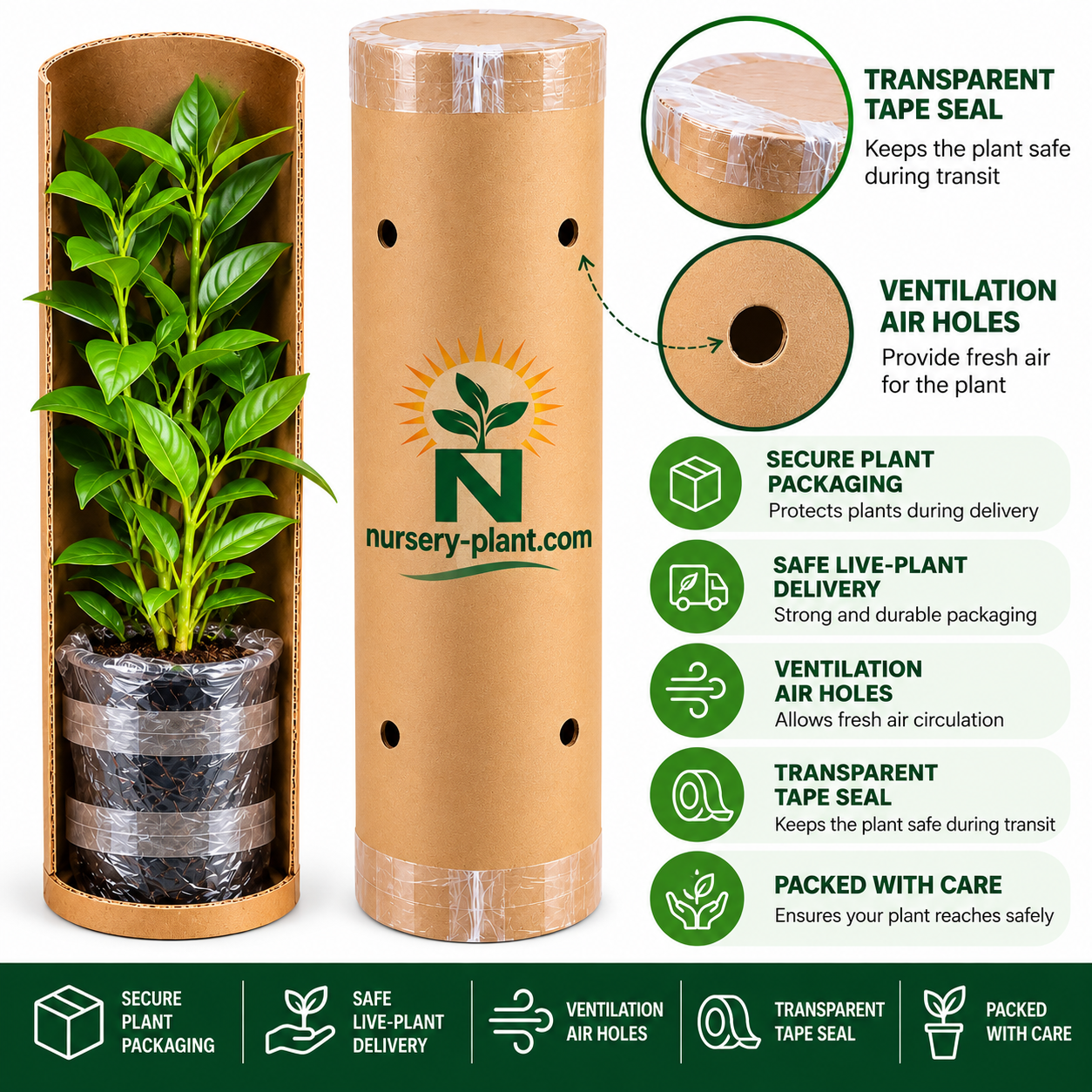
Live plants are natural products, so the delivered plant may have slight differences in height, leaf width, colour and overall shape compared with photographs.
Some temporary leaf movement or stress can occur during transportation. After delivery, place the plant in a bright location with indirect light and allow it to adjust. Check the soil before watering, and avoid immediate repotting or heavy fertilizing.
Why Choose a Black Jade Snake Plant?
- Attractive deep-green upright foliage
- Suitable for indoor and outdoor decoration
- Low watering requirements
- Adaptable to different light conditions
- Compact footprint for pots and smaller spaces
- Suitable for home, office and balcony gardens
- Easy to maintain with basic care
- Can be propagated through division
Botanical Information & Further Reading
Learn more about Snake Plant identification, cultivation and care:
- Kew Gardens – Snake Plant (Dracaena trifasciata)
- North Carolina State University – Dracaena trifasciata
- Royal Horticultural Society – Snake Plant
- University of Georgia Extension – Snake Plant Care
- Penn State Extension – Snake Plant: A Forgiving, Low-Maintenance Houseplant
- National Parks Board Singapore – Dracaena trifasciata
Frequently Asked Questions
1. What is the botanical name of the Black Jade Snake Plant?
The botanical name is Dracaena trifasciata. It was formerly classified as Sansevieria trifasciata.
2. Is Black Jade Snake Plant an indoor plant?
Yes. It is commonly grown indoors and can adapt to different light conditions. Bright indirect light is preferable for healthy growth.
3. Does Black Jade Snake Plant need direct sunlight?
No. It does not require strong direct sunlight. Bright indirect light or partial shade is generally suitable.
4. How often should I water a Snake Plant?
Allow the potting mix to dry completely before watering again. Watering frequency depends on temperature, pot size, light and soil conditions.
5. Can I grow Black Jade Snake Plant in a pot?
Yes. It grows very well in containers. Use a pot with drainage holes and a well-draining succulent potting mix.
6. Can Snake Plants grow in West Bengal?
Yes. They can grow in many parts of West Bengal. Protect them from excessive monsoon moisture and avoid waterlogged soil.
7. Does Black Jade Snake Plant produce flowers?
Yes, mature plants can occasionally produce small, greenish-white or cream-coloured fragrant flowers on a flower stalk. Indoor flowering is uncommon.
8. How can I propagate Black Jade Snake Plant?
It can be propagated through rhizome division or leaf cuttings. Division is generally preferred for maintaining the characteristics of the parent plant.
9. Why are my Snake Plant leaves becoming soft?
Soft leaves may indicate overwatering and root rot. Check the soil and roots, remove damaged parts and allow the potting mix to dry properly.
10. Is Black Jade Snake Plant safe for pets?
No. Snake Plant contains saponins and can cause digestive problems if chewed or swallowed by cats and dogs. Keep it out of their reach.
11. Does Black Jade Snake Plant grow quickly?
No. It is generally a slow-to-moderate-growing plant. New shoots develop from underground rhizomes.
12. What is the difference between Black Jade and other Snake Plants?
Black Jade is a nursery trade name associated with darker-green Snake Plant foliage. Other varieties may have yellow margins, silver patterns or different leaf shapes. Confirm the exact cultivar with the supplier if a specific appearance is required.
For More Information
Visit: Nursery-Plant.Com
For Contact Visit:Contact Us
For Shopping Visit: Shop Page


Reviews
There are no reviews yet.