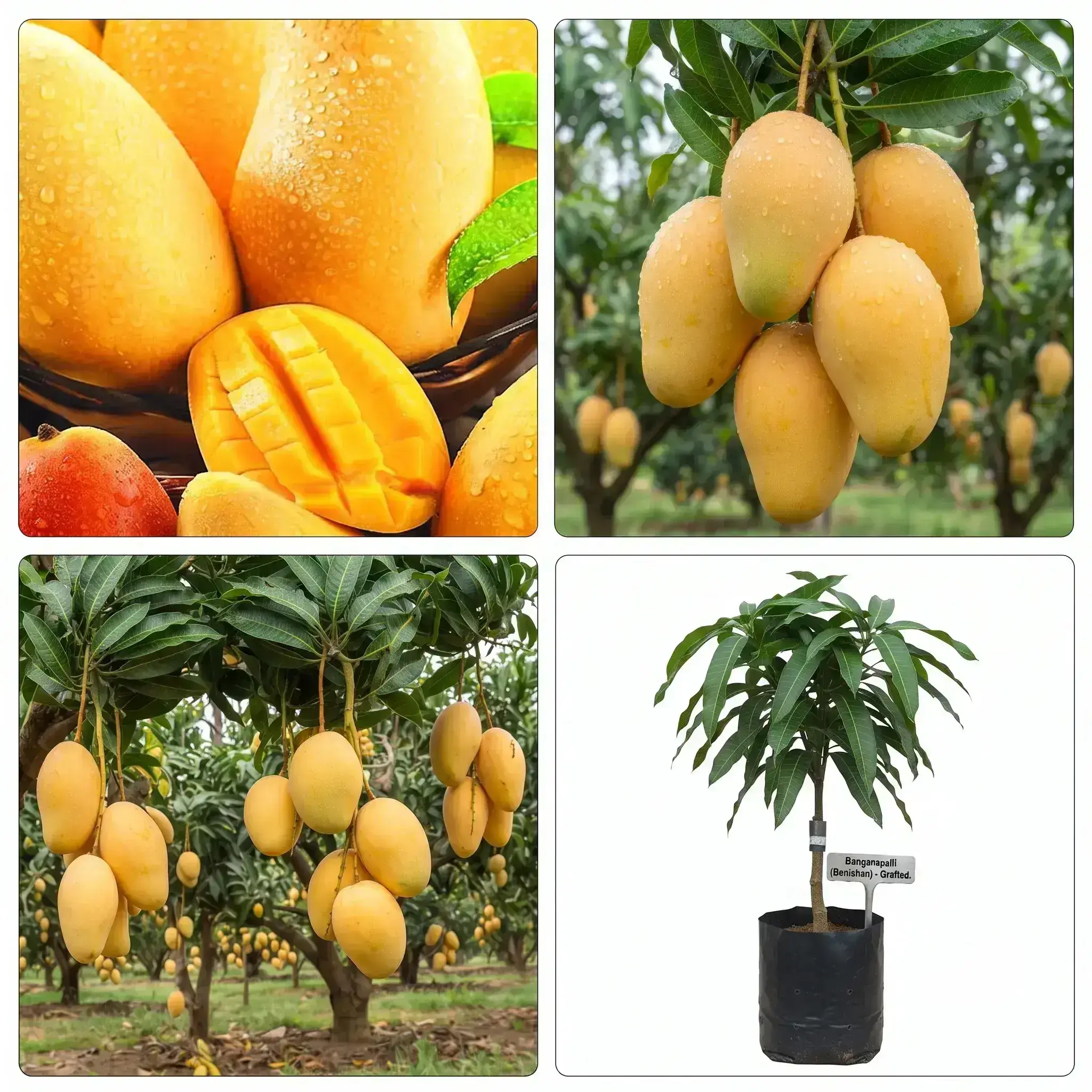

Banganapalli Mango Grafted Healthy Plant | Benishan Mango Live Grafted Fruit Tree for Home Garden
🌿 About the Plant
The Banganapalli Mango Plant, also widely known as Benishan, Baneshan, Safeda or Chapta, is a popular Indian mango cultivar grown for its attractive, large fruits and good eating and keeping qualities.
Its botanical species is Mangifera indica L., belonging to the Anacardiaceae family. Kew recognises Mangifera indica as an accepted species and records its native range from Assam through southern China, with the species now widely cultivated across tropical regions.
Banganapalli is documented as a commercial mango variety associated particularly with Andhra Pradesh and Tamil Nadu. Tamil Nadu Agricultural University lists Banganapalli under commercial mango varieties and gives Chapta, Safeda, Baneshan and Chapai as synonyms/common names.
This product is supplied as a grafted mango plant. Grafting is particularly useful for maintaining the characteristics of a selected mango cultivar, rather than relying on the variable characteristics of a seed-grown plant.
The Banganapalli mango is valued primarily as a fresh-eating fruit, while its fruit quality and keeping characteristics also make the cultivar useful for commercial cultivation and processing.
🌱 Plant Characteristics
- Plant type: Evergreen perennial fruit tree
- Botanical name: Mangifera indica L.
- Family: Anacardiaceae
- Cultivar: Banganapalli
- Common names: Banganapalli, Benishan, Baneshan, Safeda, Chapta, Chapai
- Growth habit: Woody evergreen tree
- Leaves: Long, simple, leathery green leaves
- Flowers: Small flowers produced in terminal panicles
- Fruit: Large mango with yellow to golden-yellow skin when ripe
- Propagation: Grafted plant
- Primary use: Fresh fruit and home/orchard cultivation
Mangifera indica can become a large evergreen tree when allowed to grow naturally. Kew records mango trees reaching substantial heights, so a small grafted nursery plant should not be assumed to remain small permanently.
🍋 Fruits
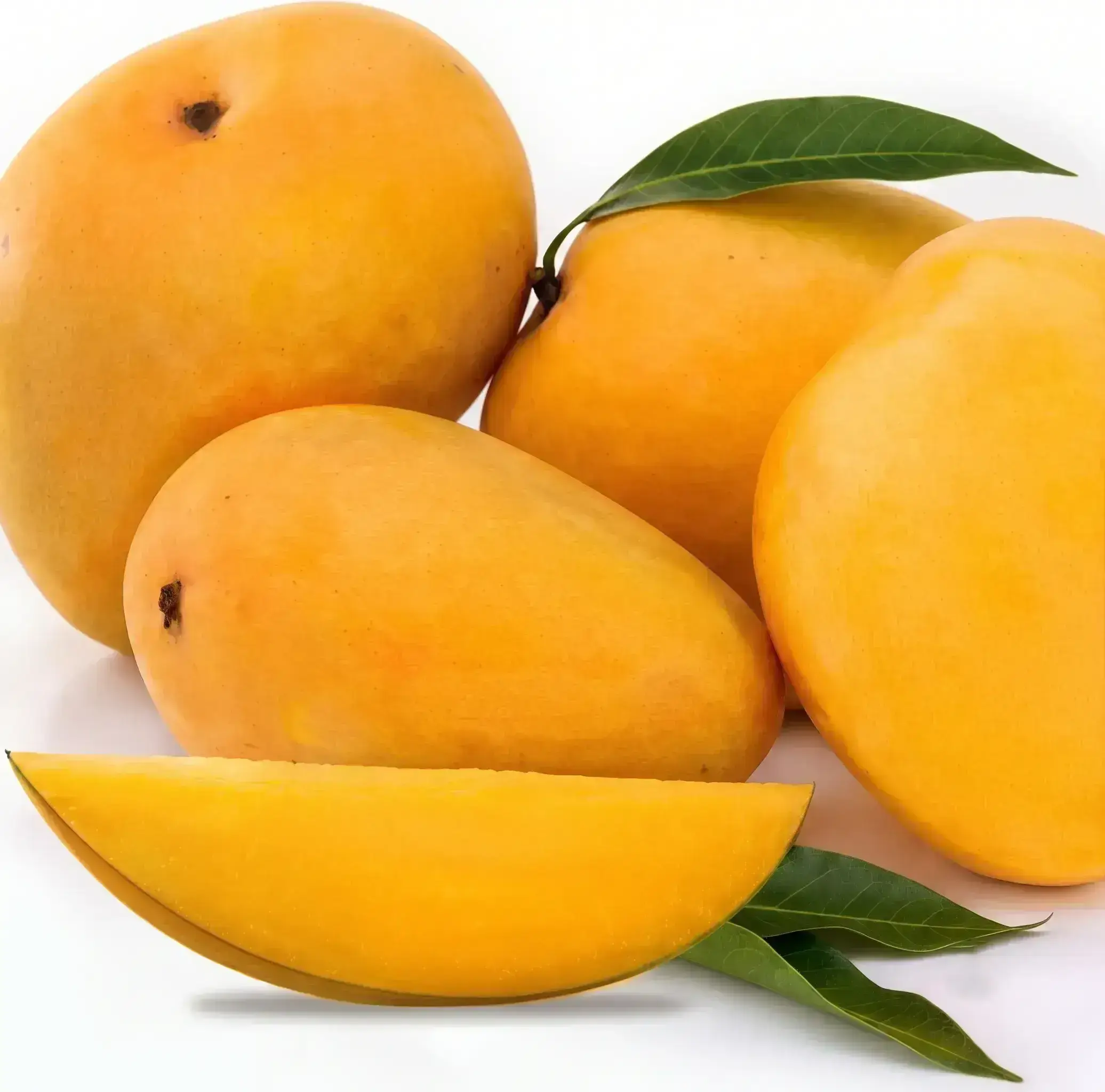
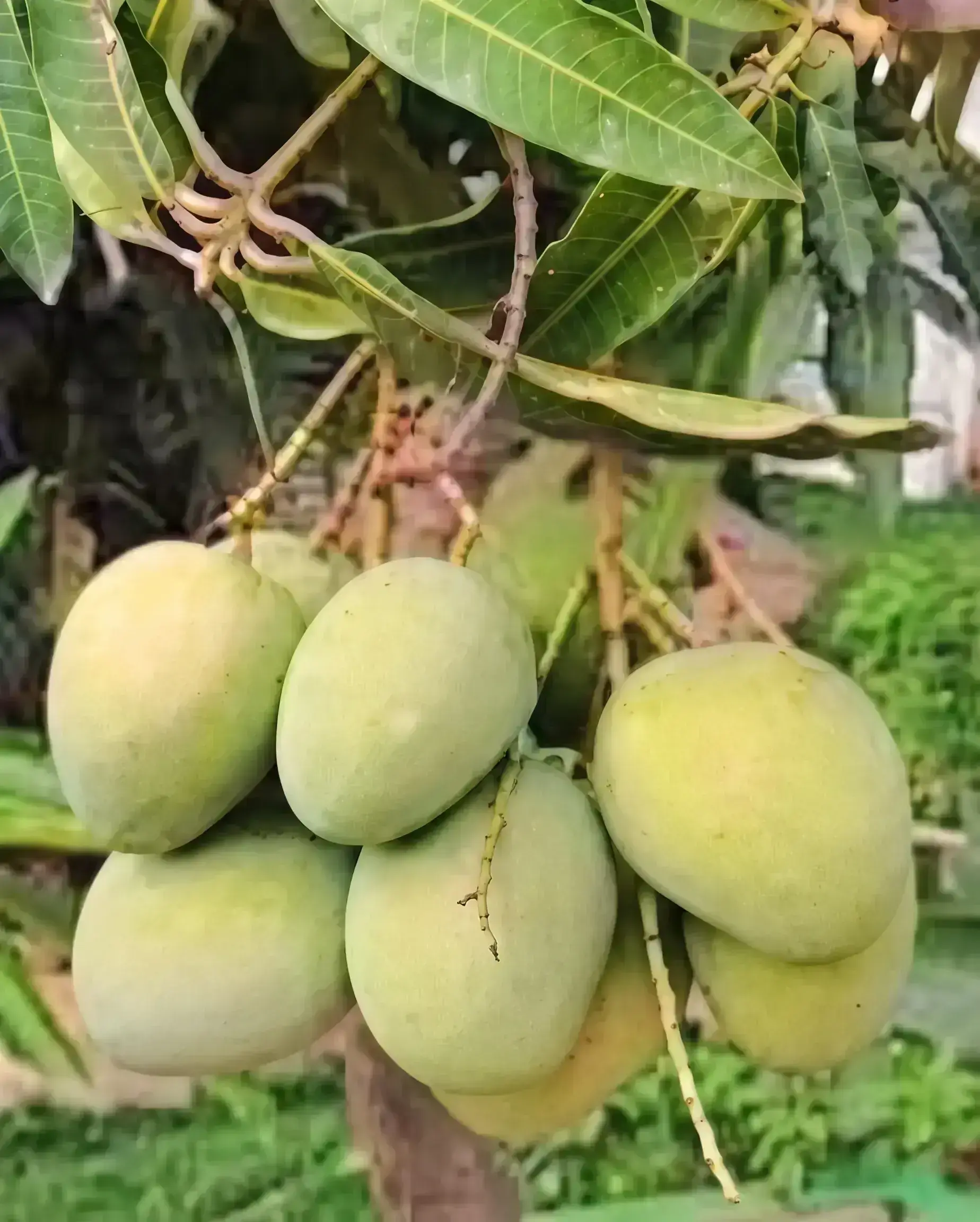
Banganapalli is recognised for its large, obliquely oval mangoes with golden-yellow colour at maturity. TNAU describes the cultivar as having good fruit quality and good keeping quality and identifies it as a mid-season variety.
Typical characteristics associated with Banganapalli include:
- Large fruit size
- Obliquely oval shape
- Golden-yellow ripe skin
- Sweet, pleasant mango flavour
- Fleshy edible pulp
- Good keeping quality
- Popular fresh-eating use
Individual fruit size, colour, sweetness and harvest timing can vary according to the plant’s age, climate, nutrition, crop load and cultivation practices.
Banganapalli is also reported in Indian horticultural research under related names such as Banganpalli, Benishan and Baneshan. ICAR records, for example, refer to Banganpalli clones and early Baneshani material in mango evaluation work.
☀️ Sunlight Requirements
Mango is a sun-loving tropical fruit tree and should be planted in a bright outdoor location.
For good growth:
- Provide plenty of direct sunlight.
- Select an open location rather than deep shade.
- Keep competing trees from blocking the canopy.
- Ensure good air circulation around the plant.
- Avoid locations where buildings permanently shade the tree.
Adequate sunlight is particularly important as the plant matures and begins flowering and fruit development.
For Indian home gardens, an open backyard, orchard area or sunny terrace garden can be considered where sufficient space and structural conditions are available.
💧 Watering
A newly planted grafted mango requires regular attention to watering while its root system becomes established.
Follow these practical steps:
- Check the moisture of the soil around the root zone.
- Water deeply when the soil begins to dry.
- Keep newly planted trees reasonably moist during establishment.
- Adjust irrigation according to rainfall and season.
- Provide additional water during prolonged hot and dry periods.
- Reduce unnecessary watering during periods of heavy monsoon rainfall.
- Ensure that excess water can drain away.
- Avoid keeping the root zone continuously waterlogged.
Once established, mango trees are considerably more resilient than young plants, but good irrigation management remains important for healthy growth and fruit production.
🪴 Soil & Potting
Banganapalli mango performs best in fertile, well-drained soil with adequate depth for root development.
Suitable soil should provide:
- Good drainage
- Reasonable organic matter
- Good root penetration
- Adequate moisture retention
- No prolonged standing water
For a young grafted plant grown in a container, a practical growing mix may contain:
- Garden soil
- Well-decomposed compost or vermicompost
- Cocopeat
- Coarse sand or another drainage-improving material
The exact mix does not have to follow one fixed recipe. The important factors are fertility, drainage and adequate root space.
Always use containers with drainage holes.
For permanent ground planting, select a location where the tree can develop its root system without being restricted by foundations, concrete structures or other large trees.
🌱 Fertilizer & Nutrition
Mango trees benefit from balanced nutrition, particularly as they grow toward flowering and fruit production.
For home gardening:
- Apply well-decomposed compost or organic manure.
- Vermicompost can be used as an organic soil amendment.
- Use a suitable balanced fertilizer when required.
- Nutrient requirements increase as the tree matures and begins producing fruit.
- Avoid excessive fertilizer, particularly unnecessary nitrogen.
- Follow the fertilizer manufacturer’s recommended dosage.
For mature mango trees, fertilizer programmes are generally adjusted according to tree age, soil fertility, crop load and local horticultural recommendations.
Apply fertilizers around the root-zone area rather than directly against the trunk.
🌼 Flowering & Fruit Development
Mango trees produce terminal flower panicles containing many small flowers. Successful fruit production depends on the plant reaching suitable maturity and receiving appropriate environmental and cultural conditions.
Important factors include:
- Cultivar
- Plant age
- Sunlight
- Temperature
- Water management
- Nutrition
- Flowering conditions
- Pollination
- Pruning
- Pest and disease management
Because this is a grafted plant, it is expected to retain the characteristics of the selected Banganapalli cultivar more reliably than a seedling grown from an unknown mango seed.
However, grafting does not mean immediate fruiting.
Fruiting is not guaranteed immediately after delivery and depends on plant age, graft maturity, climate, nutrition, sunlight and growing conditions.
Indian mango research also demonstrates that different Banganapalli clones can vary in performance. ICAR has reported evaluation of Banganpalli clones and related material under different production conditions.
🏡 Home Garden Suitability
Banganapalli is well suited to outdoor cultivation where the local climate supports mango production.
It can be grown in:
- 🏡 Home gardens
- 🌳 Backyards
- 🌱 Fruit gardens
- 🌾 Orchards
- 🚜 Farms
- 🌴 Tropical and subtropical landscapes
- 🪴 Large terrace gardens while young
It is particularly attractive to home gardeners who want to grow a recognised Indian mango cultivar rather than an unknown mango seedling.
Because the mature tree can become large, choose the planting location carefully.
🪴 Container / Terrace Gardening
A grafted Banganapalli mango plant can be grown in a large container while young, provided it receives sufficient sunlight and proper care.
For terrace gardening:
- Use a large, sturdy container.
- Ensure good drainage.
- Use fertile, well-drained potting media.
- Provide several hours of direct sunlight.
- Water according to soil moisture.
- Refresh or replace the growing medium as necessary.
- Prune appropriately to manage the canopy.
- Protect the plant from strong winds on exposed terraces.
Container cultivation can restrict the ultimate size of a mango tree, but it does not automatically create a permanently dwarf tree.
For long-term terrace cultivation, choose a suitable grafted plant and maintain an appropriate container, but allow for the increasing weight of the tree, pot and wet growing medium.
✂️ Pruning & Maintenance
Grafted mango plants generally benefit from sensible structural training during their early years.
Basic maintenance includes:
- Remove dead or damaged branches.
- Maintain a balanced framework.
- Remove shoots emerging from below the graft union.
- Remove weak or badly positioned branches.
- Avoid excessive pruning of healthy productive growth.
- Keep the area around the trunk reasonably clean.
- Monitor the plant regularly for pests and diseases.
Important for grafted plants: shoots appearing below the graft union are rootstock shoots and should generally be removed because they can compete with the desired Banganapalli scion.
Heavy pruning should not be carried out simply to make a naturally large mango tree permanently miniature.
🌳 Space Requirement
A mango tree needs significant long-term space.
Before planting your Banganapalli grafted plant, consider:
- Distance from your house
- Boundary walls
- Electrical wires
- Roofs and other structures
- Nearby trees
- Future canopy spread
- Root-zone space
- Access for harvesting and maintenance
Kew’s botanical information describes Mangifera indica as a substantial tree, with mango trees capable of reaching considerable heights.
A grafted nursery plant may initially be compact, but it should still be planted with its future size in mind.
For small gardens, regular training and pruning can help manage the canopy, but pruning should not be treated as a guarantee that the tree will remain permanently small.
🌱 Special Cultivation Notes
Grafted plant: Grafting joins selected Banganapalli cultivar material to a rootstock. Proper care of the graft union is important.
Graft union care: Do not bury the graft union under soil or potting media. Keep the union above the soil surface.
Rootstock shoots: Any vigorous shoot developing below the graft union should be removed.
Cultivar identity: Banganapalli is a documented commercial mango cultivar and is known by several regional/common names, including Benishan and Baneshan.
Not a hybrid: Banganapalli itself should not automatically be described as a hybrid. The product is a grafted Banganapalli cultivar plant. Grafting and hybridisation are different concepts.
Indian cultivation: Banganapalli has particular commercial importance in Andhra Pradesh and Tamil Nadu and is also cultivated in other suitable mango-growing regions.
📦 Live Plant Delivery & Natural Variation
This is a live grafted plant, so its appearance can naturally vary.
During packing, transportation and acclimatisation, the plant may show:
- Slight leaf yellowing
- Temporary drooping
- Minor leaf shedding
- Different plant height
- Different leaf size
- Different stem thickness
- Different branching
- Temporary transportation stress
Changes in sunlight, temperature, humidity and watering during transportation can temporarily affect the plant’s appearance.
The product photograph represents the general plant type and expected cultivar characteristics. Every individual live plant will not necessarily look exactly the same as the product photograph.
After delivery, place the plant in a suitable location and allow it to acclimatise gradually.
⚠️ Important Note
- The accepted botanical name is Mangifera indica L.
- Banganapalli is a recognised mango cultivar and is also known as Benishan/Baneshan, Safeda, Chapta and Chapai in Indian horticultural sources.
- This product is a grafted plant, not a seed-grown mango seedling.
- Grafting does not guarantee immediate fruiting.
- Fruiting depends on plant age, graft maturity, climate, sunlight, nutrition, irrigation and general care.
- The mature mango tree requires adequate space.
- Keep the graft union above the soil level.
- Remove shoots developing below the graft union.
- Do not assume a grafted plant will remain permanently small.
- Fruit size, colour, sweetness and harvest timing can vary according to growing conditions.
- The supplied plant may naturally differ in size and appearance from the product photograph.
🌱 Why Choose This Plant?
- 🥭 Recognised Banganapalli mango cultivar
- 🌱 Supplied as a grafted fruit plant
- 🇮🇳 Popular Indian commercial mango variety
- 🍋 Large, obliquely oval fruit
- 💛 Attractive golden-yellow ripe fruit colour
- 😋 Suitable primarily for fresh eating
- 📦 Good keeping quality is associated with the cultivar
- 🏡 Suitable for home gardens
- 🌳 Suitable for orchard and farm cultivation
- 🪴 Can be maintained in a large container while young
- 🌿 Excellent choice for gardeners interested in growing a named mango cultivar
🌿 Botanical Information
- Botanical Name: Mangifera indica L.
- Family: Anacardiaceae
- Common Names: Mango, Banganapalli mango, Benishan, Baneshan, Safeda, Chapta, Chapai
- Variety/Cultivar: Banganapalli
- Plant Type: Evergreen perennial fruit tree
- Growth Habit: Large woody tree with a broad canopy
- Propagation: Grafted
- Fruit: Large, obliquely oval mango
- Ripe Fruit Colour: Golden yellow
- Primary Use: Fresh fruit
- Native Range of Species: Assam to southern China according to Kew
- Suitable Growing Conditions: Warm climate, good sunlight, fertile well-drained soil and appropriate irrigation
Kew recognises Mangifera indica as an accepted species in the Anacardiaceae family.
🔗 Botanical Information & Further Reading
- Kew – Plants of the World Online: Verified scientific name, taxonomy, family and distribution of Mangifera indica. Kew – Mangifera indica
- Kew – Mangifera indica General Information: Botanical characteristics, morphology and uses of mango. Kew – Mangifera indica General Information
- Tamil Nadu Agricultural University – Mango: Indian mango varieties, including Banganapalli/Benishan, fruit characteristics and commercial information. TNAU – Mango
- ICAR – Horticulture Research: Indian mango cultivar and clone evaluation information, including Banganpalli material. ICAR – Horticulture Annual Report
- ICAR – Central Institute for Subtropical Horticulture: Research and technical resources on mango cultivation and varieties. ICAR-CISH
For More Information
Visit: Nursery-Plant.Com
For Contact Visit:Contact Us
For Shopping Visit: Shop Page


Reviews
There are no reviews yet.