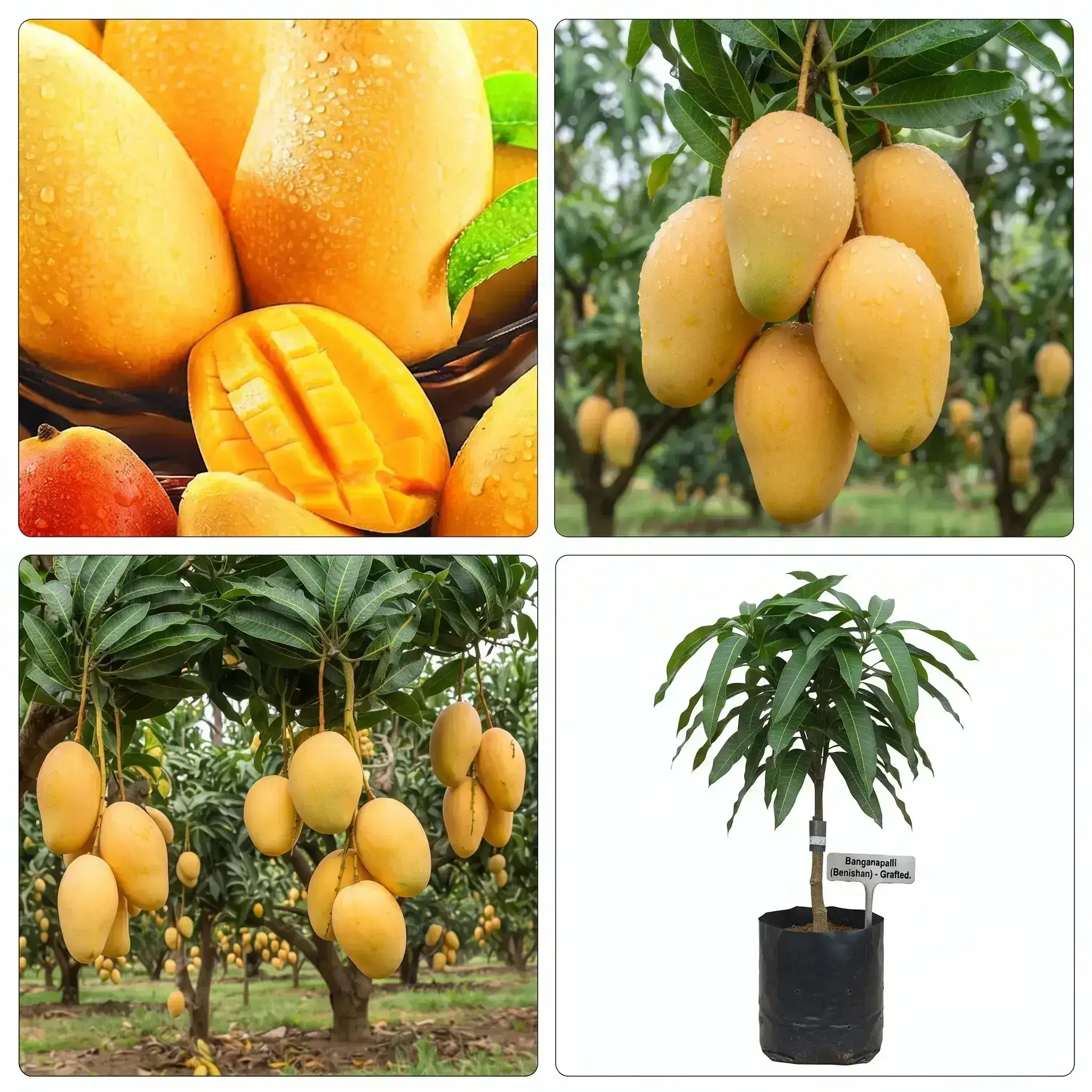
Banganapalli Mango Grafted Hybrid Plant – Mangifera indica Premium Live Fruit Plant for Home Garden
The Banganapalli (Benishan) Mango Grafted Live Plant Banganapalli Mango , also widely known as Benishan, is a recognised mango variety associated with Andhra Pradesh and valued for its large, elongated fruits, smooth yellow skin when ripe, and sweet, relatively fibre-light flesh.
The mango tree (Mangifera indica) is a tropical and subtropical evergreen fruit tree that grows well in warm conditions with adequate sunlight and suitable drainage. A grafted plant is often preferred by home gardeners because it can retain the characteristics of its selected parent variety and may begin fruiting earlier than a seed-grown tree. However, the exact fruiting time and harvest depend on the plant’s age, grafting quality, local climate, and growing conditions.
This plant is suitable for gardeners who want to grow a traditional mango variety in a home garden, orchard, or large outdoor space. With proper care, it can become a long-term fruit tree.
Product Highlights
- Plant name: Banganapalli Mango / Benishan Mango
- Scientific name: Mangifera indica L.
- Family: Anacardiaceae
- Plant type: Tropical fruit tree
- Variety: Banganapalli (Benishan)
- Propagation: Advertised as grafted; confirm the propagation method with the seller if required
- Fruit type: Large mangoes, typically elongated or oblong
- Fruit flavour: Generally sweet when fully ripe
- Flesh texture: Commonly described as relatively low in fibre
- Best growing location: Sunny outdoor garden or orchard
- Climate preference: Warm tropical and subtropical conditions
- Suitable for: Home gardens, fruit orchards, and spacious outdoor properties
- Plant form: Live nursery plant; delivered size and appearance may vary
Botanical Information
| Feature | Details |
|---|---|
| Common names | Banganapalli, Benishan, Banganapalle mango |
| Scientific name | Mangifera indica L. |
| Family | Anacardiaceae |
| Plant category | Evergreen fruit tree |
| Native origin | Mango is native to South Asia |
| Growth habit | Medium to large tree, depending on conditions and management |
| Leaves | Long, simple, leathery leaves |
| Flowers | Small flowers arranged in terminal clusters |
| Fruit | Fleshy drupe with a single large seed |
| Sunlight | Full sun preferred |
| Soil | Well-drained soil with good root aeration |
| Climate | Warm conditions; protect young plants from frost and severe cold |
About Banganapalli (Benishan) Mango
Banganapalli is a well-known mango cultivar grown commercially and in home gardens. The names Banganapalli, Banganapalle, and Benishan are commonly associated with this variety, although nursery labelling can sometimes be inconsistent.
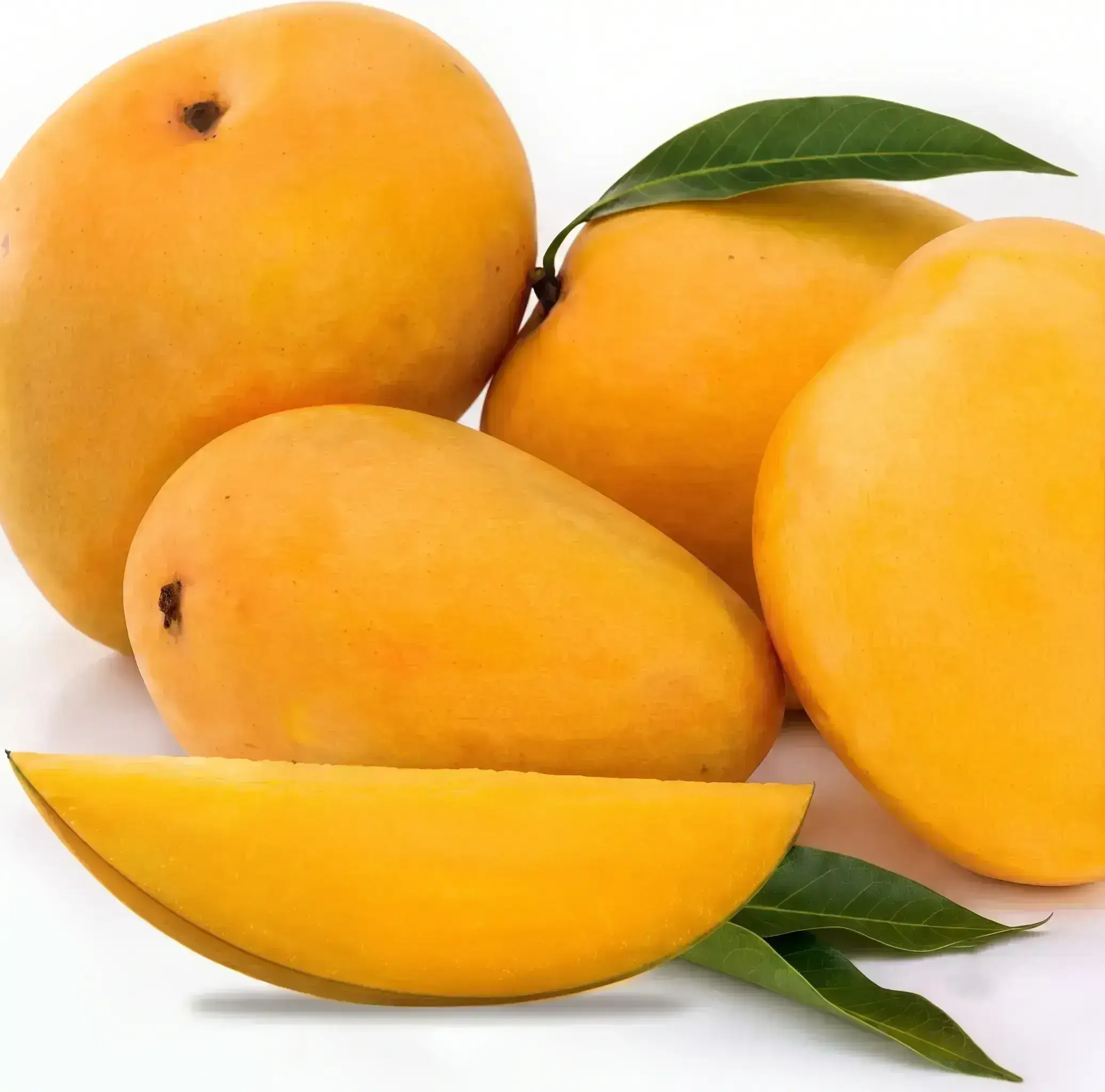
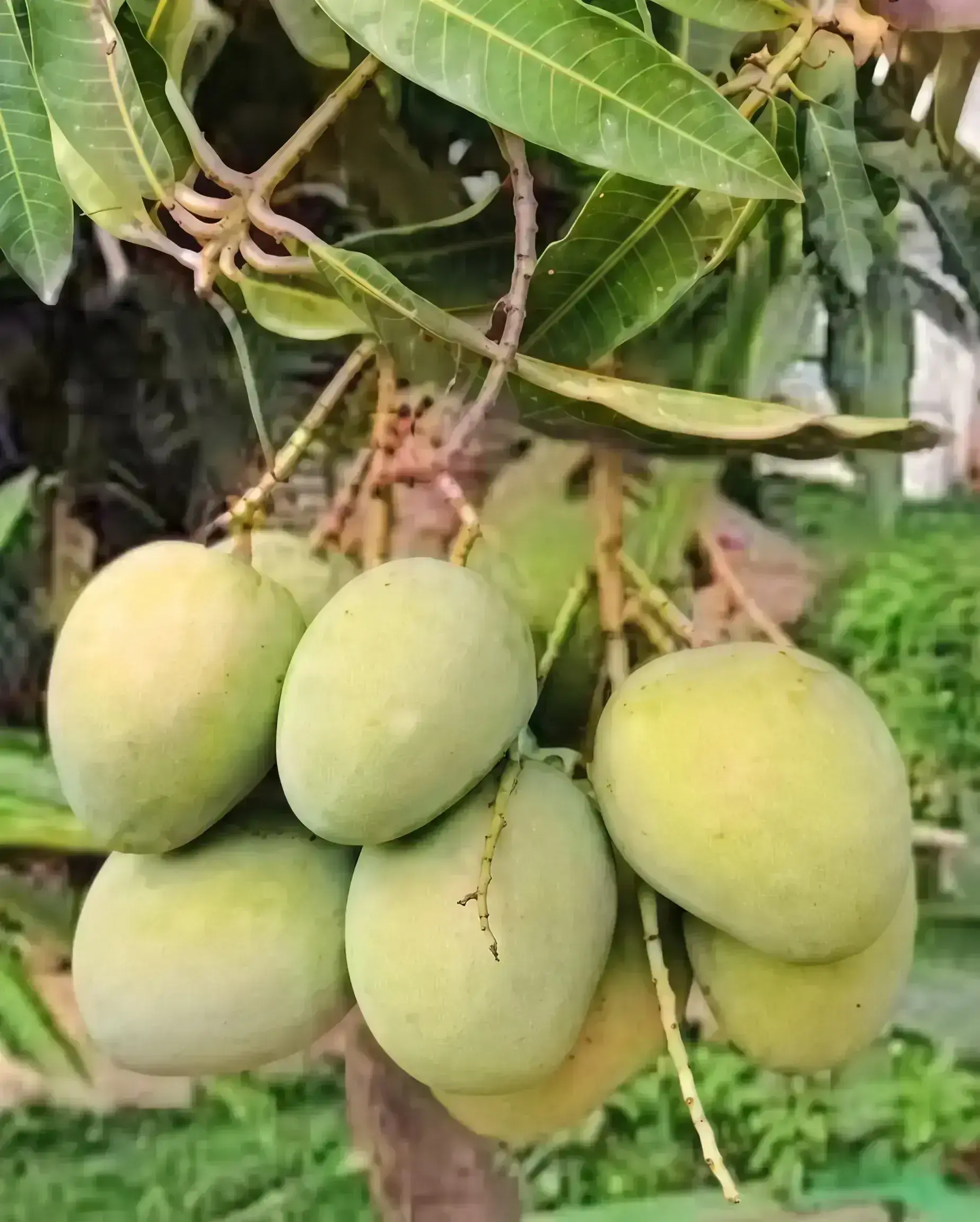
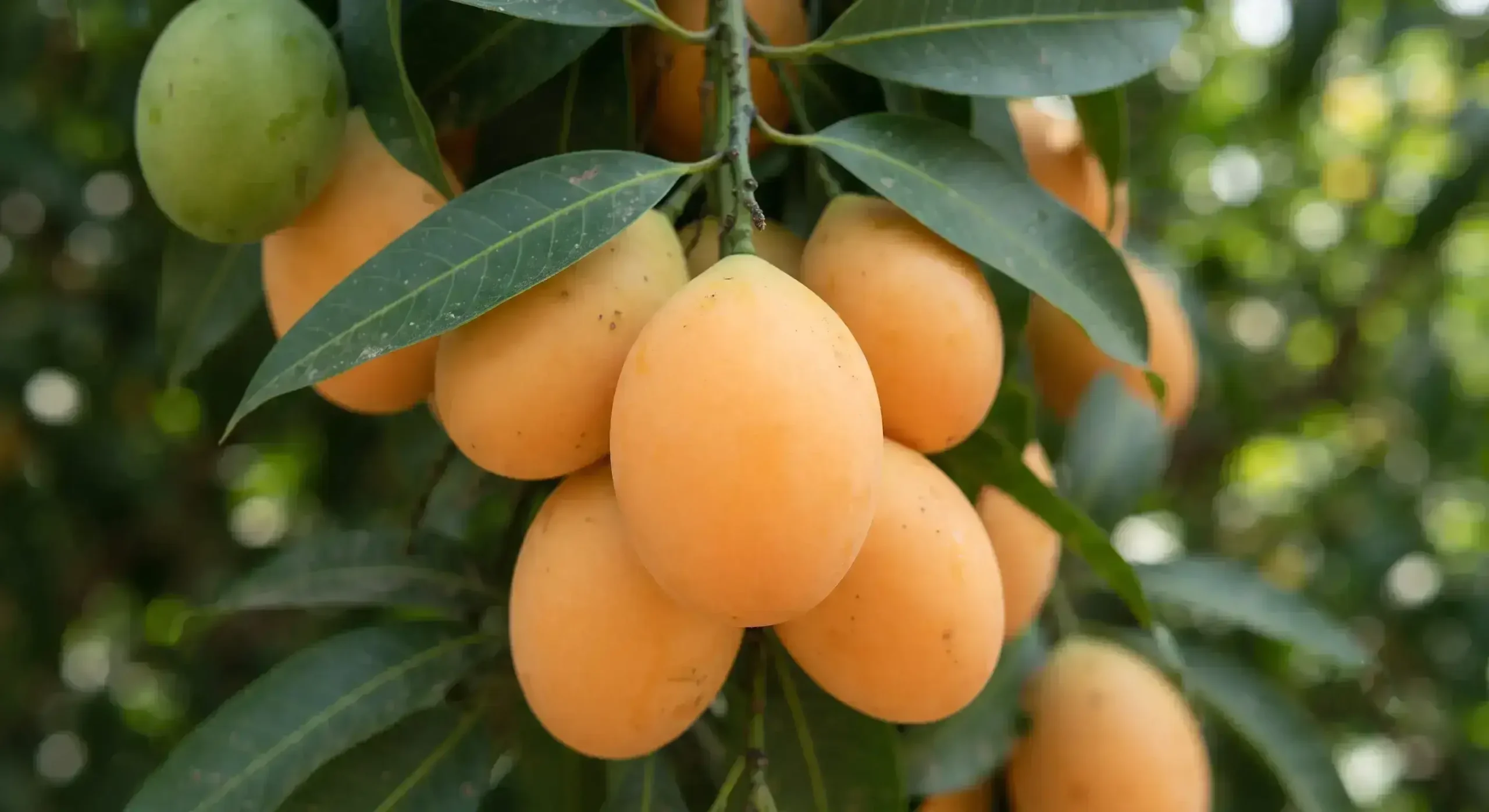
The fruit is typically large and elongated, with smooth skin that becomes yellowish as it ripens. Its flesh is generally sweet and relatively low in fibre, making it popular for fresh eating. Actual fruit size, sweetness, colour, and texture can vary with maturity, weather, soil, irrigation, crop load, and the authenticity of the plant variety.
A mango tree can provide both fruit and attractive evergreen foliage. However, it needs a sunny position and sufficient room to develop. For smaller gardens, thoughtful planting and appropriate pruning are important because a mango tree can eventually become large.
Variety note: The product title describes this plant as a “grafted hybrid.” Banganapalli is a recognised mango cultivar, but the word “hybrid” does not establish that this particular plant is a new cross or hybrid. If you require a verified Banganapalli/Benishan graft, ask the seller to confirm the parent variety and propagation method.
Why Choose a Banganapalli Mango Plant?
1. A recognised mango variety
Banganapalli is familiar to many mango lovers and is grown for its eating-quality fruit.
2. Sweet fruit for fresh consumption
The variety is commonly valued for sweet, relatively fibre-light flesh when properly ripened. Taste depends on fruit maturity and growing conditions.
3. Suitable for a home fruit garden
A sunny garden with enough space can accommodate a mango tree for long-term cultivation.
4. Grafted plant advantage
A correctly grafted plant can reproduce the selected cultivar’s characteristics more reliably than a seed-grown tree. Grafted plants may also fruit earlier, but no particular harvest date is guaranteed.
5. Attractive evergreen tree
The glossy foliage provides a tropical appearance throughout much of the year in suitable climates.
6. Long-term garden investment
With suitable care and space, a mango tree can remain productive for many years. Productivity depends on variety authenticity, climate, pollination, tree health, and management.
Ideal Climate and Growing Location
Mango trees grow best in warm conditions with good sunlight. They are sensitive to frost, and young plants can be damaged by cold winds or sudden temperature drops.
In warm regions of India, mangoes are commonly grown outdoors. In humid areas, including parts of eastern India, good air circulation and drainage are particularly important during the monsoon.
Choose a location that offers:
- Strong sunlight for most of the day
- Well-drained soil
- Protection from strong winds while the plant is young
- Adequate space for the mature canopy
- Distance from foundations, drains, boundary walls, and overhead cables
A young plant can be grown in a large container for a period, but open-ground planting is usually more suitable for long-term growth where space allows. If growing in a pot, choose a stable container with drainage holes and be prepared to manage root space and pruning carefully.
Sunlight Requirements
Full sunlight supports healthy growth and is important for flowering and fruit production.
- Aim for around 6–8 hours of direct sunlight daily once the plant is established.
- Avoid keeping the tree permanently in a shaded corner.
- Acclimatise a nursery plant gradually if it arrives from a shaded growing area.
- During very hot weather, a recently delivered plant may need temporary protection from harsh afternoon sun while it adjusts.
Insufficient light can lead to weak growth and may reduce the likelihood of good flowering and fruiting.
Soil Requirements
Banganapalli mango grows best in soil that allows water to drain away while retaining enough moisture for healthy roots.
Suitable soil characteristics:
- Well-drained loamy or sandy-loam soil
- Good root aeration
- Moderate organic matter
- No persistent standing water
Before planting, loosen the soil in the planting area and incorporate mature compost if needed. Avoid adding large amounts of fresh manure directly against the roots.
In heavy clay soil, consider improving drainage or planting on a raised mound. Mango roots can be damaged by prolonged waterlogging, especially during the monsoon.
For container growing, use a free-draining potting mix and ensure that excess water can escape freely from the bottom of the pot.
Watering Guide
Water requirements change as the plant grows. A newly planted mango needs more regular monitoring than an established tree.
For a newly delivered plant
- Check whether the root ball is dry before watering.
- Water thoroughly if needed, then allow excess water to drain.
- Keep the plant sheltered from strong winds while it settles.
For a young mango plant
- Check the upper soil layer regularly.
- Water when the soil begins to dry rather than following a rigid daily schedule.
- Increase watering during hot, dry weather if the soil dries quickly.
- Reduce additional watering when monsoon rainfall keeps the soil moist.
For an established tree
- Water during prolonged dry spells, particularly when the tree is actively growing.
- Avoid keeping the root zone constantly wet.
- Adjust irrigation according to soil type, rainfall, and tree size.
Excessive watering can cause root stress. Yellowing leaves, persistent dampness, and poor growth may indicate drainage or watering problems.
Fertiliser and Organic Nutrition
A balanced feeding programme helps support healthy growth, but more fertiliser does not necessarily mean more fruit.
- Incorporate mature compost into the planting area.
- Apply well-rotted organic matter around the root zone without piling it against the trunk.
- Use a suitable fruit-tree fertiliser according to its label and the plant’s age.
- Follow recommended application rates rather than guessing the dose.
- Avoid excessive nitrogen, which can encourage leafy growth at the expense of flowering.
- Do not heavily fertilise a recently transplanted, waterlogged, or visibly stressed plant.
Established trees may require a different feeding programme from young plants. Soil fertility, rainfall, and tree size should guide fertiliser use. For commercial-scale production, a soil test and locally recommended mango nutrient programme are preferable.
Planting Instructions
Step 1: Choose the location
Select a sunny, well-drained outdoor site with enough room for the tree’s future canopy.
Step 2: Prepare the planting hole
Dig a hole wider than the root ball. Loosen the surrounding soil, and avoid creating a depression that traps water.
Step 3: Remove the nursery container
Handle the plant carefully. Avoid pulling the stem or breaking the root ball.
Step 4: Position the plant
Place the root ball at approximately the same depth as it was growing in the nursery. If the graft union is visible, keep it above the soil line.
Step 5: Backfill
Fill around the roots with the prepared soil. Firm gently to remove large air pockets without compacting the soil excessively.
Step 6: Water
Water thoroughly to settle the soil around the roots. Allow excess water to drain.
Step 7: Protect the young plant
Use a stake if needed for support in a windy location. Mulch can help retain moisture, but keep the mulch away from direct contact with the trunk.
Step 8: Monitor establishment
Check moisture, foliage, and new growth over the following weeks. Avoid heavy fertilising and unnecessary pruning immediately after planting.
Growing Banganapalli in a Pot
Container cultivation can be useful while the plant is small or where open ground is unavailable. However, mango is a tree, and long-term container growing requires more attention.
- Select a sturdy pot with adequate drainage.
- Use a well-draining growing medium.
- Keep the container in a sunny location.
- Water when the soil begins to dry, avoiding standing water in the tray.
- Feed modestly according to the fertiliser label.
- Repot when roots have filled the container.
- Prune carefully if needed to maintain a manageable canopy.
A pot-grown tree may remain smaller than a tree planted in open ground, but growth, flowering, and fruiting can be limited by root space and environmental conditions. Do not assume that a container-grown tree will produce a particular quantity of fruit.
Flowering and Fruiting Expectations
A correctly identified grafted Banganapalli plant may fruit earlier than a seed-grown mango, but the exact time depends on the age and condition of the plant, the quality of the graft, local climate, sunlight, and care.
A recently delivered plant may need time to establish its roots before it can flower or fruit reliably. Young plants should be allowed to develop a healthy framework rather than being forced to carry fruit too early.
To support future flowering and fruiting:
- Provide full sunlight.
- Avoid excessive nitrogen fertiliser.
- Maintain good drainage.
- Water appropriately during dry periods.
- Avoid unnecessary root disturbance.
- Keep the plant healthy and allow it to mature.
Mango flowering is seasonal and affected by weather. Do not interpret “all-season” or similar nursery claims as a guarantee of year-round fruiting. The harvest period and fruit characteristics should be confirmed for the particular plant supplied.
Pruning and Tree Maintenance
Mango trees can develop a large canopy. Early structural management can help keep the tree healthy and make harvesting easier.
- Remove dead, diseased, or broken branches.
- Prune lightly to remove crossing branches when necessary.
- Use clean, sharp tools.
- Avoid severe pruning unless there is a clear horticultural reason.
- Maintain good air circulation through the canopy.
- Remove weeds and competing vegetation near the base.
- Inspect the tree after storms and heavy rain.
Avoid frequent heavy pruning, especially around the flowering season. Mango trees flower on mature shoots, so poorly timed or excessive pruning can reduce flowering.
Common Problems and Solutions
1. Yellowing leaves
Possible causes include overwatering, poor drainage, nutrient deficiency, or transplant stress. Check the soil and roots before adding fertiliser.
2. Leaf burn or drooping
A plant recently moved into stronger sunlight may experience stress. Acclimatise it gradually and check soil moisture.
3. Slow growth
The plant may be adjusting after delivery, receiving insufficient sunlight, or growing in unsuitable soil. Review drainage, light, and watering before changing fertiliser.
4. No flowering
A young tree may not be mature enough. Insufficient sunlight, excessive nitrogen, unsuitable weather, or incorrect variety identification may also contribute.
5. Flowers but little fruit
Flowering does not guarantee fruit set. Weather, pollination, pests, and tree condition can affect how much fruit develops.
6. Fruit drop
Some fruit drop is natural. Severe drop can be associated with weather stress, irregular moisture, pests, or other growing problems.
7. Fungal problems during the monsoon
Humid conditions can encourage fungal diseases, including mango anthracnose. Improve air circulation, avoid unnecessary leaf wetting, remove badly affected material, and seek locally appropriate plant-health advice if symptoms spread.
8. Pests
Mango trees can be affected by insects such as hoppers, mealybugs, and scale insects. Inspect new growth and flower clusters regularly. Use only locally approved treatments according to their labels and protect pollinators.
First-Delivery Care
Live plants may experience temporary stress during transport. A few fallen leaves or mild drooping do not necessarily mean the plant is unhealthy.
- Unpack the plant carefully.
- Inspect the stem, leaves, root ball, and any visible graft union.
- Check soil moisture and water if the root ball is dry.
- Keep the plant in a bright, sheltered outdoor position initially.
- Gradually expose it to stronger sunlight if it was grown under shade.
- Avoid immediate heavy fertilising or unnecessary repotting.
- Plant it in a suitable permanent location once it has adjusted, following any nursery-specific instructions.
Important Buying Information
- Variety identity: Banganapalli and Benishan are commonly used names for the recognised mango variety, but seller labels may vary. Confirm the variety if authenticity is important.
- Grafted status: The title advertises a grafted plant. Ask the seller to confirm the propagation method and parent variety.
- “Hybrid” description: This word in the title does not independently prove a specific hybrid cross. Banganapalli is a recognised cultivar.
- Fruit expectations: Fruit size, sweetness, flesh texture, harvest period, and productivity depend on the plant’s identity and growing conditions.
- Plant size: Delivered height, leaf count, and root-ball size can vary by nursery stock and season.
- Pot inclusion: A pot should not be assumed to be included unless specified in the product options.
- Natural variation: Minor differences in foliage and appearance are normal for live plants.
- Climate suitability: Mango needs warmth and sunlight. Young plants should be protected from frost and severe cold.
- Care responsibility: Successful establishment and fruiting depend on appropriate planting, watering, nutrition, and ongoing maintenance.
Frequently Asked Questions (FAQs)
1. What is the scientific name of Banganapalli mango?
Its scientific name is Mangifera indica L. Banganapalli, also called Benishan, is a recognised mango cultivar.
2. Are Banganapalli and Benishan the same variety?
The names are commonly used for the same recognised variety. However, nursery labels can vary, so ask the seller to confirm the identity of the plant supplied.
3. Is this a grafted mango plant?
The product title advertises it as grafted. Confirm the propagation method with the seller if you need assurance that it is a grafted Banganapalli plant.
4. Is Banganapalli a hybrid mango?
Banganapalli is a recognised cultivar. The term “hybrid” in a product title does not establish that the plant is a newly bred hybrid or identify a particular cross.
**5. Can I grow
For More Information
Visit: Nursery-Plant.Com
For Contact Visit:Contact Us
For Shopping Visit: Shop Page


Reviews
There are no reviews yet.