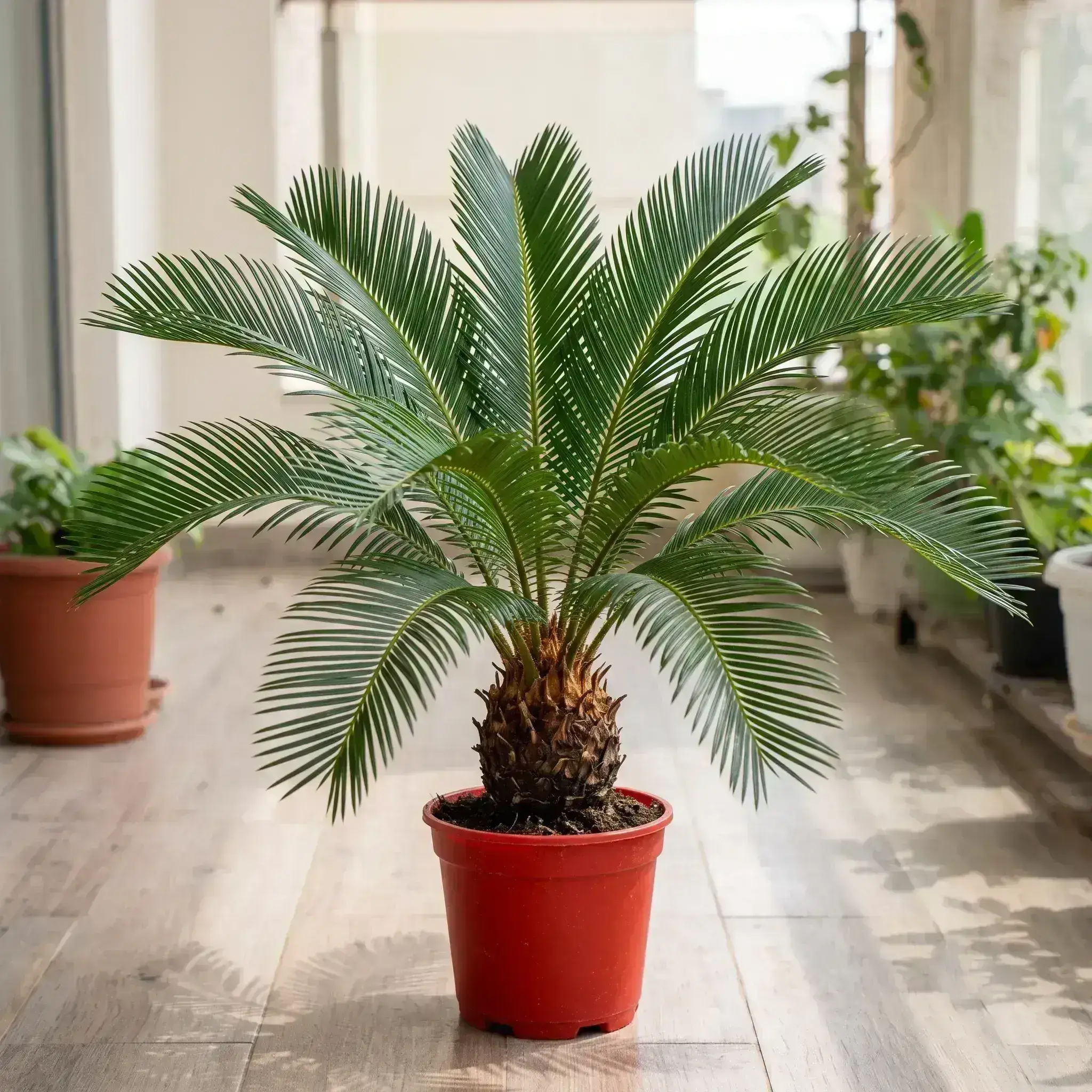
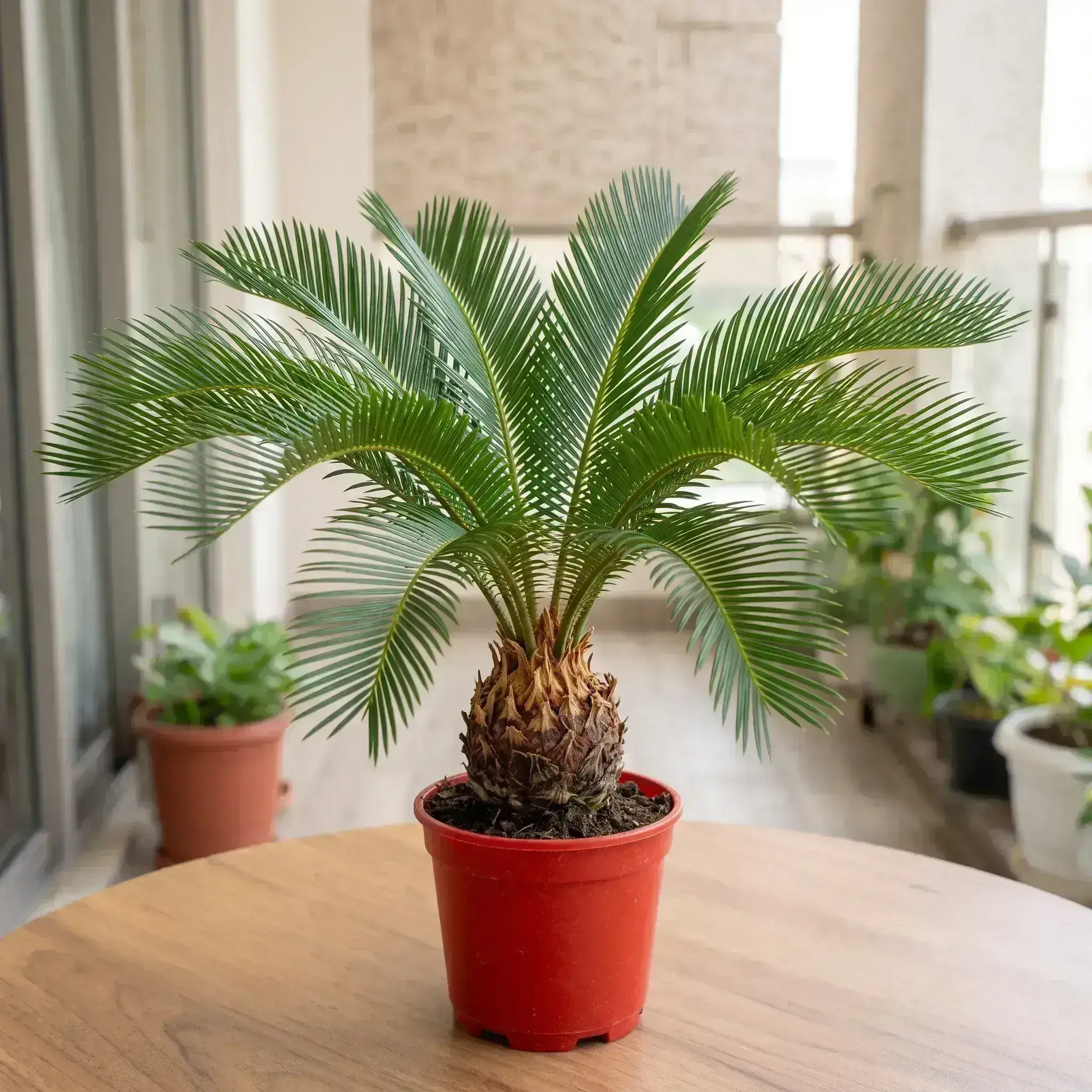
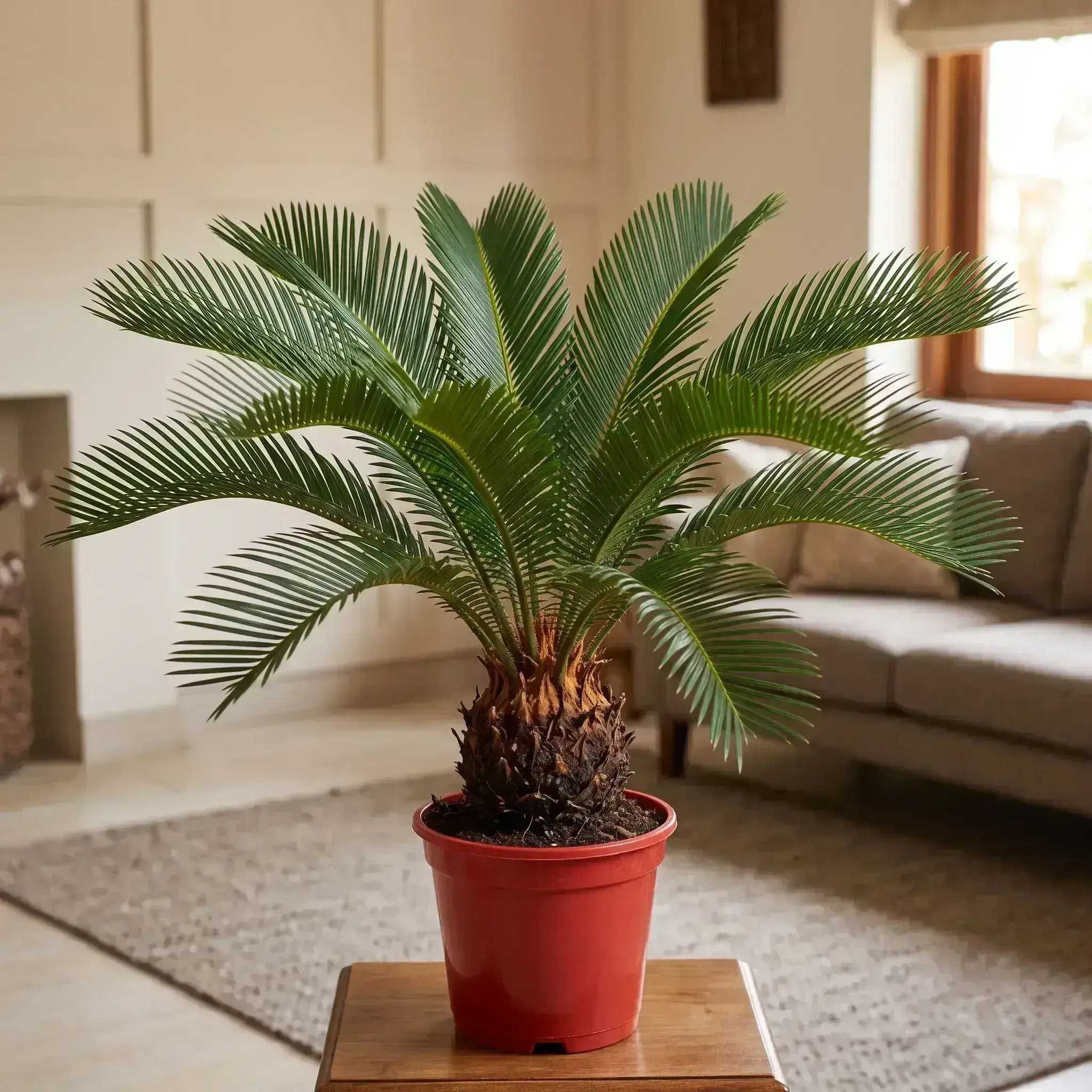
Sago Palm Plant | Cycas Palm (Cycas revoluta) Plant
The Sago Palm Plant Also Known As Cycas palm (Cycas Revoluta) Plant . This attractive evergreen ornamental plant is admired for its thick, sturdy trunk and beautiful crown of glossy, dark-green, feather-like leaves. Its symmetrical shape gives it a palm-like appearance, making it a popular choice for home gardens, patios, balconies and landscape decoration.
The Sago Palm is a slow-growing plant that can live for many years with proper care. It is suitable for growing in large pots or directly in the garden. Its distinctive architectural appearance makes it an attractive focal point in both traditional and modern garden designs.
Although commonly called a palm, Cycas revoluta is actually a cycad, an ancient group of cone-producing plants. It is not a true palm tree.
Plant Highlights
- Common Names: Sago Palm, Cycas Palm, Japanese Sago Palm, King Sago Palm
- Botanical Name: Cycas revoluta Thunb.
- Family: Cycadaceae
- Plant Type: Evergreen, slow-growing cycad
- Origin: Southern Japan and nearby East Asian islands
- Foliage: Glossy, dark-green, feather-like leaves
- Growth Habit: Upright trunk with a circular crown of leaves
- Light Requirement: Bright light, partial shade to full sun after acclimatisation
- Water Requirement: Moderate; allow the soil to dry somewhat between watering
- Uses: Home gardens, landscape decoration, patios, large containers and ornamental displays
- Maintenance: Low to moderate
About the Sago Palm Plant
The Sago Palm is a member of the Cycadaceae family. Cycads are an ancient group of plants that have existed for millions of years.
The plant develops a thick, woody trunk with a crown of long, stiff, pinnately divided leaves. Each leaf has numerous narrow leaflets arranged along a central stalk, giving the plant its distinctive feather-like appearance.
Unlike flowering plants, cycads produce cones and exposed seeds. Male and female reproductive structures develop on separate plants.
Sago Palm is especially valued as an ornamental plant because of its compact appearance, long-lasting foliage and slow growth.
Appearance and Growth Habit
The Sago Palm has a strong architectural appearance that makes it stand out in garden landscapes.
- A thick, rough-textured trunk supports the crown.
- Long, dark-green leaves grow from the top in a circular arrangement.
- Individual leaflets are narrow, stiff and pointed.
- New leaves usually emerge together in a fresh growth flush.
- The plant grows slowly and gradually develops a more substantial trunk.
Its slow growth makes it suitable for long-term container gardening. However, mature plants need sufficient room for their expanding crown.
Sunlight Requirements
Sago Palm grows well in bright light and can adapt to partial shade or full sunlight when gradually acclimatised.
For outdoor growing:
- Choose a bright garden location.
- Morning sunlight is beneficial.
- Established plants can tolerate stronger sunlight.
- Protect young plants from sudden exposure to intense afternoon sun.
For indoor or balcony growing:
- Place the plant near a bright window or in a well-lit balcony.
- Avoid dark indoor corners.
- Rotate the pot occasionally if light comes mainly from one direction.
Sudden changes from shade to strong sunlight can damage the foliage.
Watering Requirements
Sago Palm is relatively drought tolerant once established. It does not like continuously wet soil.
Follow these watering guidelines:
- Check the soil before watering.
- Water thoroughly when the upper soil layer has dried.
- Allow excess water to drain from the pot.
- Never leave the plant standing in collected water.
- Reduce watering during cooler weather or periods of slow growth.
During the humid monsoon season in West Bengal, pay particular attention to drainage. Excess moisture around the roots can cause root problems.
Soil and Potting Mix
Sago Palm grows best in a well-draining growing medium. It can adapt to different soil types, but compacted soil that remains wet for long periods should be avoided.
A suitable container mix can include:
- Garden soil or a loamy growing medium
- Well-decomposed compost
- Coarse sand or perlite
- Pumice or other drainage-improving material
Choose a sturdy pot with drainage holes. Avoid oversized containers that hold excessive moisture around the roots.
For garden planting, select a location where rainwater drains away freely.
Temperature and Humidity
Sago Palm is suitable for tropical and subtropical growing conditions.
- It prefers warm weather.
- It can tolerate normal seasonal variations once established.
- Protect young plants from frost and unusually cold conditions.
- Avoid prolonged exposure to cold, waterlogged soil.
- Good air circulation helps maintain healthy foliage.
In Indian summers, provide suitable moisture and protect newly planted specimens from sudden heat stress. During the monsoon, avoid water accumulation around the trunk and roots.
Fertilizer and Plant Nutrition
Sago Palm is a slow-growing plant and does not require frequent feeding.
- Apply a balanced fertilizer during the active growing season.
- Use a fertilizer suitable for ornamental palms or cycads, following its label instructions.
- Apply fertilizer around the root zone rather than directly against the trunk.
- Avoid excessive feeding.
- Reduce fertilizer application when the plant is not actively growing.
A healthy root system, suitable sunlight and well-drained soil are more important than frequent fertilizer application.
Growing Sago Palm in Pots
Sago Palm is an excellent choice for container gardening because of its slow-growing nature and attractive shape.
It can be displayed in:
- Large decorative garden pots
- Balcony containers
- Patio planters
- Entrance garden arrangements
- Landscape focal-point containers
Choose a stable container with sufficient room for root development. Repot only when the plant becomes crowded or the growing medium needs replacement.
Remember that even a slow-growing Sago Palm can eventually become a large plant and may need a bigger container.
Growing Sago Palm in the Home Garden
Sago Palm can be used as a specimen plant or as part of a tropical garden arrangement.
It looks attractive when planted:
- Near garden entrances
- Along garden borders
- In open landscape spaces
- Beside decorative rocks
- In large garden containers
- As a focal point in a tropical garden
Give the plant enough space for its mature crown. The leaflets have sharp, pointed tips, so avoid placing it beside narrow walkways or areas where children and pets frequently play.
Pruning and Maintenance
Sago Palm generally requires very little pruning.
- Remove only completely dead or damaged leaves.
- Use clean, sharp pruning tools.
- Avoid cutting healthy green leaves.
- Do not remove newly emerging leaves.
- Wear protective gloves and clothing when handling the foliage.
New leaves often emerge in a growth flush. Allow them to develop naturally without bending or disturbing them.
Propagation
Sago Palm can be propagated through seeds or offsets, commonly called pups, that sometimes develop near the base of the main plant.
Propagation through offsets:
- Identify a healthy, sufficiently developed offset near the parent trunk.
- Separate it carefully using a clean, suitable tool.
- Allow any cut surface to dry appropriately before planting.
- Plant it in a well-draining growing medium.
- Keep it in a warm, bright location and avoid excessive watering while it establishes.
Seed propagation requires suitable male and female plants and successful pollination. Growing from seed is generally a slower process.
For home gardeners, purchasing a healthy nursery-grown plant is usually easier.
Common Problems and Solutions
1. Yellowing Leaves
Possible causes include overwatering, poor drainage, nutrient problems or natural ageing of older leaves. Check the soil and growing conditions before applying fertilizer.
2. Brown Leaf Tips
Dry conditions, irregular watering, excessive sunlight or physical damage can contribute to brown tips. Review the plant’s location and watering routine.
3. Root Rot
Constantly wet soil and poor drainage can damage the roots. Use a well-draining mix and avoid watering when the soil is already wet.
4. Scale Insects
Scale insects may appear on leaves and stems. Inspect the plant regularly and treat infestations early with an appropriate plant-safe method.
5. Slow or No New Growth
Sago Palm naturally grows slowly and may produce new leaves only occasionally. A period without new leaves does not necessarily mean the plant is unhealthy.
Is Sago Palm Suitable for Indoor Growing?
Yes, Sago Palm can be grown indoors if it receives sufficient natural light.
A bright location near a window or a well-lit balcony is preferable. Avoid dark rooms and continuously damp soil.
Because the plant has sharp leaf tips and is highly toxic if eaten, choose its indoor position carefully, particularly in homes with children or pets.
Important Safety Information – Highly Toxic Plant
Sago Palm (Cycas revoluta) is highly toxic to humans, dogs and cats if any part of the plant is swallowed.
All parts contain toxic compounds, including cycasin. The seeds are particularly dangerous because they can contain high concentrations of toxins.
- Never eat the leaves, seeds, roots or other plant parts.
- Keep the plant away from children and pets.
- Do not use its seeds or leaves for food or home remedies.
- Wear gloves and protective clothing when handling or pruning it.
- Keep fallen seeds and plant material away from animals.
Ingestion can cause serious poisoning, including liver damage and potentially life-threatening complications. If a person or pet eats any part of the plant, seek urgent medical or veterinary advice. Do not wait for symptoms to appear.
Live Plant Delivery Information
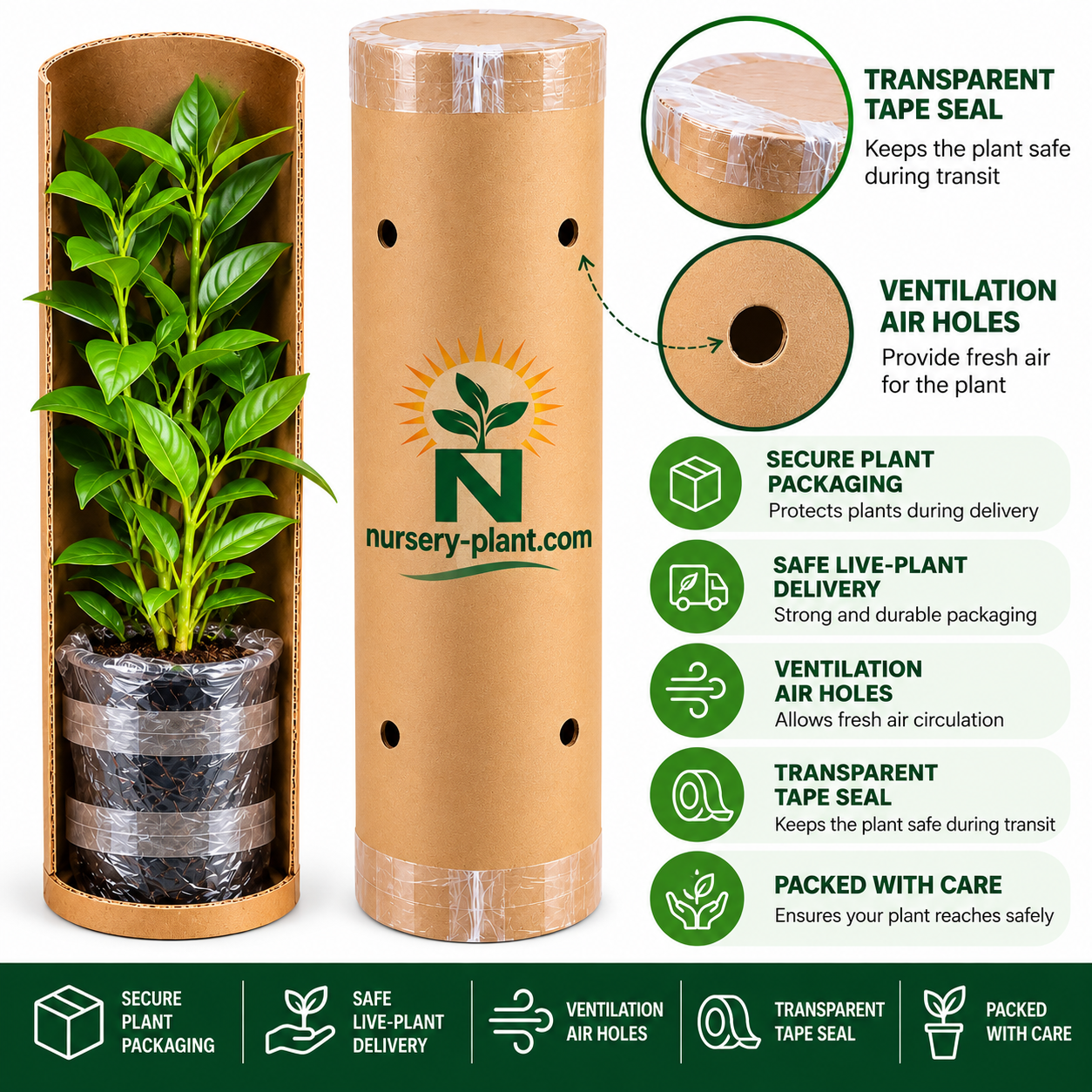
- This listing is for a live Sago Palm (Cycas revoluta) plant.
- Plant height, trunk thickness, leaf count and overall shape may vary.
- New leaf growth and foliage density depend on the plant’s growing season and conditions.
- Minor leaf movement or temporary stress may occur during transportation.
- Unpack the plant carefully after delivery and place it in a bright, sheltered location.
- Allow it to adjust to its new surroundings before repotting or applying fertilizer.
- Check the soil before watering and avoid keeping it excessively wet.
Why Choose the Sago Palm Plant?
Sago Palm is a long-lasting ornamental plant with a distinctive tropical appearance. Its thick trunk, glossy green foliage and symmetrical crown make it an attractive choice for home gardens, patios and landscape decoration.
Its slow-growing nature makes it suitable for people who prefer a low-maintenance ornamental plant. With suitable sunlight, well-drained soil and careful watering, it can remain an attractive garden feature for many years.
Important: Choose a safe planting position because this plant is highly toxic if eaten and has sharp leaf tips.
Botanical Information & Further Reading
Explore these reliable resources for additional botanical and horticultural information:
- Royal Horticultural Society – Cycas revoluta plant profile
- North Carolina State University – Sago Palm (Cycas revoluta)
- University of Florida IFAS – Cycas revoluta, Sago Palm
- University of Florida IFAS – Common Poisonous Landscape Plants
- University of California Agriculture and Natural Resources – Cycas revoluta safety information
- Florida A&M University – Cycas revoluta: The Sago Palm (PDF)
- Tamil Nadu Central University – Flora and Biodiversity Guide (PDF)
Frequently Asked Questions
1. What is the botanical name of the Sago Palm?
The botanical name is Cycas revoluta Thunb. It belongs to the Cycadaceae family.
2. Is Sago Palm a true palm tree?
No. It is a cycad, not a true palm. It has a palm-like appearance but belongs to a different group of plants that produce cones and seeds.
3. Can Sago Palm grow in India?
Yes. It is widely grown as an ornamental plant in suitable tropical and subtropical gardens in India. Good drainage and appropriate sunlight are important.
4. Can I grow Sago Palm in a pot?
Yes. It grows well in a large container with drainage holes and a well-draining potting mix. Its slow growth makes it suitable for long-term container gardening.
5. Does Sago Palm need direct sunlight?
It can grow in full sun or partial shade. Young plants should be gradually acclimatised to stronger sunlight to avoid leaf damage.
6. How often should I water Sago Palm?
Water when the upper soil layer has dried. Avoid frequent watering when the soil is already moist because excessive moisture can damage the roots.
7. How fast does Sago Palm grow?
It is a very slow-growing plant. New leaves usually appear in growth flushes rather than continuously throughout the year.
8. Can Sago Palm grow indoors?
Yes. It can be grown indoors in a bright location with sufficient natural light. Avoid dark rooms and overwatering.
9. Is Sago Palm poisonous to pets?
Yes. All parts of the plant are highly toxic to dogs and cats if eaten. The seeds are especially dangerous. Keep the plant away from pets.
10. Does Sago Palm produce flowers?
No. It does not produce flowers like ordinary flowering plants. It produces male or female reproductive structures called cones. Male and female structures occur on separate plants.
11. Can Sago Palm produce new plants?
Yes. It can be propagated through seeds or offsets, commonly called pups, that develop near the base of the parent plant.
For More Information
Visit: Nursery-Plant.Com
For Contact Visit:Contact Us
For Shopping Visit: Shop Page


Reviews
There are no reviews yet.