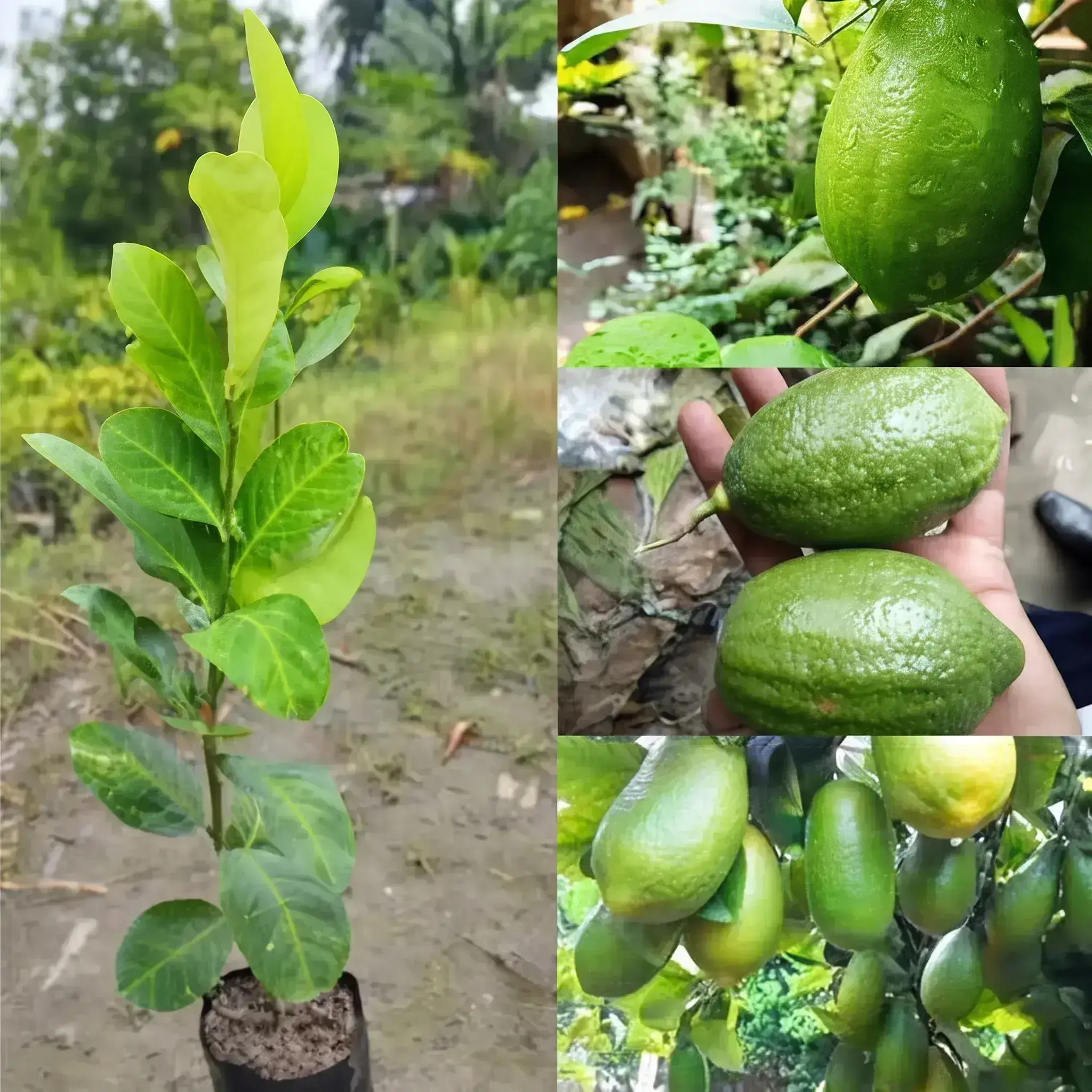
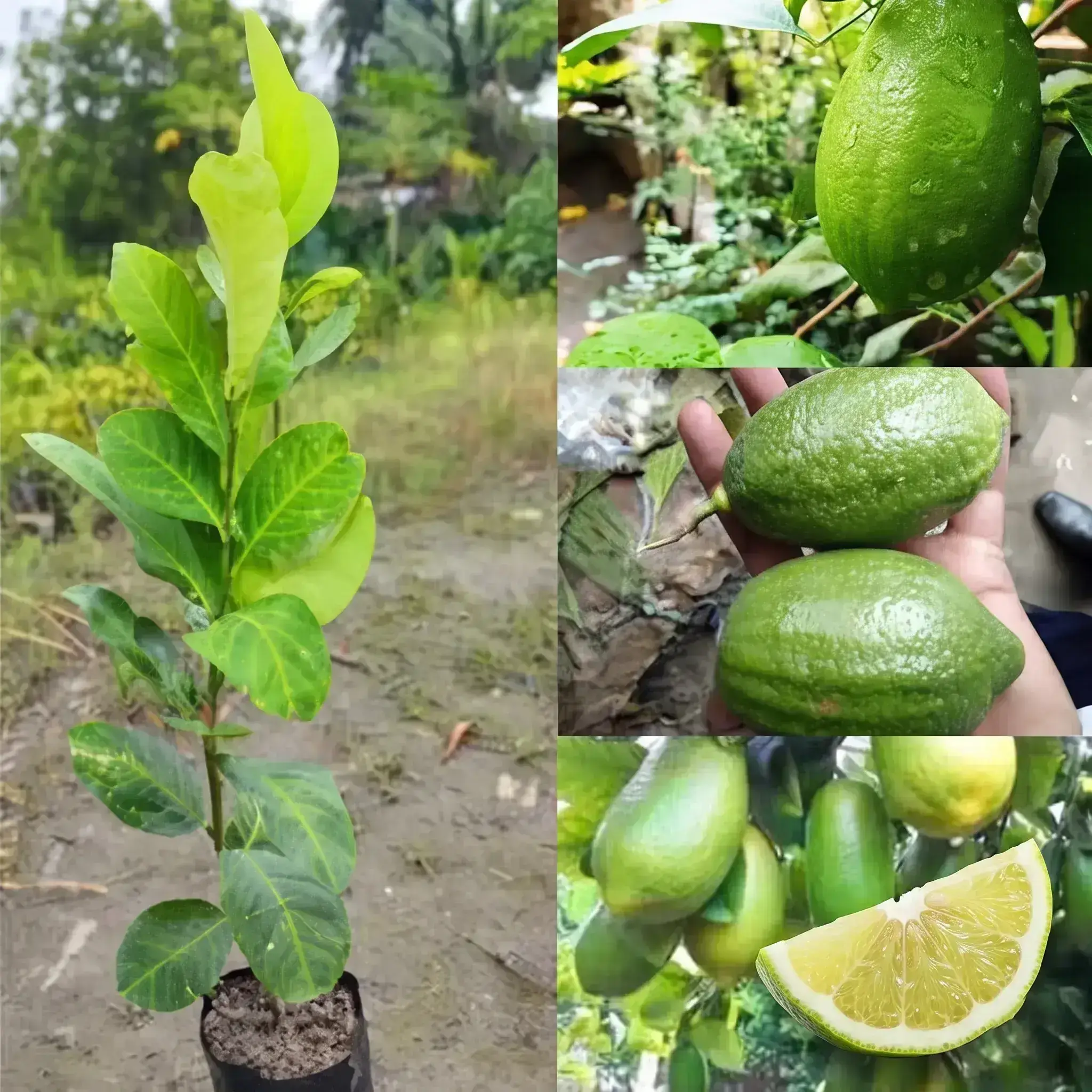
Lemon Tree | Eureka Lemon Tree (Citrus × limon) Seedless Lemon Plant
Hybrid Seedless Lemon is a premium grafted lemon plant marketed for gardeners who want to grow fresh lemons at home with the convenience of a seedless or very low-seed fruit type.
The botanical name used for lemon is Citrus × limon (L.) Osbeck, belonging to the Rutaceae family. Kew currently accepts Citrus × limon as a hybrid taxon and gives its hybrid formula as involving C. maxima, C. medica and C. reticulata. The plant is widely cultivated, including throughout India.
The exact identity of a plant sold commercially as “Hybrid Seedless Lemon” can depend on the nursery’s selected mother plant. Therefore, the word “hybrid” in this product name should not be taken as a claim of a particular documented breeding cross unless cultivar documentation is supplied.
Seedless lemon types are commercially available in India. For example, IARI’s Pusa Lemon-1 is an improved lemon selection that has been reported to produce seedless fruit under solid-block orchard conditions.
🌱 Plant Characteristics
- Common Name: Seedless Lemon, Lemon, Nimbu
- Botanical Name: Citrus × limon (L.) Osbeck
- Family: Rutaceae
- Plant Type: Evergreen fruit tree
- Propagation: Grafted
- Growth Habit: Small to medium-sized citrus tree
- Fruit Type: Citrus hesperidium
- Fruit Colour: Green when immature, usually yellow at maturity
- Fruit Texture: Juicy and segmented
- Flavour: Characteristically acidic and refreshing
- Sunlight: Full sun
- Suitable For: Home gardens, kitchen gardens, terraces and orchards
Citrus plants are generally evergreen trees or shrubs, and their fruits are botanically classified as hesperidia, with juice-filled pulp vesicles inside the fruit segments.
🍋 Seedless Lemon Fruit Characteristics
The main attraction of this plant is the possibility of harvesting lemons with few or no noticeable seeds, depending on the particular selected plant and growing conditions.
Typical lemon fruits are:
- Green during early development
- Yellow or yellow-green when mature
- Juicy and acidic
- Divided into segments
- Aromatic
- Covered by a fragrant citrus peel
- Useful for fresh juice and cooking
Commercial seedless lemon descriptions in India commonly report fruits with little or no seed development. However, seedless does not always mean that every individual fruit will contain absolutely zero seeds. Some commercially sold seedless lemon plants note that occasional fruits may contain a very small number of seeds.
Fruit size, shape, peel thickness, juice content, acidity and seed development can vary according to the specific lemon selection, pollination conditions, climate and plant health.
🌼 Flowers
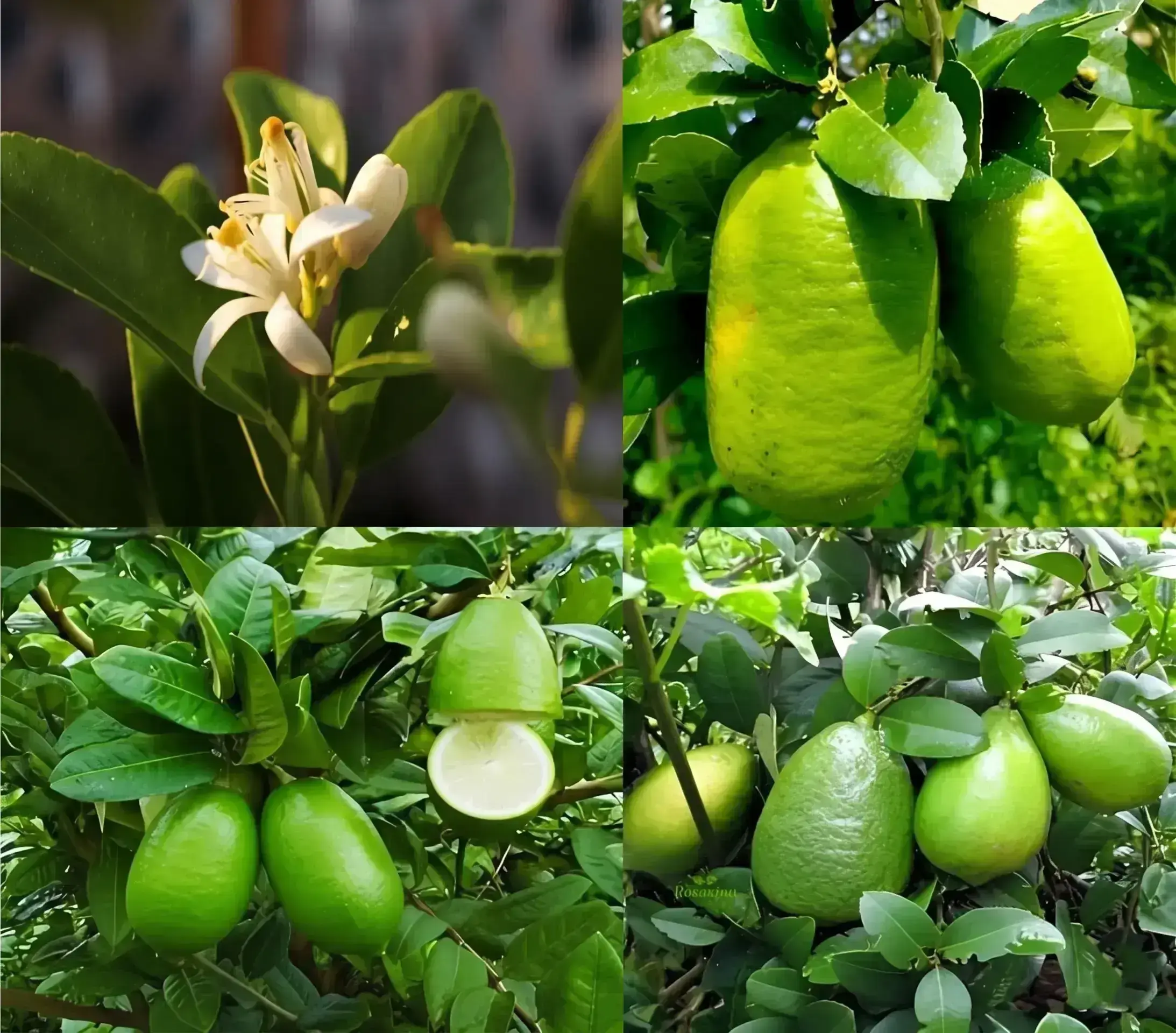
Healthy lemon trees produce attractive, fragrant flowers that are generally white.
Flowers can appear during different growth flushes, and suitable citrus varieties may produce multiple flowering periods under favourable conditions.
The combination of adequate sunlight, healthy foliage, appropriate irrigation and balanced nutrition supports flowering and fruit development.
🍋 Fruit Development & Harvest
After flowering, small green fruits begin developing and gradually increase in size.
The fruit generally changes from green toward yellow as it approaches maturity. Lemons can often be harvested when they have reached suitable size and maturity even if some green colour remains, depending on the desired use.
For home harvesting:
- Pick fruit with suitable size and firmness.
- Use clean pruning shears if necessary.
- Avoid pulling fruit aggressively from the branch.
- Do not allow excessively mature fruit to remain unnecessarily long on the tree.
A grafted plant can reach reproductive maturity earlier than a seed-grown plant, but the actual fruiting period depends on the age and maturity of the grafted plant and its growing conditions.
Fruiting is not guaranteed immediately after delivery and depends on plant age, variety, climate, sunlight, nutrition, water management and growing conditions.
☀️ Sunlight Requirements
Lemon is a sun-loving fruit plant.
For good growth:
- Provide approximately 6–8 hours of direct sunlight per day where practical.
- Select an open, bright location.
- Avoid deep shade.
- Good sunlight is particularly important for flowering and fruit development.
For terrace or balcony cultivation, position the container where the plant can receive strong direct sunlight for most of the day.
💧 Watering
Lemon prefers regular moisture but does not like continuously waterlogged soil.
For a young grafted plant:
- Water thoroughly when the upper soil layer begins to dry.
- Maintain moderate moisture during active growth.
- Increase watering during very hot and dry weather.
- Reduce watering during heavy monsoon conditions.
- Ensure excess water drains away quickly.
Avoid keeping the pot standing in water.
Established citrus plants benefit from adequate moisture during flowering, fruit development and periods of active growth. NHB guidance also emphasises maintaining adequate moisture at important growth stages while avoiding water contacting the main trunk.
🪴 Soil & Potting
Use a fertile, loose and well-drained growing medium.
For container cultivation, a practical mixture can contain:
- Good-quality garden soil
- Well-decomposed compost
- Cocopeat
- Coarse sand or another drainage-improving material
The soil should hold sufficient moisture without becoming compacted or waterlogged.
For ground planting, improve poor soil with mature organic matter and make sure the planting location has good drainage.
🌱 Fertilizer & Nutrition
Lemon plants benefit from balanced nutrition throughout active growth.
For a young plant:
- Apply well-decomposed compost or farmyard manure.
- Use a balanced citrus or fruit-tree fertilizer.
- Provide micronutrients if a deficiency is identified.
- Apply fertilizer according to plant size and the manufacturer’s recommended dosage.
- Water after applying granular fertilizer.
Avoid excessive nitrogen. Too much nitrogen can encourage soft vegetative growth without necessarily improving fruit production.
For mature plants, fertilizer requirements increase according to canopy size, soil fertility and crop load.
🌱 Grafting & Propagation
Grafting is commonly used for producing selected citrus planting material.
The grafted upper portion, called the scion, is selected for desirable characteristics, while the rootstock provides the root system.
After receiving the plant:
- Keep the graft union above the soil.
- Never bury the graft union during planting.
- Check regularly for shoots emerging below the graft.
- Remove unwanted rootstock shoots before they become dominant.
- Avoid damaging the graft union during weeding or pruning.
NHB cultivation guidance notes that lemons can be propagated through budding, while vegetative propagation methods are widely used for selected citrus planting material.
🏡 Home Garden Suitability
Hybrid Seedless Lemon is particularly useful for gardeners who want a practical fruit plant that can supply fresh lemons for regular household use.
It can be grown in:
- Home gardens
- Kitchen gardens
- Backyards
- Farmhouses
- Large balconies
- Sunny terraces
- Courtyards
- Containers
- Small fruit gardens
Its evergreen nature also gives it ornamental value in addition to its fruit crop.
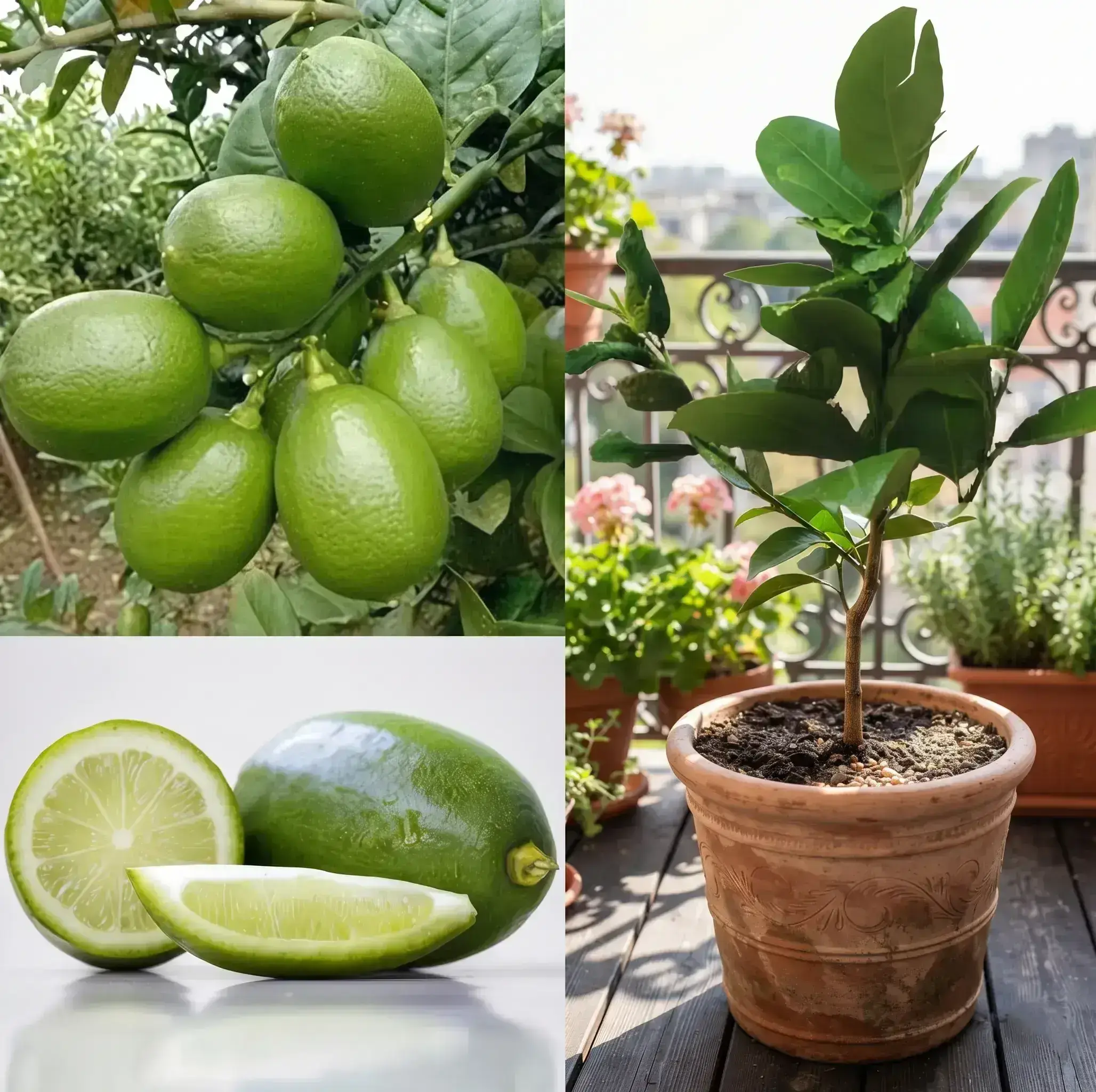
🪴 Container & Terrace Gardening
One of the advantages of lemon is that a grafted plant can be maintained in a suitably large container with proper care.
For container cultivation:
- Use a large container with drainage holes.
- Choose a stable pot that will not easily tip over.
- Use a fertile, well-draining medium.
- Provide strong direct sunlight.
- Avoid overwatering.
- Feed regularly during active growth.
- Prune lightly to maintain a manageable shape.
- Repot when the roots become crowded.
A container-grown lemon should not automatically be considered a permanently dwarf plant. Its final size depends on rootstock, variety, container size, nutrition and pruning.
✂️ Pruning & Maintenance
Regular light maintenance helps maintain a healthy canopy.
Remove:
- Dead branches
- Broken branches
- Diseased growth
- Weak or crossing shoots
- Unwanted rootstock shoots
- Excessively crowded interior growth
Avoid severe pruning unless necessary.
Always use clean pruning tools when cutting the plant.
🌱 Climate Requirements
Lemon is widely cultivated in warm and subtropical regions.
It can perform well in many Indian growing regions when provided with:
- Adequate sunlight
- Suitable soil drainage
- Regular moisture
- Balanced nutrition
- Protection from severe environmental stress
India has considerable diversity in citrus genetic resources, and lemon types are cultivated across several regions. The Indian Flora database records Citrus × limon as a cultivated fruit tree in multiple Indian states.
🍋 Everyday Uses
Fresh lemons are extremely useful in an Indian kitchen.
Home-grown lemons can be used for:
- Lemon juice
- Shikanji
- Pickles
- Chutneys
- Salad dressing
- Cooking
- Garnishing
- Homemade beverages
- Lemon-based sauces
- Flavoured water
The aromatic peel can also be used in cooking when properly washed and when suitable for the intended culinary purpose.
🌱 Why Choose Hybrid Seedless Lemon?
- Grafted live lemon plant
- Convenient seedless or low-seed fruit characteristic
- Useful for regular household cooking
- Evergreen citrus foliage
- Fragrant flowers
- Juicy and strongly flavoured fruit
- Suitable for Indian home gardens
- Can be grown in a large container
- Suitable for terrace gardening with sufficient sunlight
- Compact management is possible with appropriate pruning
- Excellent choice for gardeners who want a practical edible fruit plant
🌿 Botanical Information
Botanical Name: Citrus × limon (L.) Osbeck
Family: Rutaceae
Order: Sapindales
Genus: Citrus
Plant Type: Evergreen citrus tree
Common Names: Lemon, Lemon tree, Nimbu
Fruit Type: Hesperidium
Propagation: Grafted/budded planting material
Growing Habit: Evergreen, branching fruit tree
Kew currently treats Citrus × limon as an accepted hybrid taxon. It also lists several historical names as synonyms, reflecting the complex taxonomy of cultivated citrus.
📦 Live Plant Delivery & Natural Variation
This is a live grafted plant, so the plant you receive may naturally look different from product photographs.
During packing and transportation, temporary stress can occur. You may notice:
- Slight leaf yellowing
- Temporary leaf drooping
- Minor leaf shedding
- Small differences in height
- Different leaf size
- Variation in stem thickness
- Different branching patterns
- Minor transport-related stress
These changes can occur because of differences in light, temperature, humidity, watering and transportation conditions.
After delivery:
- Carefully unpack the plant.
- Place it in a bright location.
- Water according to soil moisture.
- Allow it to acclimatise.
- Avoid heavy fertilizer immediately after arrival.
- Protect the graft union from damage.
Product photographs are representative. The actual plant supplied may naturally vary in size, foliage, branching and appearance.
⚠️ Important Note
The product name “Hybrid Seedless Lemon” describes the commercial planting material being offered. The exact cultivar or breeding parentage should not be assumed unless supported by authenticated nursery or breeder documentation.
Seedless characteristics can also vary. Even recognised seedless selections may occasionally produce a small number of seeds under certain growing or pollination conditions.
Similarly, grafted does not mean immediate fruiting. The plant must establish properly, and flowering and fruiting depend on plant age, graft maturity, rootstock, variety, climate, sunlight, nutrition and care.
Fruiting is not guaranteed immediately after delivery and depends on plant age, variety, climate, sunlight, nutrition, water management and growing conditions.
🔗 Botanical Information & Further Reading
- Kew – Plants of the World Online: Citrus × limon
- Kew – Citrus × limon General Information
- ICAR – Indian Agricultural Research Institute: Pusa Lemon-1
- ICAR – Central Citrus Research Institute, Nagpur
- NHB – Citrus/Lemon Cultivation Study
- India Flora Online – Citrus × limon
- eFlora of India – Citrus × limon
For More Information
Visit: Nursery-Plant.Com
For Contact Visit:Contact Us
For Shopping Visit: Shop Page


Reviews
There are no reviews yet.