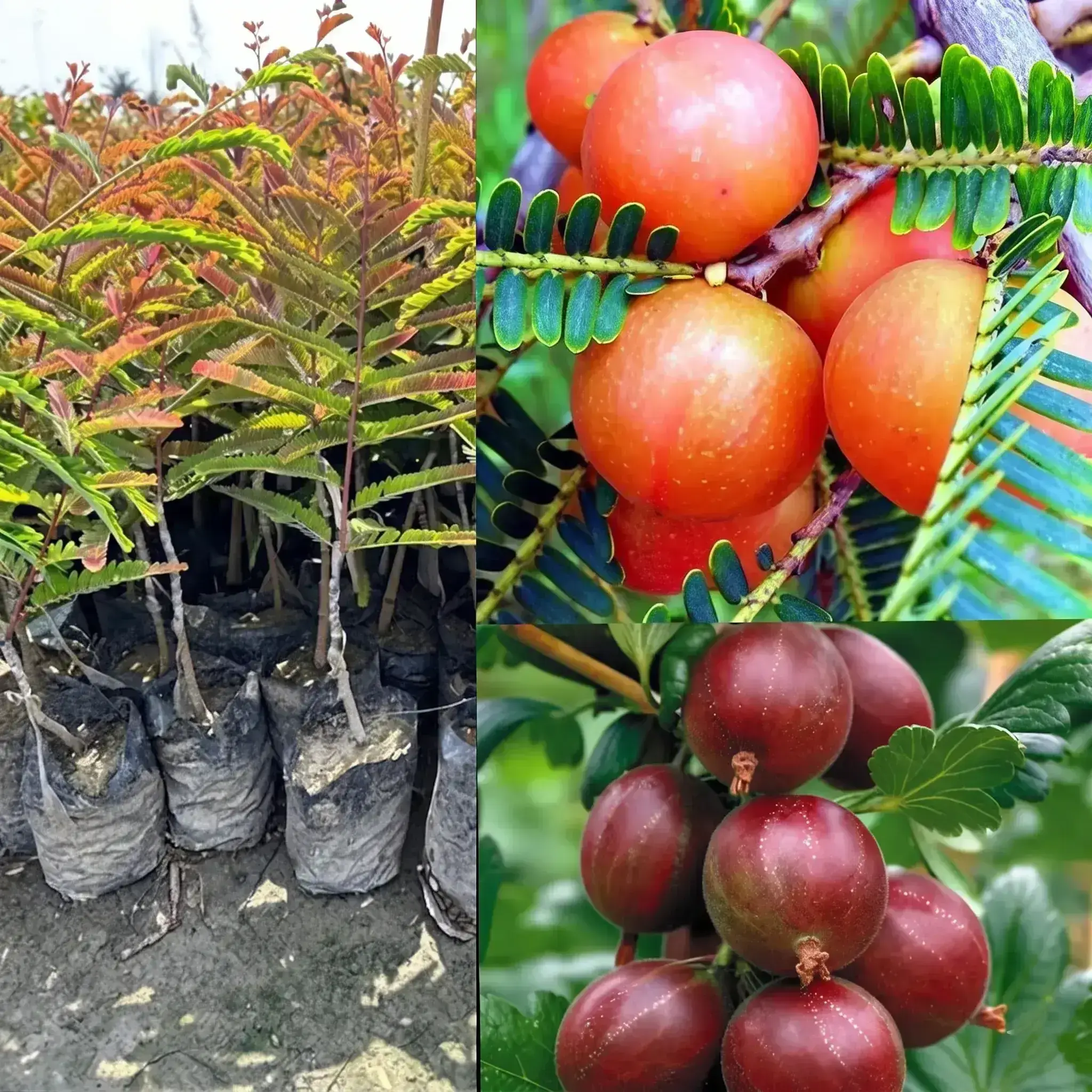

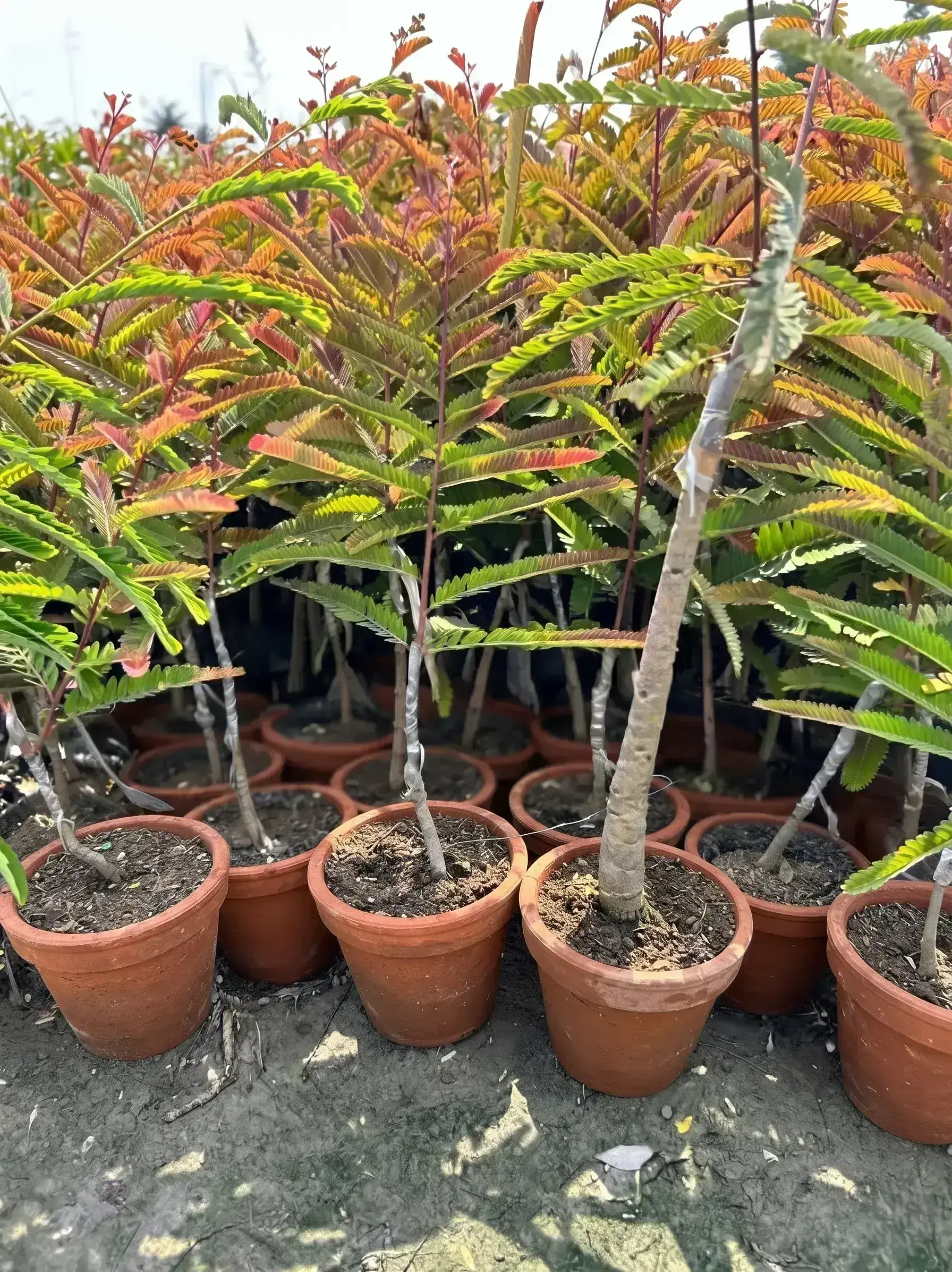
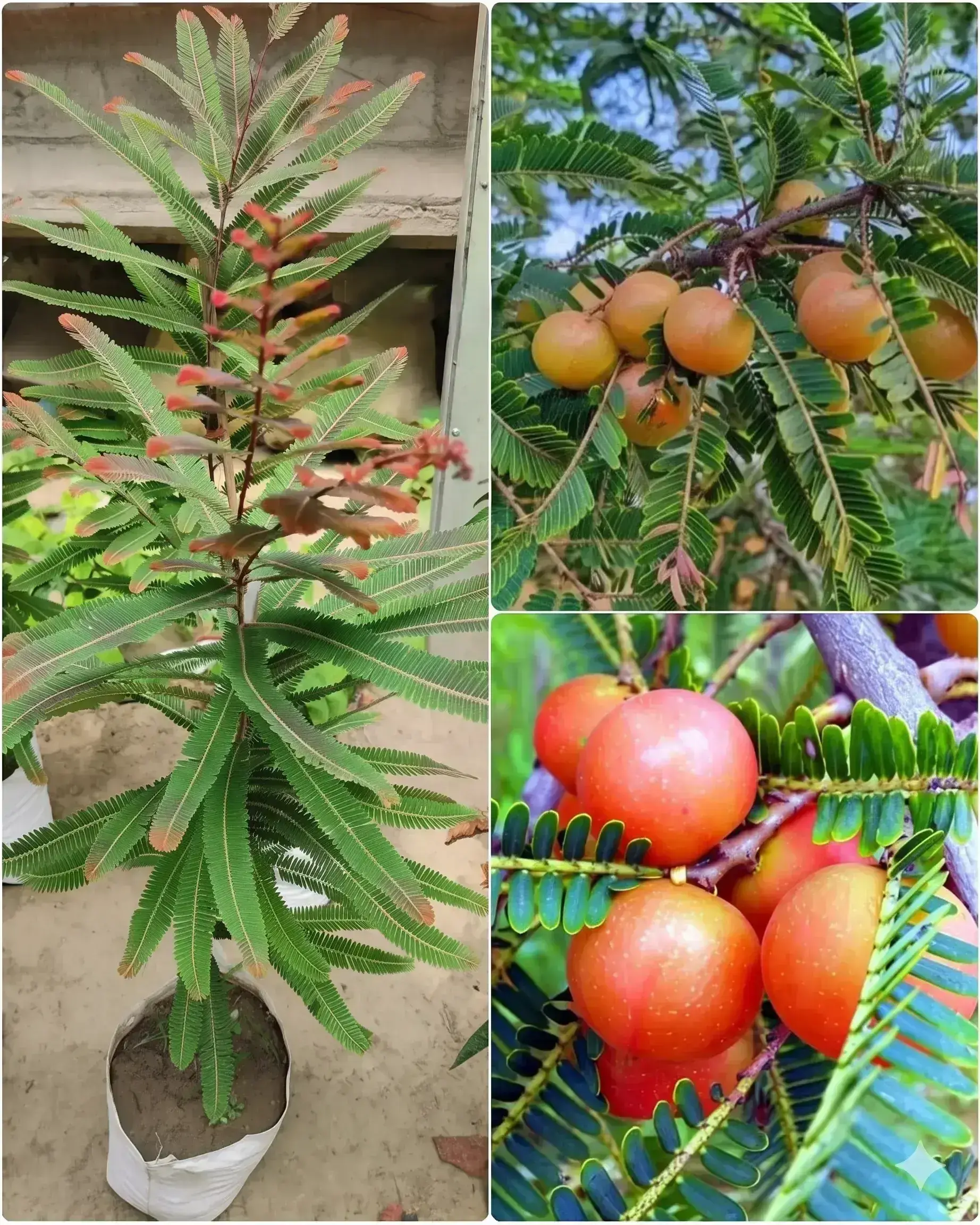
Indian Gooseberry Amla Plant | Red Amalaki Tree (Phyllanthus emblica) Nelli tree Grafted Fruit Plant
The Red Amla Plant (Thai Variety Grafted), botanically identified as Phyllanthus emblica L. Amla is a hardy fruit tree well known across India and other parts of tropical and subtropical Asia. Kew lists Phyllanthus emblica as the accepted botanical name, while Emblica officinalis is a commonly encountered botanical synonym.
This plant is supplied as a grafted fruit plant, making it different from a seed-grown amla tree. Grafting allows a selected scion to be propagated onto a suitable rootstock, and grafted or budded planting material is an established method used for commercial amla cultivation.
The name “Red Amla” or “Thai Variety” is used in the nursery trade for particular selections of amla marketed for their distinctive reddish characteristics or fruit appearance. Because the exact registered cultivar behind this nursery name is not specified, fruit colour, size, flavour and other varietal characteristics can vary between planting sources. This listing therefore avoids promising a particular fruit colour or yield as a guaranteed characteristic.
It is a useful choice for gardeners who want to grow an unusual amla selection while also enjoying the attractive appearance of a grafted fruit tree.
🌿 Botanical Information
- Botanical Name: Phyllanthus emblica L.
- Common Names: Amla, Indian Gooseberry, Aonla, Nelli
- Family: Phyllanthaceae according to current Kew taxonomy
- Common older family treatment: Euphorbiaceae appears in several Indian horticultural references
- Plant Type: Fruit-bearing tree
- Product Type: Grafted live fruit plant
- Market Name: Red Amla / Thai Variety
- Propagation: Grafted
- Native Range: Tropical and subtropical Asia
- Suitable Use: Home garden, fruit garden, terrace garden with adequate space, orchard and farm planting
Kew currently places Phyllanthus emblica in the family Phyllanthaceae, while Indian horticultural literature such as TNAU has traditionally listed amla under Euphorbiaceae.
🍒 What Makes Red Amla Interesting?
The traditional amla fruit is usually associated with its green to yellow-green appearance, while nursery selections sold as Red Amla are marketed for more unusual reddish characteristics.
Some Indian nursery sources specifically market Thai Red Amla with reddish plant parts and light-red fruit. However, these characteristics should be understood as nursery-trade descriptions rather than a formally verified cultivar standard.
The plant remains an amla, Phyllanthus emblica, and should be cared for broadly according to the requirements of amla.
If your main purpose is to obtain a specific red-fruited selection, it is advisable to retain the nursery’s supplied varietal identification and purchase from a reliable source.
🌳 Grafted Plant Advantage
This product is supplied as a grafted plant rather than an ordinary seedling.
Amla is commercially propagated using grafting and budding, and the National Horticulture Board’s planting-material guidance describes aonla as being commercially propagated by budding/grafting on seedling rootstocks.
Grafting is useful because the upper part of the plant—the scion—comes from a selected mother plant. However, grafting does not mean that fruiting will happen immediately after delivery.
Fruit production depends on several factors, including:
- Age and maturity of the graft
- Health of the root system
- Quality of the graft union
- Sunlight
- Soil and drainage
- Water management
- Nutrition
- Local climate
- Pruning and training
- Plant stress after transportation
Therefore, fruiting should not be considered guaranteed immediately after planting.
☀️ Sunlight Requirements
Amla generally performs well in a sunny location.
For a home garden, choose a location receiving good direct sunlight for most of the day. Strong sunlight supports healthy vegetative growth and is particularly important when growing the plant for fruit production.
Avoid placing the plant permanently in a heavily shaded corner, underneath a dense tree canopy or against a structure that blocks most direct sunlight.
A bright, open garden location is preferable.
🌱 Soil Requirements
Amla is considered a hardy fruit crop and can grow in a range of soil conditions. TNAU describes amla as a subtropical plant that prefers a relatively dry climate and notes its ability to tolerate variable soil conditions, including salinity and alkalinity.
For home gardening, however, good drainage is still important.
A suitable planting area should have:
- Loose or reasonably well-structured soil
- Good drainage
- Adequate organic matter
- No prolonged standing water around the roots
- Sufficient space for root development
Heavy, continuously waterlogged soil should be improved before planting.
For container growing, use a large container with several drainage holes and a well-draining growing medium.
💧 Watering Guide
Newly planted amla requires regular watering while it establishes its root system.
Water deeply enough to moisten the root zone, but avoid keeping the soil permanently saturated.
A practical home-garden approach is:
After planting:
Water regularly according to soil moisture and weather.
During hot and dry weather:
Monitor the soil more frequently and provide water when the upper soil begins drying.
During monsoon:
Reduce irrigation when rainfall is sufficient.
After establishment:
Water mainly according to rainfall, soil condition and plant requirement.
TNAU recommends irrigation during the initial establishment period and notes that irrigation may not be necessary during sufficiently wet rainy and winter periods.
The exact watering frequency should therefore be adjusted rather than following a fixed “every X days” schedule.
🌿 Fertilizer & Nutrition
Amla responds well to proper nutrition, especially when it is being grown for fruit production.
Well-decomposed organic manure or compost can be incorporated around the plant while keeping it away from direct contact with the trunk.
TNAU provides a commercial amla nutrient schedule that includes farmyard manure along with nitrogen, phosphorus and potassium for bearing plants, with fertilizer application associated with pruning.
For home gardens:
- Add mature compost or well-decomposed organic manure.
- Use a balanced fruit-tree fertilizer when appropriate.
- Avoid excessive fertilizer application.
- Increase nutrition gradually as the plant becomes established.
- Do not place concentrated fertilizer directly against the stem.
For container plants, nutrients may need to be replenished more regularly because the available growing medium is limited.
✂️ Pruning & Training
Training during the early years helps create a strong and manageable tree structure.
TNAU recommends developing the main branches approximately 0.75–1 metre above ground level and using a modified central-leader approach. Crowded branches can later be thinned to improve the productive canopy.
For a home garden:
- Remove dead or damaged branches.
- Remove weak and badly crossing branches.
- Keep the centre reasonably open.
- Remove unwanted shoots arising below the graft union.
- Avoid heavy pruning when the plant is already stressed.
🔗 Important Graft Union Care
Because this is a grafted plant, the graft union is an important part of the plant.
After planting:
- Keep the graft joint above the soil surface.
- Do not bury the graft union during repotting or planting.
- Do not allow soil or mulch to remain piled against the graft.
- Watch for shoots developing below the graft.
- Remove rootstock shoots carefully when they appear.
Shoots emerging from below the graft may belong to the rootstock rather than the selected scion and can compete with the grafted portion.
🪴 Can It Be Grown in a Pot?
Yes, a young grafted amla plant can be grown in a large container, but amla ultimately develops into a tree and should not be treated as a permanently small indoor plant.
For container cultivation:
- Start with a suitably large, sturdy container.
- Make sure drainage is excellent.
- Use a porous, well-draining growing medium.
- Provide strong sunlight.
- Support the plant if necessary while it establishes.
- Prune selectively to maintain a practical size.
- Repot when the root system becomes strongly root-bound.
For long-term growth and fruit production, an open ground planting location generally provides more room for root and canopy development.
🌳 Planting in the Ground
If planting in a garden or farm, choose an open location with adequate sunlight and enough long-term space for the tree.
TNAU recommends approximately 6 × 6 metres spacing for conventional amla planting, although the ideal spacing for a home garden depends on the planting system, variety, soil, pruning method and available space.
Do not plant the tree immediately beside:
- Building foundations
- Narrow boundary walls
- Utility wires
- Underground utility lines
- Small pathways
- Other trees with dense canopies
Remember that the attractive young plant you receive will eventually become a much larger woody fruit tree.
🍈 Fruiting Expectations
One of the main reasons to grow a grafted amla plant is the possibility of obtaining fruit from a selected planting material rather than growing an unknown seedling.
However, grafted does not mean instant fruiting.
The actual time to fruiting depends on the maturity of the supplied plant, scion maturity, rootstock, climate, sunlight, nutrition, watering, pruning and general plant health.
The word “Red” also should not be interpreted as a guarantee that every fruit will develop exactly the same colour. Fruit characteristics can vary with the particular selection, maturity and growing conditions.
If the plant is young when delivered, give it sufficient time to establish before expecting significant fruit production.
🌦️ Climate & Indian Growing Conditions
Amla is well suited to tropical and subtropical environments and has a long history of cultivation in India. Kew records its native distribution across a broad area of tropical and subtropical Asia, including India and Thailand.
Indian horticultural guidance describes amla as a hardy subtropical fruit crop capable of growing under a range of soil conditions.
This makes amla a practical fruit-tree choice for many Indian gardens, provided the plant receives adequate sunlight and the soil is not continuously waterlogged.
In areas with very heavy monsoon rainfall, drainage becomes particularly important.
🐛 Pests & Plant Health
Like other fruit trees, amla can experience pest and disease problems under favourable conditions.
TNAU lists problems including gall caterpillar, bark-eating caterpillar and rust among amla plant-protection concerns.
For a home garden:
- Inspect new shoots regularly.
- Remove visibly damaged or dead plant parts.
- Keep the growing area clean.
- Avoid excessive watering.
- Maintain good air circulation through sensible pruning.
- Use plant-protection products only when necessary and according to their label directions.
Do not assume that a grafted plant is completely pest- or disease-free.
🏡 Best Uses
The Red Amla grafted plant can be grown for:
- Home fruit gardens
- Kitchen gardens
- Backyard orchards
- Farm planting
- Terrace gardens with suitable large containers
- Collection of unusual fruit-tree selections
- Garden landscapes where a fruit-bearing tree is desired
It can also be an interesting addition for gardeners who already grow conventional amla and want to try a different nursery selection.
🌱 Planting Tips After Delivery
Live plants can experience some stress during transportation. Follow these steps after receiving the plant:
- Open the package carefully.
- Check the plant and graft union.
- Keep it in a bright, protected location initially if it has experienced transport stress.
- Water according to the moisture level of the growing medium.
- Do not immediately apply strong fertilizer.
- Allow the plant to acclimatize.
- Plant or repot carefully without disturbing the root ball unnecessarily.
- Keep the graft union above the soil.
- Gradually expose the plant to its final sunlight conditions if required.
- Avoid unnecessary pruning immediately after transportation.
📦 Live Plant Delivery & Natural Variation
This is a live plant, not a manufactured product.
The delivered plant may naturally vary in:
- Height
- Number of branches
- Leaf density
- Stem thickness
- Shape
- Root-ball size
- Pot or growing-bag size
- Leaf colour
- Minor cosmetic marks
These variations are normal in living plants and do not necessarily indicate poor plant health.
The plant may also arrive with fewer leaves or mild transport stress depending on the season and journey. With proper care, it can recover and continue growing.
⚠️ Important Note About the “Thai Red Amla” Name
“Thai Red Amla” is used commercially by nurseries for particular Phyllanthus emblica planting material. I found nursery descriptions specifically associating the name with reddish plant and fruit characteristics.
However, authoritative Indian horticultural sources list established amla cultivars such as Banarasi, NA-7, Krishna, Kanchan, Chakaiya and BSR-1, rather than identifying “Thai Red Amla” as one of those standard Indian cultivars.
Therefore, this product should be understood as a nursery-marketed Thai/Red Amla selection, unless the seller provides a documented cultivar name or propagation record.
🌿 Why Grow A Grafted Amla Plant?
A grafted amla plant combines the practical advantages of selected propagation with the beauty and usefulness of a fruit tree.
Key reasons gardeners may choose it include:
- Grafted planting material rather than ordinary seedling stock
- Amla fruit tree suitable for Indian growing conditions
- Interesting Red/Thai nursery selection
- Suitable for home gardens and orchards
- Can be maintained in a large container while young
- Useful for gardeners interested in unusual fruit varieties
- Long-term fruit-tree value with proper care
🛒 Product Summary
Red Amla Plant (Thai Variety Grafted) is a live grafted Phyllanthus emblica fruit plant marketed as a Thai/Red Amla selection. It is suitable for gardeners looking for an unusual amla plant for a home garden, backyard orchard or suitable large container.
Amla is a hardy tropical/subtropical fruit tree, and grafted/budded planting material is an established propagation method for the crop.
For the best results, provide plenty of sunlight, well-drained soil, sensible watering, regular nutrition and sufficient space for long-term tree growth.
Please remember: the plant’s actual fruiting time, fruit colour, fruit size and yield depend on the specific planting material and growing conditions. No fruiting or yield should be considered guaranteed immediately after delivery.
🔗 Botanical Information & Further Reading
- Kew Science – Phyllanthus emblica L. — Current accepted botanical name, distribution and taxonomy.
- Tamil Nadu Agricultural University – Amla Horticulture Guide — Varieties, climate, planting, irrigation, nutrition and pruning information.
- National Horticulture Board – Seed & Planting Material Manual — Commercial aonla cultivars and grafting/budding propagation information.
- National Horticulture Board – Aonla DPR — Background, distribution and cultivation information for Indian aonla.
- Thailand Department of Medical Sciences – Phyllanthus emblica Monograph — Thai botanical and traditional reference information.
- Thailand Department of Agriculture Plant Database — Thai government plant and genetic-resource database.
For More Information
Visit: Nursery-Plant.Com
For Contact Visit:Contact Us
For Shopping Visit: Shop Page


Reviews
There are no reviews yet.