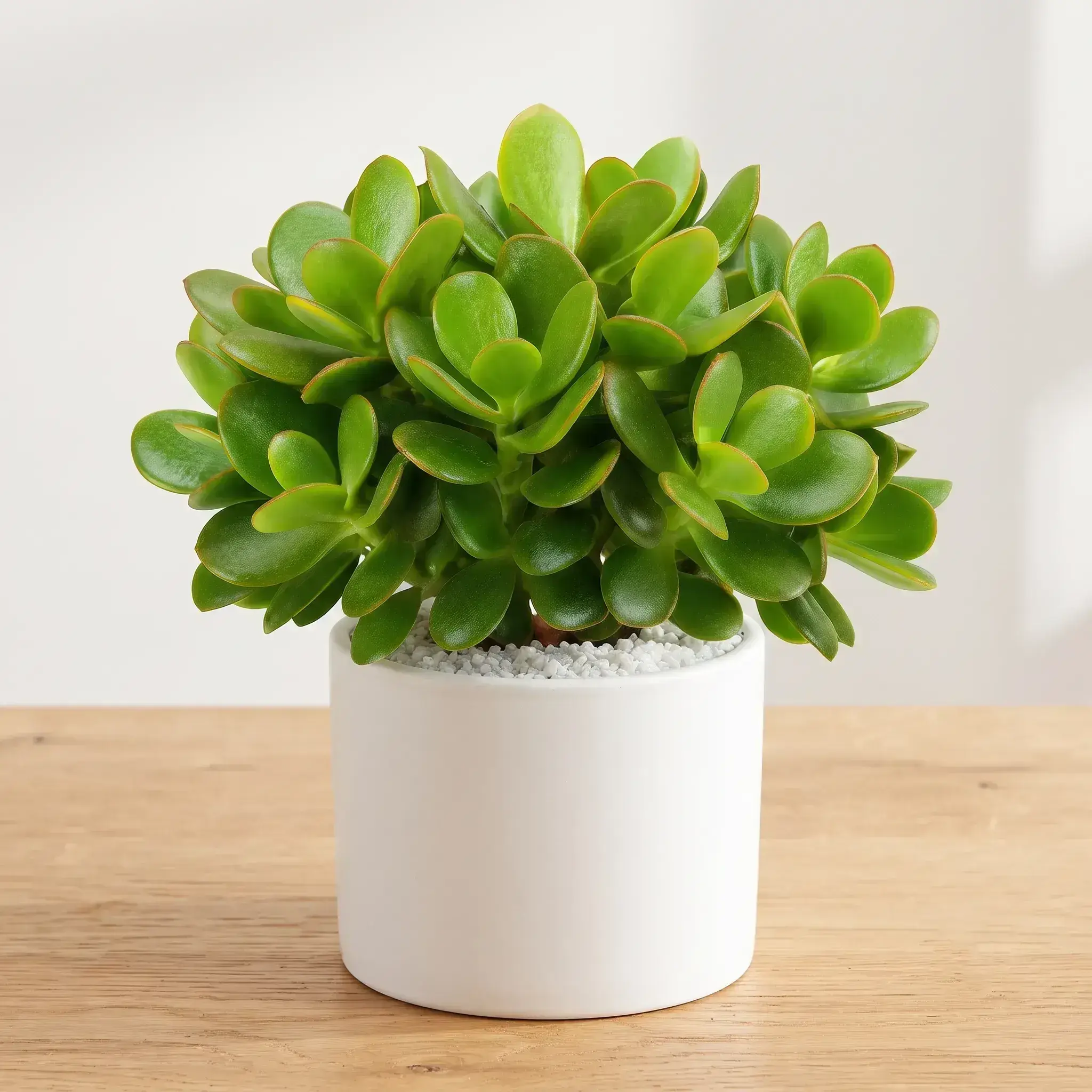
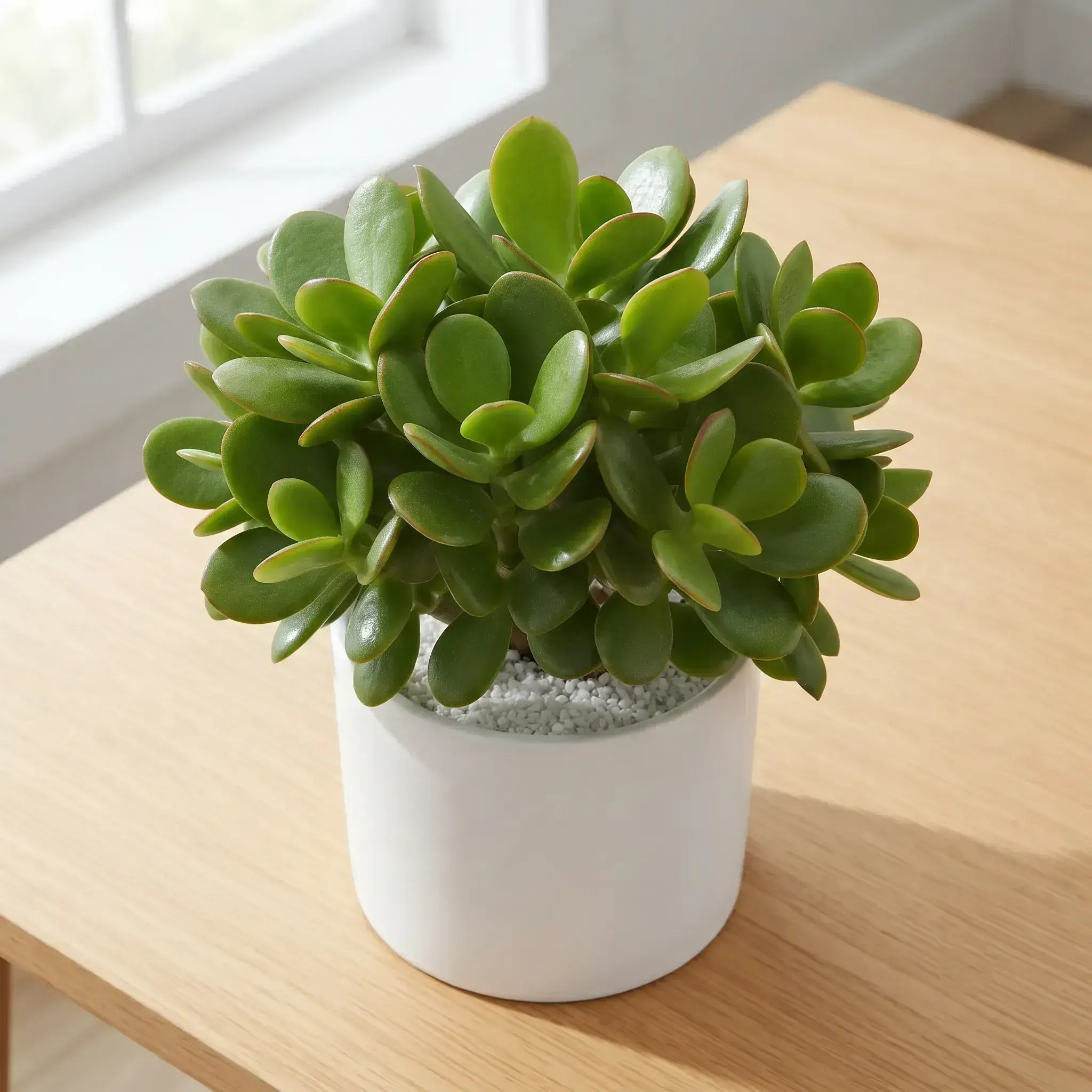


Dollar Succulent Jade Plant | Crassula ovata Live Lucky Money Plant for Home & Office
🌿 About the Plant
The Dollar Succulent Jade Plant, commonly called Jade Plant, Lucky Plant, Money Plant or Jade Tree, is a popular succulent valued for its thick, fleshy leaves, sturdy stems and attractive miniature-tree appearance. It is an excellent container plant for homes, offices, balconies, windowsills and succulent collections.
Its botanical name is Crassula ovata (Mill.) Druce, and it belongs to the Crassulaceae family. Kew currently accepts Crassula ovata as the correct botanical name and records its native range in southeastern Mozambique and South Africa. It is a succulent subshrub or shrub adapted to subtropical conditions.
The common names Money Plant, Lucky Plant and Jade Plant are associated with cultural beliefs about prosperity and good fortune. These are traditional or decorative associations, not scientifically established guarantees of wealth or financial success.
This product is supplied as a live Jade Plant with pot, making it convenient for indoor and container gardening.
🌱 Plant Characteristics
- Common Name: Jade Plant, Lucky Plant, Money Plant, Jade Tree, Dollar Succulent
- Botanical Name: Crassula ovata (Mill.) Druce
- Family: Crassulaceae
- Plant Type: Evergreen succulent shrub
- Native Range: Southeastern Mozambique to South Africa
- Growth Habit: Branched, upright and spreading
- Foliage: Thick, fleshy, oval leaves
- Stem: Thickens and becomes woody with age
- Flowers: Small, star-shaped flowers
- Flower Colour: Usually white to pale pink
- Light: Bright light; some direct sunlight can be beneficial
- Water: Low; allow soil to dry between watering
- Soil: Very well-drained succulent/cactus mix
- Pot Suitability: Excellent
- Indoor Use: Yes, with sufficient light
NCSU describes Jade Plant as a low-maintenance succulent shrub that can develop a miniature-tree form as it matures.
🍃 Foliage
The main attraction of the Jade Plant is its thick, fleshy, oval-shaped foliage.
The leaves store water, which helps the plant tolerate periods of dryness. Their smooth, fleshy appearance gives the plant its characteristic jade-green appearance.
With sufficient light, mature plants can develop sturdy branches and a small-tree-like form. The combination of thick stems and fleshy leaves makes Jade Plant particularly attractive as a bonsai-style or miniature-tree specimen.
The exact appearance can vary depending on plant age, light intensity, pruning and growing conditions.
☀️ Sunlight Requirements
Jade Plant prefers bright light.
RHS recommends growing Crassula ovata in full light, while its houseplant guidance notes that bright indirect light is suitable and that excessive intensity can cause leaf scorch.
Suitable locations include:
- Bright windowsills
- East-facing windows
- Bright balconies
- Sunny indoor areas
- Covered terraces
- Bright office windows
If the plant has been grown under filtered nursery light, introduce stronger direct sunlight gradually.
Too little light can result in leggy or stretched growth, while very intense sudden sunlight can scorch leaves.
For Indian homes, several hours of bright light can help maintain compact and healthy growth.
💧 Watering
Jade Plant requires much less water than many tropical houseplants.
Allow the growing medium to dry thoroughly between watering sessions.
A simple routine is:
- Check the soil before watering.
- Wait until the soil has dried substantially.
- Water thoroughly.
- Allow excess water to drain completely.
- Do not leave the pot standing in water.
RHS specifically advises allowing the compost to dry between waterings and reducing watering during winter.
Overwatering is one of the most common problems with Jade Plants. NCSU notes that excessive watering can contribute to leaf fall and root rot.
During India’s monsoon season, watering should be reduced if the potting mix remains wet for extended periods.
🪴 Soil & Potting
Jade Plant needs a very well-drained growing medium.
A suitable mixture can contain:
- Cactus or succulent potting mix
- Loamy soil
- Coarse sand
- Perlite or pumice
- A limited amount of compost
RHS recommends cactus compost and full light for Crassula ovata.
NCSU also recommends well-drained, loamy potting soil and warns that poorly drained soil can cause root rot.
The pot should always have drainage holes.
Avoid heavy soil that remains saturated for several days.
🌱 Fertilizer & Nutrition
Jade Plant is not a heavy feeder.
During active growth, a balanced liquid fertilizer can be applied at a diluted rate according to the product label.
RHS recommends a general liquid fertilizer approximately monthly during spring and summer.
Avoid excessive feeding because Jade Plants naturally grow relatively slowly compared with many foliage plants.
Do not fertilize a severely stressed or freshly transported plant immediately. Allow it to acclimatise first.
During periods of slow growth, reduce or stop feeding.
🌡️ Temperature & Humidity
Jade Plant is adapted to subtropical conditions and generally does well in normal household environments.
Unlike many tropical foliage plants, it does not require high humidity. RHS specifically notes that Crassula ovata is adaptable to average indoor conditions and does not require special humidity measures.
Keep the plant away from:
- Strong air-conditioner airflow
- Very cold drafts
- Prolonged freezing conditions
- Sudden temperature changes
For Indian homes, normal warm indoor conditions are generally suitable.
🌼 Flowers
Mature Jade Plants can produce small, star-shaped flowers, generally appearing in clusters.
NCSU notes that tiny pink flowers can appear in spring on plants grown outdoors, while RHS describes Crassula flowers as small and star-shaped or funnel-shaped in terminal clusters.
However, flowering is not common in typical indoor home conditions.
Flowering depends on:
- Plant maturity
- Light
- Seasonal changes
- Temperature
- Water management
- Overall plant health
Flowering is not guaranteed immediately after delivery.
The primary ornamental value of this product is its attractive succulent foliage and miniature-tree appearance.
🏡 Home & Office Suitability
Jade Plant is well suited to decorative indoor gardening when adequate light is available.
It can be placed in:
- Living rooms
- Home offices
- Work desks
- Study rooms
- Windowsills
- Shelves
- Reception areas
- Balconies
- Terraces
- Succulent collections
Its compact growth and attractive foliage make it especially useful for small decorative spaces.
🪴 Container / Terrace Gardening
Jade Plant performs particularly well in containers.
NCSU notes that the plant is well suited to container growing for indoor landscapes.
For container gardening:
- Use a pot with drainage holes.
- Choose a well-drained succulent mix.
- Provide bright light.
- Avoid frequent watering.
- Allow the soil to dry between waterings.
- Rotate the pot occasionally for balanced growth.
- Repot only when necessary.
Jade Plant has a relatively small root system and does not necessarily require a very large container.
A slightly compact root environment can also make the plant easier to manage as a decorative container specimen.
✂️ Pruning & Maintenance
Jade Plant generally requires little pruning, but occasional trimming can help create a more attractive shape.
You can remove:
- Dead leaves
- Damaged branches
- Weak growth
- Unwanted stems
- Overly long branches
Use clean, sharp pruning scissors or shears.
Pruning can encourage branching and help create a fuller miniature-tree appearance.
NCSU notes that Jade Plant can be propagated from leaf or stem cuttings, making healthy pruned material potentially useful for propagation.
🌱 Propagation
Jade Plant is relatively easy to propagate.
Common methods include:
- Leaf cuttings
- Stem cuttings
- Offsets in suitable cases
RHS lists propagation by seed, offsets and root, stem or leaf cuttings.
Allowing cut surfaces to dry before planting can help reduce problems associated with excess moisture. New cuttings should be kept in a suitable well-drained medium and watered carefully.
🌳 Space Requirement
Although often sold as a small indoor plant, Crassula ovata can become a larger branched shrub with age.
Kew records the species as a succulent subshrub or shrub, while NCSU notes that mature plants can develop a miniature-tree appearance.
Container size, pruning, light and growing conditions strongly influence final size.
The plant supplied with this product is a nursery-grown specimen and should not be expected to have mature dimensions immediately after delivery.
💰 Lucky & Money Plant Tradition
Jade Plant is widely associated with good luck, prosperity and financial abundance in popular gardening traditions.
Because of its common names such as Money Plant and Lucky Plant, it is often chosen as a decorative gift for:
- New homes
- Offices
- Shops
- Business spaces
- Housewarming occasions
- Festivals
- Special occasions
These associations are cultural beliefs and symbolism, not scientific evidence that the plant creates wealth or changes financial outcomes.
🇮🇳 Growing Jade Plant in India
Jade Plant can be grown successfully in many Indian homes when given adequate light and careful watering.
For Indian conditions:
- Provide bright light.
- Gradually introduce direct sunlight.
- Use fast-draining soil.
- Water only when the soil has dried.
- Reduce watering during monsoon.
- Avoid standing water.
- Keep the plant in a well-ventilated location.
During humid and rainy periods, avoid watering simply because several days have passed. Check the soil first.
🌧️ Monsoon Care
Indian monsoon conditions require particular attention because Jade Plant is a succulent.
During prolonged rainfall:
- Keep the pot under a covered but bright location when practical.
- Protect it from continuous heavy rain.
- Make sure drainage holes remain open.
- Avoid watering already-wet soil.
- Never allow the pot to sit in standing water.
Excess moisture can cause root problems and leaf drop. NCSU specifically identifies overwatering and poor drainage as causes of root rot and leaf fall.
🐛 Common Problems
Jade Plant is generally easy to maintain, but several issues can occur.
Yellow or soft leaves:
Often associated with excessive moisture or overwatering.
Leaf drop:
Can occur due to overwatering, root problems or sudden environmental changes.
Long, stretched growth:
Usually associated with insufficient light.
Scorched leaves:
Can occur when a plant accustomed to lower light is suddenly exposed to intense direct sunlight.
Root rot:
Usually associated with excessive moisture and poor drainage.
Pests:
NCSU lists aphids, scale, spider mites and mealybugs as occasional pests.
Inspect leaves and stems regularly, particularly when the plant is kept near other houseplants.
🐶 Pet Safety
Jade Plant is toxic to dogs, cats and horses.
ASPCA identifies Jade Plant as Crassula argentea—an older scientific name associated with Crassula ovata—and lists it as toxic to dogs, cats and horses. Reported signs include vomiting, depression and incoordination.
ASPCA also specifically discusses Crassula ovata and reports possible vomiting, diarrhea, lethargy, incoordination and other signs following ingestion.
For pet-owning households:
- Keep the plant where pets cannot chew it.
- Do not allow animals to consume leaves or stems.
- Keep fallen plant material away from pets.
- Seek veterinary advice if ingestion occurs.
The plant is intended for ornamental use only.
📦 Live Plant Delivery & Natural Variation
This is a live plant, so natural variation between individual plants is expected.
Depending on season, nursery conditions and transportation, the delivered plant may show:
- Slight yellowing of older leaves
- Temporary drooping
- Minor leaf shedding
- Different plant height
- Different leaf size
- Different stem thickness
- Different branching pattern
- Fewer or no flowers
- Temporary transport stress
Changes in light, temperature, humidity and watering after delivery can temporarily affect the plant’s appearance.
The product photographs are representative. The exact plant supplied may not look identical to the photographed specimen.
Allow the plant to acclimatise after delivery before making major changes to sunlight or watering.
⚠️ Important Note
The botanical identity of this product is Crassula ovata.
The words “Dollar,” “Lucky,” and “Money Plant” describe common market names and cultural associations. They should not be interpreted as a guarantee of financial prosperity.
The plant is primarily sold as an ornamental succulent.
Flowering is not guaranteed immediately after delivery, and mature size depends on plant age, pot size, light, pruning, nutrition and growing conditions.
Because Jade Plant is toxic to dogs, cats and horses if ingested, keep it away from pets.
🌱 Why Choose This Plant?
- Attractive Jade succulent with thick fleshy leaves
- Popular Lucky Plant and Money Plant
- Suitable for homes and offices
- Excellent container plant
- Compact and easy to maintain
- Requires relatively little watering
- Suitable for sunny windows and bright indoor spaces
- Attractive miniature-tree appearance as it matures
- Easy to propagate from leaf or stem cuttings
- Suitable for balconies and terraces
- Popular choice for gifting
- Supplied with a pot for convenient display
- Excellent addition to succulent collections
🌿 Botanical Information
Botanical Name: Crassula ovata (Mill.) Druce
Family: Crassulaceae
Genus: Crassula
Plant Type: Evergreen succulent subshrub/shrub
Native Range: Southeastern Mozambique to South Africa
Common Names: Jade Plant, Jade Tree, Lucky Plant, Money Plant, Dollar Succulent
Foliage: Thick, fleshy and oval
Growth Habit: Branched and spreading; can become tree-like with age
Flowers: Small, star-shaped flowers
Light: Bright light
Soil: Well-drained cactus/succulent or loamy mix
Water: Low; allow soil to dry between watering
Humidity: Average indoor humidity generally suitable
Container: Excellent
Indoor Use: Yes, with adequate light
Pet Safety: Toxic to dogs, cats and horses if ingested
Kew currently accepts Crassula ovata as the correct species name and places it in the Crassulaceae family.
RHS recommends full light, cactus compost and careful watering for Jade Plant, while NCSU describes it as a low-maintenance succulent suitable for indoor containers.
🔗 Botanical Information & Further Reading
- Kew Science – Plants of the World Online: Crassula ovata
- Royal Horticultural Society – Crassula ovata Jade Plant
- RHS – Houseplants for Bright Light: Jade Plant
- North Carolina Extension Gardener – Crassula ovata
- NCSU – Variegated Jade Plant Growing Information
- ASPCA – Jade Plant Safety Information
- ASPCA – Succulents and Pet Safety
For More Information
Visit: Nursery-Plant.Com
For Contact Visit:Contact Us
For Shopping Visit: Shop Page


Reviews
There are no reviews yet.