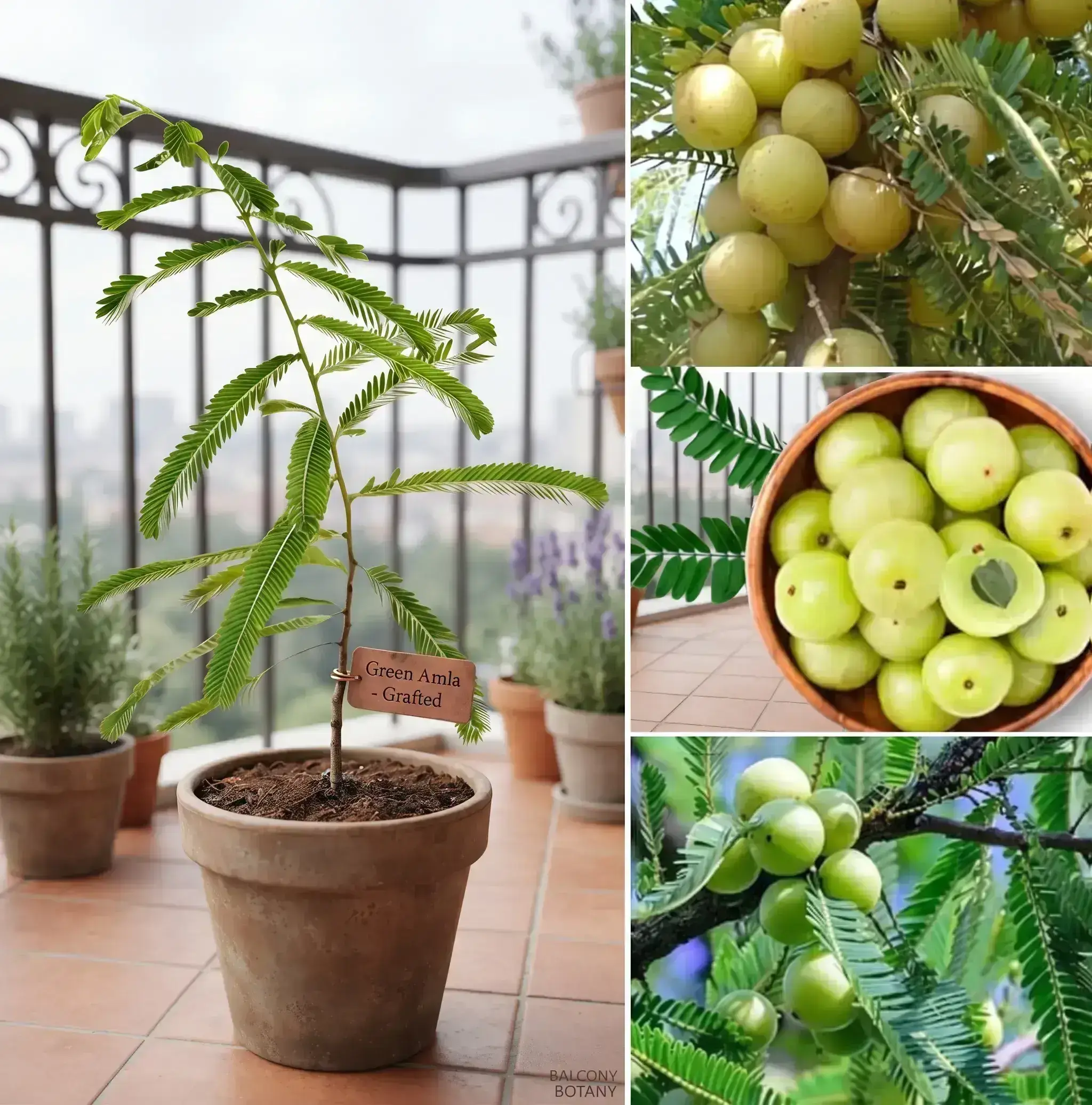
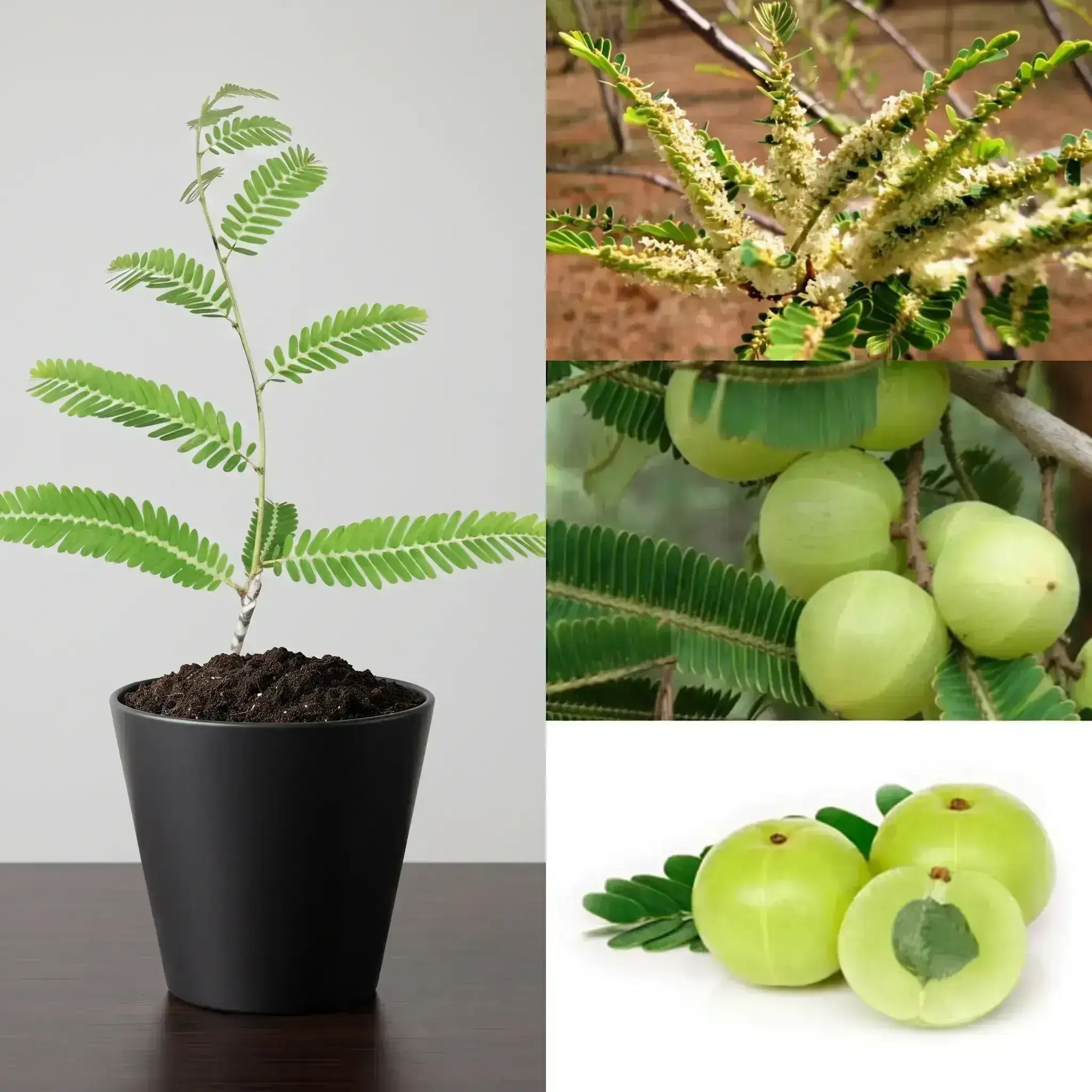
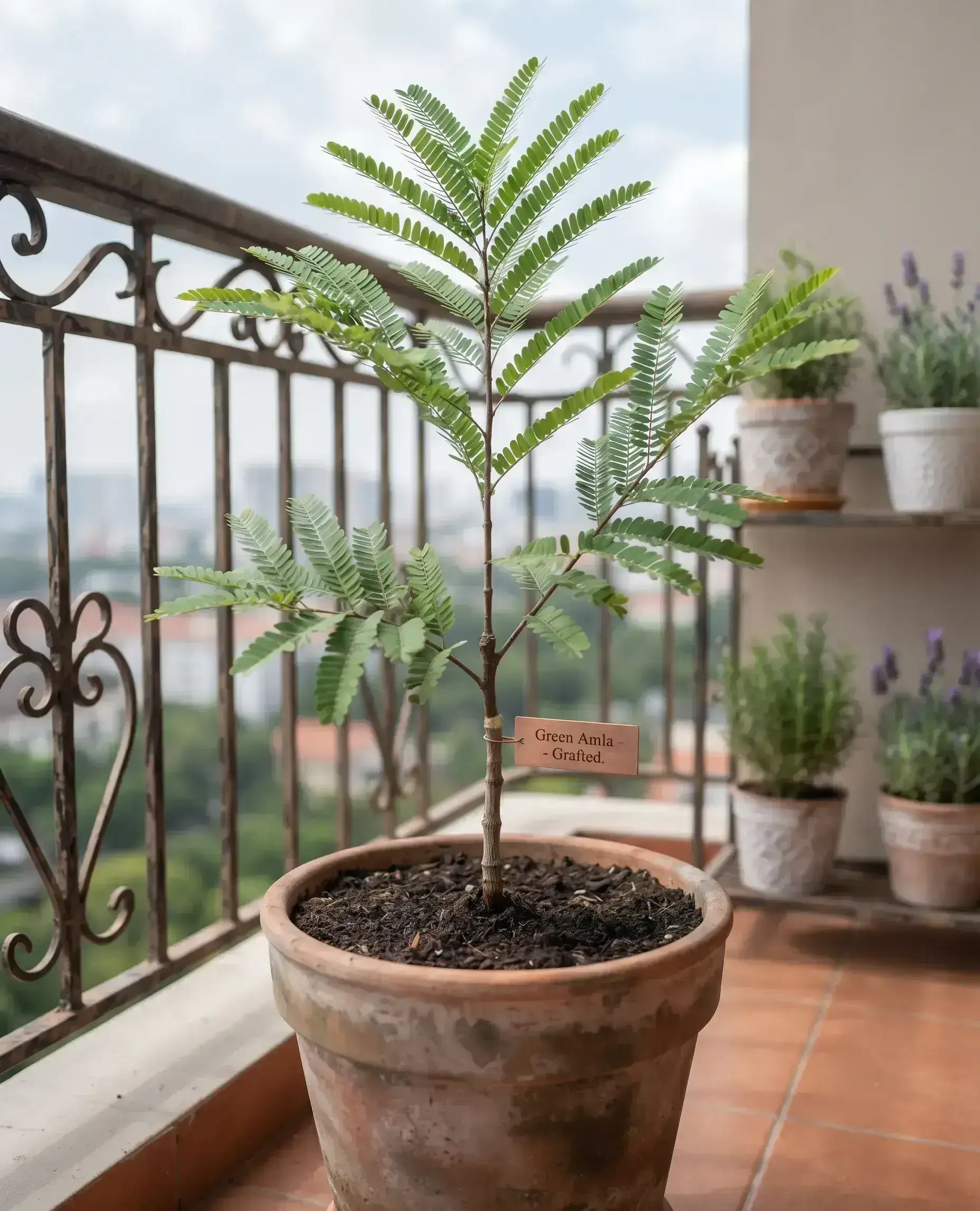
Green Amla (Indian Gooseberry) Grafted Plant | Phyllanthus emblica Premium Healthy Live Fruit Plant for Home Garden
The Green Amla Grafted Plant, also known as Indian gooseberry, Aonla or Amlaki. Amla is valued for its distinctive sour, astringent taste and its many culinary uses, including pickles, chutneys, preserves and traditional Indian preparations.
Botanically known as Phyllanthus emblica, amla is a hardy fruit tree adapted to a range of tropical and subtropical conditions. Its greenish fruits are commonly harvested for household use and food processing. A grafted plant is a practical option for gardeners who want to grow a selected fruit variety rather than an unknown seed-grown tree.
With adequate sunlight, fertile soil, appropriate watering and good drainage, this plant can become a productive addition to a home orchard, kitchen garden or spacious backyard.
Please note: “Green Amla” describes the fruit’s general appearance and may not identify a particular cultivar. Fruit size, acidity, shape, yield and maturity period depend on the actual variety supplied. Confirm the cultivar and propagation method with the nursery before purchase.
Botanical Information
- Common Name: Green Amla, Indian Gooseberry, Aonla, Amlaki, Anola
- Botanical Name: Phyllanthus emblica L.
- Synonym: Emblica officinalis Gaertn.
- Plant Family: Phyllanthaceae
- Plant Type: Hardy fruit-bearing tree
- Plant Form: Advertised as a grafted live plant
- Primary Use: Edible fruit, home gardening and food preparation
- Growth Habit: Woody tree with slender branchlets and small leaves
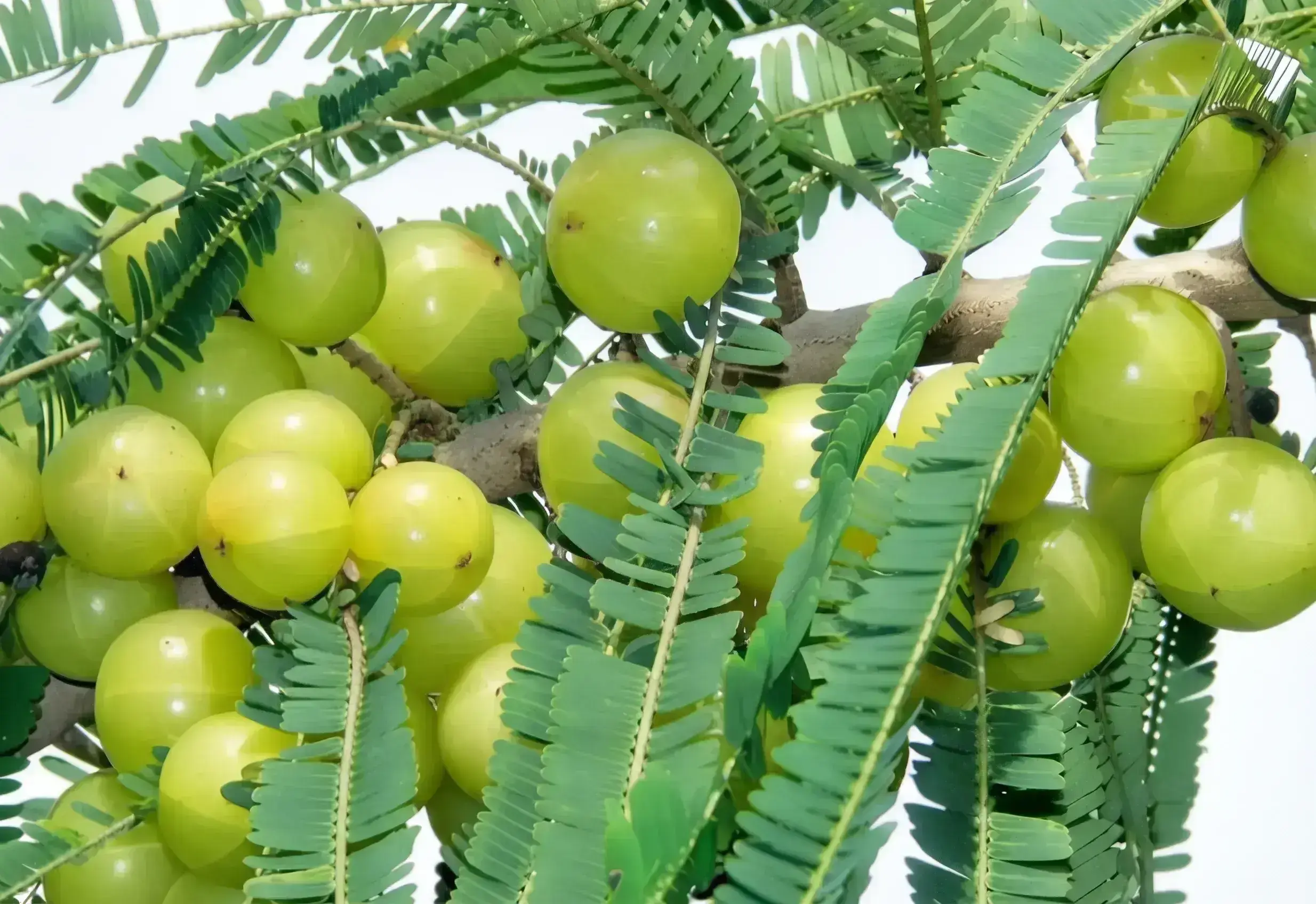
- Fruit Appearance: Generally round, green to greenish-yellow when mature, depending on variety and maturity
- Sunlight Requirement: Full sun
- Soil Requirement: Fertile, well-drained soil
- Water Requirement: Regular during establishment; reduced when rainfall is sufficient
- Suitable Climate: Tropical and subtropical regions
Key Features of the Green Amla Plant
Traditional Indian fruit: Amla has a long history of culinary use in India. Its distinctive sour and astringent flavour makes it popular for pickles, chutneys, preserves and other preparations.
Hardy fruit tree: Amla tolerates a range of soil conditions and can withstand dry periods once established. Good drainage remains essential for healthy root development.
Grafted planting material: Grafting allows a selected variety to be propagated vegetatively. A correctly identified grafted plant can retain the characteristics of the parent variety.
Useful for home gardens: Amla can be grown in a sunny backyard or home orchard where adequate space is available for the tree to develop.
Potential for earlier fruiting: Grafted amla plants generally bear earlier than seed-grown trees, although the actual bearing period depends on the plant’s age, cultivar and growing conditions.
Sunlight Requirements
Choose a sunny, open location that receives approximately 6–8 hours or more of direct sunlight daily.
Adequate sunlight supports healthy growth, flowering and fruit development. A shaded position may lead to weaker growth and lower fruiting potential.
Protect young plants from severe hot, drying winds while they establish. Mature amla trees are relatively tolerant of heat and dry conditions, but young saplings need more attentive care.
Soil Requirements
Amla grows in a variety of soils, including loamy and some heavier soils, provided drainage is adequate. Avoid extremely sandy soil that dries too quickly and locations that remain waterlogged.
For garden planting:
- Loosen the soil before planting.
- Incorporate mature compost or well-decomposed farmyard manure.
- Choose a location where excess rainwater can drain away.
- Avoid planting in low-lying areas prone to prolonged flooding.
For container cultivation, use a fertile, well-drained growing medium. The soil should retain enough moisture for the roots without remaining saturated.
Watering Guide
Amla becomes relatively drought-tolerant once established, but young plants require regular moisture.
- Newly planted sapling: Water thoroughly after planting and maintain moderate soil moisture.
- Young plant: Water when the upper layer of soil begins to dry.
- Established tree: Water during extended dry periods, especially when flowering or fruit development may be affected by moisture stress.
- Container-grown plant: Check soil moisture more frequently because pots dry faster in warm weather.
- Monsoon season: Reduce additional watering when rainfall is sufficient and ensure excess water drains away.
Avoid excessive watering. Amla can tolerate dry conditions better than prolonged waterlogging, which can damage roots and weaken the plant.
How to Plant the Grafted Amla Tree
- Choose a sunny location: Select a garden area with adequate space for the mature tree.
- Prepare the planting hole: Make a hole wider than the root ball and loosen the surrounding soil.
- Add organic matter: Mix mature compost with the topsoil if appropriate.
- Remove the plant carefully: Keep the root ball intact and avoid damaging the roots.
- Plant at the correct depth: Position the root ball at approximately its original nursery depth. Keep the graft union above the soil.
- Backfill gently: Fill around the roots and firm the soil lightly.
- Water thoroughly: Allow excess water to drain away.
- Provide initial support: Stake the sapling if strong winds could loosen it.
- Maintain the root zone: Keep weeds and dense grass away from the base.
Planting during a suitable rainy period can help establishment, provided the planting location drains well. Avoid planting when the soil is waterlogged.
Growing Green Amla in a Pot
A young amla plant can be grown in a large container, although the tree is better suited to open ground for long-term growth and fruit production.
- Choose a sturdy, deep container with adequate drainage holes.
- Use a large pot, around 75–100 litres or more as a practical starting point for long-term cultivation.
- Fill it with fertile, well-drained soil.
- Position the pot in full sunlight.
- Water according to soil moisture and weather.
- Add mature compost or a suitable fruit-tree fertiliser as needed.
- Prune lightly to maintain a manageable shape.
A container-grown plant may grow more slowly and produce less fruit than one planted in the ground. Increase the container size as the plant develops and avoid leaving the roots in stagnant water.
Fertiliser and Routine Care
Amla benefits from fertile soil and balanced nutrition, particularly during active growth.
- Incorporate mature compost or well-decomposed farmyard manure into the soil as needed.
- Use a suitable fruit-tree fertiliser according to the product label and the plant’s age.
- Avoid excessive nitrogen, which may encourage leafy growth without improving fruit production.
- Remove dead, broken or diseased branches using clean tools.
- Keep weeds away from the base of the tree.
- Inspect regularly for leaf damage, scale insects and other signs of pests.
Routine pruning should focus on removing dead, diseased, crossing or weak branches. Avoid severe pruning unless it is necessary to correct the tree’s structure.
When Will a Grafted Amla Plant Produce Fruit?
Grafted amla plants can begin bearing earlier than seed-grown trees. Horticultural guidance from Indian agricultural institutions commonly reports initial bearing in approximately 3–5 years after planting, although some plants may take longer depending on the cultivar, plant age and growing conditions. <Cite refs={[“turn117370search8″,”turn117370search19”]}/>
The exact fruiting time for this Green Amla listing cannot be guaranteed because the cultivar and age of the supplied plant have not been specified.
To support healthy development:
- Provide adequate sunlight.
- Maintain suitable soil moisture and drainage.
- Apply balanced nutrition.
- Avoid damaging the graft union.
- Allow the plant to establish before expecting a substantial crop.
- Follow variety-specific care advice from the nursery.
Flowering and Fruit Development
Amla generally produces flowers on new growth, with fruit development influenced by cultivar, climate, pollination and tree health.
The fruits are usually green when developing and may become dull greenish-yellow as they mature. The exact appearance and harvest period vary by variety and region.
To support fruit development:
- Maintain good sunlight exposure.
- Avoid prolonged drought during important growth stages.
- Prevent waterlogging during heavy rain.
- Keep the tree healthy through balanced nutrition.
- Monitor the plant for pests and disease.
Do not rely on fruit colour alone to determine maturity. Follow local harvesting guidance or ask a grower familiar with the supplied cultivar.
Growing Amla in West Bengal and Other Indian Regions
Amla is a hardy fruit tree that can grow in many parts of India, including suitable locations in West Bengal. It tolerates heat and dry periods once established, but drainage is especially important during the monsoon.
For better results:
- Select a sunny, open location.
- Use fertile, well-drained soil.
- Avoid standing water around the roots.
- Water regularly during establishment and during prolonged dry weather.
- Protect young plants from severe hot winds.
- Inspect the plant regularly for pests and damaged branches.
- Allow adequate space for the mature tree.
For commercial planting, variety selection and pollination requirements deserve particular attention. Some cultivation guidance recommends planting more than one suitable variety to improve pollination and fruit production. Ask a local horticultural specialist whether this is advisable for your specific cultivar and planting arrangement.
Culinary Uses of Amla
Amla is widely used in Indian cooking and traditional food preparation.
- Fresh fruit, when suitable for the intended taste
- Amla pickle and chutney
- Candied or preserved amla
- Amla juice and other food preparations
- Dried amla pieces
- Traditional sour preparations and condiments
Amla has a naturally tart and astringent taste. Preparation methods such as salting, cooking, sweetening or preserving can change its flavour and texture.
Important Information Before Buying
- Cultivar identity: “Green Amla” is a general product description. Ask the seller whether the plant belongs to a named variety such as NA-7, Krishna, Kanchan or another selection.
- Grafted status: Confirm that the plant is grafted and inspect the graft union when it arrives.
- Fruit characteristics: Size, shape, acidity, yield and maturity period depend on the variety and growing conditions.
- Fruiting timeline: A specific bearing date cannot be guaranteed.
- Plant size: Height, leaf count and appearance may vary with nursery stock and season.
- Space requirements: Amla can develop into a medium-sized tree, so choose the planting location carefully.
- Live plant variation: Minor changes in foliage or appearance may occur during transport and establishment.
Frequently Asked Questions (FAQs)
1. What is Green Amla?
Green Amla is Indian gooseberry, a fruit of Phyllanthus emblica. The name describes the plant’s general fruit appearance but does not necessarily identify a particular cultivar.
2. What is the botanical name of Indian gooseberry?
The accepted botanical name is Phyllanthus emblica L. It is also known by the older scientific synonym Emblica officinalis.
3. Is this plant grafted?
The product is advertised as grafted. Confirm the propagation method with the seller and check that the graft union is healthy when the plant arrives.
4. How long does a grafted amla plant take to bear fruit?
Grafted plants may begin bearing in approximately 3–5 years, depending on the cultivar, plant age, climate and care. This is an estimate, not a guarantee.
5. Can I grow amla in West Bengal?
Yes, amla can grow in suitable areas of West Bengal. Provide full sunlight, good drainage and regular watering while the plant establishes.
6. Can I grow amla in a pot?
A young plant can be grown in a large container with drainage holes and fertile soil. For long-term growth and fruit production, planting in the ground is generally preferable.
7. How much sunlight does an amla tree need?
Approximately 6–8 hours or more of direct sunlight daily is a useful target for healthy growth and fruiting potential.
8. How often should I water the plant?
Water regularly during establishment and when the soil becomes dry during prolonged dry periods. Reduce watering during the monsoon when rainfall is sufficient.
9. Is green amla sour?
Amla is naturally sour and astringent. The intensity of the taste varies with the cultivar, maturity and growing conditions.
10. Does amla need more than one tree for fruiting?
Pollination requirements depend on the variety and growing conditions. Some cultivation recommendations suggest planting multiple compatible varieties for improved production; confirm the requirements of your particular cultivar.
11. Can amla tolerate hot weather?
Established amla trees tolerate heat and dry conditions relatively well. Young plants are more vulnerable to severe hot winds and require attentive watering during establishment.
12. What can I make from amla fruit?
Amla can be used for pickles, chutneys, preserves, juice, dried preparations and other traditional foods. Wash the fruit thoroughly before preparation.
Botanical Information & Further Reading
- Tamil Nadu Agricultural University – Amla Cultivation — botanical details, varieties, planting, irrigation and cultivation practices.
- Vikaspedia – Amla Package of Practices — planting, nutrition, irrigation, pruning and pollination guidance.
- India Flora Online – Phyllanthus emblica — botanical identification, common names and plant information.
- Kerala Agricultural University – Package of Practices for Indian Gooseberry — varieties, propagation and general cultivation advice.
- Indian Council of Forestry Research and Education – Amla Information — botanical description, distribution and uses of Indian gooseberry.
- NITI Aayog – Amla Cultivation and Natural Farming — information on amla varieties, propagation, drought tolerance and cultivation.
- Punjab Agricultural University – Package of Practices for Fruits — horticultural information on amla varieties, fruit characteristics and cultivation.
Grow a traditional Indian fruit tree at home: With adequate sunlight, suitable soil, careful watering and good drainage, the Green Amla Grafted Plant can be a useful addition to a home fruit garden. Confirm the exact cultivar and realistic fruiting expectations with the nursery before purchasing.
For More Information
Visit: Nursery-Plant.Com
For Contact Visit:Contact Us
For Shopping Visit: Shop Page


Reviews
There are no reviews yet.