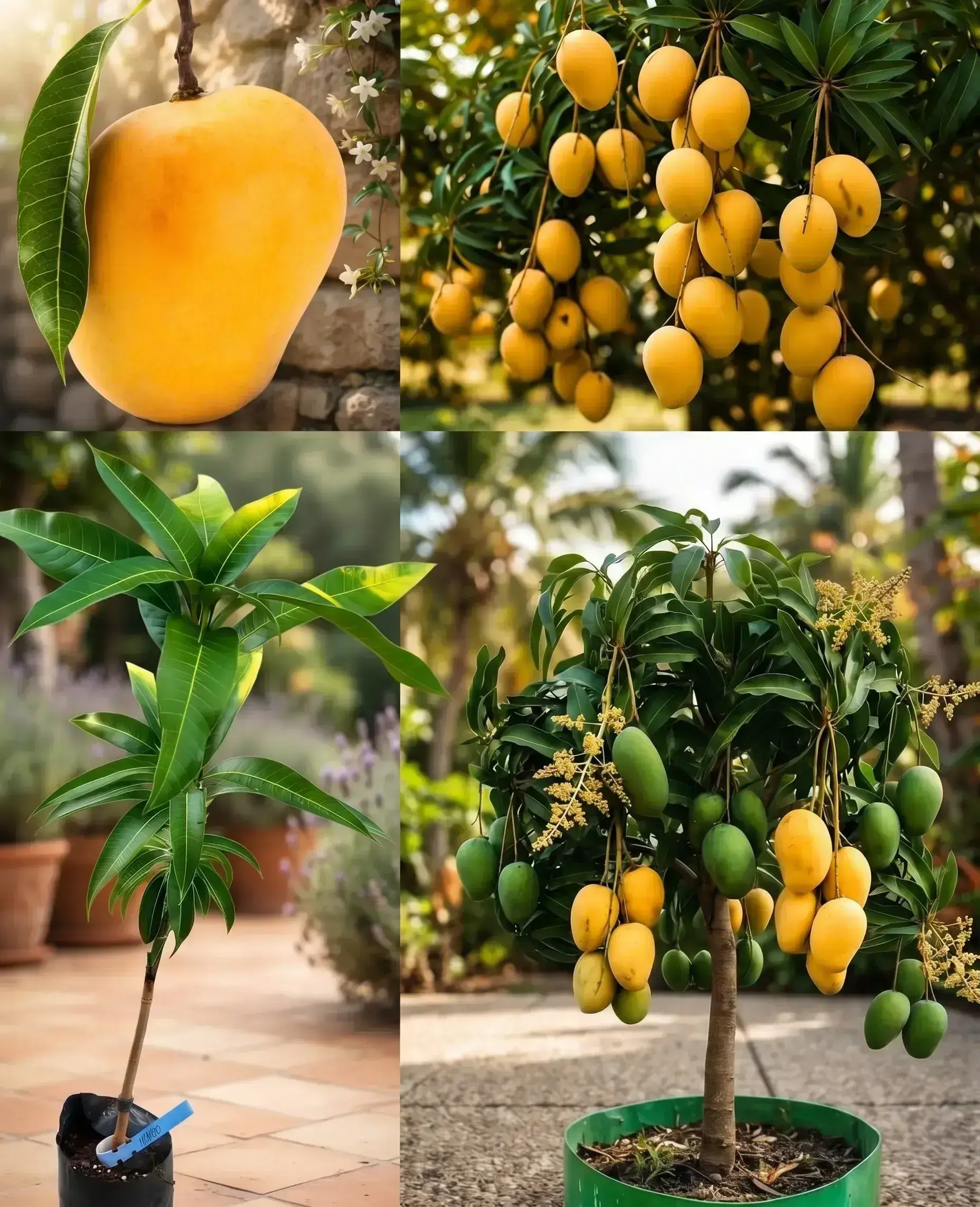
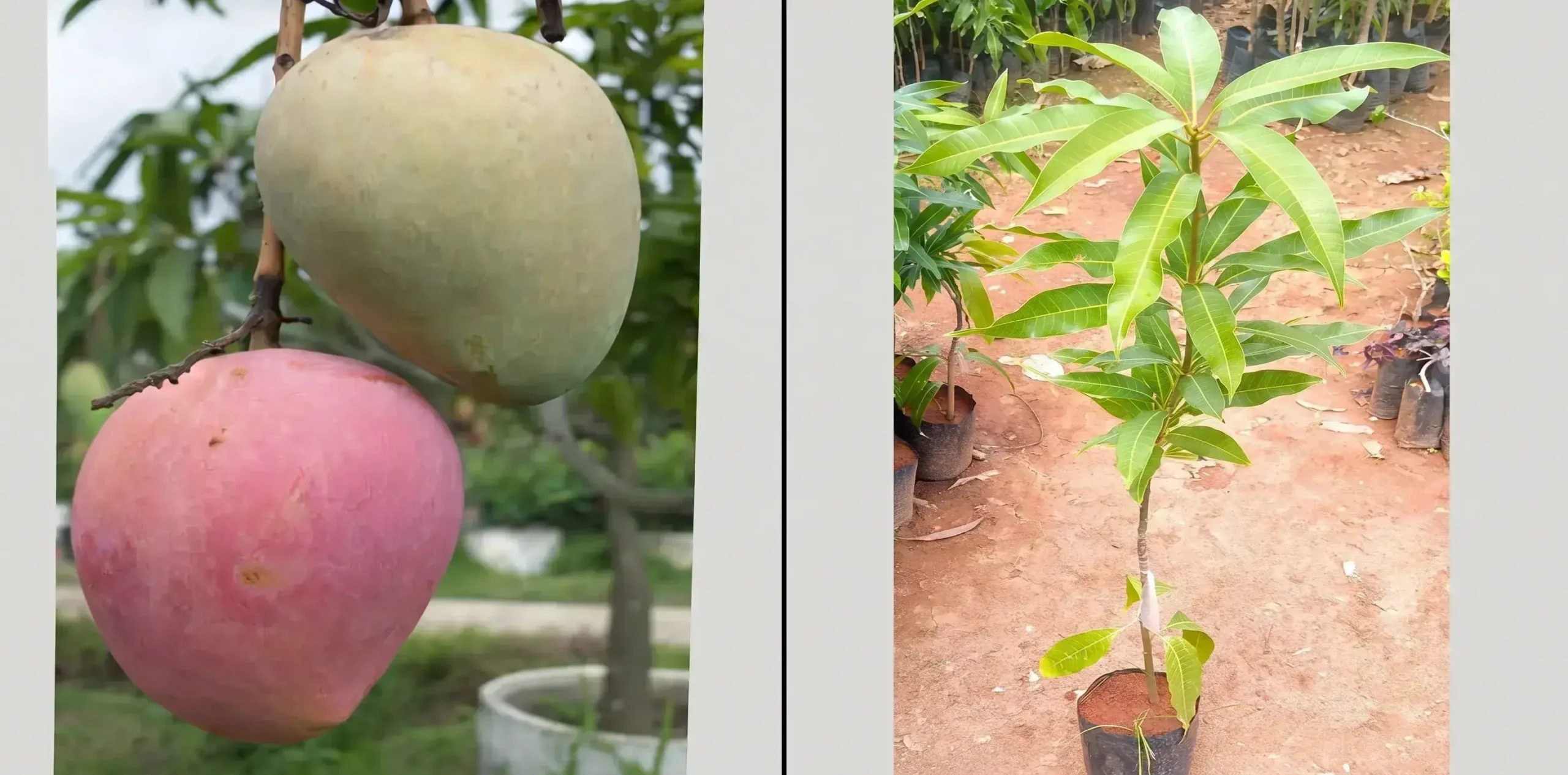

All Time Katimon Grafted Mango Plant (Baromasi Mango Plant – 12 Months Fruit Plant) | Thailand Katimon Mango Variety | Exotic Grafted Mango Fruit Plant
The Thai Katimon Grafted Mango Plant, also known as Catimon or Katimon mango. This variety is popular among growers for its potential to flower and produce fruit outside the conventional mango season.
Katimon is reported as a Thai-origin mango variety cultivated in Bangladesh and other South Asian regions. Growers in Bangladesh have reported multiple flowering and fruiting cycles under suitable conditions. However, “Baromasi” or “12-month fruiting” does not mean that ripe mangoes are guaranteed every month of the year. Fruit production depends on the plant’s maturity, local climate, nutrition, pruning, flowering conditions and successful fruit set.
A grafted mango plant is an appealing option for gardeners who want to grow a named mango variety rather than rely on an unknown seed-grown tree. With sufficient sunlight, well-drained soil and appropriate care, Katimon can be an interesting addition to a tropical home fruit garden.
Botanical Information
- Common Name: Katimon Mango, Catimon Mango, Thai Katimon Mango, Baromasi Mango
- Botanical Name: Mangifera indica
- Plant Family: Anacardiaceae
- Plant Type: Evergreen tropical fruit tree
- Variety Name: Katimon/Catimon, as marketed by the nursery
- Propagation: Advertised as grafted; confirm the propagation method with the seller
- Primary Use: Fresh mango fruit and home garden cultivation
- Growth Habit: Woody tree with a spreading canopy
- Sunlight Requirement: Full sun
- Soil Requirement: Fertile, well-drained soil
- Water Requirement: Regular during establishment; adjusted to rainfall and maturity
- Suitable Growing Areas: Warm tropical and subtropical regions
Key Features of the Katimon Mango Plant
Potential for off-season fruiting: Katimon is known in some growing regions for producing flowers and fruit outside the usual mango season. The number of harvests varies with local conditions and plant management.
Grafted plant: Grafting allows a nursery to propagate a selected mango variety vegetatively. Confirm that the plant is genuinely grafted and that the graft union is healthy.
Tropical fruit tree: The plant is suited to warm conditions and can become a long-lived feature of a home orchard.
Suitable for home gardens: It can be planted in a sunny garden with sufficient space for the mature tree. A large container may be suitable for a young plant, although long-term fruit production is generally easier in the ground.
Fresh mangoes from your garden: Fruit size, colour, flavour, fibre content and harvest timing depend on the true cultivar and growing conditions. These characteristics should not be treated as guaranteed based on the product title alone.
Sunlight Requirements
Mango trees grow best in a bright, sunny location. Aim for approximately 6–8 hours or more of direct sunlight each day.
Good sunlight supports healthy shoot growth, flowering and fruit development. A shaded position may encourage leafy growth but reduce the plant’s fruiting potential.
In very hot weather, protect a newly planted sapling from severe drying while it establishes. Once established, mango trees generally tolerate warm conditions better than young nursery plants.
Soil Requirements
Katimon mango prefers deep, fertile and well-drained soil. Avoid locations where water remains around the roots after heavy rain.
For garden planting:
- Loosen the soil before planting.
- Mix in mature compost to improve soil structure.
- Ensure excess rainwater can drain away.
- Avoid placing the plant in a low-lying, waterlogged area.
For container growing, use a loose, fertile mix that drains freely. Mango generally tolerates a range of soil conditions, but good drainage is essential for healthy roots.
Watering Guide
Watering requirements depend on the plant’s age, soil type, temperature and rainfall.
- Newly planted sapling: Water thoroughly after planting and keep the root zone moderately moist while the roots establish.
- Young plant: Water when the upper layer of soil begins to dry.
- Established tree: Water during prolonged dry spells when needed, especially while young fruit is developing.
- Container-grown plant: Check the soil regularly because pots dry faster in warm weather.
- Monsoon season: Reduce additional watering when rainfall is sufficient and prevent standing water.
Avoid frequent shallow watering that keeps the soil constantly saturated. Good drainage is particularly important in humid parts of India.
How to Plant the Grafted Katimon Mango
- Select the location: Choose a sunny, open area with adequate room for the tree.
- Prepare the planting hole: Make a hole wider than the root ball and loosen the surrounding soil.
- Add organic matter: Mix mature compost with the excavated soil if needed.
- Remove the plant carefully: Keep the root ball intact and avoid damaging young roots.
- Plant at the correct depth: Position the root ball at approximately its original growing depth. Keep the graft union above the soil.
- Backfill gently: Fill the hole and firm the soil without compacting it excessively.
- Water thoroughly: Allow excess water to drain away.
- Provide initial support: Stake the sapling if strong wind could loosen it.
- Maintain a clear root zone: Keep weeds and dense grass away from the immediate base.
In many parts of India, the monsoon can be a suitable planting period if the site drains well. Avoid planting where heavy rain will leave the roots submerged.
Can Katimon Mango Be Grown in a Pot?
A young Katimon mango can be grown in a large container, but mango is a tree with a substantial root system. Container cultivation requires careful management.
- Start with a sturdy container with generous drainage holes.
- Use a large pot, around 75–100 litres or more as a practical starting point for longer-term growing.
- Place it in full sunlight.
- Use a fertile, well-drained growing medium.
- Water according to soil moisture and weather.
- Feed moderately with a suitable fertiliser.
- Prune selectively to maintain a manageable shape.
A container-grown tree may remain smaller than one planted in the ground, and fruiting can be less predictable. Do not expect a small pot to support the same growth or harvest as a mature garden tree.
Fertiliser and Routine Care
Mango trees need balanced nutrition for root growth, healthy leaves, flowering and fruit development.
- Incorporate mature compost into the soil as appropriate.
- Use a balanced fertiliser suitable for mango or other fruit trees, following its label.
- Adjust fertiliser applications to the plant’s age and growth.
- Avoid excessive nitrogen, which can encourage leafy growth at the expense of flowering.
- Remove dead or diseased branches with clean pruning tools.
- Keep the area around the tree free from competing weeds.
Do not apply concentrated fertiliser against the trunk. If the leaves become yellow or growth slows, check watering, drainage and nutrient availability before increasing fertiliser.
Flowering and the “12-Month Mango” Claim
Katimon is marketed as a Baromasi or all-time mango because reports from some growing regions describe multiple flowering and fruiting cycles in a year. Reports from Bangladesh indicate that Katimon trees can bear outside the traditional mango season when managed under suitable conditions.
Nevertheless, multiple fruiting cycles are not the same as continuous fruit production for all 12 months. Flowering does not always lead to successful fruit set, and young fruits may drop due to weather, pollination, pests or plant stress.
For the best chance of fruiting:
- Provide full sunlight.
- Maintain suitable nutrition and drainage.
- Avoid excessive vegetative growth from over-fertilisation.
- Follow pruning advice suited to the variety and local climate.
- Monitor flowers and young fruits for pests and diseases.
- Allow the tree to establish before expecting a meaningful crop.
The exact harvest frequency in your garden cannot be guaranteed.
Growing Katimon Mango in West Bengal and Other Indian Regions
Katimon may be an interesting option for gardeners in warm parts of West Bengal. However, the local climate and seasonal rainfall can affect flowering and fruit retention.
For better results:
- Select a sunny, well-drained planting location.
- Avoid waterlogging during the monsoon.
- Maintain good airflow around the canopy.
- Water during dry periods without keeping the soil saturated.
- Inspect for mango hoppers, mealybugs, fruit flies, anthracnose and powdery mildew.
- Ask a local horticulture specialist or nursery for variety-specific pruning and off-season flowering guidance.
High humidity and rain during flowering may reduce successful pollination and fruit set in mango. Therefore, results in West Bengal may differ from reports in other regions.
Pruning and Tree Management
Pruning helps manage tree size, remove damaged growth and maintain a well-structured canopy.
- Remove dead, broken or diseased branches.
- Avoid severe or unnecessary pruning of a young sapling.
- Maintain enough space between branches for airflow and sunlight.
- Ask the nursery about the appropriate pruning schedule for Katimon if you want to encourage off-season flowering.
Aggressive pruning or attempting to force repeated flowering without understanding the tree’s growth cycle can weaken the plant. Use a balanced approach focused on long-term health.
Important Information Before Buying
- Cultivar identity: Katimon and Catimon are common spellings of the marketed Thai variety. Ask the seller to confirm the variety’s source.
- Grafted status: Confirm that the supplied plant is grafted and inspect the graft union when it arrives.
- Year-round fruiting: “Baromasi” and “12-month fruit plant” are marketing descriptions, not guarantees of monthly harvests.
- Fruiting age: Flowering and fruiting depend on the maturity and condition of the supplied sapling, its rootstock and the growing environment.
- Fruit characteristics: Fruit size, colour, taste, fibre content and yield depend on cultivar identity and growing conditions.
- Live plant variation: Height, leaf count and shape may vary according to nursery stock and season.
- Climate suitability: A variety that performs well in one region may produce different results in another.
Frequently Asked Questions (FAQs)
1. What is a Katimon mango plant?
Katimon, also spelled Catimon, is a mango variety associated with Thailand and reported to produce fruit outside the usual mango season under suitable conditions.
2. Is Katimon really a Baromasi mango?
It is marketed as a Baromasi or all-time-fruiting mango because multiple flowering and fruiting cycles have been reported in some regions. This does not guarantee ripe mangoes every month.
3. What is the botanical name of Katimon mango?
Its botanical name is Mangifera indica, the species that includes cultivated mango varieties.
4. Is this plant grafted?
The product is advertised as grafted. Confirm the propagation method with the seller and check that the graft union is healthy when the plant arrives.
5. How long does a grafted Katimon mango take to bear fruit?
The timing depends on the plant’s age, graft quality, local climate and care. A young plant may need time to establish before producing a meaningful crop.
6. Can Katimon mango grow in West Bengal?
It may grow in warm areas of West Bengal, provided it receives enough sunlight and the soil drains well. Humidity and rainfall can affect flowering and fruit retention.
7. Can I grow Katimon mango in a pot?
Yes, especially when the plant is young. Use a large container with good drainage and full sunlight, but remember that long-term fruit production can be more challenging in a pot.
8. Does Katimon mango produce fruit throughout the year?
Not necessarily. Some trees may produce multiple crops or off-season fruit, but continuous production throughout all 12 months is not guaranteed.
9. How much sunlight does the plant need?
Aim for approximately 6–8 hours or more of direct sunlight daily for healthy growth and better fruiting potential.
10. How often should I water the plant?
Water when the soil begins to dry, adjusting for weather and plant age. Avoid prolonged waterlogging, particularly during the monsoon.
11. Why does my mango tree flower but fail to produce fruit?
Possible reasons include poor pollination, rain or high humidity during flowering, temperature stress, pests, nutrient imbalance and natural fruit drop.
12. How can I encourage off-season fruiting?
Provide good sunlight, suitable nutrition and drainage, and follow variety-specific pruning advice. Off-season fruiting cannot be forced reliably simply by adding more fertiliser or water.
Botanical Information & Further Reading
- Bangladesh Sangbad Sangstha – Catimon Variety Makes Mango Farmers Happy — reporting on Katimon cultivation and off-season fruiting in Bangladesh.
- Bangladesh Sangbad Sangstha – Katimon Mango Farming in Rajshahi — regional reports on the variety’s cultivation and potential for multiple harvests.
- ICAR-CCARI – Decision Support System for Mango — guidance on mango cultivation, harvesting and tree management.
- ICAR – Softwood Grafting Is a Boon to Mango Growers — information about mango grafting and nursery plant production.
- National Research Centre for Integrated Pest Management – Mango Ecology and Distribution — mango climate requirements, flowering, fruit development and soil conditions.
- ICAR – Standardization of Mango Grafting Under Tripura Conditions — research on mango grafting methods under northeastern Indian conditions.
- Journal of Horticultural Science – Graft-Induced Off-Season Flowering and Fruiting in Mango — research into off-season flowering and fruiting in mango.
Grow an exotic mango tree in your home garden: With adequate sunlight, suitable nutrition, careful watering and good drainage, the Katimon Grafted Mango Plant can be an interesting choice for gardeners exploring off-season mango cultivation. Confirm the variety and propagation method with the nursery, and treat year-round fruiting as a possibility rather than a guarantee.
For More Information
Visit: Nursery-Plant.Com
For Contact Visit:Contact Us
For Shopping Visit: Shop Page


Reviews
There are no reviews yet.