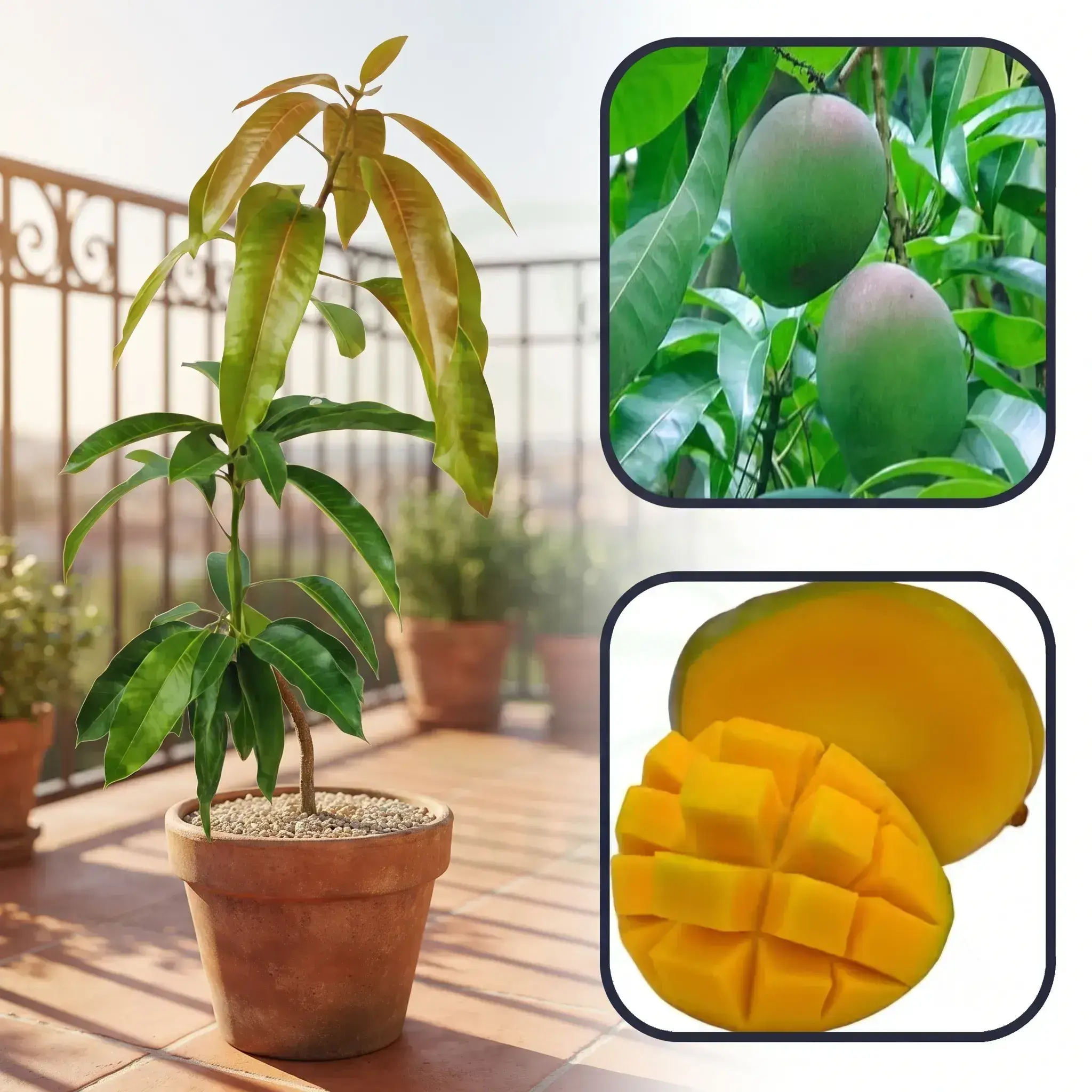

Bombay Green Mango Plant | Mangifera indica Fruiting in 1–2 Years*
🌿 About the Plant
The Sweet Bombay Green Mango Plant is a grafted mango plant offered for home gardens, kitchen gardens, terraces and fruit-growing spaces. Mango belongs to the species Mangifera indica, a long-lived tropical fruit tree in the Anacardiaceae family.
Mango is one of India’s most important fruit crops, with numerous regional varieties and selections grown across different states. A grafted plant is particularly useful for home gardeners because the grafted top portion, known as the scion, comes from selected fruiting material rather than being a random seedling.
The name “Bombay Green” is used in the Indian nursery and horticultural trade for a green-skinned mango type. However, cultivar names can sometimes vary between regional nursery markets. Unless a nursery has supplied an authenticated cultivar record, the product name should be understood as the marketed variety name rather than a claim about a specific registered clone.
🌱 Plant Characteristics
- Common Name: Sweet Bombay Green Mango
- Botanical Name: Mangifera indica
- Family: Anacardiaceae
- Plant Type: Tropical evergreen fruit tree
- Propagation: Grafted plant
- Fruit Type: Mango
- Growing Habit: Vigorous, long-lived tree
- Suitable Climate: Tropical and subtropical
- Sunlight: Full sun
- Soil: Deep, fertile and well-drained soil
- Home Garden: Suitable with adequate space
- Container Growing: Possible when young or with appropriate dwarfing/root-management practices
A grafted mango plant can establish more predictably than a seed-grown mango when the objective is to maintain the characteristics of selected fruiting material.
🍃 Leaves & Growth
Mango produces dense evergreen foliage. New leaves commonly emerge in attractive reddish, coppery or bronze shades before gradually becoming mature green.
With suitable sunlight, nutrition and root space, the plant develops a strong central framework and progressively forms a broad canopy.
Young grafted plants may initially appear small, but mango is naturally a long-lived tree. Gardeners should therefore select a planting location with sufficient room for future canopy development.
🌸 Mango Flowers
Mature mango trees produce flowering panicles carrying numerous small flowers. Depending on the variety and growing conditions, flowering can occur during the cooler/drier part of the year in many Indian growing regions.
Flowering is strongly influenced by:
- Tree maturity
- Variety
- Temperature
- Rainfall pattern
- Sunlight
- Nutrition
- Water management
- Previous-season growth
A young nursery plant may require time to establish before producing a meaningful crop.
🥭 Sweet Bombay Green Mango Fruits
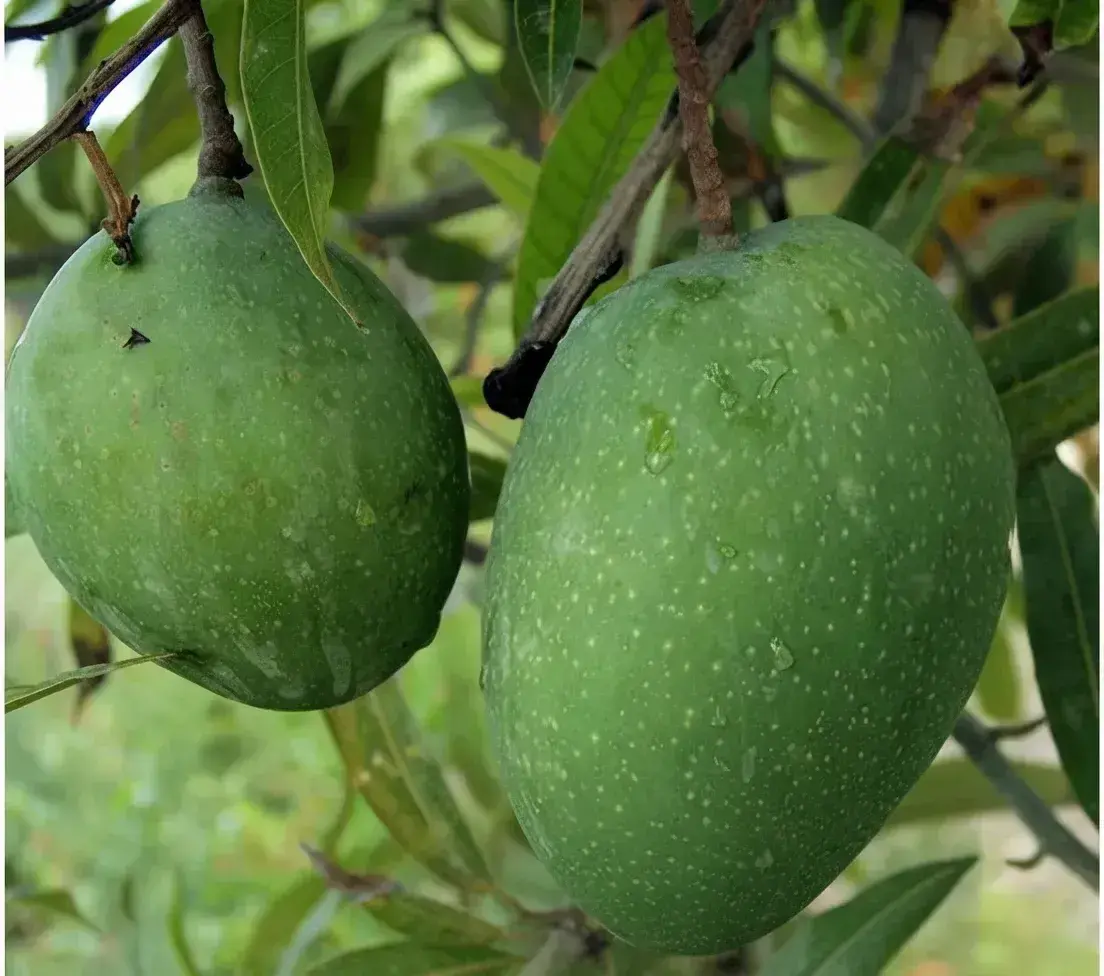
The fruit is the main attraction of this plant. The marketed Bombay Green type is associated with green-skinned mango fruit and is valued for its traditional Indian mango character.
Depending on maturity and growing conditions, mango fruits can develop:
- Green to greenish skin
- Aromatic pulp
- Sweet and pleasant mango flavour when ripe
- Characteristic mango fragrance
- Soft, juicy edible flesh at full ripeness
Mango fruit characteristics can vary according to cultivar, climate, maturity stage and crop management.
For the most accurate variety-specific characteristics, the exact nursery mother plant or cultivar source should be used because regional trade names can sometimes cover more than one selection.
🥭 Green Mangoes & Different Stages of Use
Mango fruit can be harvested at different maturity stages depending on the intended use.
Immature green mangoes may be used traditionally for:
- Pickles
- Chutneys
- Beverages
- Sliced preparations
- Other regional recipes
More mature or ripe mangoes are generally enjoyed as fresh fruit and can also be used in desserts, juices, shakes and other preparations.
The exact flavour, acidity, fibre level and aroma depend on the particular selection and harvest maturity.
☀️ Sunlight Requirements
Mango performs best in full sunlight.
For healthy growth:
- Provide approximately 6–8 hours of direct sunlight where practical.
- Choose an open location with good air circulation.
- Avoid heavy shade from buildings or large trees.
- Container-grown plants should be placed in a bright outdoor position.
- Good sunlight becomes particularly important as the plant approaches flowering and fruiting.
Insufficient sunlight can result in weaker growth and reduced flowering potential.
💧 Watering
Mango prefers good moisture availability with effective drainage.
For newly planted grafted mango:
- Water thoroughly after planting.
- Keep the root zone reasonably moist while the plant establishes.
- Allow the surface layer to dry slightly between irrigations rather than keeping the soil permanently saturated.
- Increase irrigation during prolonged hot and dry periods.
- Reduce unnecessary watering during heavy monsoon rainfall.
Avoid standing water around the roots. Poor drainage can seriously affect root health.
Once established in the ground, mango generally becomes more tolerant of short dry periods than a newly planted nursery tree, although adequate moisture remains important during active growth and fruit development.
🪴 Soil & Potting
Mango grows well in deep, fertile, well-drained soil.
A suitable home-garden soil should:
- Drain excess water efficiently
- Hold sufficient moisture
- Contain organic matter
- Provide adequate root depth
- Avoid prolonged waterlogging
For container cultivation, use a porous, fertile potting mixture rather than heavy compacted soil.
A practical mixture can include:
- Good-quality garden soil
- Well-decomposed compost
- Cocopeat
- Coarse sand or another drainage-improving material
The container should always have sufficient drainage holes.
🌱 Fertilizer & Nutrition
Mango benefits from balanced nutrition, especially as the plant grows larger and begins producing flowers and fruit.
Useful inputs include:
- Well-decomposed farmyard manure
- Compost
- Suitable fruit-tree fertilizer
- Potassium and other nutrients according to soil and plant requirements
- Micronutrients when a genuine deficiency is identified
Avoid applying excessive fertilizer directly against the stem or root crown.
For young plants, moderate feeding encourages healthy vegetative growth. As the tree becomes mature, nutrition should be managed according to tree size, soil fertility, flowering and fruiting load.
🌼 Flowering & Fruiting
The product is marketed with “Fruiting in 1–2 Years”* because grafted mango plants can reach fruiting stage considerably earlier than plants grown from seed.
However, the timing should be treated as an expected/possible timeframe, not a guarantee.
The actual time to fruiting depends on:
- Age and maturity of the grafted plant
- Scion variety
- Rootstock
- Plant health
- Climate
- Sunlight
- Soil fertility
- Water management
- Transplanting stress
- Pruning
- Flowering conditions
Fruiting is not guaranteed within 1–2 years after delivery. A newly delivered plant may first need time to recover from transportation and establish new roots before putting energy into flowering and fruit production.
🌱 Why Grafted Mango Plants Are Preferred
Grafting is a common horticultural method for propagating selected mango varieties.
The grafted plant consists broadly of:
- Rootstock: The lower/root portion providing the root system.
- Scion: The selected upper plant material responsible for the desired variety characteristics.
- Graft union: The point where the scion and rootstock have been joined.
One important advantage of grafting is that the resulting plant is vegetatively propagated from selected material rather than relying on the genetic variability of a seedling.
This is particularly valuable for fruit trees where gardeners want a known variety instead of waiting many years for a seedling to mature and discover its fruit characteristics.
⚠️ Graft Union Care
If the plant arrives with a visible graft union:
- Keep the graft union above soil level.
- Never bury the graft union.
- Do not allow water to remain continuously around the union.
- Remove shoots emerging from below the graft union.
- Avoid damaging or tightly tying material around the graft area.
Shoots originating from the rootstock can compete with the grafted variety and should generally be removed when identified.
🏡 Home Garden Suitability
Sweet Bombay Green Mango is well suited to:
- Home gardens
- Backyard fruit gardens
- Kitchen gardens
- Farmhouses
- Large terraces
- Small orchards
- Fruit-tree collections
Mango is particularly rewarding for gardeners who want a long-term fruit tree rather than a short-lived seasonal plant.
When planted in the ground, allow enough space for future canopy development.
🪴 Container / Terrace Gardening
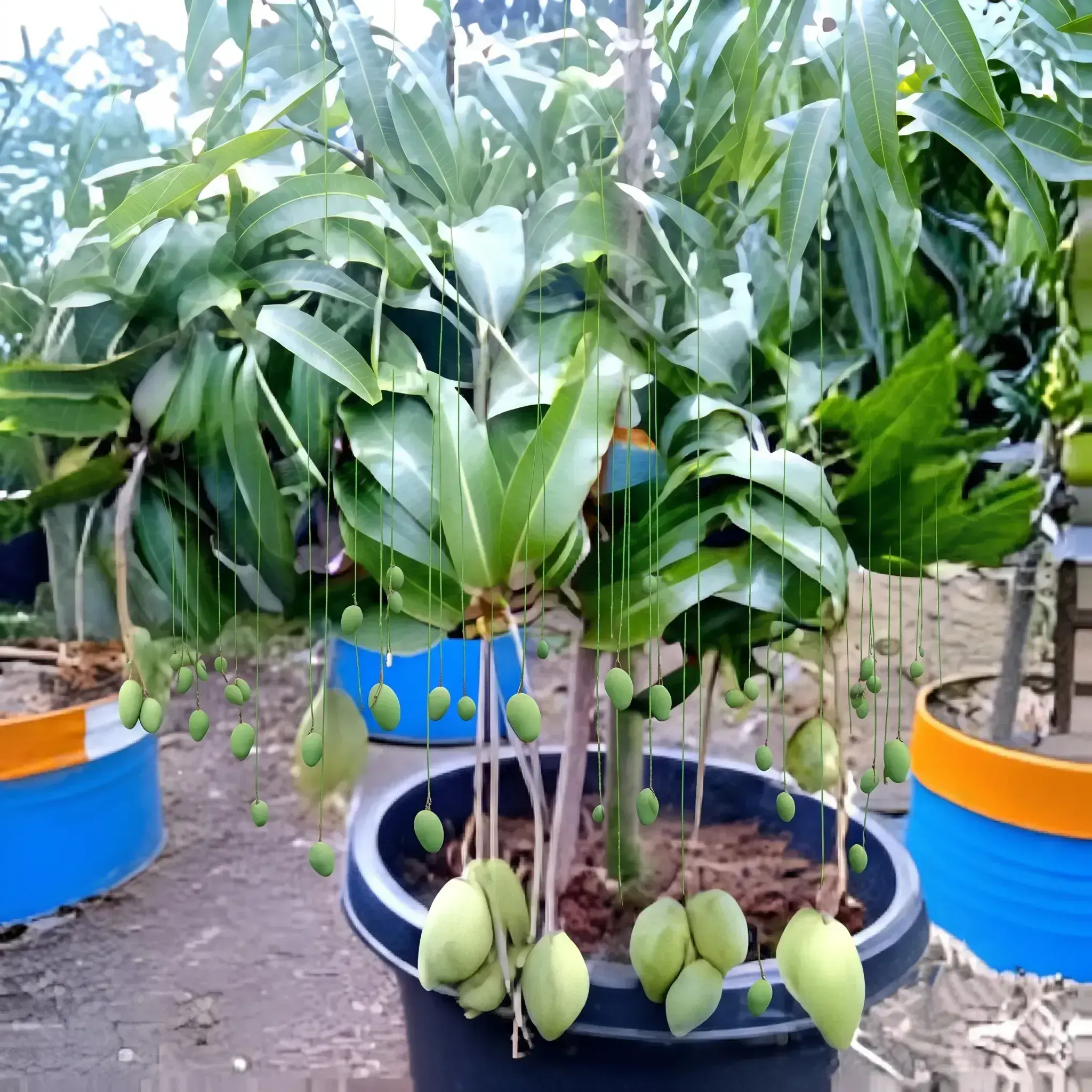
A grafted mango plant can be grown in a large container while young.
For successful container cultivation:
- Select a strong container with drainage holes.
- Use fertile, well-drained growing media.
- Provide maximum practical sunlight.
- Water according to soil moisture and weather.
- Feed periodically with a suitable fruit-tree fertilizer.
- Prune carefully when necessary to maintain manageable size.
- Repot or refresh the growing medium when the root system becomes restricted.
Container-grown mango plants require more careful management of water and nutrition than plants established in open ground.
A container also restricts root development, so the eventual growth and fruiting performance may differ from a tree planted directly in suitable soil.
✂️ Pruning & Maintenance
Young grafted mango plants should generally be trained to develop a strong and balanced framework.
Useful maintenance includes:
- Removing dead branches
- Removing damaged growth
- Removing weak or crossing branches
- Removing rootstock shoots below the graft union
- Maintaining an open, balanced canopy
Avoid unnecessary heavy pruning, especially around the flowering period.
The objective is to develop a healthy framework that receives adequate sunlight and allows good air circulation.
🌳 Space Requirement
Mango can become a large tree when grown under favourable conditions.
For ground planting, choose a location where the mature tree can develop without interfering with:
- Buildings
- Roofs
- Electrical lines
- Other large trees
- Boundary walls
- Underground infrastructure
If space is limited, regular training and pruning may help maintain a more manageable canopy, although pruning cannot completely change the natural growth habit of a vigorous mango tree.
🇮🇳 Growing in India
Mango is exceptionally well adapted to many parts of India and is grown commercially across several states.
For home gardeners, successful cultivation depends on matching the plant with the local climate and providing:
- Strong sunlight
- Warm growing conditions
- Well-drained soil
- Appropriate irrigation
- Adequate nutrition
- Protection from prolonged waterlogging
In areas with heavy monsoon rainfall, drainage is particularly important.
In hot and dry areas, regular irrigation during establishment and critical growth stages can help prevent water stress.
🌿 Seasonal Care
Summer:
Monitor soil moisture regularly and provide irrigation when required. Container plants can dry out faster in hot weather.
Monsoon:
Avoid unnecessary irrigation when rainfall is sufficient. Make sure water does not remain around the root zone.
Winter:
Growth may slow depending on local temperatures. Avoid excessive watering if the soil remains moist for long periods.
Flowering period:
Avoid unnecessary heavy pruning and maintain balanced nutrition and moisture.
🍈 Harvesting
Harvest timing depends on the variety, local climate and intended use.
Green mangoes intended for culinary purposes are harvested at a different maturity stage from fully ripe dessert mangoes.
For ripe fruit, allow the mango to develop its characteristic aroma, colour and maturity according to the variety. Avoid damaging the fruit or branches during harvesting.
Young grafted trees may produce only a small number of fruits during their first cropping years. Crop load can increase as the tree becomes better established.
📦 Live Plant Delivery & Natural Variation
This is a live plant, so the plant delivered may naturally look different from product photographs.
During transportation, temporary changes may occur because of changes in:
- Light
- Temperature
- Humidity
- Air circulation
- Water availability
- Handling
- Transportation duration
Minor leaf yellowing, temporary drooping, slight leaf shedding or small changes in foliage can occur after delivery.
Natural differences in plant height, leaf size, stem thickness, branching and canopy shape are also expected.
Product photographs are representative. The exact plant delivered may not look identical to the photographed plant.
After receiving the plant, place it in a suitable bright location and allow it to acclimatise before carrying out major pruning or repotting.
⚠️ Important Note
The statement “Fruiting in 1–2 Years”* is a product expectation for a grafted plant and is not a guaranteed fruiting period.
Actual fruiting can occur earlier or later depending on the age and maturity of the supplied plant, graft quality, rootstock, variety, climate, sunlight, soil, nutrition, irrigation and general plant health.
The name “Bombay Green” should be treated as the nursery/marketed variety name unless supported by specific authenticated cultivar documentation.
🌱 Why Choose Sweet Bombay Green Mango?
- Grafted Mangifera indica fruit plant
- Premium Indian mango type
- Suitable for home gardens
- Attractive evergreen foliage
- Produces useful green mangoes when grown to maturity
- Can also provide ripe mango fruit depending on the selection
- Grafted plants can reach fruiting stage earlier than seed-grown trees
- Suitable for backyard and fruit gardens
- Can be maintained in a large container while young
- Excellent long-term addition to an Indian home garden
- Enjoy the experience of growing your own mango tree
🌿 Botanical Information
Botanical Name: Mangifera indica L.
Family: Anacardiaceae
Common Name: Mango
Product Name: Sweet Bombay Green Mango
Plant Type: Evergreen tropical fruit tree
Propagation: Grafted
Fruit: Mango
Growing Habit: Long-lived, woody fruit tree
Sunlight: Full sun
Soil: Fertile and well drained
Climate: Tropical to subtropical
Primary Use: Fresh fruit, green mango culinary uses and home gardening
🔗 Botanical Information & Further Reading
- Kew Science – Plants of the World Online: Mangifera indica — Botanical classification, distribution and taxonomic information for mango.
- ICAR – Indian Council of Agricultural Research — Indian agricultural and horticultural research information.
- ICAR-Indian Institute of Horticultural Research — Indian horticultural research and crop-production resources.
- TNAU Agritech Portal – Mango — Practical Indian guidance on mango cultivation and management.
- National Horticulture Board – Mango — Indian horticulture information, crop production and post-harvest resources.
- RHS – Mango / Mangifera indica — Botanical and cultivation information for mango.
- FAO – Mango and tropical fruit resources — International agricultural and tropical fruit information.
For More Information
Visit: Nursery-Plant.Com
For Contact Visit:Contact Us
For Shopping Visit: Shop Page


Reviews
There are no reviews yet.