
Pairi Mango Grafted Fruit Plant – Premium Traditional Indian Mango Variety for Home Garden & Farming
🌱 About the Pairi Mango Plant
The Pairi Mango, also written as Payri or Pyari Mango, is a traditional Indian mango variety valued for its early-season fruiting, pleasant aroma, sweet-tangy flavour and soft flesh.
The mango belongs to the species Mangifera indica L., in the Anacardiaceae family. Kew’s Plants of the World Online recognizes Mangifera indica as the accepted botanical name. The species is native from Assam through southern China and is now widely cultivated, including throughout India.
Pairi is documented as an important commercial mango variety in India. The National Mango Database lists Pairi among India’s commercial mango varieties, particularly associated with southern and western India.
🥭 Traditional Pairi Mango Variety
Pairi is known as one of the mango varieties that helps mark the beginning of the Indian mango season. Agricultural horticulture references describe it as an early-maturing variety with good fruit quality.
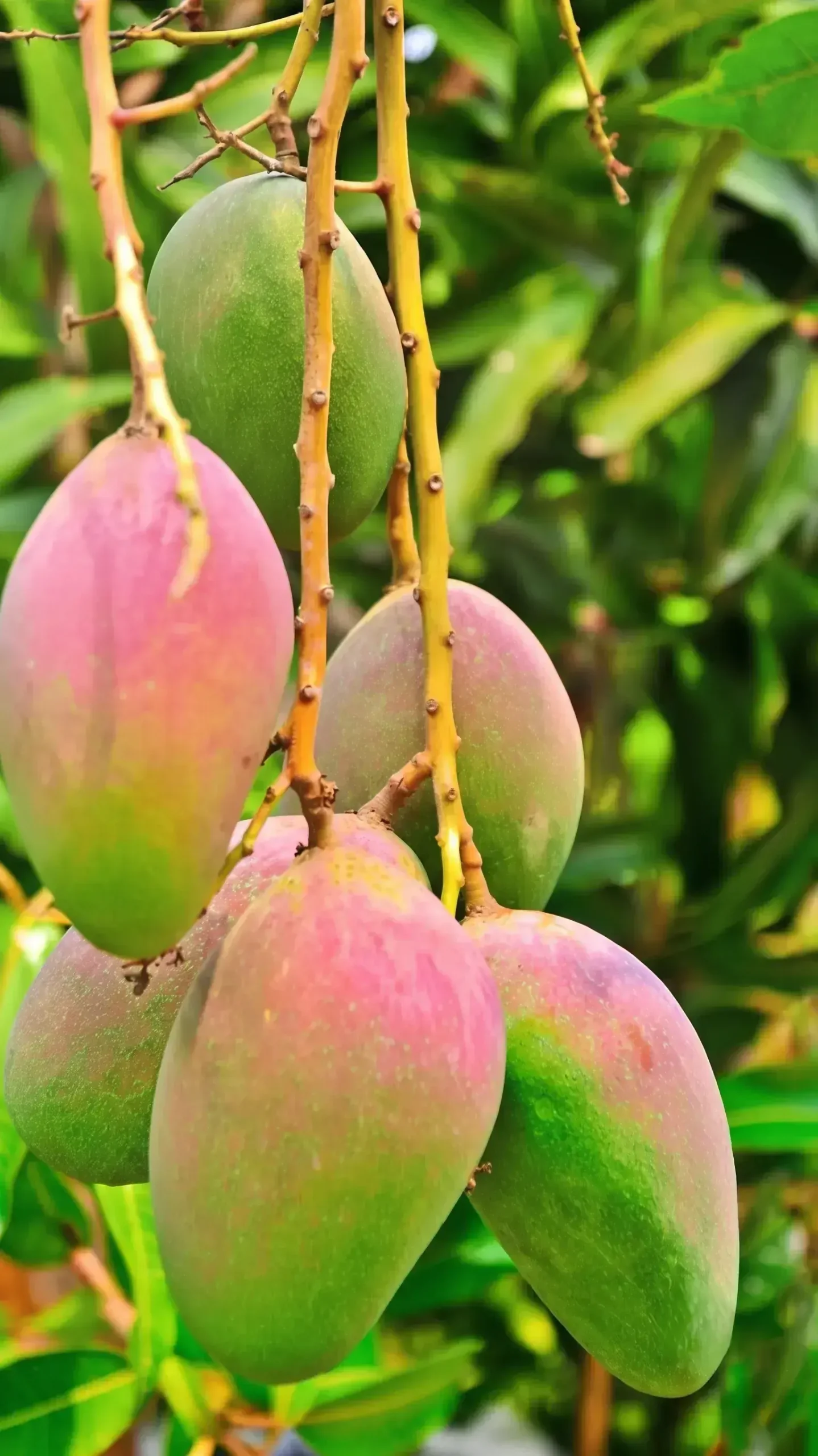
The fruit is commonly described as:
- 🥭 Medium-sized
- 🌿 Greenish to yellow skin as it matures
- 🍊 Soft yellow to yellow-orange flesh
- 🍯 Sweet with a noticeable tang
- 🌸 Pleasantly aromatic
- 🌱 Generally low-fibre or fibreless in commonly described selections
Fruit characteristics can vary depending on the particular regional selection, climate and growing conditions.
🍈 Pairi Mango Fruit
When mature, Pairi mangoes are appreciated for their juicy texture and balanced sweet-tart flavour.
Agricultural references describe Pairi fruits as medium-sized with soft, primuline-yellow, fibreless flesh and a good sugar-acid balance. Another horticultural reference describes Pairi as an early-maturing variety with good flavour and relatively poor keeping quality compared with some other mango varieties.
Because Pairi is an early-season mango, the fruit is particularly attractive to gardeners who enjoy having mango varieties that mature relatively early in the season.
🌳 Grafted Mango Plant
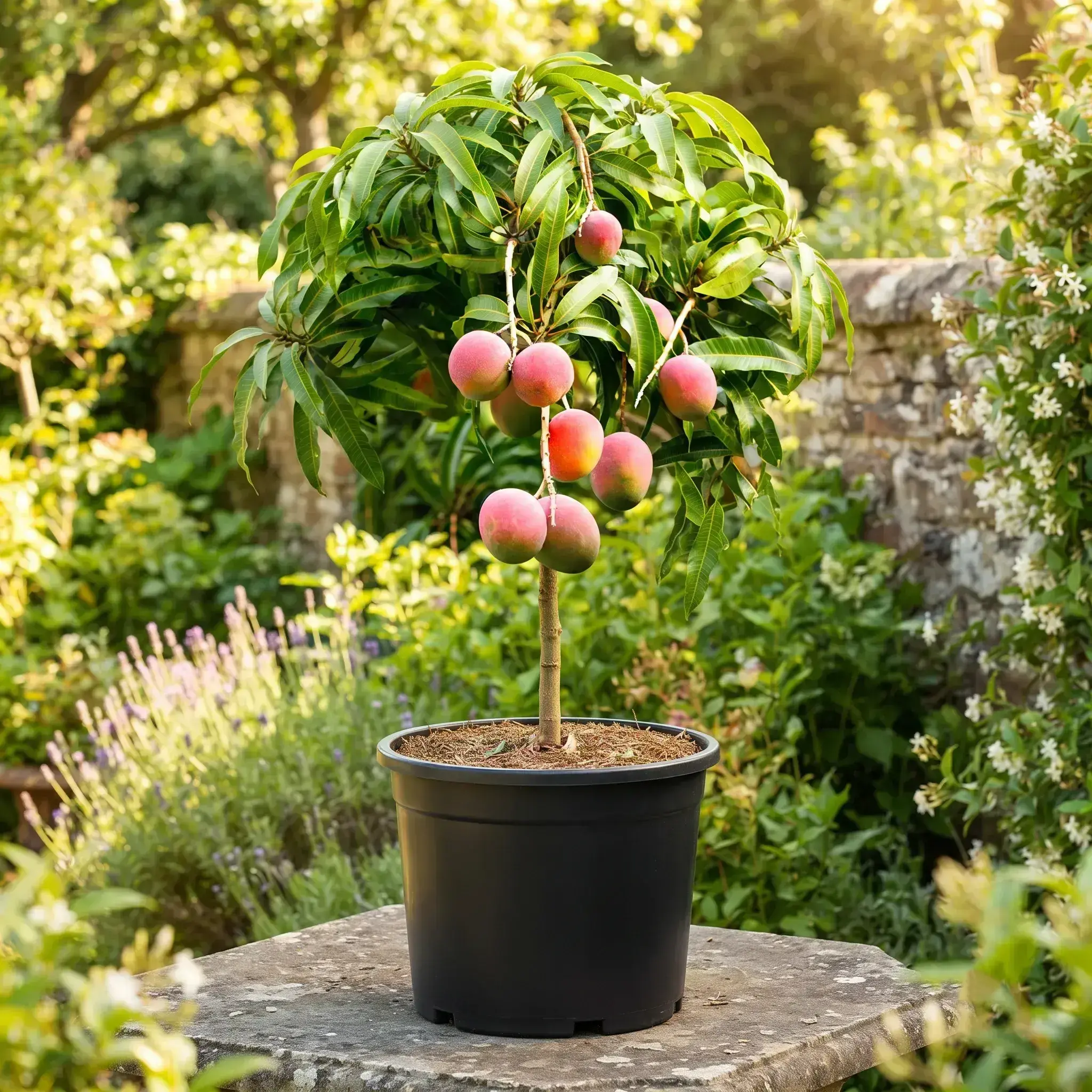
This product is offered as a grafted Pairi mango plant.
Grafting is widely used for commercial mango propagation because it allows selected varieties to be multiplied vegetatively. Indian agricultural training material identifies grafting, including softwood grafting, as an important method of mango propagation.
A grafted plant can help preserve the characteristics of the selected scion variety compared with growing an unknown mango from seed.
Important: Being grafted does not guarantee immediate fruiting. The age of the graft, rootstock, growing environment, nutrition, climate and overall plant health all influence when the tree begins flowering and producing fruit.
☀️ Sunlight Requirements
Mango is a sun-loving tropical fruit tree and Pairi should be grown in a bright, open location.
For best growth:
- Provide full sunlight.
- Aim for several hours of direct sunlight every day.
- Choose an open location with good air circulation.
- Avoid deep shade.
- Gradually acclimatise a nursery plant before exposing it to very intense sunlight.
Good sunlight is especially important when growing mangoes for flowering and fruit production.
💧 Watering
Water the young plant regularly while it is becoming established, but avoid continuously waterlogged soil.
A simple watering routine:
- Check the soil before watering.
- Water thoroughly when the upper soil begins to dry.
- Allow excess water to drain completely.
- Reduce watering during cool or prolonged rainy periods.
- Give additional water during hot and dry weather when necessary.
Mature outdoor mango trees can become more tolerant of short dry periods, but young plants benefit from consistent moisture while establishing.
🪴 Soil & Potting
Use a fertile, well-draining soil mixture for container cultivation.
A practical potting mix can include:
- Garden soil
- Well-decomposed compost
- Cocopeat
- Coarse sand or another drainage material
The pot must have adequate drainage holes.
If growing the plant in a container, gradually shift it into a larger pot as the root system develops.
🌱 Fertilizer & Nutrition
A young mango plant benefits from balanced nutrition during active growth.
Suitable options include:
- Compost
- Vermicompost
- Well-rotted organic manure
- Balanced fruit-tree fertilizer
- Micronutrients when required
Avoid excessive fertilizer application. A combination of good sunlight, healthy soil, correct watering and balanced nutrition is more important than heavy feeding.
For commercial orchards, fertilizer quantities should be determined according to tree age, soil conditions and local horticultural recommendations.
✂️ Pruning & Plant Shape
Light formative pruning can help establish a strong and manageable tree structure.
Remove:
- Dead branches
- Broken branches
- Weak shoots
- Crossing branches
- Unwanted basal growth
For grafted plants, remove shoots that develop below the graft union, as these can belong to the rootstock and compete with the desired Pairi growth.
🏡 Pairi Mango for Home Gardens
Pairi is an interesting choice for gardeners who want to grow a traditional Indian mango variety at home.
It can be grown in:
🌳 Backyard Gardens:
Plant in a sunny location with sufficient room for the tree to develop.
🏡 Home Fruit Gardens:
A good choice for gardeners building a collection of traditional mango varieties.
🪴 Terrace Gardens:
A young grafted plant can be grown in a large container with excellent drainage and adequate sunlight.
🌱 Farms & Orchards:
Suitable for growers in regions where the local climate is appropriate for mango cultivation.
🪴 Growing Pairi Mango in a Container
A grafted mango can be maintained in a large container during its early years.
For container cultivation:
- Use a large, sturdy pot.
- Ensure several drainage holes.
- Provide full sunlight.
- Use fertile, well-draining soil.
- Feed moderately during active growth.
- Prune appropriately to maintain a manageable structure.
- Repot when the plant becomes root-bound.
Container-grown mangoes may remain smaller than trees planted directly in the ground, but container size and pruning do not necessarily guarantee a permanently dwarf tree.
🌼 Flowering & Fruiting
A grafted Pairi mango plant may begin flowering earlier than a seed-grown mango, but no fixed fruiting period should be guaranteed.
Fruit production depends on:
- Graft maturity
- Plant age
- Rootstock
- Sunlight
- Temperature
- Soil conditions
- Water management
- Nutrition
- Flowering conditions
- General tree health
A newly purchased plant may therefore need time to establish before producing its first crop.
🥭 Pairi Mango Season
Pairi is generally described as an early-season mango variety. Horticultural references commonly place its season around the early part of the Indian mango harvest, although the exact timing varies according to region, climate and weather.
Do not expect the same harvest date every year because mango flowering and fruit maturity can be affected by local weather conditions.
🌳 Space Requirement
Mango is naturally a large evergreen fruit tree. Kew’s botanical information describes Mangifera indica as a tree commonly reaching around 10–15 metres in some documented populations, with a dense rounded or spreading crown.
Therefore, when planting Pairi in the ground:
- Choose an open location.
- Keep sufficient distance from buildings.
- Avoid planting directly beside walls.
- Provide enough room for the canopy.
- Consider future tree size before permanent planting.
A grafted plant may be smaller when purchased, but it should still be treated as a long-term fruit tree.
🌿 Pairi Mango – Traditional Indian Choice
Pairi is included among India’s recognized commercial mango varieties. The National Mango Database lists Pairi along with varieties such as Banganapalli, Totapuri, Neelum, Alphonso and Kesar.
Its combination of early season, aromatic fruit and sweet-tangy flavour makes it an interesting addition to a traditional Indian mango collection.
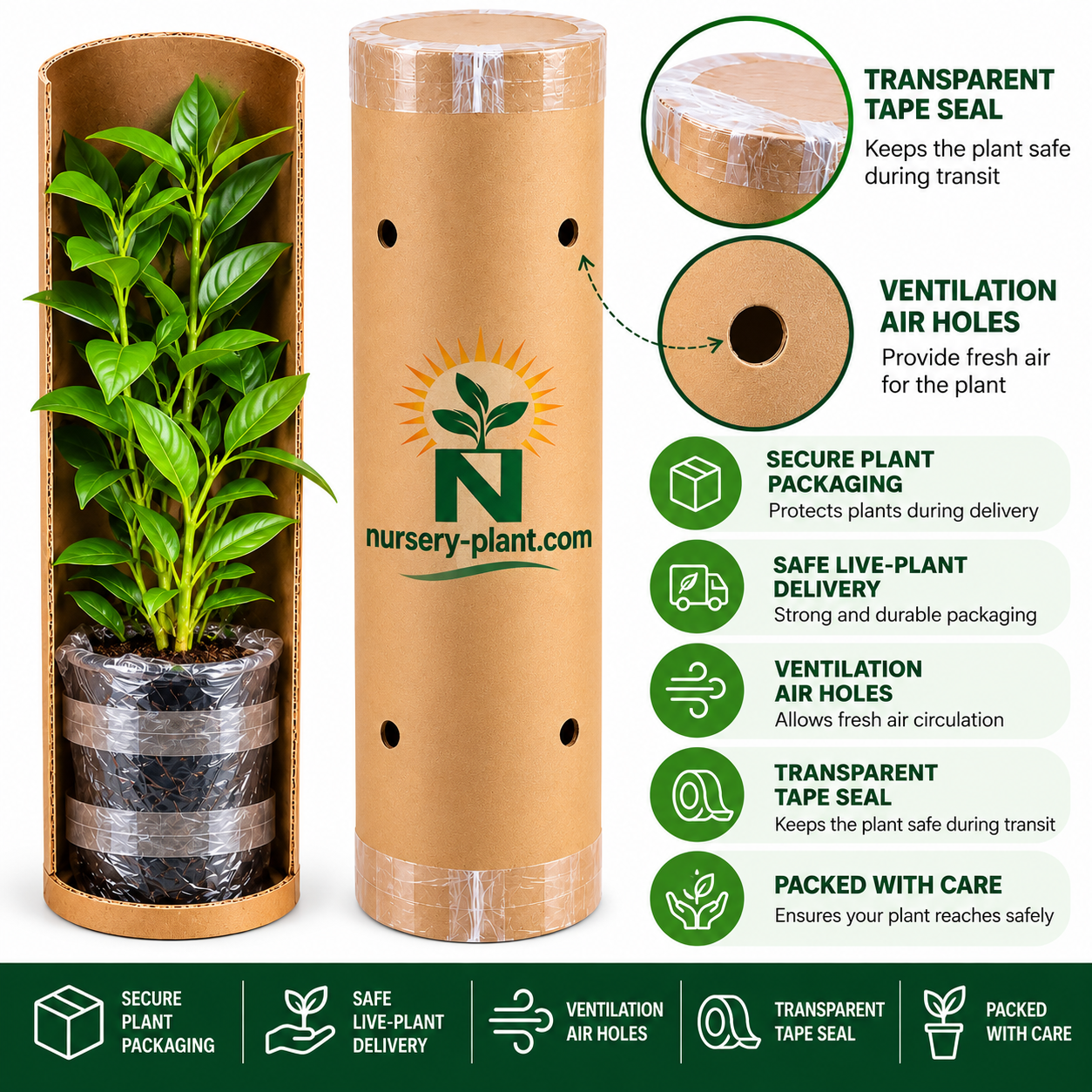
📦 Live Plant Delivery & Natural Variation
This is a live grafted plant, so its appearance may naturally differ from product photographs.
You may notice:
- Slight differences in plant height
- Differences in leaf size
- Variation in stem thickness
- Different numbers of leaves
- Minor leaf yellowing
- Temporary leaf drooping
- Small differences in branching
Transportation can temporarily stress a live plant because of changes in light, temperature, humidity and watering.
After receiving the plant:
- Carefully remove the packaging.
- Place it in a bright location.
- Gradually acclimatise it to strong outdoor sunlight.
- Water according to soil moisture.
- Avoid disturbing the graft union.
- Allow the plant time to recover and establish.
⚠️ Important Fruiting Note
A grafted Pairi mango plant is not a guarantee of immediate fruit production.
The actual time to flowering and fruiting varies with the plant’s age, graft maturity, climate, rootstock, growing conditions and management.
Fruit size, colour, flavour and harvest timing can also vary between regional selections and growing environments.
🌱 Why Choose a Pairi Mango Grafted Plant?
- 🥭 Traditional Indian mango variety
- 🌱 Grafted fruit plant
- 🌸 Known as an early-season mango
- 🍯 Pleasant sweet-tangy flavour profile
- 🍊 Soft yellow flesh
- 🌿 Suitable for home fruit gardens
- 🏡 Suitable for large terrace containers while young
- 🌳 Suitable for farms and mango orchards
- 🇮🇳 Excellent choice for gardeners interested in traditional Indian mango varieties
🌿 Botanical Information
- Botanical Name: Mangifera indica L.
- Family: Anacardiaceae
- Common Name: Mango
- Variety: Pairi / Payri / Pyari
- Plant Type: Evergreen tropical fruit tree
- Product Type: Grafted live fruit plant
- Fruit: Edible mango
- Growth Habit: Evergreen tree
- Native Range: Assam to southern China
- Cultivated In: India and many other tropical regions
🔗 Botanical Information & Further Reading
For the accepted botanical name, family and distribution of mango, see Kew – Plants of the World Online: Mangifera indica.
For botanical descriptions of the mango tree, flowers and fruit, see Kew – Mangifera indica General Information.
For information on India’s commercial mango varieties, including Pairi, see National Mango Database – Indian Varieties.
For horticultural information describing Pairi as an early-maturing Indian mango with soft, fibreless flesh, see Fruitipedia – Mango Variety Information.
For an educational horticulture reference describing Pairi’s season, fruit characteristics and flavour, see College of Horticulture & Forestry – Mango Variety Identification Manual.
For information on mango propagation and grafting practices in India, see MANAGE – DAESI Study Material.
For More Information Visit: Nursery-Plant.Com
For Contact Visit:Contact Us
For Shopping Visit: Shop Page


Reviews
There are no reviews yet.