hing plant | asafetida plant (ferula assa plant) for Home Garden
🌿 About the Plant
Hing, also known as Heeng or Asafoetida, is one of the most distinctive aromatic spices used in Indian cooking. The botanical name associated with the principal commercial species is Ferula assa-foetida L., belonging to the Apiaceae (carrot/parsley) family. Kew’s Medicinal Plant Names Services recognises Ferula assa-foetida L. as an accepted name associated with asafoetida. (Kew MPNS)
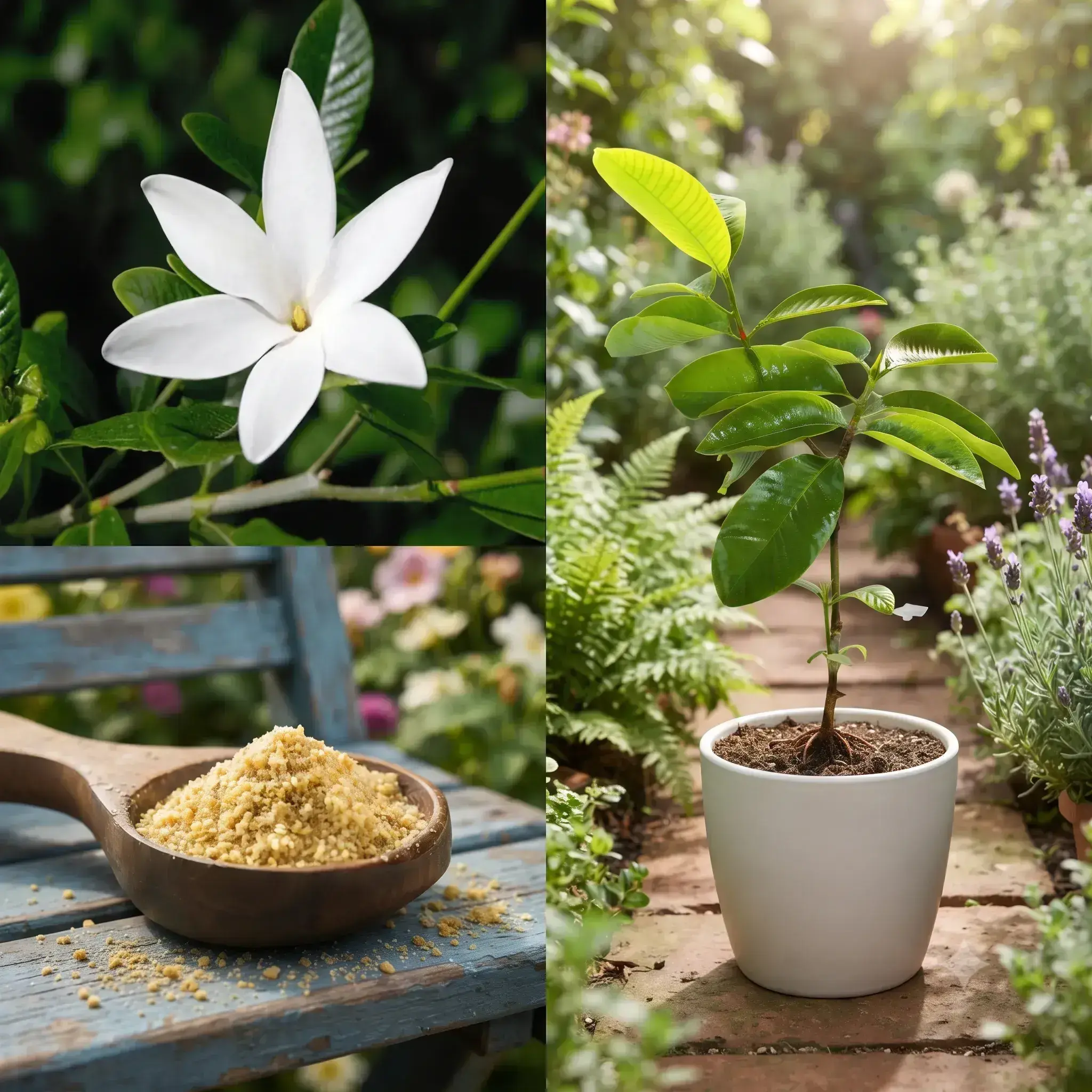
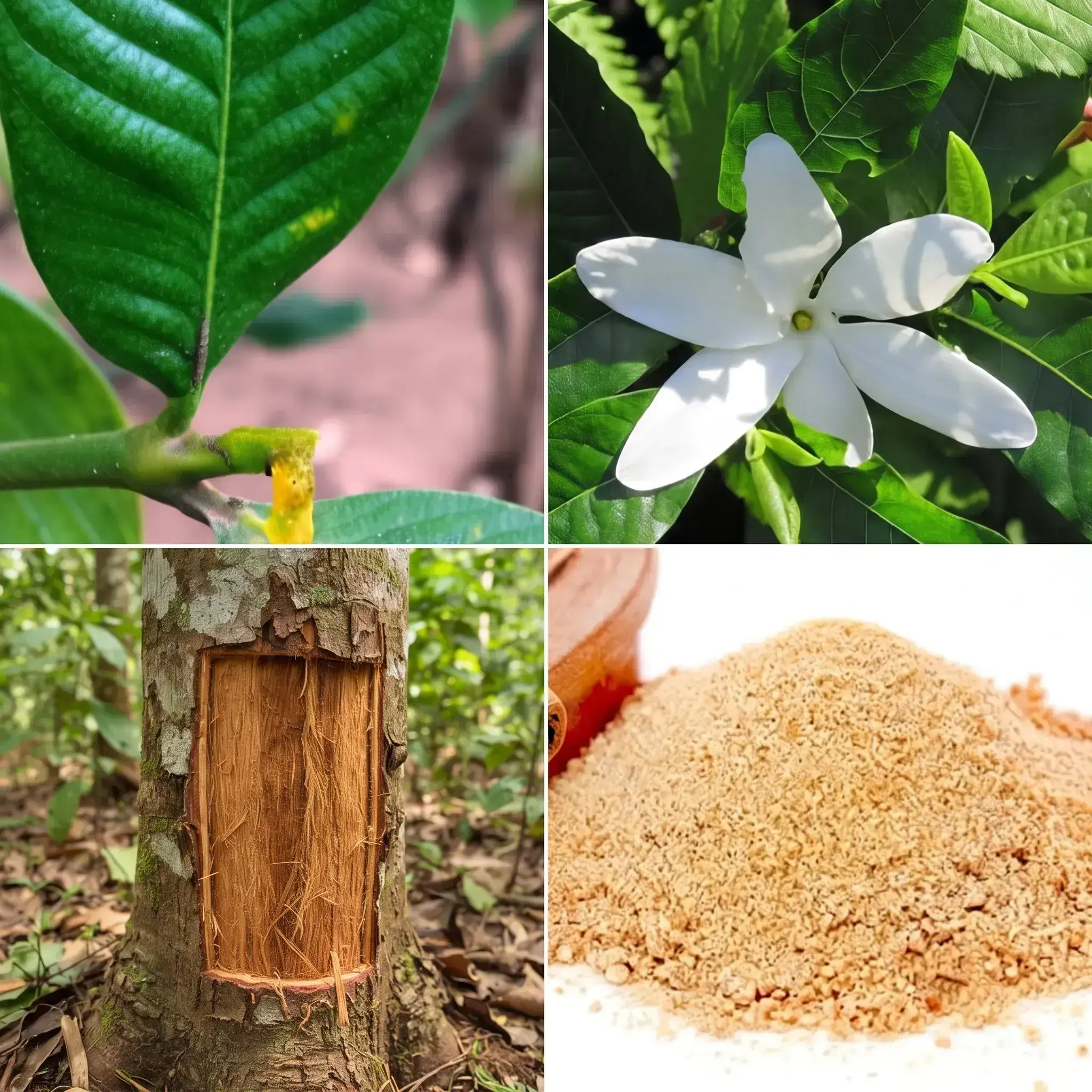
Unlike many kitchen herbs where the leaves or fruits are harvested, commercial Hing is obtained from the plant’s oleo-gum-resin, which is produced from underground root/rhizome tissues. The resin has an extremely strong characteristic aroma and is dried and processed into the familiar Hing spice used in Indian kitchens. The Spices Board of India identifies the commercial part as oleo-gum resin extracted from the rhizome and thickened root. (Spices Board India)
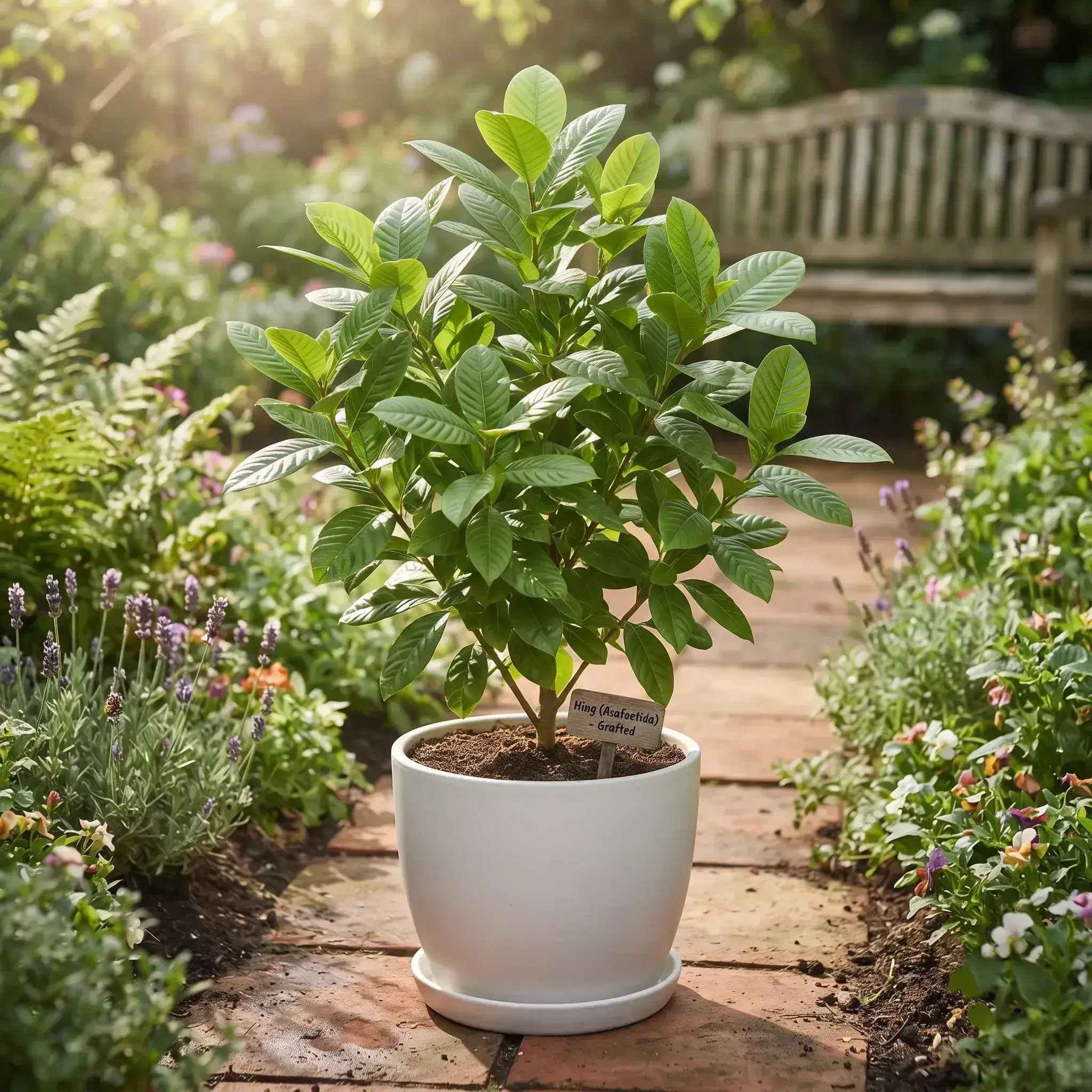
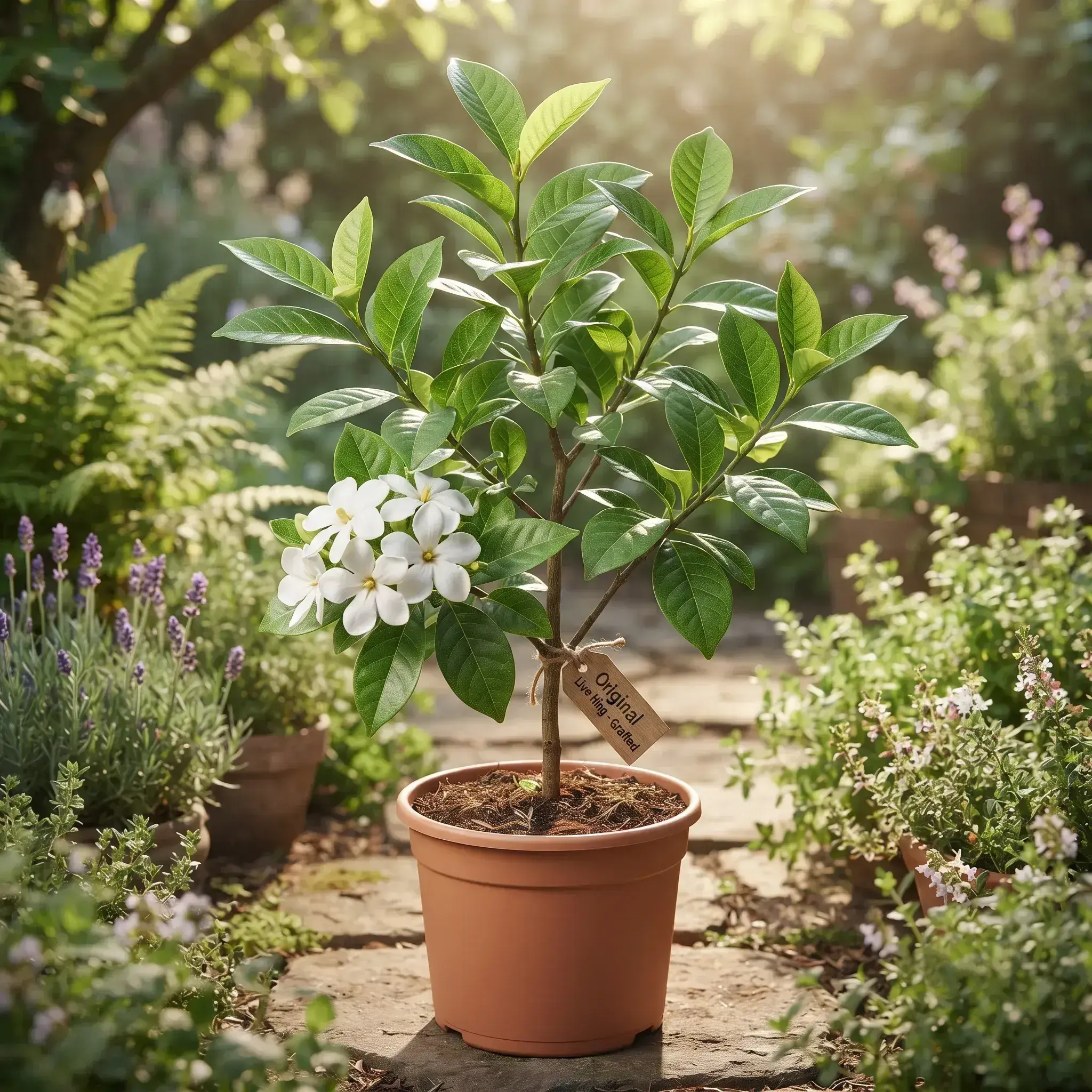
This is a fascinating plant for gardeners because the live plant looks quite different from the powdered Hing found in a kitchen spice container. It develops attractive foliage and eventually produces tall flowering structures under suitable conditions.
🌱 Plant Characteristics
- Common Names: Hing, Heeng, Asafetida, Hing
- Botanical Name: Ferula assa-foetida L.
- Family: Apiaceae
- Plant Type: Perennial herb
- Growth Habit: Herbaceous, upright plant
- Foliage: Large, divided leaves
- Flowers: Small flowers arranged in large umbrella-like inflorescences
- Commercial Product: Oleo-gum-resin
- Main Source: Root/rhizome tissues
- Natural Habitat: Dry and cold regions of Central Asia
- Supplied Plant Height: Approximately 1.5–3 feet, depending on nursery stock and season
Published Indian research describes Ferula assa-foetida as a perennial herb capable of reaching approximately 2–2.5 metres under suitable conditions. Therefore, the supplied 1.5–3-foot plant should be considered a young or juvenile plant, not its permanent mature size. (Indian Journal of Plant Genetic Resources)
🌿 Foliage & Growth Habit
Young Hing plants can develop a strong basal rosette of divided leaves. As the plant matures, it can become considerably larger than the height of the nursery plant supplied.
The foliage is adapted to the plant’s natural environment, where it experiences relatively dry conditions and seasonal temperature changes.
Because Hing is a perennial plant with a specialised root system, it should be given sufficient soil depth and good drainage rather than treated like a small short-lived kitchen herb.
🌼 Flowers & Seed Development
Under suitable conditions, mature Hing plants produce large umbrella-shaped flower clusters, characteristic of members of the Apiaceae family.
The plant normally requires several years to reach the stage associated with commercial oleo-gum-resin production. CSIR-IHBT reports that Ferula assa-foetida prefers cold and dry conditions and takes approximately five years for production of oleo-gum resin from its roots. (Press Information Bureau, Government of India)
This is an important point for home gardeners: a 1.5–3-foot plant should not be expected to immediately produce commercial Hing resin.
☀️ Sunlight Requirements
Hing is naturally associated with bright, open environments and cold-dry regions.
For home cultivation:
- Place the plant in a bright outdoor location.
- Provide good sunlight rather than keeping it permanently indoors.
- Allow sufficient airflow around the plant.
- Avoid heavily shaded, humid corners.
- Protect young plants from sudden extreme environmental changes after delivery.
CSIR-IHBT’s Indian cultivation programme specifically identifies cold desert regions of the Himalayas as suitable target areas for commercial cultivation. (India Science, Technology & Innovation)
💧 Watering
Hing should not be treated like a moisture-loving tropical herb.
Its natural adaptation is to dry environments, so excessive irrigation can be problematic, particularly when drainage is poor.
For home gardening:
- Allow the growing medium to dry to an appropriate degree between watering.
- Water thoroughly when the plant actually needs moisture.
- Avoid frequent shallow watering.
- Never allow the root zone to remain permanently waterlogged.
- Reduce watering considerably during wet or rainy periods.
- Ensure excess rainwater can drain away quickly.
The correct watering frequency will depend heavily on your local climate, soil and container.
In humid Indian regions such as coastal or monsoon areas, excellent drainage becomes particularly important.
🪴 Soil & Potting
A deep, loose and very well-drained soil is preferable for Hing.
A suitable home-garden medium can include:
- Good-quality garden soil
- Coarse sand
- Well-decomposed organic matter
- Cocopeat in a limited proportion where moisture retention needs to be moderated
The aim is to create a growing medium that supports root development without remaining saturated.
Because the plant develops a substantial underground root system, a deep container is more appropriate than a shallow decorative pot.
If planting directly into the ground, select a location that does not collect rainwater.
🌱 Fertilizer & Nutrition
Hing does not need excessive feeding for successful establishment.
For home gardening:
- Start with fertile soil containing mature organic matter.
- Apply compost sparingly when required.
- Avoid excessive nitrogen fertilization.
- Do not place concentrated fertilizer directly against the stem.
- Adjust feeding according to soil fertility and plant growth.
The objective during the early years should be healthy root and plant establishment, rather than forcing rapid top growth.
🌿 Hing Resin & Spice Production
The most important feature of the Hing plant is that the familiar spice is not simply harvested from its leaves.
Commercial asafoetida is an oleo-gum-resin obtained from underground parts of Ferula plants. The Spices Board of India describes asafoetida as dried latex/oleo-gum-resin exuded from the living underground rhizome or tap root. (Spices Board India)
CSIR-IHBT’s research programme reports that Ferula assa-foetida requires approximately five years before production of oleo-gum resin from the roots. (Press Information Bureau)
Therefore, this product should primarily be viewed as a specialized live spice plant for cultivation and botanical interest, rather than a quick source of homemade Hing.
Commercial resin production involves specialized cultivation and harvesting techniques. Home gardeners should not cut or injure the roots of a young plant in an attempt to obtain resin.
🌱 Special Cultivation Notes
Hing is unusual compared with many plants sold for Indian home gardens because the main commercial species is not naturally a typical lowland tropical Indian plant.
The Government of India’s PIB reported that CSIR-IHBT introduced Ferula assa-foetida planting material from Iran through ICAR-NBPGR and developed cultivation technology for India’s Himalayan cold-desert regions. The identified target regions include areas such as Lahaul-Spiti, Kinnaur, Ladakh and parts of Uttarakhand, with other high-altitude areas also investigated. (PIB)
This means performance in a warm, humid lowland garden can be very different from performance in the cold, dry conditions where commercial Indian trials have been conducted.
Gardeners in warm and humid regions should therefore pay particular attention to:
- Drainage
- Avoiding excessive irrigation
- Good air circulation
- Seasonal temperature
- Protection from prolonged waterlogging
- Appropriate winter conditions
🏡 Home Garden Suitability
A live Hing plant can be an excellent choice for gardeners interested in unusual spice plants, traditional Indian ingredients and botanical collections.
It is particularly interesting because:
- The plant is visually different from ordinary kitchen herbs.
- Its underground root system has commercial spice significance.
- It has a long perennial growth cycle.
- Mature plants can develop impressive foliage and flowering structures.
- It offers an opportunity to learn about the botanical source of a familiar Indian spice.
However, it is not a conventional quick-harvest kitchen herb.
If your primary goal is to harvest Hing resin at home, realistic expectations are essential because resin production requires a mature plant and specialised harvesting methods.
🪴 Container Gardening
The supplied 1.5–3 feet plant can initially be grown in a suitable large container.
For container cultivation:
- Choose a deep pot with multiple drainage holes.
- Use a loose, well-drained soil mixture.
- Place the pot in a bright outdoor location.
- Avoid excessive watering.
- Keep the root zone free from standing water.
- Repot carefully if the plant becomes root-bound.
- Avoid unnecessary disturbance of the main root.
Because Hing develops a significant root system, deep containers are preferable to shallow pots.
Long-term container cultivation may require progressively larger containers, depending on plant growth.
✂️ Pruning & Maintenance
Young Hing plants generally do not require aggressive pruning.
Maintenance should focus on:
- Removing dead or damaged foliage.
- Keeping weeds away from the plant.
- Maintaining good drainage.
- Avoiding standing water.
- Monitoring for common garden pests.
- Providing sufficient sunlight and airflow.
Avoid cutting or damaging the main root system.
The underground portion is particularly important to the plant’s long-term development, and commercial resin harvesting is a specialised process carried out only after sufficient plant maturity.
🌳 Space Requirement
Although the supplied plant is only 1.5–3 feet tall, mature Ferula assa-foetida plants can become much larger.
ICAR-NBPGR-associated research reports mature plants reaching approximately 2–2.5 metres in height. Another Indian forestry publication describes Hing as a perennial plant growing to around 1.83 metres. (Indian Journal of Plant Genetic Resources)
Allow sufficient space around the plant for:
- Root development
- Foliage expansion
- Air circulation
- Future growth
- Easy watering and maintenance
Do not permanently judge its required space from the initial nursery height.
🇮🇳 Hing Cultivation in India
Hing has historically been heavily dependent on imports for the Indian spice market.
India’s CSIR and ICAR institutions have worked to introduce and establish Ferula assa-foetida cultivation in suitable Indian regions.
ICAR-NBPGR facilitated the introduction of Heeng germplasm from Iran in 2018, and CSIR-IHBT subsequently established plants in the Lahaul valley. By the end of 2020, the programm had established 800 saplings in the cold-desert region. (Indian Journal of Plant Genetic Resources)
CSIR-IHBT identifies cold-desert Himalayan regions as the primary target areas for its developed cultivation technology. (India Science, Technology & Innovation)
This makes the Hing plant particularly interesting for Indian gardeners because it represents an example of a traditionally imported spice crop being experimentally established in suitable Indian agro-climatic zones.
🌿 Culinary Use
Hing is one of the most recognizable aromatic spices in Indian cuisine.
It is traditionally used in small quantities to add a distinctive savory and pungent character to dishes such as:
- Dal
- Sambar
- Rasam
- Vegetable curries
- Pickles
- Chutneys
- Kadhi
- Lentil preparations
- Fried snacks
- Spice mixtures
The Spices Board of India notes its use in curries, sauces and pickles. (Spices Board India)
Raw asafoetida has an exceptionally strong odour, while processed Hing used in household cooking is usually formulated or compounded into a more convenient spice product.
⚠️ Traditional & Medicinal Use
Hing has a long history of traditional use in various systems of medicine and household practices.
However, traditional use should not be presented as proof that the plant or its resin can treat a particular disease.
This product is sold as a live spice plant for gardening and culinary interest. It is not a medicine and should not be used as a substitute for professional medical treatment.
Concentrated herbal preparations and raw plant materials should be handled responsibly, particularly by children, pregnant individuals and people taking medicines.
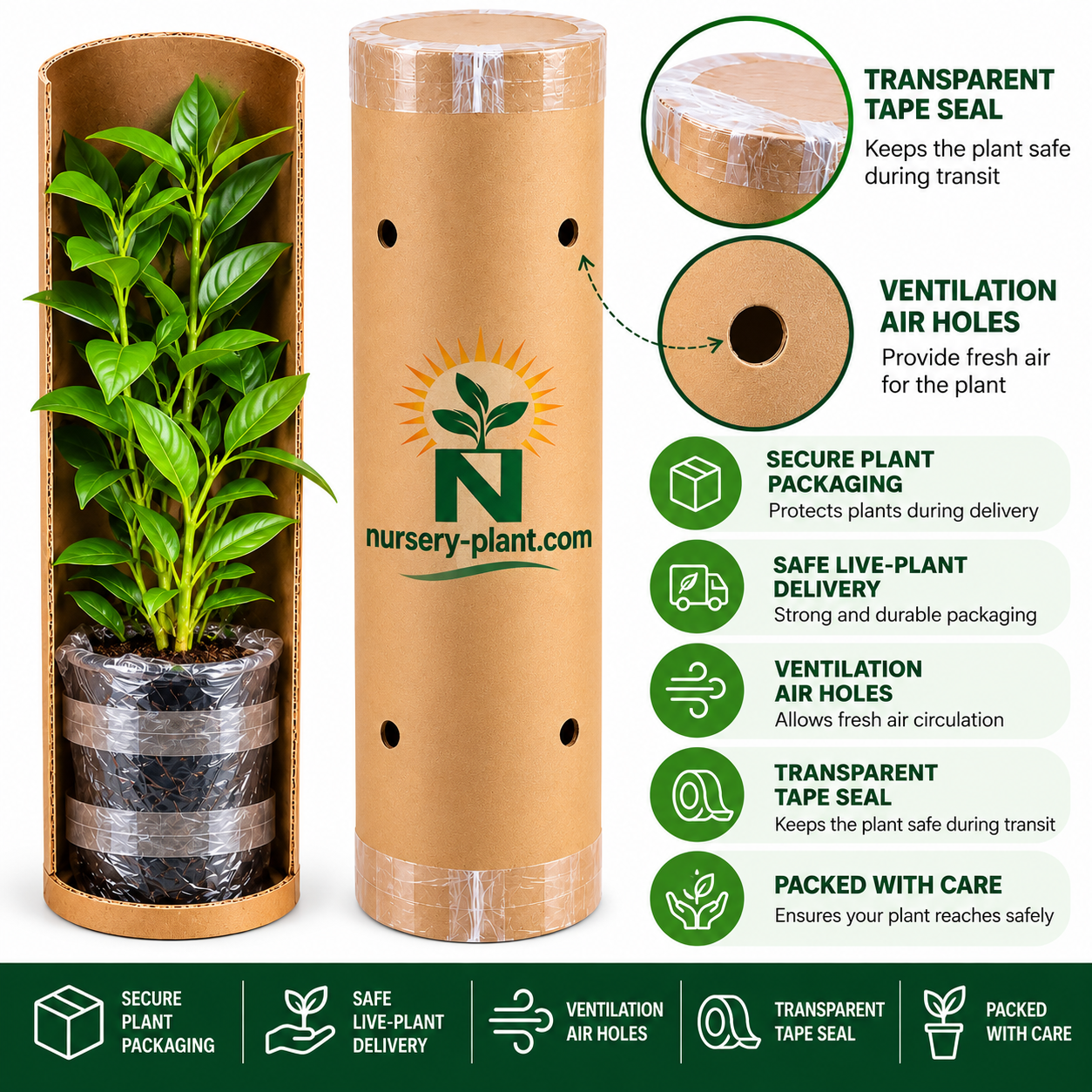
📦 Live Plant Delivery & Natural Variation
This is a live plant, so the actual plant supplied may naturally differ from the photographs shown online.
During packing, transportation and acclimatisation, you may notice:
- Slight leaf yellowing
- Temporary drooping
- Minor leaf shedding
- Changes in leaf appearance
- Different plant height
- Variation in stem thickness
- Differences in foliage density
- Temporary transport stress
These are natural possibilities with live plants and do not necessarily indicate permanent damage.
After delivery, place the plant in a suitable bright location and allow it time to adjust to its new environment.
Changes in temperature, sunlight, humidity and watering can temporarily affect the plant’s appearance.
Product photographs are representative. The supplied plant may naturally vary according to season, growth stage, nursery conditions and availability.
⚠️ Important Note
The listed 1.5–3 feet height refers to the approximate supplied plant size, not the maximum mature height.
Hing is a perennial plant that can become considerably larger with age.
Also, commercial Hing resin should not be expected from a newly delivered plant. CSIR-IHBT reports that approximately five years of cultivation may be required for oleo-gum-resin production, and commercial extraction requires specialised practices. (PIB)
Do not cut, drill or injure the root of a young plant to try to obtain Hing.
🌱 Why Choose This Plant?
- Genuine botanical source of the traditional Hing/Heeng spice
- Attractive and unusual perennial herb
- Excellent choice for spice-plant collections
- Suitable for gardeners interested in traditional Indian crops
- Supplied at an approximate 1.5–3 feet height
- Can initially be grown in a suitable deep container
- Interesting foliage and mature flowering habit
- Educational plant for understanding the origin of asafoetida
- Suitable for gardeners who enjoy growing uncommon spice plants
- A unique addition to a home herb or kitchen garden collection
🌿 Botanical Information
| Feature | Details |
|---|---|
| Common Name | Hing, Heeng, Asafoetida |
| Botanical Name | Ferula assa-foetida L. |
| Family | Apiaceae |
| Genus | Ferula |
| Plant Type | Perennial herb |
| Growth Habit | Upright herbaceous plant |
| Mature Height | Approximately 2–2.5 m reported in Indian literature |
| Supplied Height | Approximately 1.5–3 feet |
| Flowers | Small flowers in umbrella-like clusters |
| Commercial Part | Oleo-gum-resin |
| Source of Resin | Underground root/rhizome tissues |
| Climate Preference | Cold and relatively dry conditions |
| Soil | Deep, loose and very well drained |
| Watering | Moderate; avoid waterlogging |
| Garden Use | Spice garden, botanical collection and specialised home garden |
The botanical identity and commercial significance of Ferula assa-foetida are supported by Kew, India’s Spices Board, ICAR-NBPGR and CSIR-IHBT sources. (Kew MPNS) (Spices Board India)
🔗 Botanical Information & Further Reading
- Kew – Medicinal Plant Names Services: Asafoetida / Ferula assa-foetida
- Spices Board India – Asafoetida
- ICAR-NBPGR / Indian Journal of Plant Genetic Resources – Introduction of Heeng Germplasm
- India Science, Technology & Innovation – CSIR-IHBT Heeng Agrotechnology
- Government of India PIB – CSIR-IHBT Asafoetida Cultivation
- CSIR-IHBT – Asafoetida Cultivation Research
- Research paper – Introduction of Heeng Germplasm by NBPGR
- ICFRE – Potential of Asafoetida
🌱 Final Growing Reminder
Hing is a specialised perennial spice plant, very different from common fast-growing kitchen herbs. The supplied 1.5–3 feet plant is best treated as a young plant that needs time to establish.
Provide bright light, deep well-drained soil, careful watering and protection from prolonged waterlogging. Most importantly, do not expect immediate Hing resin production. Commercial resin development occurs only after the plant reaches sufficient maturity and requires specialised harvesting practices.
With realistic expectations and suitable growing conditions, this unusual plant can become an interesting addition to a home garden, spice collection or botanical garden.
For More Information
Visit: Nursery-Plant.Com
For Contact Visit:Contact Us
For Shopping Visit: Shop Page


Reviews
There are no reviews yet.