Tagar Flower Plant – Crape Jasmine (Tabernaemontana divaricata) for Home Garden
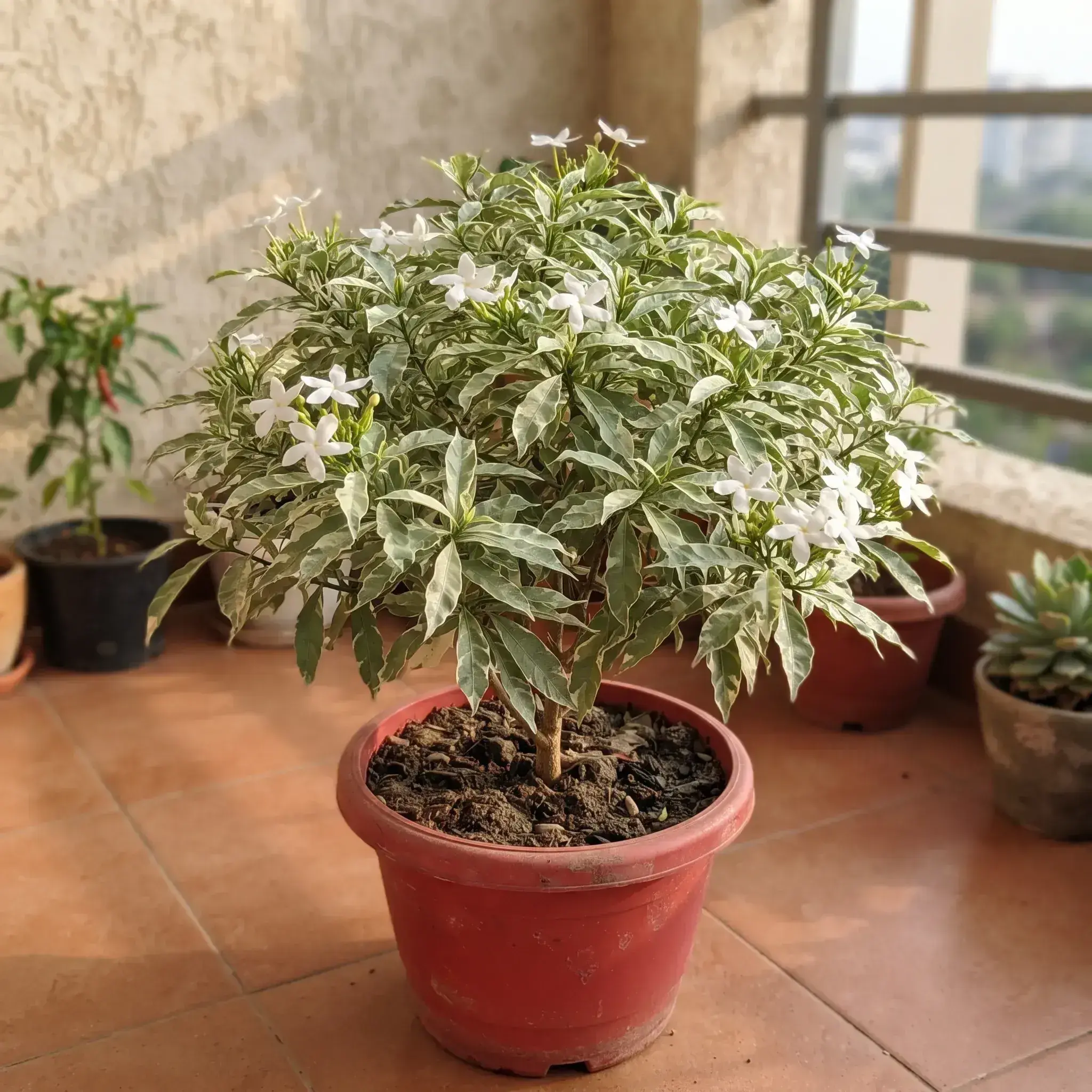
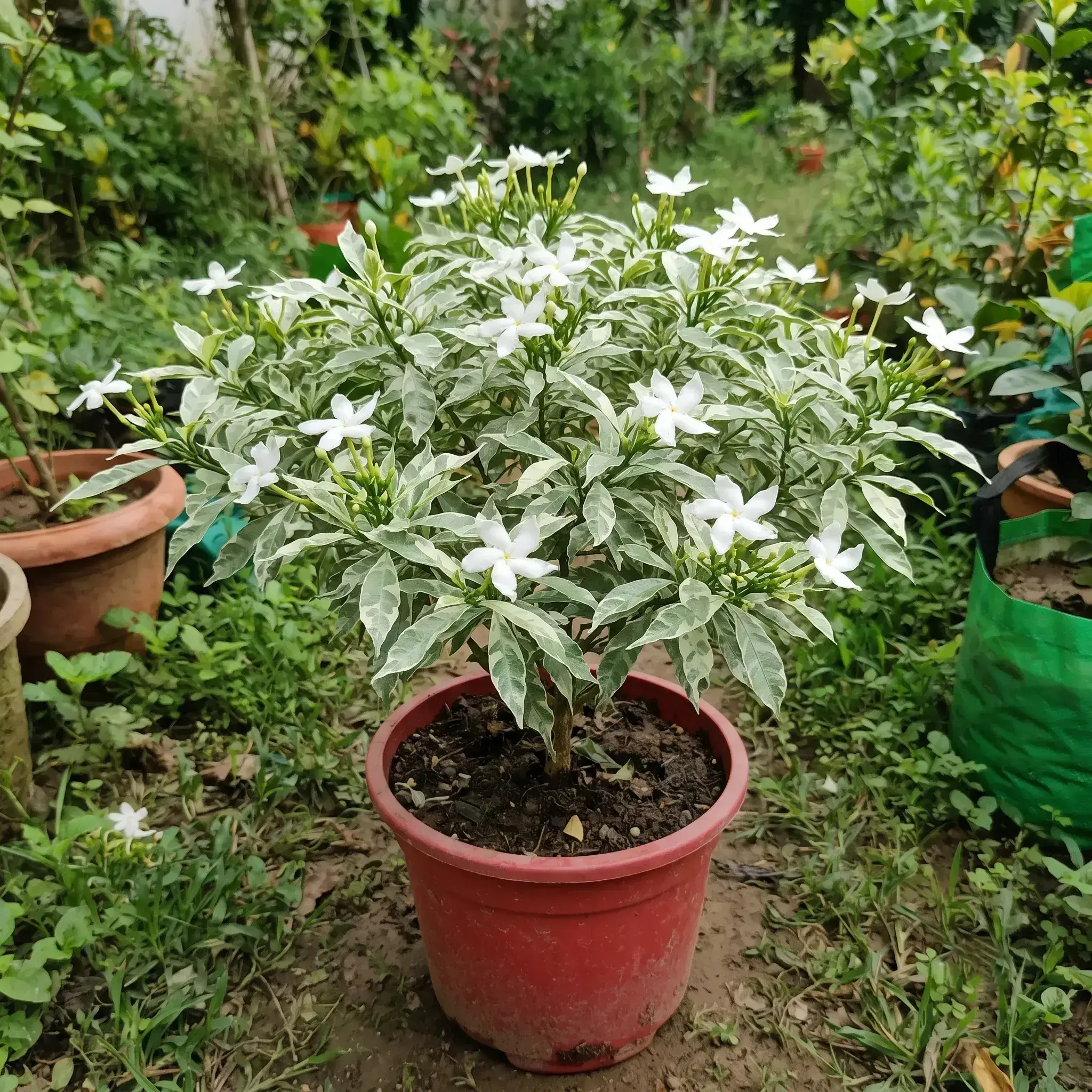
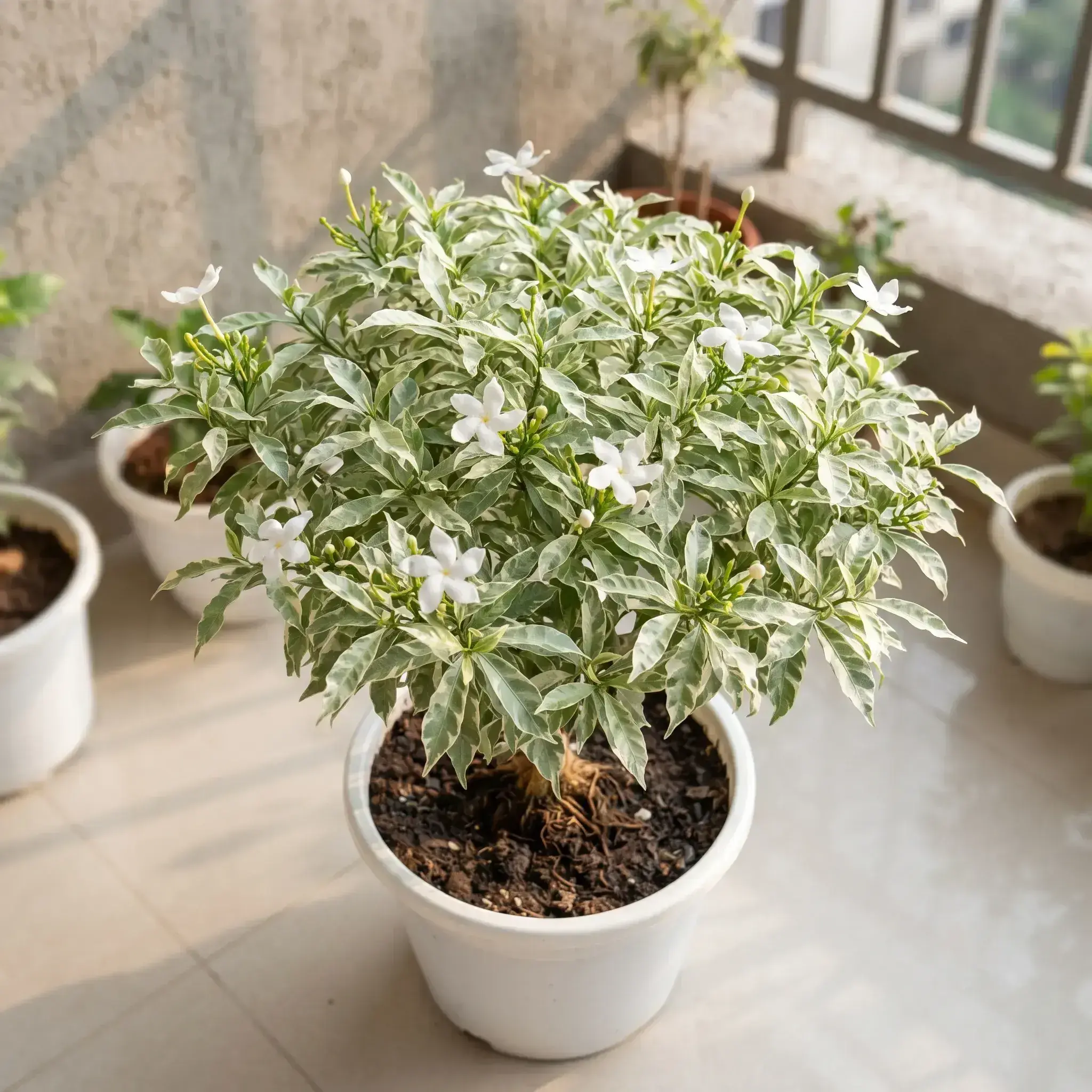
The Tagar Flower Plant commonly known as Crape Jasmine (Tabernaemontana divaricata) Plant, Crape Jasmine, Chandni, Pinwheel Flower or Tagar. This popular Indian flowering shrub is admired for its beautiful white flowers, glossy dark-green leaves and attractive bushy growth.
The botanical name of Tagar is Tabernaemontana divaricata. It is a tropical evergreen ornamental shrub belonging to the Apocynaceae family. Its white flowers have five curved petals arranged in a beautiful pinwheel-like shape and often release a pleasant fragrance, especially during the evening and night.
Tagar is a wonderful choice for home gardens, outdoor pots, balconies, entrance areas and landscape borders. It is also traditionally grown in many Indian gardens for its attractive flowers, which are commonly used in पूजा and floral decorations.
Plant Highlights
- Common Name: Tagar, Chandni, Crape Jasmine, Pinwheel Flower, Moonbeam
- Botanical Name: Tabernaemontana divaricata
- Family: Apocynaceae
- Plant Type: Tropical evergreen flowering shrub
- Flower Colour: White
- Flower Shape: Five-petalled pinwheel-shaped flowers
- Foliage: Glossy, dark-green leaves
- Flower Fragrance: Pleasant, often stronger at night
- Growth Habit: Upright, bushy and branching
- Light Requirement: Full sunlight to partial shade
- Water Requirement: Moderate, regular watering
- Best For: Home gardens, pots, borders, balconies and outdoor decoration
About the Tagar Flower Plant
Tagar is a well-known ornamental shrub grown in India and other tropical regions. It is appreciated for its attractive white flowers and evergreen foliage.
The plant develops several branches with opposite pairs of glossy green leaves. Its flowers usually appear in small clusters at the ends of branches or near the leaf axils.
There are different cultivated forms of Crape Jasmine. Some varieties produce single flowers with five pinwheel-shaped petals, while double-flowered varieties have multiple layers of white petals and a fuller appearance.
Appearance and Growth
Tagar grows as a medium-sized evergreen shrub with multiple woody branches. Its leaves are smooth, glossy, deep green and generally oval or oblong with pointed tips.
The flowers are its most attractive feature. They are usually white, waxy and fragrant, with petals arranged in a pinwheel pattern.
Under suitable growing conditions, the plant develops a rounded, bushy appearance. Regular pruning can help maintain its size and encourage fresh branching.
Flowering and Fragrance
Tagar is popular for its beautiful white flowers and pleasant fragrance.
The plant can produce flowers repeatedly in favourable tropical conditions. Flowering may occur during several parts of the year, depending on climate, sunlight, plant maturity and variety.
For better flowering:
- Provide adequate sunlight.
- Maintain regular soil moisture.
- Use fertile, well-draining soil.
- Feed moderately during active growth.
- Prune lightly to encourage new branches.
The flowers are often more fragrant during the evening and night, making Tagar a lovely choice near garden entrances, pathways and sitting areas.
Sunlight Requirements
Tagar grows well in full sunlight to partial shade.
- Provide around 4–6 hours of sunlight where possible.
- Morning sunlight is beneficial for healthy growth.
- Partial shade can be suitable in very hot locations.
- Avoid keeping the plant in deep shade for long periods.
- Gradually introduce young plants to stronger sunlight.
In West Bengal, a location receiving morning sunlight and some protection from harsh afternoon heat can be suitable.
Watering Requirements
Tagar prefers moderately moist soil but does not tolerate prolonged waterlogging.
- Water when the upper layer of soil begins to dry.
- Water deeply around the root zone.
- Allow excess water to drain away.
- Increase watering during hot and dry weather when needed.
- Reduce watering during cooler periods.
During the monsoon, check the drainage carefully. Excess water around the roots can cause yellow leaves and root damage.
Soil and Potting Mix
Tagar grows well in fertile, organic-rich and well-draining soil.
A suitable potting mixture can include:
- Garden soil for structure
- Compost or vermicompost for organic nutrients
- Cocopeat for moisture retention
- Coarse sand or perlite for improved drainage
Avoid compact soil that remains waterlogged. If growing in a container, choose a pot with sufficient drainage holes.
Temperature and Humidity
Tagar is a tropical plant that prefers warm conditions.
- Protect young plants from cold winds.
- Maintain suitable soil moisture during summer.
- Provide good air circulation.
- Avoid prolonged exposure to very cold conditions.
- Protect container-grown plants during unusually cold weather.
The warm and humid climate of many parts of India is generally suitable for growing Tagar outdoors.
Fertilizer and Plant Nutrition
Regular but moderate feeding supports healthy foliage and flowering.
- Add compost or vermicompost periodically.
- Use a balanced flowering-plant fertilizer according to its label.
- Apply fertilizer to moist soil.
- Avoid excessive nitrogen fertilizer.
- Reduce feeding when growth slows.
Healthy roots and balanced nutrition help the plant produce strong branches and flowers.
Growing Tagar in Pots
Tagar can be grown successfully in containers, making it suitable for balconies, terraces and small gardens.
- Choose a medium-to-large pot with drainage holes.
- Use fertile, well-draining potting soil.
- Place the pot in a sunny or partially shaded location.
- Water according to soil moisture.
- Prune regularly to maintain a compact shape.
- Repot when roots become crowded.
A larger container gives the roots enough room to develop and supports healthy plant growth.
Growing Tagar in Home Gardens
Tagar is a versatile flowering shrub for Indian home gardens. It can be planted in garden beds or maintained in decorative pots.
Popular garden uses include:
- Garden borders and pathways
- Entrance and courtyard decoration
- Outdoor flowering arrangements
- Balcony and terrace gardens
- Decorative shrub planting
- Areas near outdoor sitting spaces
Its white flowers look attractive against the dark-green foliage and can complement other colourful flowering plants.
Pruning and Maintenance
Regular light pruning helps maintain a healthy and attractive shape.
- Remove dry and damaged branches.
- Trim excessively long shoots.
- Remove weak or overcrowded growth.
- Use clean pruning scissors.
- Prune after a flowering flush when necessary.
Tagar produces milky sap when stems or leaves are damaged. Wear gloves while pruning and avoid contact with the eyes or mouth.
Propagation
Tagar can be propagated through stem cuttings and seeds. Stem cuttings are commonly used for home gardening.
Propagation through stem cuttings:
- Select a healthy, semi-mature branch.
- Cut a suitable section using clean pruning scissors.
- Remove the lower leaves.
- Place the cutting in a moist, well-draining propagation medium.
- Keep it in a warm location with bright indirect light.
- Maintain moisture without waterlogging.
- Transplant after a healthy root system develops.
Avoid taking cuttings from weak or diseased branches.
Common Problems and Solutions
Yellow Leaves: May occur due to overwatering, poor drainage, nutrient imbalance or natural ageing. Check soil moisture and root health.
Few Flowers: Insufficient sunlight, excessive nitrogen or unsuitable pruning may reduce flowering. Review the plant’s growing conditions.
Brown Leaf Edges: Can result from irregular watering, fertilizer buildup or environmental stress. Maintain consistent care.
Leaf Drop: Sudden changes in watering, temperature or light may cause leaf drop. Keep the growing conditions stable.
Scale Insects: These pests may appear on stems and leaves. Inspect the plant regularly and use an appropriate plant-safe treatment if needed.
Sooty Mould: Black fungal growth can develop on sticky honeydew left by certain insects. Check for scale insects or other sap-feeding pests and address the infestation.
Is Tagar Suitable for Home Gardens?
Yes. Tagar is an excellent outdoor ornamental shrub for Indian home gardens. Its white flowers, evergreen foliage and pleasant fragrance make it suitable for garden borders, entrances and decorative pots.
It can grow in full sunlight or partial shade and requires moderate watering. With regular maintenance, it can develop into an attractive flowering shrub.
Safety and Toxicity
Tagar belongs to the Apocynaceae family and produces milky latex when its stems or leaves are damaged.
The plant should not be assumed to be edible or safe for home remedies. Avoid swallowing any part of the plant or allowing children and pets to chew its leaves or flowers.
- Wear gloves when pruning.
- Avoid contact between the milky sap and eyes or mouth.
- Wash your hands after handling damaged plant parts.
- Keep the plant away from small children and pets.
- Seek medical advice if plant material is swallowed or irritation develops.
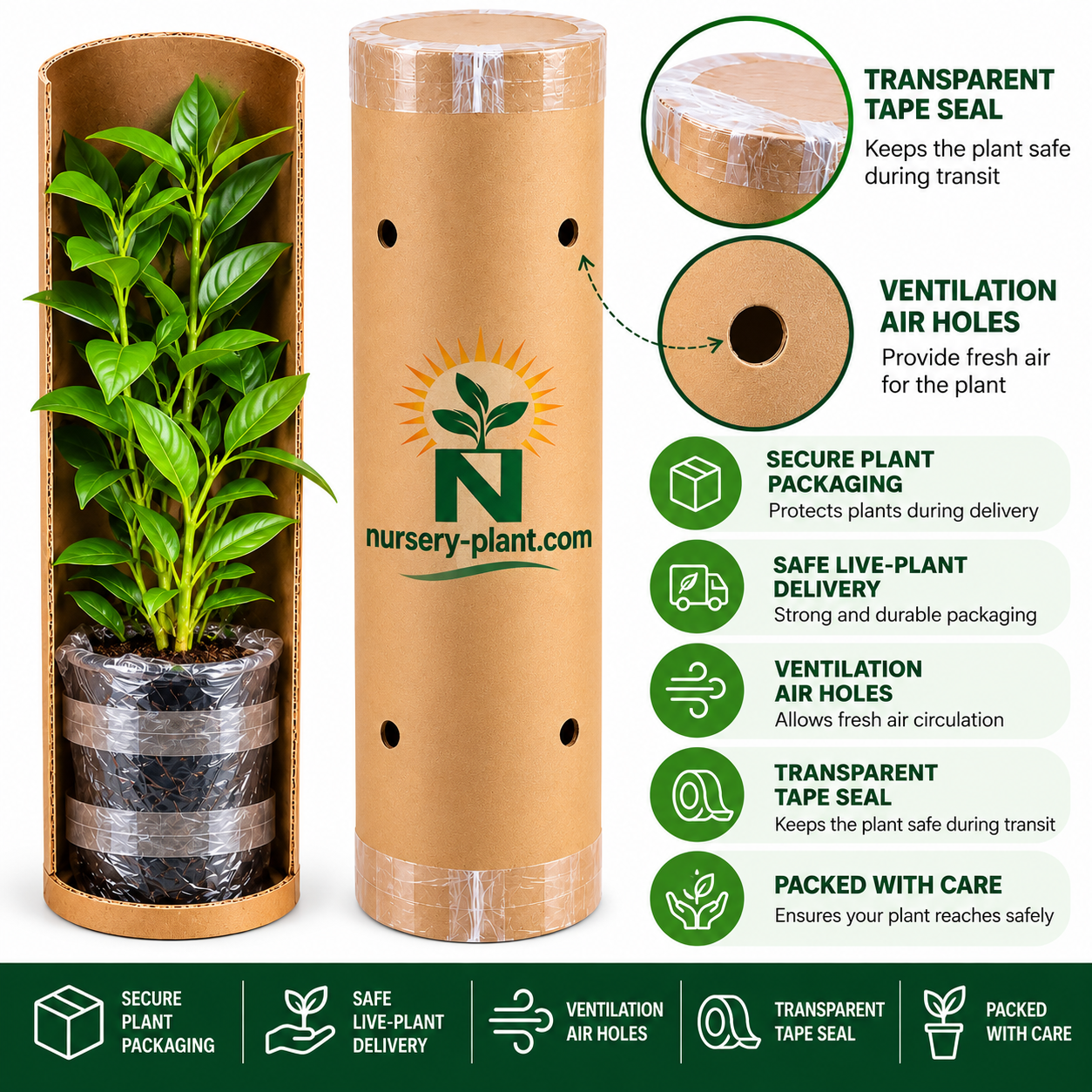
Live Plant Delivery Information
Live plants are natural products, so the delivered plant may have slight differences in height, branch shape, leaf size and flower appearance compared with photographs.
Some temporary leaf drooping or flower loss can occur during transportation. After delivery, place the plant in a bright, well-ventilated location and allow it to adjust. Check the soil before watering and avoid immediate repotting or heavy fertilizing.
Why Choose a Tagar Flower Plant?
- Beautiful white pinwheel-shaped flowers
- Pleasant fragrance, especially during the evening
- Attractive glossy green foliage
- Suitable for Indian home gardens
- Can be grown in garden beds or pots
- Useful for borders, entrances and outdoor decoration
- Suitable for tropical and subtropical climates
- An attractive flowering shrub for home gardeners
Botanical Information & Further Reading
Explore these references to learn more about Tagar identification, flowering and cultivation:
- Kew Science – Tabernaemontana divaricata
- University of Florida – Crape Jasmine Plant Guide
- National Parks Board, Singapore – Pinwheel Flower
- CSIR-NEERI – Crape Jasmine
- Royal Horticultural Society – Tabernaemontana divaricata
- Botanical Survey of India – Flora of Thiruvananthapuram
Frequently Asked Questions
1. What is the botanical name of the Tagar Flower Plant?
The botanical name is Tabernaemontana divaricata. It belongs to the Apocynaceae family.
2. Is Tagar the same as Crape Jasmine?
Yes. Tagar, Chandni, Crape Jasmine and Pinwheel Flower are common names used for Tabernaemontana divaricata.
3. What colour flowers does Tagar produce?
Tagar generally produces beautiful white flowers. Depending on the variety, flowers may be single or double.
4. Does Tagar have a fragrance?
Yes. Its flowers have a pleasant fragrance that is often stronger during the evening and night.
5. Can Tagar grow in West Bengal?
Yes. Tagar is suitable for many warm and humid parts of West Bengal. It can be grown outdoors in garden soil or containers with suitable sunlight and drainage.
6. Does Tagar need full sunlight?
Tagar grows well in full sunlight to partial shade. Morning sunlight with some afternoon protection can be suitable in hot weather.
7. Can I grow Tagar in a pot?
Yes. Choose a medium-to-large pot with drainage holes and use fertile, well-draining soil.
8. How often should I water Tagar?
Water when the upper soil layer begins to dry. Avoid keeping the roots continuously waterlogged.
9. How can I propagate Tagar?
Tagar can be propagated through stem cuttings and seeds. Healthy semi-mature stem cuttings are commonly used.
10. Does Tagar flower throughout the year?
In favourable tropical conditions, Tagar may flower repeatedly during the year. Flowering frequency depends on sunlight, temperature, plant maturity and care.
11. What is the difference between single and double Tagar?
Single Tagar generally has five prominent pinwheel-shaped petals. Double Tagar has multiple layers of petals, giving the flowers a fuller appearance.
12. Is Tagar safe for children and pets?
Do not allow children or pets to chew or swallow any part of the plant. It produces milky sap and should be handled carefully during pruning.
For More Information
Visit: Nursery-Plant.Com
For Contact Visit:Contact Us
For Shopping Visit: Shop Page


Reviews
There are no reviews yet.