
Chinese Spider Hibiscus (Jhumka Joba) Live Flower Plant
🌿 About the Plant
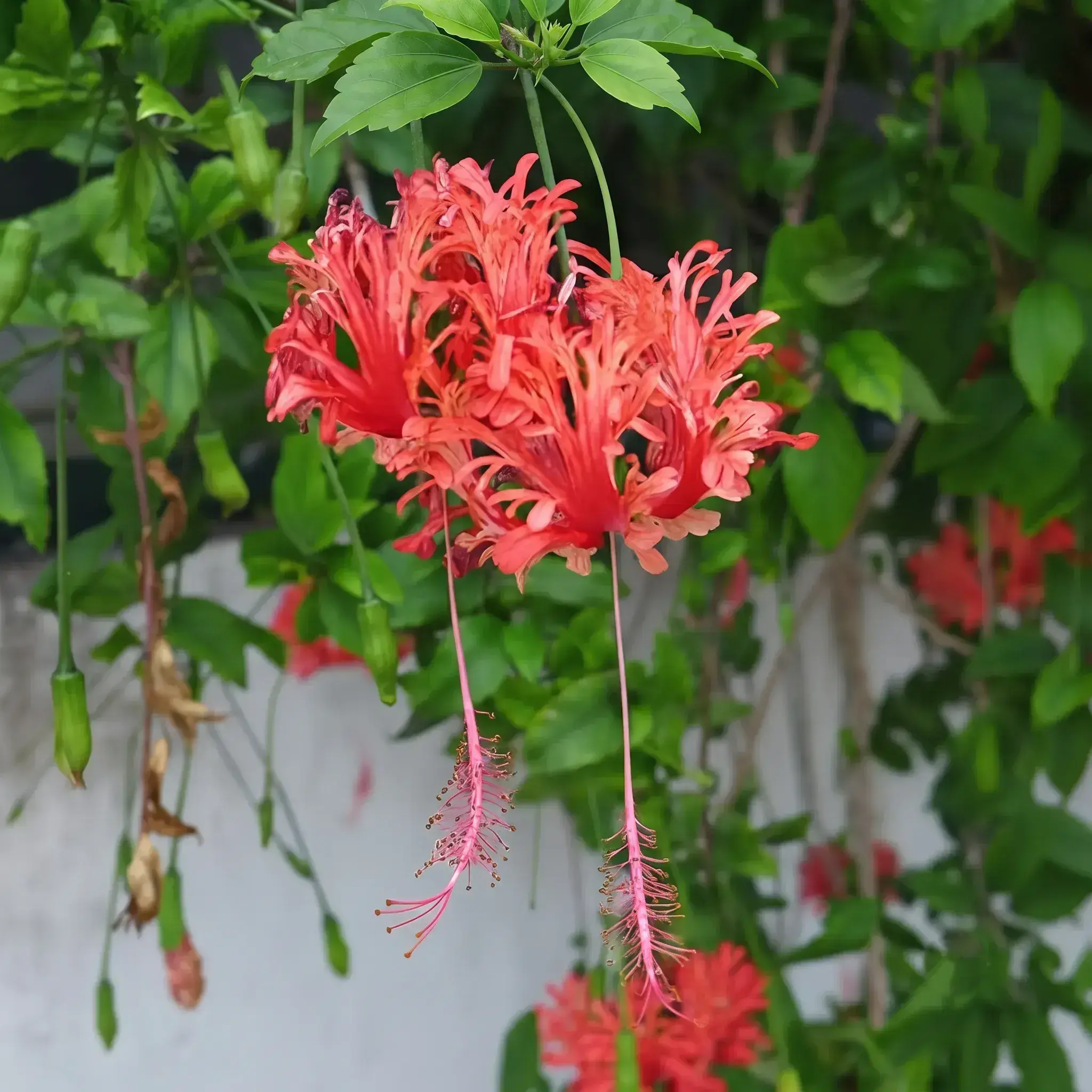
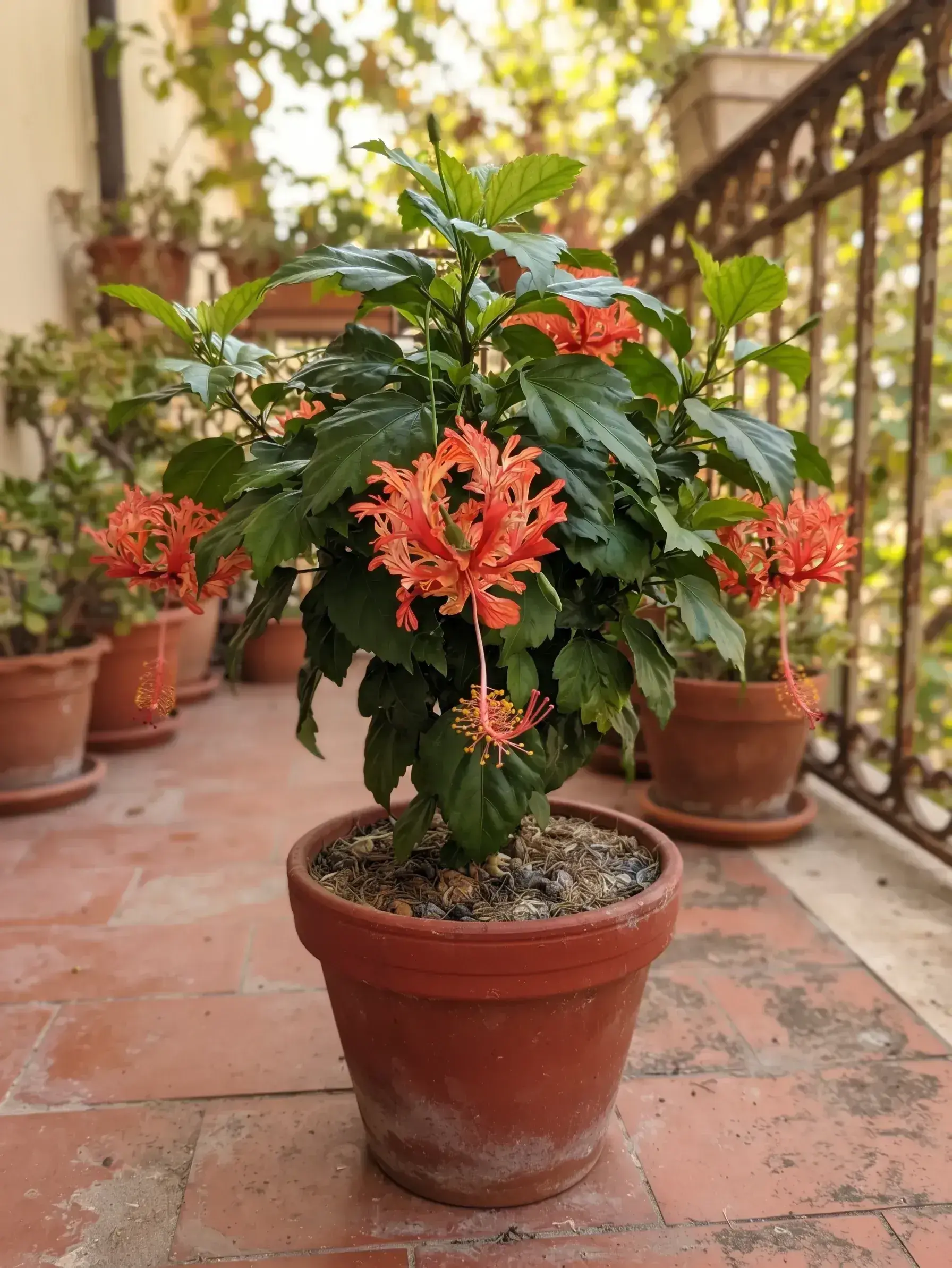
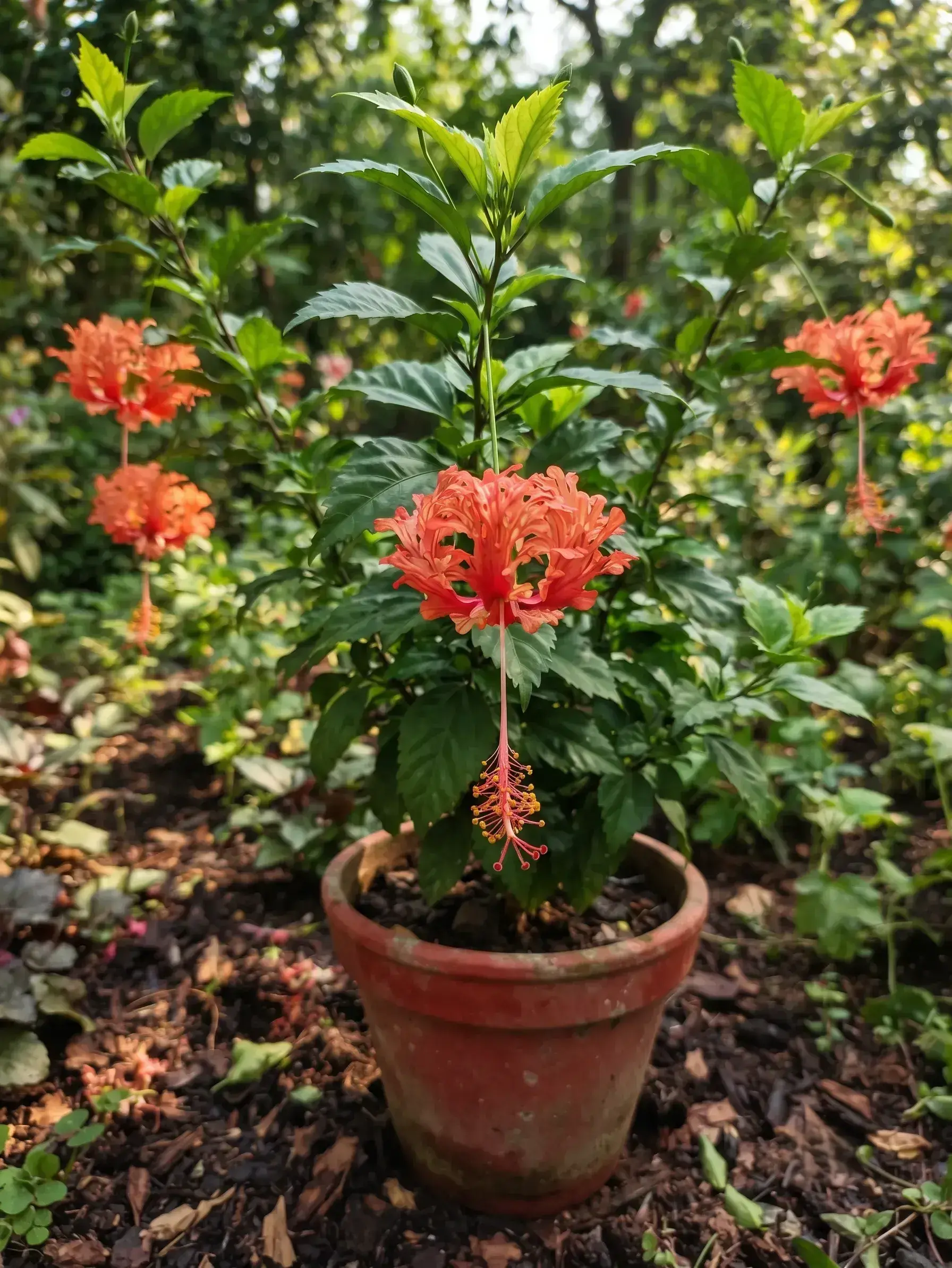
Bring a distinctive tropical flowering plant to your garden with the Chinese Spider Hibiscus, popularly sold as Jhumka Joba. This ornamental Hibiscus is valued for its unusual flower form, attractive green foliage, and the long, delicate staminal structure associated with spider-type Hibiscus flowers.
The plant is sold under the botanical name Hibiscus rosa-sinensis, a name still very commonly used in horticulture. For current botanical classification, Kew accepts Hibiscus × rosa-sinensis as a cultivated hybrid group rather than treating it as a straightforward wild species. Kew describes it as a cultigen derived from artificial hybrids and places it in the Malvaceae family.
The RHS also describes Chinese Hibiscus as a highly variable cultivated group with flowers ranging from crimson and orange to yellow and white, including single, semi-double and double forms.
The Jhumka Joba / Chinese Spider Hibiscus name is used in the nursery trade for distinctive flower forms. Since an officially documented cultivar identity for the exact nursery name supplied here was not found in the authoritative sources reviewed, this description does not claim a specific registered cultivar, breeding parentage, or genetic origin for “Jhumka Joba.”
The plant is supplied with a paper pot, making it convenient for establishing in a suitable home garden or transferring into an appropriate container or garden bed.
🌱 Plant Characteristics
- Common Name: Chinese Hibiscus
- Popular Nursery Name: Jhumka Joba / Chinese Spider Hibiscus
- Scientific Name Used in Horticulture: Hibiscus rosa-sinensis
- Current Kew Treatment: Hibiscus × rosa-sinensis
- Family: Malvaceae
- Plant Type: Evergreen tropical flowering shrub
- Growth Habit: Bushy and branching
- Foliage: Green, glossy ornamental leaves
- Flower Type: Distinctive spider-type ornamental flower
- Suitable For: Home gardens, balconies, terraces, patios and containers
- Pot: Paper pot included as described in the product listing
Hibiscus × rosa-sinensis is widely cultivated in tropical and subtropical regions and is particularly valued for its large ornamental flowers. Kew records it as a cultivated hybrid group and lists India among its introduced distribution areas.
🌸 Flowers
The flowers are the main attraction of this Jhumka Joba plant.
Compared with ordinary single-flowered Hibiscus types, spider-type forms are appreciated for their more unusual petal and staminal arrangement. The flowers can create a delicate, open appearance rather than the compact appearance of some traditional Hibiscus varieties.
Chinese Hibiscus is highly variable in flower form and colour. RHS notes that cultivated forms include single, semi-double and double flowers, with colours ranging from crimson and orange to yellow and white.
The exact flower appearance of an individual plant can depend on its genetics, maturity and growing conditions.
Flowering is not guaranteed immediately after delivery.
🌺 Jhumka Joba / Spider-Type Flower Appearance
The term “Jhumka Joba” is commonly used as a nursery or regional name for a distinctive Hibiscus flower form.
“Jhumka” refers to an ornamental, hanging or earring-like appearance, while “Joba” is a widely used Bengali name associated with Hibiscus.
Because nursery names can vary between growers, the exact flower form should be understood according to the plant supplied and the product photographs, rather than as proof of a formally registered cultivar.
No specific cultivar parentage is claimed here unless independently documented.
🌿 Foliage
Chinese Hibiscus develops attractive green leaves that provide ornamental value even when the plant is not flowering.
The foliage is generally glossy to semi-glossy and forms a dense background for the colourful flowers.
Healthy foliage depends strongly on:
- Adequate sunlight
- Regular but controlled watering
- Suitable nutrition
- Good drainage
- Warm temperatures
- Sufficient humidity
- Regular pest inspection
Yellowing or dropping leaves can occur when plants experience sudden changes in light, temperature, watering or other environmental conditions.
☀️ Sunlight Requirements
Hibiscus needs bright light and good sunlight for healthy growth and flowering.
RHS lists Chinese Hibiscus for full sun to partial shade, while its cultivation guidance recommends bright filtered light for indoor growing.
For Indian home gardens:
- Give the plant several hours of good sunlight.
- Morning sunlight is generally useful.
- A bright balcony or terrace can be suitable.
- Avoid keeping it permanently in deep shade.
- If moving it from a shaded nursery environment to strong outdoor sunlight, acclimatise it gradually.
- Rotate container-grown plants periodically if one side receives much more light.
Strong, consistent light is particularly important if the main objective is abundant flowering.
💧 Watering
Hibiscus prefers regular moisture but good drainage.
Water when the upper layer of the growing medium begins to dry rather than following a rigid daily schedule.
During hot Indian weather, container plants may need more frequent watering. During cooler or rainy periods, watering should be reduced according to actual soil moisture.
A good watering routine is:
- Check the soil first.
- Water thoroughly when the upper layer has started drying.
- Allow excess water to drain.
- Do not leave the pot sitting in stagnant water.
- Adjust watering according to temperature, rainfall and sunlight.
RHS recommends increasing watering as light and temperature rise during active growth and reducing watering when growth slows.
🪴 Soil & Potting
Use a fertile, moisture-retentive but well-draining potting mix.
A practical container mix can include:
- Garden soil or good-quality loam
- Cocopeat
- Compost or well-decomposed organic matter
- Perlite or coarse sand for additional drainage
RHS recommends well-drained loam for Chinese Hibiscus and indicates that the plant performs in neutral to acidic growing conditions.
Avoid very compact soil that remains saturated for extended periods.
The container should always have suitable drainage.
🌱 Fertilizer & Nutrition
Hibiscus is an active-growing ornamental plant and benefits from regular nutrition during periods of strong growth.
Use a balanced liquid fertilizer or suitable flowering-plant fertilizer according to the manufacturer’s instructions.
General guidelines:
- Feed during active growth.
- Follow the recommended dilution.
- Avoid excessive fertilizer.
- Do not heavily fertilize a recently transported or stressed plant.
- Reduce feeding when growth slows.
- Maintain good watering practices to reduce fertilizer salt accumulation.
RHS recommends beginning regular balanced liquid feeding after repotting once the plant has had time to establish.
🌸 Flowering & Flower Development
Hibiscus can produce flowers repeatedly when supplied with suitable warmth, light, moisture and nutrition.
RHS lists flowering for Chinese Hibiscus from approximately May to October under its UK cultivation conditions, but flowering in India’s warmer climate can occur over different periods depending on the region and growing environment.
Flowering depends on:
- Plant maturity
- Sunlight
- Temperature
- Nutrition
- Watering
- Pruning
- Root health
- Growing environment
A newly delivered plant may temporarily have fewer flowers or flower buds because transportation and environmental changes can cause stress.
Flowering is not guaranteed immediately after delivery.
✂️ Pruning & Maintenance
Regular pruning can help keep Hibiscus compact and bushy.
You can:
- Remove dead branches.
- Remove damaged shoots.
- Trim excessively long growth.
- Pinch young shoots to encourage branching.
- Remove weak or overcrowded growth.
- Remove faded flowers where appropriate.
RHS notes that regular pruning can keep Chinese Hibiscus small and bushy and encourage new flower-bearing shoots.
Use clean pruning tools and avoid unnecessary heavy pruning when the plant is already stressed.
🏡 Home Garden Suitability
Jhumka Joba is an attractive choice for gardeners who enjoy unusual flowering plants.
It can be grown in:
- Home gardens
- Balcony gardens
- Terrace gardens
- Courtyards
- Patios
- Garden borders
- Large containers
- Entrance areas
- Flowering plant collections
Its tropical foliage and distinctive flowers make it useful as a decorative focal plant.
🪴 Container & Terrace Gardening
Chinese Hibiscus is well suited to container cultivation.
For container growing:
- Use a pot with drainage holes.
- Provide bright sunlight.
- Use fertile, well-draining soil.
- Water according to soil moisture.
- Feed during active growth.
- Prune to maintain the desired shape.
- Repot when the root system becomes crowded.
RHS specifically lists Chinese Hibiscus among plants suitable for patio and container growing.
As the plant matures, a larger and heavier container may be required to provide stability.
🌡️ Temperature & Humidity
Hibiscus is a warm-climate plant.
RHS describes Hibiscus rosa-sinensis as a tender tropical plant and recommends warm, humid conditions with good ventilation.
For Indian conditions, warm temperatures are generally suitable.
During unusually cool weather:
- Protect young plants from cold drafts.
- Avoid placing them directly beside air-conditioner outlets.
- Reduce watering if the soil remains wet for longer.
- Keep the plant in a bright location.
Humidity can also be helpful, particularly in dry indoor environments.
🇮🇳 Growing Jhumka Joba in India
Hibiscus is widely cultivated in India, and Kew records Hibiscus × rosa-sinensis as introduced in multiple Indian regions.
Summer:
Provide good sunlight, regular watering and sufficient nutrition.
Monsoon:
Reduce watering when rainfall is frequent and ensure that excess water drains quickly.
Winter:
In warmer regions, growth can continue. In cooler areas, protect young plants from unusually low temperatures.
Balcony/terrace:
Use a stable container and provide adequate sunlight and airflow.
🐛 Common Problems
Hibiscus is generally a manageable garden plant, but pests can occur.
RHS notes potential problems including:
- Aphids
- Red spider mites
- Glasshouse whitefly
- Scale insects
- Mealybugs
- Powdery mildew in suitable conditions
Inspect the undersides of leaves and young shoots regularly.
Common environmental problems include:
Bud drop:
Can occur after changes in light, temperature, watering or humidity.
Yellow leaves:
May be associated with overwatering, insufficient light, nutrient problems or environmental stress.
Reduced flowering:
Often associated with inadequate light, excessive shade, unsuitable nutrition, pruning at the wrong time or general plant stress.
🌱 Space Requirement
Although a nursery plant may initially be compact, Chinese Hibiscus is a woody flowering shrub, not a permanently miniature plant.
RHS gives approximately 1–1.5 metres in height and 0.5–1 metre in spread for its Chinese Hibiscus profile, although actual size varies among cultivars and growing conditions.
Regular pruning can help maintain a more compact form.
Give the plant sufficient space for:
- Branching
- Air circulation
- Sunlight exposure
- Future growth
- Easy maintenance
🌿 Paper Pot Planting
The plant is supplied with a paper pot.
Because paper pots can differ in construction and durability, handle the container carefully during planting.
If the supplied paper pot is designed for direct planting, follow the nursery’s recommended procedure. If it is a temporary nursery container, remove it carefully without unnecessarily disturbing the root ball.
After planting:
- Water thoroughly.
- Place the plant in suitable light.
- Avoid heavy fertilizer immediately after transplanting.
- Keep the soil appropriately moist.
- Allow the plant to acclimatise.
📦 Live Plant Delivery & Natural Variation
This is a live flowering plant, so the appearance at delivery may naturally differ from product photographs.
The supplied plant may vary in:
- Height
- Number of branches
- Leaf size
- Leaf density
- Flower quantity
- Flower colour intensity
- Flower shape
- Number of buds
- Overall fullness
During transportation, the plant may experience temporary stress, which can cause:
- Slight drooping
- Minor leaf yellowing
- Small amounts of leaf shedding
- Bent leaves or branches
- Temporary flower or bud loss
Changes in light, temperature, humidity and watering during transportation can affect the plant’s appearance.
After delivery, place the plant in a suitable location and allow it to adjust gradually.
Product photographs are representative. The actual live plant may not look exactly identical to the photographs.
⚠️ Important Botanical Note
The name “Chinese Spider Hibiscus” or “Jhumka Joba” is being used here as the product’s nursery/trade description.
The authoritative sources reviewed confirm the broader Hibiscus × rosa-sinensis cultivated group and its wide variation in flower form, but they do not provide sufficient evidence to identify “Jhumka Joba” as a universally standardised botanical cultivar name.
Therefore, this listing does not invent or claim a specific cultivar parentage or registration that has not been verified.
🌱 Why Choose This Jhumka Joba Hibiscus?
- Distinctive spider-type Hibiscus appearance
- Attractive tropical flowering plant
- Suitable for Indian home gardens
- Excellent container and terrace plant
- Beautiful green foliage
- Can produce repeated flowers under suitable conditions
- Can be maintained as a compact bush through pruning
- Suitable for balconies, patios and garden borders
- Warm-climate friendly
- Supplied in a convenient paper pot
- Interesting choice for Hibiscus collectors and flowering-plant enthusiasts
🌿 Botanical Information
Botanical Name Used in Trade: Hibiscus rosa-sinensis
Current Kew Treatment: Hibiscus × rosa-sinensis L.
Common Name: Chinese Hibiscus / Chinese Rose
Nursery Name: Jhumka Joba / Chinese Spider Hibiscus
Family: Malvaceae
Plant Type: Evergreen tropical flowering shrub
Growth Habit: Bushy and branching
Foliage: Green, glossy ornamental leaves
Flower: Large ornamental Hibiscus flower
Flower Form: Spider-type form as described for this product
Light: Full sun to partial shade; bright filtered light indoors
Soil: Fertile, well-drained loam
Water: Regular moisture without waterlogging
Humidity: Moderate to high preferred
Container Growing: Yes
Garden Use: Flower beds, borders, patios, balconies and containers
Pot: Paper pot included as described in the product listing
Kew classifies Hibiscus × rosa-sinensis as an accepted cultivated hybrid group, while RHS describes Chinese Hibiscus as a highly variable ornamental group with many flower forms and colours.
🔗 Botanical Information & Further Reading
- Kew – Plants of the World Online: Hibiscus × rosa-sinensis
- RHS – Hibiscus rosa-sinensis Growing Guide
- RHS – Hibiscus × rosa-sinensis Plant Profile
- Kew – Hibiscus × rosa-sinensis Species Information
- Kew – Hibiscus × rosa-sinensis Distribution & Botanical Information
For More Information
Visit: Nursery-Plant.Com
For Contact Visit:Contact Us
For Shopping Visit: Shop Page


Reviews
There are no reviews yet.