
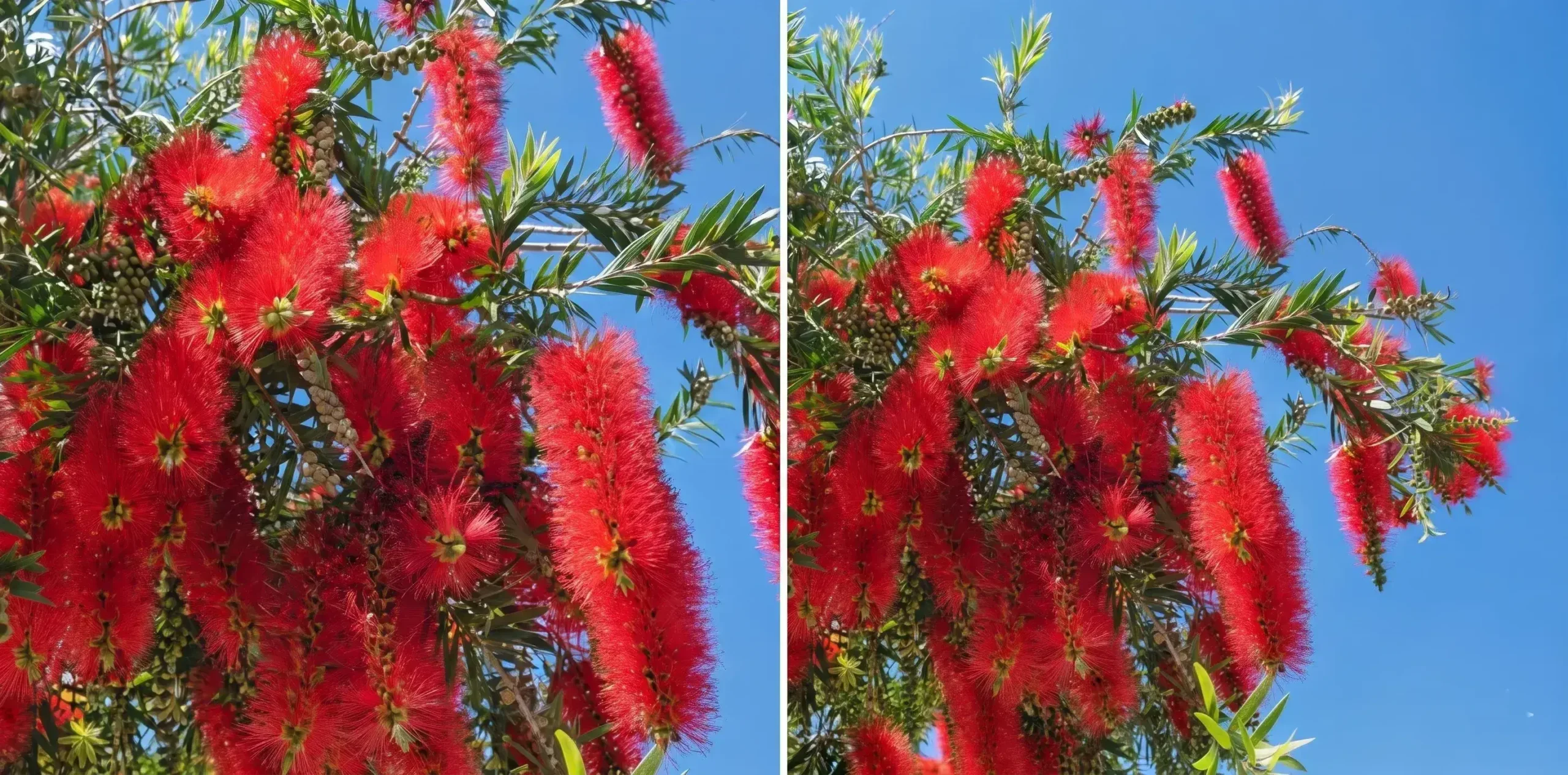


Bottle Brush Flower Live Plant With Pot
🌿 About the Plant
Add a bright, distinctive flowering plant to your garden with the Red Bottlebrush Flower Plant, commonly sold under the name Callistemon citrinus. It is known for its unusual cylindrical flower spikes covered with numerous long, colourful stamens that resemble a traditional bottle-cleaning brush.
An important botanical note is that Kew currently treats Callistemon citrinus as a synonym of Melaleuca citrina. The older Callistemon name remains extremely common in horticultural trade, so both names are included here for clarity.
The plant belongs to the Myrtaceae family and is native to eastern and southeastern Australia. It is an evergreen shrub or small tree with aromatic foliage and attractive red to crimson bottlebrush-like flower spikes.
This live plant is supplied with a pot, making it convenient for growing in a home garden, balcony, terrace, patio, or other suitable sunny location.
🌱 Plant Characteristics
- Common Name: Red Bottlebrush / Crimson Bottlebrush
- Horticultural Name: Callistemon citrinus
- Current Kew Name: Melaleuca citrina
- Family: Myrtaceae
- Plant Type: Evergreen flowering shrub or small tree
- Native Range: Eastern and southeastern Australia
- Growth Habit: Upright, rounded and branching
- Foliage: Narrow, aromatic green leaves
- Flower Colour: Red to crimson
- Flower Form: Bottlebrush-like cylindrical spikes
- Suitable For: Home gardens, borders, containers, patios and landscaping
- Pot: Included as described in the product listing
North Carolina State Extension describes Crimson Bottle Brush as an evergreen perennial shrub or small tree with red or yellow flower spikes and aromatic foliage.
🌺 Flowers
The spectacular bottlebrush flowers are the main attraction of this plant.
Instead of producing conventional large petals, the flowers are dominated by numerous long stamens. Together, these stamens form dense cylindrical spikes that resemble a bottle-cleaning brush.
NCSU describes the flowers as bright crimson, with bottlebrush-like terminal inflorescences containing numerous individual flowers.
Flowering can occur during several periods depending on climate and growing conditions. In frost-free environments, flowering may occur intermittently through much of the year, while flowering seasons are more restricted in cooler climates.
Flowering depends on:
- Plant age
- Sunlight
- Temperature
- Water availability
- Nutrition
- Pruning
- Overall plant health
- Local climate
Flowering is not guaranteed immediately after delivery.
❤️ Red Bottlebrush Flower Colour
The red or crimson flower spikes provide strong contrast against the plant’s green foliage.
The exact shade may vary slightly between individual plants and depending on flower maturity, sunlight and growing conditions.
Because the product is described as Red Bottle Brush, it should be understood as a red-flowering Callistemon/Melaleuca type rather than as a specific named cultivar unless a cultivar name is separately provided.
🌿 Foliage
The plant has narrow, lance-shaped to elliptical leaves.
One interesting characteristic is that the foliage can have a lemon-like fragrance when crushed or bruised. NCSU notes that the young leaves can emerge coppery before developing into green mature foliage.
The evergreen foliage provides ornamental value even when the plant is not flowering.
☀️ Sunlight Requirements
Bottlebrush performs best in full sun.
RHS cultivation information for Callistemon recommends full sun, while NCSU specifies at least approximately six hours of direct sunlight per day for Crimson Bottle Brush.
For Indian gardens:
- Choose an open, sunny location.
- Provide several hours of direct sunlight.
- Avoid permanent deep shade.
- Morning and afternoon sunlight can both be useful.
- Acclimatise a newly delivered plant gradually if it was previously grown under lower light.
Good sunlight is especially important when the goal is strong flowering.
💧 Watering
Bottlebrush prefers moist but well-drained soil, particularly while the plant is young and establishing.
Water thoroughly when the soil begins to dry, then allow excess water to drain away.
Once established, the plant can tolerate periods of relatively dry conditions. NCSU describes established plants as drought tolerant.
For Indian conditions:
Summer:
Young plants may need more frequent watering because heat can dry the soil quickly.
Monsoon:
Reduce additional irrigation when rainfall is sufficient. Ensure that water does not remain around the roots.
Winter:
Water according to actual soil moisture rather than following a fixed schedule.
Avoid keeping the pot continuously waterlogged.
🪴 Soil & Potting
Use a fertile, well-draining growing medium.
Bottlebrush can tolerate different soil conditions, but good drainage is important.
For container cultivation, a suitable mix can contain:
- Garden soil or loam
- Compost or well-decomposed organic matter
- Cocopeat
- Coarse sand or perlite
RHS recommends moist but well-drained, neutral to acidic soil for bottlebrush plants.
Avoid heavy compacted soil that stays saturated after watering.
The container should always have drainage holes.
🌱 Fertilizer & Nutrition
A healthy Bottlebrush benefits from balanced nutrition during active growth.
Use a suitable flowering-plant or balanced fertilizer according to the manufacturer’s instructions.
General care:
- Feed during active growth.
- Avoid excessive fertilizer.
- Use organic compost as part of normal soil management where appropriate.
- Reduce feeding when growth slows.
- Do not over-fertilize a recently transplanted or stressed plant.
Good sunlight and appropriate nutrition work together to support healthy foliage and flowering.
🌸 Flowering & Seasonal Growth
Bottlebrush can produce flowers more than once under favourable conditions.
NCSU reports spring and fall flowering for Crimson Bottle Brush and notes that in frost-free areas flowers may appear intermittently throughout the year.
Actual flowering in Indian gardens may vary according to regional temperature, rainfall, sunlight and plant maturity.
A young nursery plant may require time to establish before producing its best flowering display.
No immediate flowering guarantee is made.
✂️ Pruning & Maintenance
Bottlebrush responds well to pruning and can be maintained as a compact shrub or trained toward a small tree form.
Useful maintenance includes:
- Remove dead branches.
- Remove damaged growth.
- Trim excessively long shoots.
- Remove spent flower spikes if desired.
- Lightly shape the plant after flowering.
- Maintain a balanced structure.
NCSU notes that this plant is very tolerant of pruning and that older plants can be cut back substantially and regenerated.
For young plants, moderate formative pruning can encourage a fuller structure.
Avoid unnecessary heavy pruning immediately before an important flowering period because this can remove developing flower-bearing growth.
🏡 Home Garden Suitability
Red Bottlebrush is an attractive choice for gardens where you want both evergreen foliage and colourful flowers.
It can be used as:
- Garden specimen
- Flowering shrub
- Small ornamental tree
- Border plant
- Garden accent
- Informal screen
- Patio plant
- Container specimen
- Pollinator-friendly ornamental
NCSU lists Bottlebrush as useful for containers, borders, lawns, pollinator gardens and as an accent or specimen plant.
🪴 Container Gardening
Young Bottlebrush plants can be grown successfully in containers.
Container cultivation is useful for:
- Balconies
- Terraces
- Patios
- Courtyards
- Small gardens
- Rental homes
- Garden entrances
Use a stable container with drainage holes and place the plant where it receives sufficient sunlight.
As the plant grows, the root system may eventually require a larger container or planting into the ground.
NCSU specifically notes that Crimson Bottle Brush can be grown in containers and maintained in a bright indoor environment when necessary in colder climates.
🌳 Space Requirement
Although the supplied plant may be a manageable nursery-sized specimen, Bottlebrush can become a large shrub or small tree if allowed to grow naturally.
NCSU reports that Melaleuca citrina can reach approximately 10–15 feet in height and width in suitable conditions, although it is also commonly maintained as a smaller shrub of around 3–5 feet through cultivation and pruning.
Actual mature size depends on:
- Growing conditions
- Cultivar
- Climate
- Soil
- Container size
- Pruning
- Available space
Leave enough room around the plant for future growth.
🌿 Landscaping Use
Bottlebrush works particularly well as a colourful landscape accent.
It can be planted:
- Near lawns
- Along garden borders
- Around patios
- Near garden entrances
- As a specimen plant
- In informal screens
- In pollinator-friendly garden designs
The red flowers can provide a strong visual contrast when planted among green shrubs or foliage plants.
🐝 Flowers & Pollinators
Bottlebrush flowers can be attractive to pollinating insects.
NCSU identifies the plant as having value for bees and pollinators and describes the flowers as a source of nectar.
This makes the plant useful not only for ornamental purposes but also as part of a diverse garden planting scheme.
🌡️ Temperature & Climate
Bottlebrush is best suited to warm climates.
NCSU places Crimson Bottle Brush primarily in USDA Zones 8b–11b and notes that it may require protection in colder conditions.
For Indian gardeners, this makes it particularly suitable for many warm and subtropical regions.
Protect young plants from unusually cold conditions, especially if grown in exposed containers.
🇮🇳 Growing Bottlebrush in India
The plant can be suitable for many Indian gardens when provided with adequate sunlight and drainage.
Summer:
Give young plants regular water and strong sunlight. Check containers more frequently because they can dry quickly.
Monsoon:
Avoid unnecessary irrigation and ensure excellent drainage.
Winter:
Water according to soil moisture and protect young plants from unusually cold conditions where required.
Warm coastal areas:
The plant can perform well under suitable warm conditions, provided the soil drains properly.
🐛 Common Problems
Bottlebrush is generally considered a reasonably manageable ornamental plant, but pests can occur.
NCSU notes that indoor or stressed plants may be affected by:
- Spider mites
- Scale insects
Yellowing leaves can also occur when the soil becomes too alkaline or contains excessive salts.
Regularly inspect:
- New shoots
- Leaf undersides
- Stems
- Flowering branches
Good sunlight, suitable watering and proper drainage can help maintain healthy growth.
📦 Live Plant Delivery & Natural Variation
This is a live plant, so its appearance at delivery may naturally differ from product photographs.
The actual plant may vary in:
- Height
- Stem thickness
- Number of branches
- Leaf size
- Leaf density
- Flower quantity
- Flowering stage
- Overall fullness
During transportation, temporary changes may include:
- Slight drooping
- Minor leaf yellowing
- Small amounts of leaf shedding
- Bent foliage
- Minor cosmetic damage
- Fewer flowers at delivery
Changes in light, temperature, humidity and watering during transportation can temporarily affect the plant’s appearance.
After receiving the plant, place it in a suitable bright location and allow it to acclimatise gradually.
Product photographs are representative. The actual live plant may not look exactly identical to the photographs.
⚠️ Important Botanical Note
The product name uses Callistemon citrinus, which is still extremely common in horticultural and nursery trade.
However, Kew currently treats Callistemon citrinus as a synonym of Melaleuca citrina. NCSU also lists Callistemon citrinus as a previous name for Melaleuca citrina.
This description therefore uses both names so that customers searching for either the traditional horticultural name or the current taxonomic name can identify the plant correctly.
The product is described as a red bottlebrush flowering plant; no specific cultivar name or breeding history is being claimed.
🌱 Why Choose This Red Bottlebrush Plant?
- Attractive red bottlebrush-shaped flower spikes
- Evergreen ornamental foliage
- Distinctive tropical and Australian landscape character
- Suitable for sunny home gardens
- Can be grown in containers
- Useful for balconies and terraces
- Suitable as a garden specimen or flowering shrub
- Can be trained and pruned into a manageable shape
- Established plants tolerate some dry conditions
- Flowers can attract bees and other pollinators
- Attractive aromatic foliage
- Supplied as a live plant with pot
🌿 Botanical Information
Botanical Name Used in Nursery Trade: Callistemon citrinus
Current Kew Name: Melaleuca citrina
Common Names: Red Bottlebrush, Crimson Bottlebrush, Bottle Brush
Family: Myrtaceae
Plant Type: Evergreen shrub or small tree
Native Range: Eastern and southeastern Australia
Growth Habit: Upright, rounded and branching
Foliage: Narrow, aromatic, evergreen leaves
Flower Colour: Red to crimson
Flower Form: Bottlebrush-like spikes
Light: Full sun
Soil: Moist but well-drained
Water: Regular while establishing; moderate thereafter
Container Growing: Yes
Landscape Use: Specimen, border, container, patio and pollinator garden
Kew’s current taxonomy places this plant under Melaleuca citrina, while the older Callistemon citrinus name remains widely encountered in horticulture.
🔗 Botanical Information & Further Reading
- Kew – Plants of the World Online: Callistemon citrinus / Melaleuca citrina
- Kew – Melaleuca citrina Species Information
- NC State Extension – Crimson Bottle Brush
- RHS – Callistemon Plant Profile
- RHS – Callistemon ‘Firebrand’ Growing Information
- RHS – Callistemon ‘Red Cluster’ Growing Information
For More Information
Visit: Nursery-Plant.Com
For Contact Visit:Contact Us
For Shopping Visit: Shop Page


Reviews
There are no reviews yet.