

🌿 About the Plant
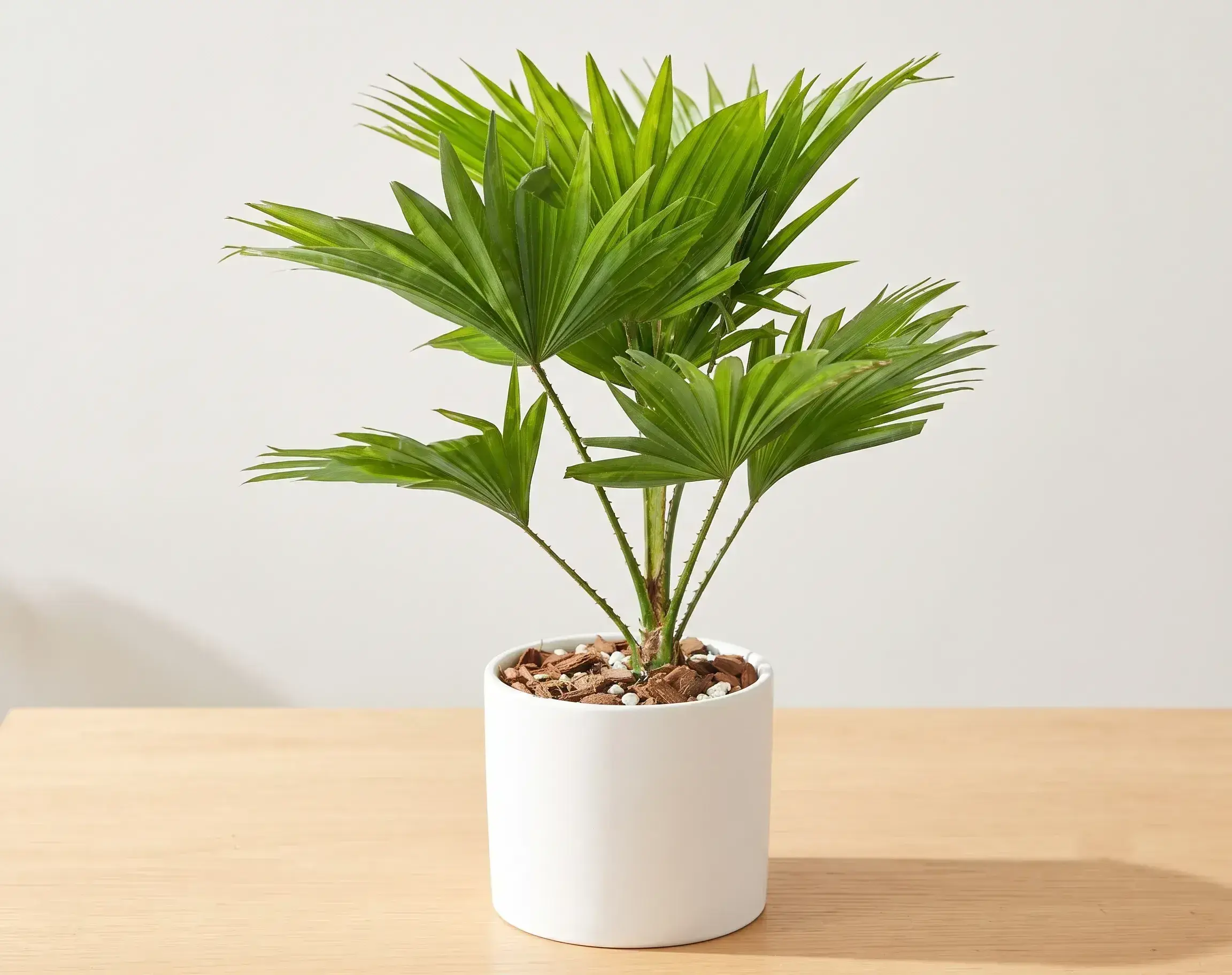
The Green Table Umbrella Palm, commonly sold as Umbrella Palm, Umbrella Plant or Umbrella Sedge, is an attractive grass-like ornamental plant recognised for its distinctive umbrella-shaped arrangement of green bracts at the top of its upright stems.
The botanical identity commonly associated with the true Umbrella Palm is Cyperus alternifolius L., a member of the Cyperaceae (sedge) family. Kew currently recognises Cyperus alternifolius as an accepted species and describes it as a perennial or rhizomatous plant associated primarily with wet tropical environments.
The plant has a very distinctive appearance. Long, upright green stems rise from the base, with narrow leaf-like bracts spreading outward at the top like the ribs of an umbrella. This unusual form makes it popular as a decorative houseplant, office plant, balcony plant and water-garden specimen.
The product is supplied with a pot, making it convenient for placing on a suitable table, stand, balcony, terrace or bright indoor location.
🌱 Plant Characteristics
- Common Names: Umbrella Palm, Umbrella Plant, Umbrella Sedge, Umbrella Papyrus
- Botanical Name: Cyperus alternifolius L.
- Family: Cyperaceae
- Plant Type: Perennial ornamental sedge
- Growth Habit: Upright, clump-forming
- Foliage: Long, narrow green bracts
- Characteristic Feature: Umbrella-shaped crown
- Climate: Warm and moist conditions
- Garden Use: Indoor decoration, office, balcony, terrace, water garden and outdoor landscaping
- Product Format: Live plant with pot
Kew records Cyperus alternifolius as a perennial or rhizomatous geophyte and places its primary natural biome in wet tropical regions.
🌿 Unique Umbrella-Shaped Appearance
The most attractive feature of this plant is its unusual umbrella-like crown.
Unlike ordinary houseplants with broad leaves, the Umbrella Palm produces upright green stems with a circular arrangement of narrow bracts near the top. From a distance, the arrangement resembles a miniature green umbrella.
This distinctive structure makes it suitable for:
- Office desks or stands
- Home interiors with suitable light
- Balconies
- Windowside plant displays
- Terrace gardens
- Decorative corners
- Water gardens
- Outdoor pots
Its architectural form can add a modern and tropical appearance to a plant collection.
🌿 Foliage
The green bracts are long, narrow and arranged radially around the top of each stem.
The foliage is responsible for most of the plant’s decorative appeal. New stems can emerge from the clumping base, gradually producing a fuller appearance when growing conditions are suitable.
A healthy plant can therefore become increasingly bushy or dense over time.
Brown or dry tips can occur when the plant experiences unsuitable moisture conditions, dry air or environmental stress. North Carolina State University Extension notes that the roots of Umbrella Palm need to remain consistently wet and that brown leaf tips can be associated with inadequate water conditions.
🌱 Growth Habit
Umbrella Palm is a perennial clumping plant rather than a conventional woody palm tree.
The common name “palm” comes from its palm-like umbrella-shaped appearance, but botanically it belongs to the sedge family Cyperaceae, not the palm family Arecaceae.
This distinction is useful for gardeners because its care requirements are also different from those of typical indoor palm species.
The plant spreads by its underground rhizomatous growth and can gradually form a larger clump.
☀️ Sunlight Requirements
Umbrella Palm can grow in bright light, sunlight or light shade, depending on the growing environment.
For indoor cultivation:
- Place the plant near a bright window.
- Provide plenty of natural light.
- Avoid a permanently dark room.
- Rotate the pot occasionally for more balanced growth.
- If moving it from shade to strong outdoor sunlight, acclimatise it gradually.
North Carolina State University Extension reports that Umbrella Palm performs in sun or light shade, while also recommending protection from harsh sun and strong winds that can damage the foliage.
For Indian homes and offices, a bright window, balcony or shaded outdoor location with good natural light can be suitable.
💧 Watering
Water management is particularly important for this plant.
Unlike many drought-tolerant indoor plants, Umbrella Palm prefers consistently moist conditions.
For best results:
- Keep the growing medium consistently moist.
- Do not allow the plant to remain completely dry for long periods.
- Check the soil frequently.
- Increase watering during hot weather.
- Reduce the frequency only when environmental conditions naturally reduce water loss.
- Avoid letting the plant suffer repeated severe drying.
NCSU Extension specifically recommends keeping the soil moist or growing the plant in standing water and notes that its roots need to remain wet.
This makes the plant especially interesting for gardeners who enjoy moisture-loving ornamentals.
🪴 Soil & Potting
Use a fertile, moisture-retentive growing medium.
A suitable container mixture can include:
- Good-quality garden soil
- Compost or mature organic matter
- Cocopeat
- A small amount of coarse material for structure
Unlike succulents or drought-tolerant plants, Umbrella Palm does not require a very dry or sharply draining growing medium.
The pot should still be appropriate for the intended growing method and should not allow the plant to become unstable.
If using a drainage pot indoors, a saucer or water tray can help maintain moisture, but avoid creating conditions that could damage furniture or flooring.
NCSU Extension specifically describes growing Umbrella Palm indoors in a container on a tray of water as one suitable approach.
🌱 Fertilizer & Nutrition
Umbrella Palm benefits from fertile growing conditions.
For home care:
- Mix mature compost into the potting medium.
- Feed lightly during active growth.
- Use a balanced ornamental-plant fertilizer according to label instructions.
- Avoid excessive fertilizer concentration.
- Water appropriately after granular feeding when required.
North Carolina State University Extension identifies fertile soil as preferable for Umbrella Palm.
Because this plant can grow actively when warmth and moisture are available, regular but moderate nutrition can help maintain healthy green foliage.
🪴 Plant with Pot
This product is supplied as a live Umbrella Palm with a pot, making it convenient for decorative use.
The supplied pot allows the plant to be placed directly in a suitable location after delivery.
For best results:
- Keep the plant in its supplied pot initially.
- Check soil moisture regularly.
- Place it in bright natural light.
- Keep the root zone adequately moist.
- Protect indoor surfaces from excess water.
- Repot into a larger container when necessary.
The exact pot size and plant size may vary according to nursery availability.
🏠 Indoor Home Use
Despite its common name “Umbrella Palm,” this plant can be used as a decorative indoor plant when adequate light and moisture are provided.
Good indoor locations include:
- Bright living rooms
- Near windows
- Home offices
- Reception areas
- Study rooms
- Bright corridors
- Indoor plant corners
Avoid placing it in a completely dark room or in a location where air-conditioning continuously dries the plant.
Its unusual umbrella-shaped foliage can provide a distinctive decorative accent without requiring the large space of a mature tree.
🏢 Office Use
Umbrella Palm can also add a fresh green appearance to offices and workspaces.
For an office:
- Choose a bright location.
- Keep the plant away from direct hot air from AC vents.
- Check soil moisture regularly.
- Use a water tray carefully if appropriate.
- Protect desks and floors from water leakage.
- Provide sufficient natural light.
If the office receives very little natural light, long-term growth may be weaker. In that situation, moving the plant periodically to a brighter location can help.
🌿 Humidity & Indoor Environment
Umbrella Palm naturally comes from environments associated with moisture and wet tropical conditions.
It therefore generally appreciates a more humid environment than many drought-tolerant houseplants.
In dry indoor environments:
- Keep the soil consistently moist.
- Avoid placing it directly beside a strong AC outlet.
- Consider a suitable humid location.
- Avoid allowing the foliage to become chronically dry.
Good moisture management is usually more important than frequent misting.
✂️ Pruning & Maintenance
Umbrella Palm is relatively straightforward to maintain.
Remove:
- Completely dry stems
- Brown or damaged foliage
- Weak unwanted growth
- Old stems that no longer contribute to the appearance
Cut unwanted stems close to the base using clean pruning tools.
Regular removal of old stems can help maintain a neat appearance and make space for newer growth.
Avoid cutting healthy green stems unnecessarily.
🌱 Propagation & Clump Development
Umbrella Palm is a perennial rhizomatous plant and can develop into a larger clump over time.
Its underground rhizomatous growth allows new shoots to emerge from the base.
As the plant becomes crowded, it can potentially be divided and replanted, provided the division contains healthy roots and shoots.
For a home gardener, division can be useful when an established plant becomes too dense for its current container.
🌿 Outdoor & Water-Garden Use
Although marketed here as an indoor decorative plant, Umbrella Palm is also suitable for certain outdoor applications.
It can be grown in:
- Water gardens
- Pond margins
- Moist garden areas
- Shaded patios
- Balconies
- Terraces
- Decorative outdoor containers
Its strong preference for moisture makes it particularly attractive near suitable water features.
However, outdoor planting should be managed according to local conditions because the plant can spread under favourable environments. NCSU Extension notes that it can become weedy or invasive in some locations.
🇮🇳 Growing in Indian Conditions
Umbrella Palm can be interesting for Indian gardeners because its preference for warm and moist conditions fits many tropical and subtropical environments.
It can be particularly convenient in regions where:
- Summer temperatures are warm
- Humidity is moderate to high
- Water is readily available
- Indoor or outdoor light can be provided
- The plant can be protected from harsh drying conditions
In areas with strong summer heat, keeping the plant in bright filtered light or morning sunlight can be preferable to exposing it suddenly to intense afternoon conditions.
During the Indian monsoon, outdoor plants may receive sufficient natural moisture, but container drainage should still be monitored.
🌳 Space Requirement
A young plant can remain relatively compact, making it suitable for home and office decoration.
Under favourable outdoor conditions, however, Umbrella Palm can become substantially larger. NCSU Extension reports typical heights around 4 feet, with plants reaching approximately 6 feet under ideal warm, moist outdoor conditions; indoor specimens can remain considerably smaller.
Therefore:
- Keep young plants on tables or stands only while their size is suitable.
- Move larger plants to the floor or a larger container.
- Divide crowded clumps when appropriate.
- Provide sufficient space around the foliage.
The actual mature size depends on growing conditions, container size and management.
🌱 Indoor Placement Tips
For a healthy decorative display:
Best: Bright window + consistently moist soil + warm environment.
Avoid: Dark room + dry soil + direct hot AC airflow.
A simple routine is to check the soil moisture every few days and adjust watering according to temperature and indoor conditions rather than following a rigid daily schedule.
⚠️ Important Note About the Name “Palm”
Although commonly called Umbrella Palm, this plant is not a true palm.
It belongs to the sedge family Cyperaceae, while true palms belong to the family Arecaceae.
The botanical name commonly used for the plant is Cyperus alternifolius L., which Kew recognises as an accepted species.
This botanical distinction is important when searching for accurate care information.
⚠️ Invasiveness & Outdoor Planting
Umbrella Palm can spread through its rhizomatous growth, and NCSU Extension warns that it can become weedy or invasive in some locations.
For responsible gardening:
- Prefer containers where spread needs to be controlled.
- Avoid releasing plant material into natural wetlands.
- Prevent unwanted spread into neighbouring properties.
- Dispose of removed rhizomes responsibly.
Its suitability as an ornamental plant does not mean it should be allowed to spread uncontrolled in sensitive natural habitats.
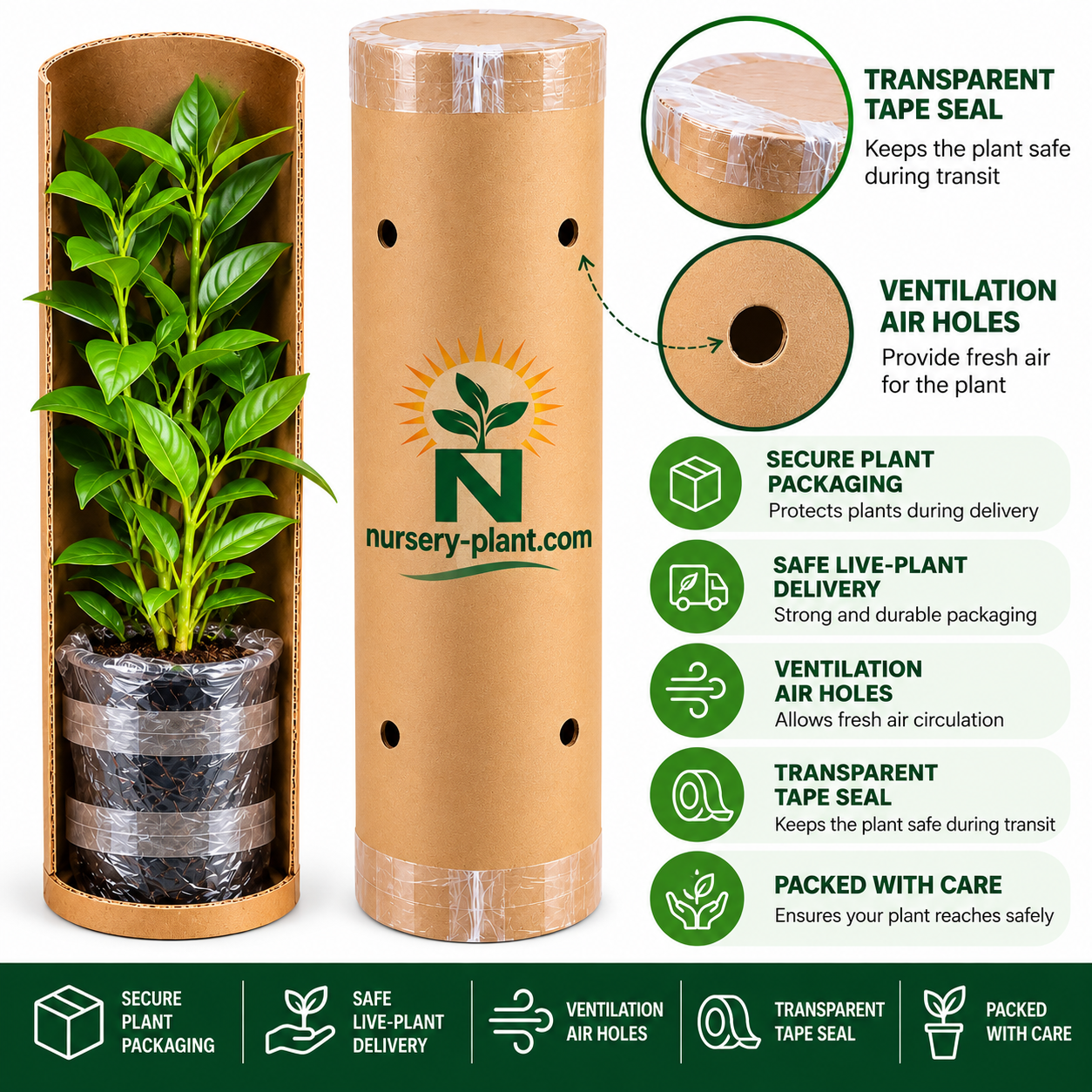
📦 Live Plant Delivery & Natural Variation
This is a live plant, so the actual plant supplied may naturally differ from the product photographs.
During packing, transportation and acclimatisation, you may notice:
- Slight leaf yellowing
- Temporary drooping
- Minor shedding or drying of older foliage
- Brown tips caused by temporary moisture stress
- Different plant height
- Variation in stem thickness
- Differences in the number of umbrella-like crowns
- Variation in foliage density
- Temporary transport stress
These are natural possibilities with living plants.
After delivery, place the plant in a suitable bright location and restore consistent moisture gradually.
Product photographs are representative. The actual plant supplied may naturally vary according to season, growth stage, nursery conditions and availability.
🌱 Why Choose This Plant?
- Attractive Green Table Umbrella Palm for home and office
- Distinctive umbrella-shaped green foliage
- Live plant supplied with a pot
- Suitable for bright indoor spaces
- Excellent for home offices and workspaces
- Can also be grown outdoors in suitable moist conditions
- Beautiful choice for balconies and terraces
- Suitable for water-garden settings
- Easy-to-recognise architectural form
- Perennial ornamental plant
- Particularly interesting for plant collectors
- Adds a fresh green tropical appearance to interiors
🌿 Botanical Information
| Feature | Details |
|---|---|
| Common Name | Umbrella Palm, Umbrella Plant, Umbrella Sedge |
| Botanical Name | Cyperus alternifolius L. |
| Family | Cyperaceae |
| Genus | Cyperus |
| Plant Type | Perennial rhizomatous sedge |
| Growth Habit | Upright, clump-forming |
| Foliage | Narrow green bracts |
| Characteristic Feature | Umbrella-like crown |
| Light | Bright light, sun or light shade |
| Water | Consistently moist conditions |
| Soil | Fertile and moisture-retentive |
| Indoor Use | Suitable in bright indoor locations |
| Outdoor Use | Moist gardens and water features |
| Container Growing | Excellent while appropriately sized |
| Product Format | Live plant with pot |
Kew recognises Cyperus alternifolius L. as an accepted species in the Cyperaceae family and describes it as a perennial or rhizomatous plant primarily associated with wet tropical environments.
🔗 Botanical Information & Further Reading
- Kew Science – Plants of the World Online: Cyperus alternifolius
- North Carolina State University Extension – Umbrella Palm
- Kew Science – Cyperus alternifolius General Information
- Kew Science – Cyperus Genus Information
- Wikipedia – Cyperus alternifolius / Umbrella Plant
- NCBI/PubMed – Research on Cyperus alternifolius
- ResearchGate – Research on Cyperus alternifolius
🌱 Final Growing Reminder
The Green Table Umbrella Palm is a moisture-loving ornamental sedge with a distinctive umbrella-shaped appearance. Although commonly called a palm, it is botanically a member of the sedge family.
For attractive growth, provide bright natural light, consistently moist soil, suitable humidity and regular maintenance. It can be particularly effective as a decorative plant for a bright home, office, balcony or terrace.
Keep the plant appropriately contained where necessary, because its rhizomatous growth can allow it to spread under favourable conditions. With suitable care, this unusual green plant can provide a long-lasting architectural accent to your indoor or outdoor plant collection.
For More Information
Visit: Nursery-Plant.Com
For Contact Visit:Contact Us
For Shopping Visit: Shop Page


Reviews
There are no reviews yet.