

Shami Plant for Home & Office Garden
🌿 About the Plant
Shami, also called Khejri, Khejra, Sami, Banni or Jand, is a traditional Indian tree with both ecological and cultural importance. The botanical name accepted by Kew is Prosopis cineraria (L.) Druce, and it belongs to the Fabaceae (legume) family. Kew records the species as native from the Arabian Peninsula through Iran to India and describes it as a shrub or tree primarily associated with desert and dry-shrubland environments.
The Shami tree is particularly well known in Indian culture because of its association with Shami Puja and Dussehra traditions. Historical and ethnobotanical literature records the tree as sacred and associated with religious practices in India.
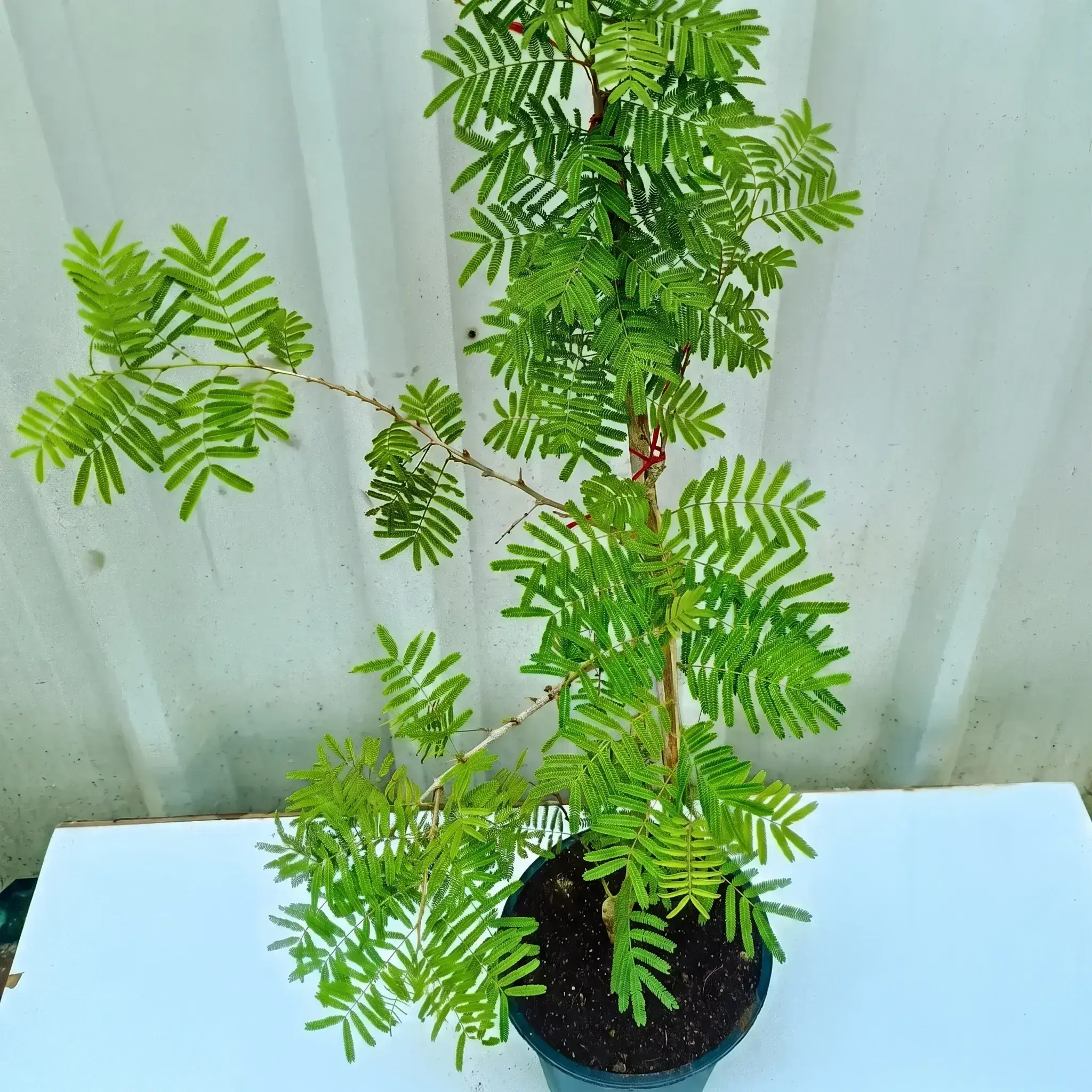
This live Shami plant with pot is suitable for gardeners who want to grow a culturally significant Indian tree in a home, balcony, terrace or office garden. The supplied plant is young, so its appearance and growth habit will naturally change as it develops.
🌱 Plant Characteristics
- Common Names: Shami, Khejri, Khejra, Sami, Banni, Jand
- Botanical Name: Prosopis cineraria (L.) Druce
- Family: Fabaceae
- Plant Type: Perennial woody tree/shrub
- Growth Habit: Branching, spreading tree
- Leaves: Small compound, pinnate leaves
- Flowers: Small flowers arranged in spikes
- Fruit: Long, narrow pods
- Climate: Dry, warm and semi-arid conditions
- Garden Use: Sacred plant, ornamental garden, balcony, terrace and suitable outdoor containers
- Product Format: Live plant supplied with pot
ICAR documentation identifies Prosopis cineraria as Shami in several Indian languages, including Bengali, Hindi, Gujarati, Kannada, Malayalam, Marathi, Oriya, Tamil and Telugu.
🌿 Foliage & Natural Appearance
Shami has fine, compound foliage that gives the tree a light and delicate appearance.
Its leaves are made up of many small leaflets, giving the plant a characteristic feathery texture. The tree can develop a spreading crown as it matures.
Because Shami is naturally adapted to dry environments, it is considerably more tolerant of drought and heat than many moisture-loving ornamental plants.
A young potted plant, however, still requires appropriate watering while it establishes its root system.
🌼 Flowers
Shami produces relatively small flowers rather than large showy blooms.
The flowers are arranged in slender clusters, and mature plants can subsequently produce pods.
The ornamental appeal of Shami comes primarily from its fine foliage, branching structure and traditional significance, rather than large colourful flowers.
Flowering depends on plant age, season, climate, sunlight, nutrition and overall plant health.
🌱 Fruits & Pods
After flowering, mature Shami trees can produce elongated pods.
The pods are traditionally known in Rajasthan as Sangri and have food and livestock-feed significance in dryland regions. The Indian Forest Research and Education Council notes that the pods are eaten green or dried and can also be used as fodder.
A young home-garden plant should not be expected to produce pods immediately.
Fruiting is not guaranteed immediately after delivery and depends on plant age, genetic material, climate, sunlight, nutrition, water management and growing conditions.
☀️ Sunlight Requirements
Shami is a sun-loving dryland tree and generally performs best with strong natural light.
For home cultivation:
- Place the plant in a bright outdoor location.
- Provide several hours of direct sunlight whenever possible.
- Avoid keeping it permanently in a dark indoor room.
- Give a newly delivered plant time to acclimatise before suddenly exposing it to extreme heat.
- Rotate a container-grown plant periodically if balanced growth is desired.
An office environment may be suitable only when the plant receives sufficient natural light, such as near a bright window or in an outdoor office garden.
💧 Watering
Shami is naturally adapted to dry and drought-prone environments, so excessive watering should be avoided.
For a young potted plant:
- Check the soil before watering.
- Water when the growing medium has dried noticeably.
- Give enough water to moisten the root zone.
- Allow excess water to drain completely.
- Reduce watering during rainy or humid periods.
- Avoid keeping the pot continuously wet.
Once established, Shami can tolerate considerably drier conditions than many common ornamental plants.
However, drought tolerance does not mean that a newly delivered nursery plant should be left completely dry for long periods.
🪴 Soil & Potting
Use a loose, well-drained soil mixture.
A suitable container mix can contain:
- Garden soil
- Mature compost in moderate quantity
- Coarse sand
- Cocopeat or another organic component in a limited amount
The goal is to provide enough structure and nutrition while allowing excess water to escape.
Avoid heavy soil that remains saturated after watering.
Because Shami develops into a tree, a sturdy container with adequate drainage is preferable.
🌱 Fertilizer & Nutrition
Shami generally does not require extremely heavy feeding.
For home cultivation:
- Use fertile soil containing some mature organic matter.
- Add compost periodically when required.
- Use a balanced fertilizer sparingly during active growth.
- Avoid excessive nitrogen application.
- Keep fertilizer away from direct contact with the stem.
- Water appropriately after applying granular fertilizer.
As a member of the Fabaceae family, Shami is a legume, but this should not be interpreted as meaning that the plant never requires nutrients. Healthy growth still depends on suitable soil conditions and overall nutrition.
🪴 Shami Plant with Pot
This product is supplied as a live Shami plant with a pot, making it convenient for home gardeners, gift purposes and plant collections.
The pot allows the plant to be established before deciding whether to move it into a larger container or directly into the ground.
For the supplied plant:
- Keep the pot in a bright location.
- Make sure drainage holes remain open.
- Do not allow water to stand inside the pot.
- Avoid immediately changing the plant’s environment drastically.
- Increase pot size gradually as the plant develops.
🏡 Home Garden Suitability
Shami can be an excellent choice for people who want a plant with traditional cultural importance and strong dryland character.
It can be grown in:
- Home gardens
- Courtyards
- Balconies
- Terraces
- Outdoor office gardens
- Sacred plant collections
- Temple gardens
- Farmhouses
- Suitable large containers
Its fine foliage and branching habit provide an attractive natural appearance even when it is not flowering.
🏢 Office Garden & Indoor Placement
The product can be kept in an office garden or near a bright window, but Shami is fundamentally an outdoor, sun-loving tree.
It should not be marketed as a low-light indoor plant.
For office use:
- Choose a location with strong natural light.
- A sunny balcony or open terrace is preferable.
- Avoid air-conditioned rooms with very low light for long-term cultivation.
- Do not place the pot where water can damage electrical equipment.
- Maintain proper drainage.
If the office has insufficient sunlight, the plant will generally perform better outdoors.
🪴 Container / Terrace Gardening
A young Shami plant can be grown in a container for some time.
For terrace gardening:
- Use a sturdy pot.
- Ensure excellent drainage.
- Use a well-drained growing medium.
- Provide plenty of sunlight.
- Water moderately.
- Protect the plant from accidental physical damage.
- Repot into a larger container as the root system develops.
A mature Shami tree requires substantially more space than a young nursery plant, so permanent container cultivation should take the eventual size of the tree into account.
✂️ Pruning & Maintenance
Young Shami plants generally need only light maintenance.
You can:
- Remove dead or damaged branches.
- Remove unwanted shoots.
- Maintain a balanced shape.
- Keep the area around the pot free of weeds.
- Remove damaged leaves.
- Monitor for common garden pests.
As the tree grows, selective pruning can help maintain a suitable structure.
Avoid heavy pruning immediately after delivery while the plant is adjusting to its new environment.
🌳 Mature Growth & Space Requirement
Although the supplied Shami plant is young and compact, Prosopis cineraria is a true woody tree.
It can develop a spreading crown with age, so gardeners should plan for its future size.
Avoid placing a long-term planting directly:
- Under electrical wires
- Against building walls
- In very narrow passages
- Beside fragile structures
- Where the mature branches will obstruct movement
For a container-grown specimen, gradually increase container size as necessary.
🌿 Cultural & Sacred Importance
Shami has a long-standing cultural association in India.
Ethnobotanical literature records the tree as sacred, with associations involving Devi and Lord Shiva, and records the practice of Shami Puja in connection with traditional religious observances.
A forest-research publication also notes that Prosopis cineraria is considered sacred by Hindus.
The plant is particularly associated with Dussehra/Shami Puja traditions, making it a meaningful choice for people who want to maintain a living Shami plant at home.
Cultural and religious practices vary among communities, so the plant should be appreciated according to individual family and regional traditions.
🌱 Traditional Ecological Importance
Shami is much more than a sacred ornamental tree.
It is an important dryland species and has traditionally supported rural livelihoods in arid regions.
The tree provides:
- Fodder
- Pods
- Fuelwood
- Shade
- Soil-supporting ecological benefits
- A source of biomass in dry environments
ICFRE describes Prosopis cineraria as an important tree of dry regions and notes the traditional use of its foliage and pods.
Its ability to survive difficult dryland conditions makes it an important example of a tree adapted to harsh environments.
🇮🇳 Growing Shami in India
Shami is native to India and naturally occurs across dry and semi-arid parts of the country.
Kew lists India within the native distribution of Prosopis cineraria and places the species primarily in desert and dry-shrubland environments.
It is particularly well known in Rajasthan and other dry regions, but the plant can also be grown elsewhere when its basic requirements are met.
In humid regions such as eastern India, including West Bengal, gardeners should pay particular attention to drainage and controlled watering, especially during the monsoon.
🌱 Repotting & Transplanting
If the plant eventually becomes root-bound, it can be shifted into a larger container or planted in the ground.
When transplanting:
- Water lightly before the move if the soil is excessively dry.
- Handle the root ball carefully.
- Avoid unnecessary root disturbance.
- Plant at approximately the same soil level.
- Water after planting.
- Provide suitable sunlight while the plant establishes.
- Avoid heavy fertilizer immediately after transplanting.
For long-term growth, ground planting is generally more suitable when sufficient outdoor space is available.
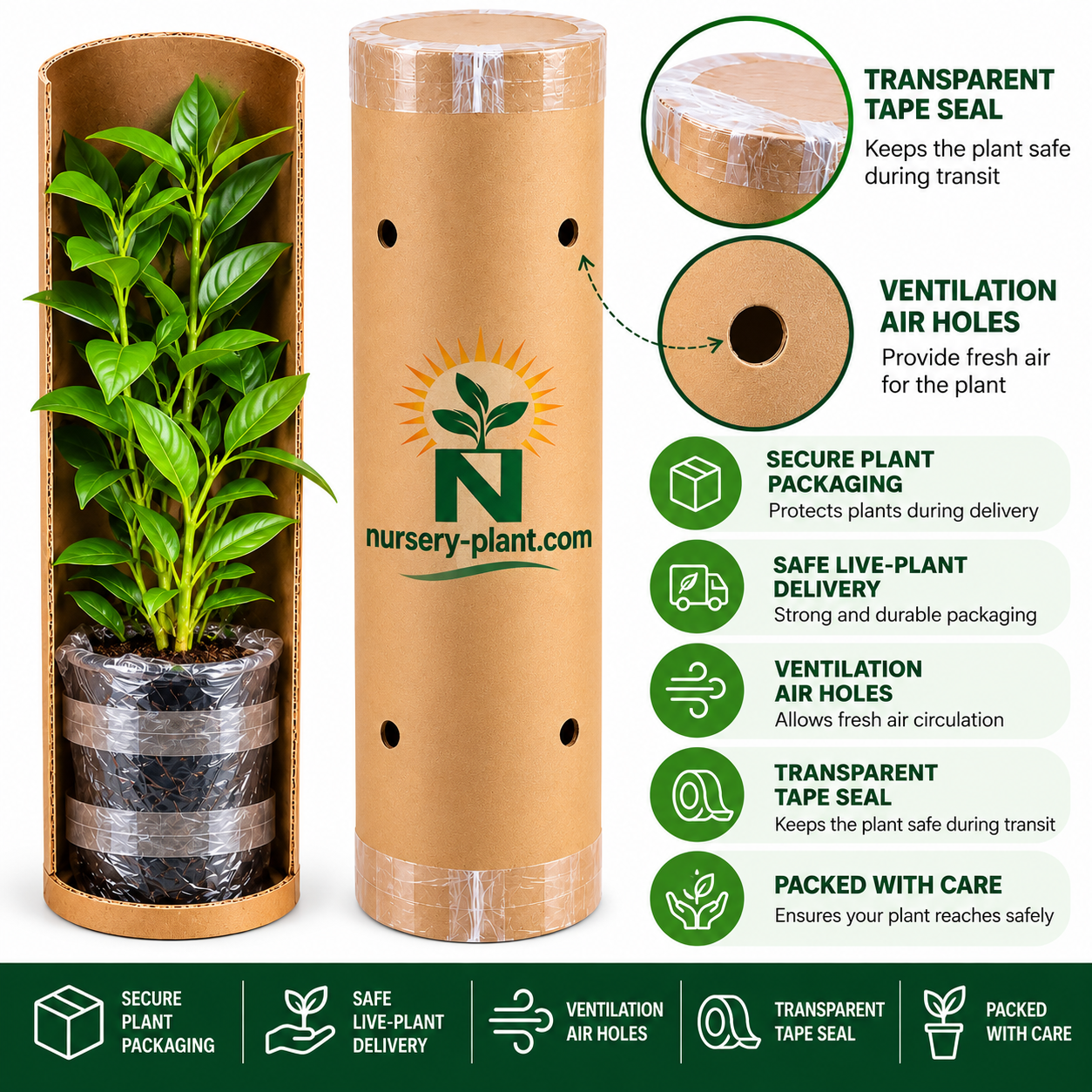
📦 Live Plant Delivery & Natural Variation
This is a live plant, so the actual plant supplied may naturally differ from the product photograph.
During packing, transportation and acclimatisation, you may notice:
- Slight leaf yellowing
- Temporary drooping
- Minor leaf shedding
- Different leaf size
- Variation in plant height
- Differences in stem thickness
- Variation in branching
- Temporary transport stress
These changes can occur naturally when a plant experiences changes in light, temperature, humidity and watering.
After delivery, place the plant in a suitable bright location and allow it to acclimatise gradually.
Product photographs are representative. The actual plant supplied may naturally vary according to season, growth stage, nursery conditions and availability.
⚠️ Important Note
The name Shami is sometimes applied to different plants in regional or commercial contexts. For this product, the intended botanical identity is Prosopis cineraria (L.) Druce, the species widely known as Shami/Khejri in India. ICAR documentation specifically records Prosopis cineraria under the Indian name Shami.
Kew also confirms that older names such as Prosopis spicigera and Prosopis aculeata are synonyms of Prosopis cineraria.
🌱 Why Choose This Plant?
- Traditional Shami / Khejri plant
- Botanical name: Prosopis cineraria
- Culturally significant Indian tree
- Associated with Shami Puja traditions
- Suitable for home and sacred plant collections
- Attractive fine-textured foliage
- Highly adapted to dry and warm conditions
- Can initially be maintained in a suitable pot
- Suitable for terrace and balcony gardening while young
- Excellent choice for Indian plant enthusiasts
- Valuable dryland tree with traditional ecological importance
- Supplied as a convenient live plant with pot
- A meaningful choice for home, office or gifting
🌿 Botanical Information
| Feature | Details |
|---|---|
| Common Name | Shami, Khejri, Khejra, Sami, Banni, Jand |
| Botanical Name | Prosopis cineraria (L.) Druce |
| Family | Fabaceae |
| Genus | Prosopis |
| Plant Type | Perennial woody tree/shrub |
| Growth Habit | Branching and spreading |
| Leaves | Compound, fine-textured foliage |
| Flowers | Small flowers in clusters |
| Fruit | Long pods |
| Climate | Dry, warm and semi-arid |
| Sunlight | Bright sunlight |
| Watering | Moderate; drought tolerant once established |
| Soil | Well drained |
| Garden Use | Sacred, ornamental, terrace and outdoor garden |
| Product Format | Live plant with pot |
Kew recognises Prosopis cineraria (L.) Druce as the accepted botanical name and places it in the Fabaceae family.
🔗 Botanical Information & Further Reading
- Kew Science – Plants of the World Online: Prosopis cineraria
- ICAR – Geographical Indications / Traditional Plant Knowledge: Prosopis cineraria
- ICFRE – Prosopis cineraria / Khejri Reference
- Jharkhand Biodiversity Board – Traditional Knowledge of Sacred Plants
- Wikipedia – Prosopis cineraria
- ResearchGate – Research on Prosopis cineraria
- NCBI/PubMed – Scientific Literature on Prosopis cineraria
🌱 Final Growing Reminder
Shami is a sun-loving, dryland-adapted Indian tree with strong cultural significance. For healthy growth, provide plenty of natural light, well-drained soil and controlled watering.
If you are keeping the plant indoors or in an office, choose the brightest natural-light location available, because Shami is not naturally a low-light indoor plant.
Give the young plant time to establish before expecting flowering or pods, and remember that its mature form will be much larger than the supplied nursery plant. With appropriate care, this Shami plant with pot can become a meaningful long-term addition to a home, office garden, terrace or sacred plant collection.
For More Information
Visit: Nursery-Plant.Com
For Contact Visit:Contact Us
For Shopping Visit: Shop Page


Reviews
There are no reviews yet.