
Areca Palm Air Purifier Plant (1.5–3 Feet Height) | Live Indoor Decorative Palm for Home & Office
🌿 About the Plant
The Areca Palm, also commonly called Butterfly Palm, Golden Cane Palm, Yellow Palm or Bamboo Palm, is one of the most popular ornamental palms for homes, offices and indoor plant collections.
The botanical name currently accepted by Kew is Chrysalidocarpus lutescens H.Wendl., in the Arecaceae (palm) family. The name Dypsis lutescens is widely used in horticulture and is listed by Kew as a synonym under its current accepted taxonomy. (Kew Science) (RHS)
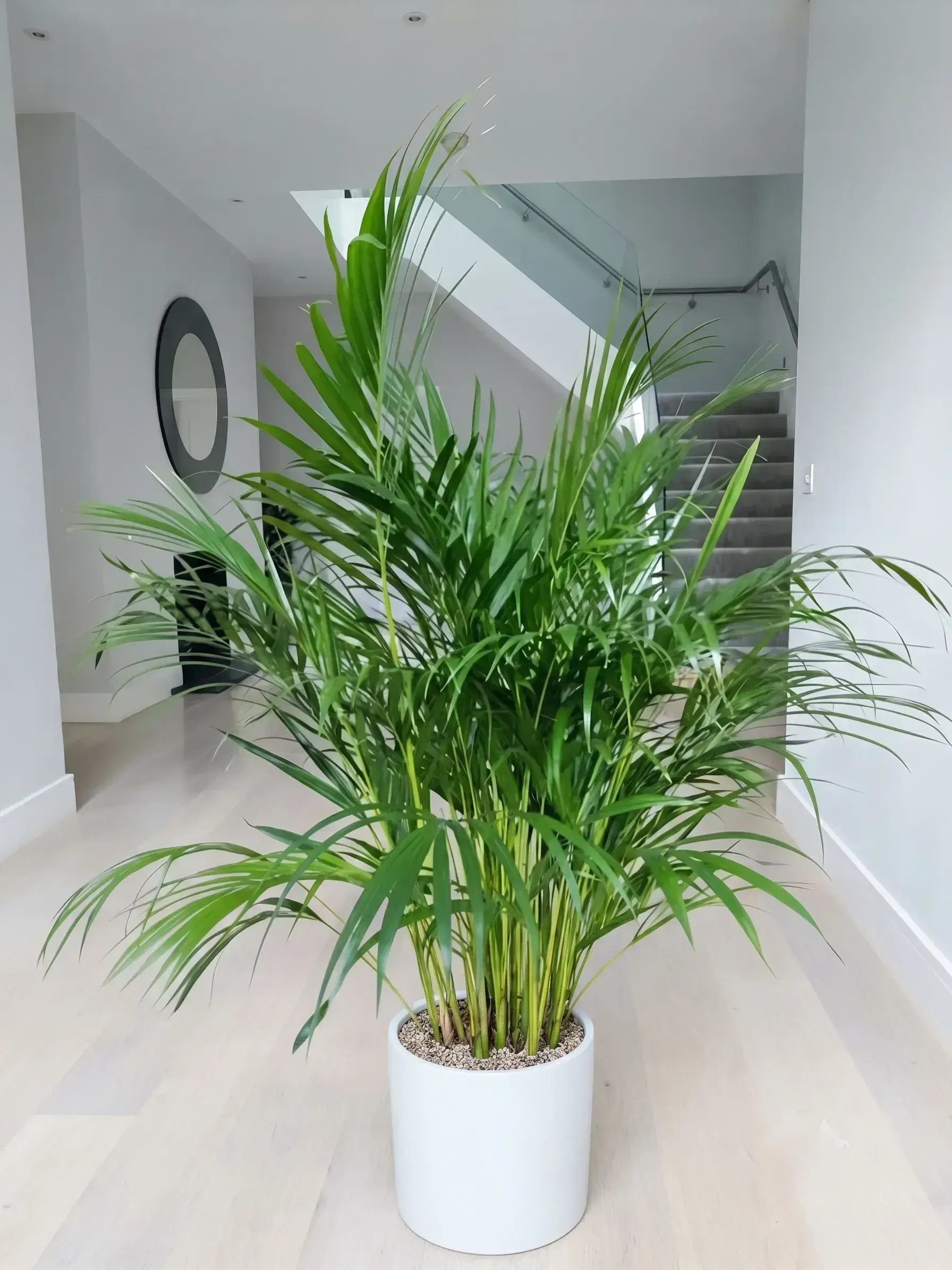
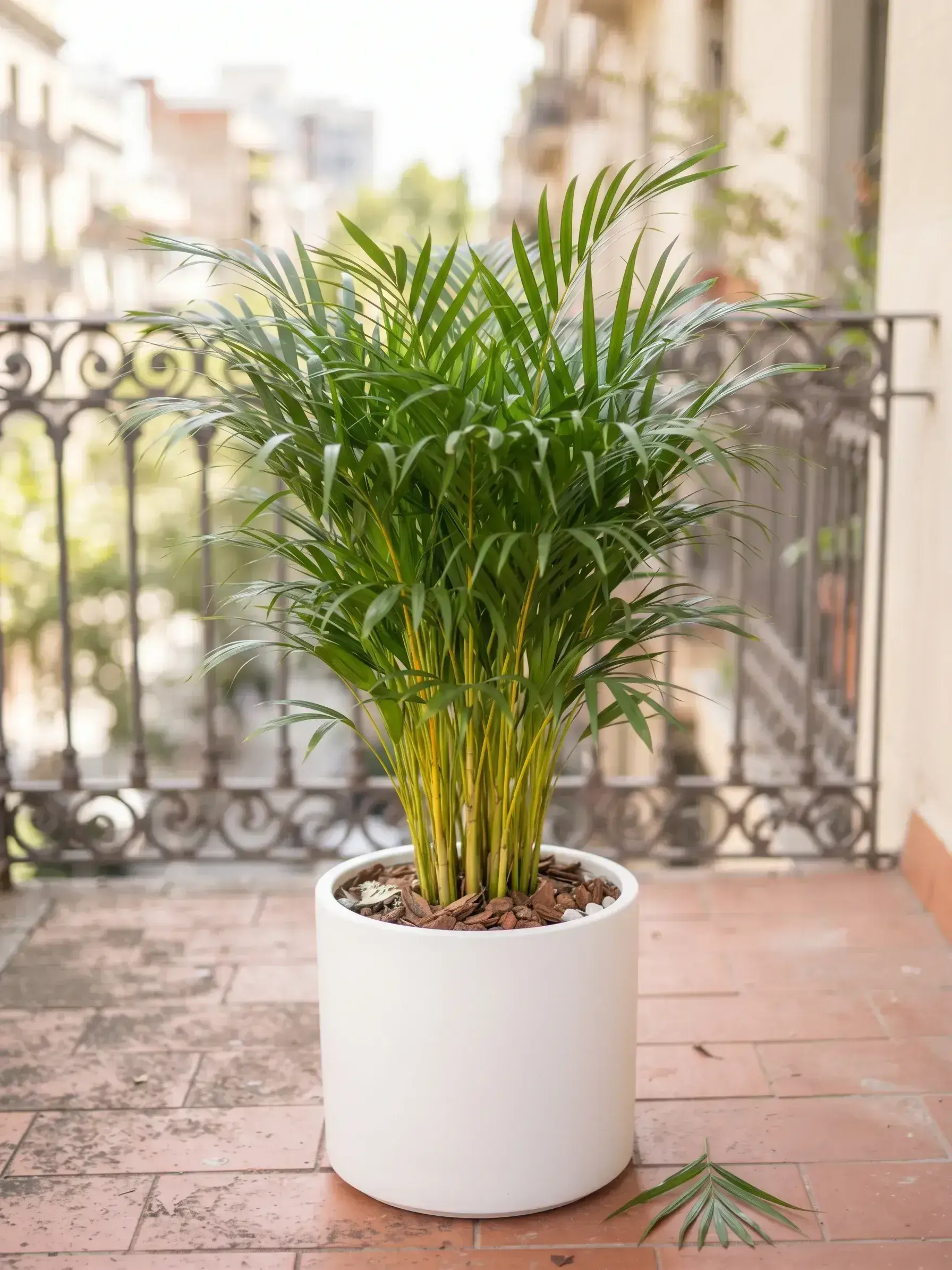
The plant develops multiple slender, cane-like stems and elegant arching, feather-shaped fronds. Its soft green appearance makes it particularly suitable for living rooms, offices, reception areas, balconies, bedrooms with suitable light and covered outdoor spaces.
This product is supplied at approximately 1.5–3 feet height, making it convenient for indoor decoration while the plant is still young.
🌱 Plant Characteristics
- Common Names: Areca Palm, Butterfly Palm, Golden Cane Palm, Yellow Palm, Bamboo Palm
- Botanical Name: Chrysalidocarpus lutescens H.Wendl.
- Common Horticultural Name: Dypsis lutescens
- Family: Arecaceae
- Plant Type: Evergreen ornamental palm
- Growth Habit: Clump-forming with multiple stems
- Foliage: Long, arching, pinnate green fronds
- Native Range: Madagascar
- Climate: Warm tropical and subtropical conditions
- Supplied Height: Approximately 1.5–3 feet
- Garden Use: Indoor decoration, office, balcony, terrace and landscape planting
Kew records the species as native to Madagascar and primarily associated with wet tropical environments. RHS describes it as a clumping palm with arching pinnate leaves. (Kew Science) (RHS)
🌴 Attractive Areca Palm Appearance
The Areca Palm is valued primarily for its elegant foliage.
Multiple slender stems emerge from the base, creating a naturally full appearance. The long pinnate fronds arch outward from the stems, giving the plant a soft, tropical look.
Unlike many indoor plants with broad leaves, Areca Palm has fine, feather-like foliage that can visually soften modern interiors.
It works particularly well with:
- Modern furniture
- Wooden interiors
- Office desks and workspaces
- Reception areas
- Living-room corners
- Balcony seating areas
- Indoor plant collections
🌿 Evergreen Foliage
Areca Palm remains attractive throughout the year when grown under suitable conditions.
Its long green fronds can gradually become fuller as new growth develops.
Older leaves may naturally yellow or dry and can eventually be removed. Brown tips can also occur when the plant experiences unsuitable watering, low humidity, excessive dryness or environmental stress.
The plant should therefore be maintained with consistent care rather than treated as a completely maintenance-free indoor plant.
☀️ Sunlight Requirements
Areca Palm prefers bright light, particularly when grown indoors.
RHS recommends bright indirect light for Dypsis lutescens and notes that the species needs good light levels.
For home and office cultivation:
- Place the plant near a bright window.
- Bright filtered or indirect light is ideal indoors.
- Avoid keeping it permanently in a dark corner.
- Protect foliage from intense direct afternoon sunlight through glass.
- If moving it outdoors, acclimatise it gradually.
A north- or east-facing bright location can work well in many homes, while very strong west-facing sunlight through glass may scorch unacclimatised foliage.
💧 Watering
Areca Palm prefers moderate and consistent watering.
For best results:
- Check the upper layer of soil before watering.
- Water when the soil begins to dry.
- Water thoroughly enough to moisten the root zone.
- Allow excess water to drain.
- Never leave the pot standing permanently in stagnant water.
- Reduce watering during cooler periods or low-light conditions.
- Check container plants more frequently during hot Indian summers.
Overwatering can create poor root conditions, while prolonged dryness can lead to leaf-tip browning and drooping.
The ideal routine is to maintain moderate moisture without keeping the soil continuously saturated.
🪴 Soil & Potting
Use a fertile, well-drained indoor potting mixture.
A suitable mix can contain:
- Good-quality garden soil
- Mature compost
- Cocopeat
- Coarse sand, perlite or another drainage-improving material
The soil should hold some moisture while allowing excess water to escape.
RHS recommends a loam-based, peat-free potting medium for indoor palms and notes that coarse sand can be incorporated to improve drainage. (RHS)
Always use a container with suitable drainage holes.
🌱 Fertilizer & Nutrition
Areca Palm benefits from regular but moderate nutrition during active growth.
For home and office plants:
- Apply a balanced indoor-plant fertilizer according to label instructions.
- Feed more regularly during active growth.
- Reduce feeding when growth slows.
- Avoid excessive fertilizer concentration.
- Water appropriately after granular fertilizer application.
RHS recommends balanced liquid fertilizer for indoor palms during the growing season. (RHS)
If the plant develops brown leaf tips, do not automatically assume it needs more fertilizer. Watering, humidity, light and environmental conditions should also be checked.
💨 Humidity & Indoor Environment
Areca Palm is a tropical species and generally appreciates moderate to higher humidity.
In dry indoor environments:
- Keep it away from strong air-conditioner airflow.
- Avoid placing it directly beside heaters.
- Maintain consistent watering.
- A naturally humid room can be beneficial.
- A humidity tray can be considered where appropriate.
RHS notes that many tropical indoor palms benefit from increased humidity and recommends maintaining suitable atmospheric moisture. (RHS)
In Indian homes, humidity is often naturally adequate during the monsoon, while dry winter or air-conditioned rooms may require more careful monitoring.
🏠 Indoor Home Suitability
Areca Palm is particularly suitable for indoor decoration when sufficient natural light is available.
It can be placed in:
- Living rooms
- Bedrooms with suitable light
- Home offices
- Study areas
- Reception spaces
- Bright corridors
- Indoor balconies
- Covered verandas
- Large indoor plant corners
Its soft, arching foliage provides a tropical appearance without requiring the visual space of a large outdoor tree.
🏢 Office Garden & Workspace
Areca Palm is also commonly used as an office ornamental plant.
RHS specifically identifies Dypsis lutescens as an effective visual choice for offices and notes that multiple Areca Palms can create a tropical workplace atmosphere. (RHS)
For an office:
- Place the plant near available natural light.
- Avoid direct cold air from AC vents.
- Check soil moisture regularly.
- Keep the pot stable.
- Clean dusty fronds gently when required.
- Rotate the plant periodically for balanced growth.
A completely windowless office is generally not an ideal long-term environment for this palm unless suitable supplemental plant lighting is provided.
🌿 Air-Purifying Plant – What to Expect
Areca Palm is often marketed as an “air-purifying plant.” There is scientific interest in the ability of indoor plants to interact with certain airborne compounds, and ICAR-published research has included Areca Palm among foliage plants evaluated for indoor and urban environments.
NASA’s historic controlled-environment research also investigated whether common interior plants could remove certain volatile organic compounds such as benzene, formaldehyde and trichloroethylene.
However, these findings should not be interpreted as meaning that a few potted plants can replace ventilation, air filtration or pollution-control measures in a normal home or office. NASA’s original work involved controlled experimental conditions, and indoor air quality in real buildings is strongly influenced by ventilation and pollutant sources.
Therefore, the Areca Palm should primarily be appreciated as a decorative living plant that contributes greenery and natural aesthetics to indoor spaces, rather than as a substitute for an air purifier or ventilation system.
🌱 Natural Indoor Benefits
Keeping an Areca Palm indoors can provide several practical decorative benefits:
- Adds natural greenery
- Creates a tropical visual atmosphere
- Softens office and home interiors
- Can complement modern interior decoration
- Provides a living focal point
- Adds foliage to otherwise plain spaces
Like other plants, it also participates in normal photosynthesis and water exchange, but these natural processes should not be confused with guaranteed indoor pollution removal.
✂️ Pruning & Maintenance
Areca Palm requires relatively little pruning.
Routine care includes:
- Remove completely brown or dead fronds.
- Trim severely damaged leaf portions when necessary.
- Remove dry stems close to the base using clean tools.
- Clean dusty leaves gently.
- Rotate the container periodically.
- Check for common indoor pests.
RHS notes that pruning is generally not required beyond removing unsuitable growth. (RHS)
Avoid cutting healthy green fronds unnecessarily because they contribute to the plant’s photosynthesis and growth.
🪴 Container Gardening
The supplied 1.5–3 feet Areca Palm is well suited to container cultivation.
For best results:
- Use a stable pot.
- Ensure adequate drainage.
- Use a fertile, well-drained potting medium.
- Place it in bright filtered light.
- Water according to soil moisture.
- Feed moderately during active growth.
- Repot when the plant becomes significantly root-bound.
The plant can remain in a container for many years, although the pot size may need to increase as the palm grows.
🌴 Mature Size & Space Requirement
The supplied height of 1.5–3 feet represents the approximate nursery plant size and not the mature height.
RHS reports Dypsis lutescens reaching approximately 4–8 metres in suitable conditions, while noting that container-grown plants are smaller.
Kew also describes the species as a shrub or tree and records its natural range in Madagascar.
Therefore, plan for additional space if you intend to keep the plant for many years.
For indoor use, regular container management can help keep the plant at a practical size.
🌱 Repotting
As the root system develops, the palm may eventually become root-bound.
Signs that repotting may be useful include:
- Roots emerging from drainage holes
- Soil drying unusually quickly
- Noticeably restricted growth
- Plant becoming unstable in the container
When repotting:
- Choose a pot only moderately larger than the existing one.
- Use fresh, well-drained potting medium.
- Handle the root ball carefully.
- Maintain the previous planting depth.
- Water appropriately after repotting.
- Avoid heavy fertilization immediately after the move.
RHS suggests repotting indoor palms when they become pot-bound, with the frequency depending on container size and growth. (RHS)
🐛 Common Maintenance Problems
Areca Palm can occasionally experience common indoor-palm pests such as:
- Spider mites
- Mealybugs
- Scale insects
- Thrips
RHS lists these among pests that may affect Dypsis lutescens. (RHS)
Regularly inspecting the undersides of leaves and stems can help identify problems early.
Yellowing or browning leaves can have multiple causes, including:
- Watering problems
- Low humidity
- Sudden environmental changes
- Excessive sunlight
- Poor drainage
- Nutrient imbalance
- Natural ageing of older fronds
Therefore, one symptom should not automatically be attributed to a single cause.
🇮🇳 Growing Areca Palm in India
Areca Palm is widely used as an ornamental plant in Indian homes, offices and landscaping.
Kew records the species as native to Madagascar and introduced in several regions, including Assam and the Andaman Islands.
For Indian indoor cultivation, the most important factors are:
- Bright filtered light
- Warm temperatures
- Moderate humidity
- Consistent but controlled watering
- Good drainage
- Protection from harsh cold
- Protection from strong direct sunlight through glass
During India’s hot summer months, indoor plants may require more frequent moisture checks. During the monsoon, avoid excessive watering when indoor evaporation is slower.
⚠️ Important Note About “Air Purifier”
The term “Air Purifier Plant” is commonly used in commercial plant marketing, but an Areca Palm should not be considered a replacement for a mechanical air purifier, HVAC filtration system or adequate ventilation.
Research has demonstrated that plants can interact with certain pollutants under controlled experimental conditions, but the effect of ordinary numbers of houseplants in real homes and offices is more limited.
For good indoor air quality, combine plants with:
- Proper ventilation
- Source control
- Regular cleaning
- Suitable filtration when required
The main benefit of this plant for the home or office is its attractive living greenery and tropical decorative appearance.
📦 Live Plant Delivery & Natural Variation
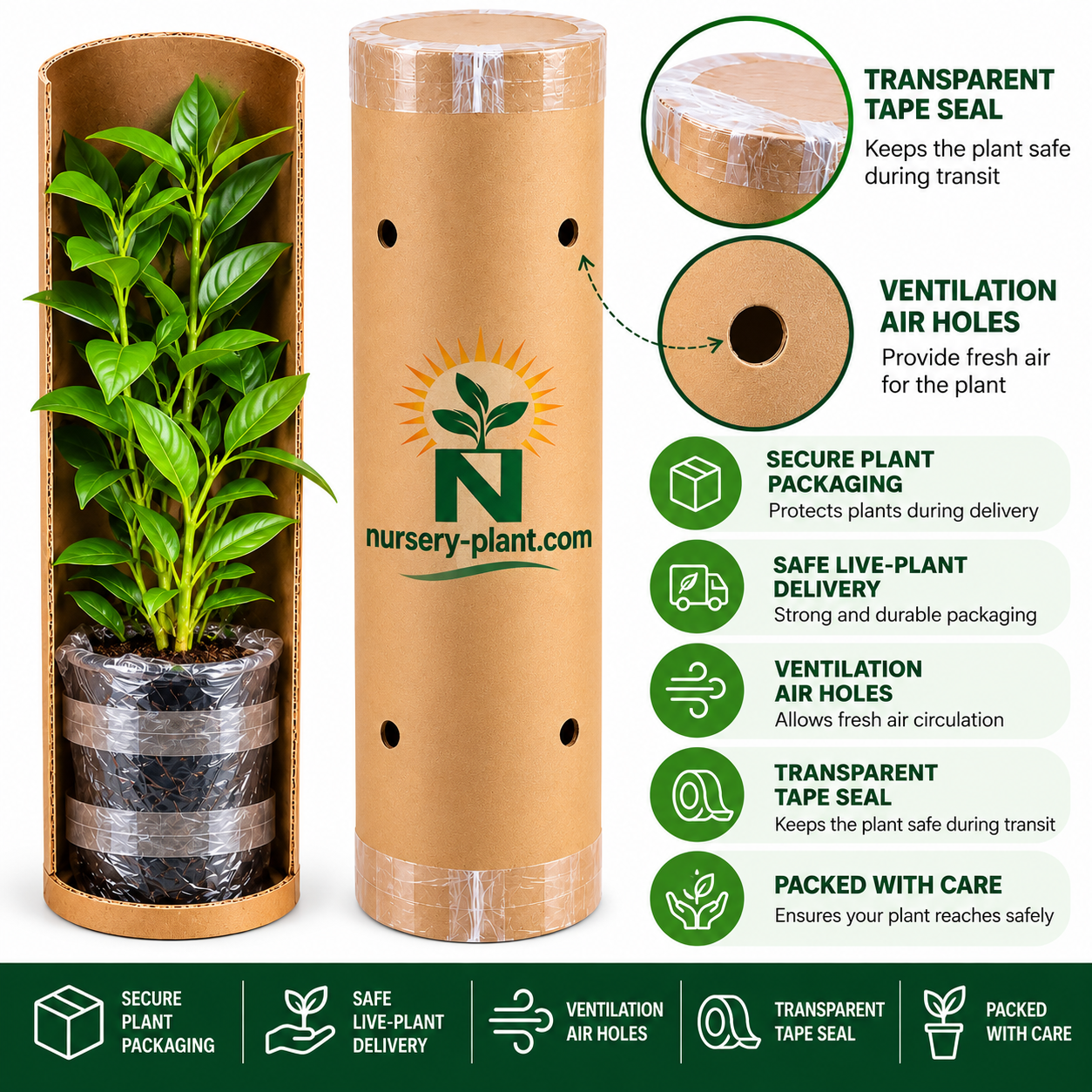
This is a live plant, so the actual plant supplied may naturally differ from the product photographs.
During packing, transportation and acclimatisation, you may notice:
- Slight leaf yellowing
- Temporary drooping
- Minor leaf shedding
- Brown or dry leaf tips
- Different frond size
- Variation in plant height
- Differences in stem thickness
- Variation in the number of stems
- Differences in foliage density
- Temporary transport stress
These are natural possibilities with living plants.
A plant may also look slightly less full immediately after delivery because the fronds can move or fold during transportation.
After delivery, place it in a bright suitable location and allow it to acclimatise gradually.
Product photographs are representative. The actual plant supplied may naturally vary according to season, growth stage, nursery conditions and availability.
⚠️ Important Note
The listed 1.5–3 feet height refers to the approximate size of the plant supplied at the time of dispatch.
The mature palm can become considerably larger, especially when planted outdoors or given substantial root space.
Also, the botanical name currently accepted by Kew is Chrysalidocarpus lutescens, while Dypsis lutescens remains an extremely common horticultural name and is listed by Kew as a synonym.
🌱 Why Choose This Plant?
- Beautiful Areca Palm for home and office
- Approximate supplied height of 1.5–3 feet
- Elegant feather-like green fronds
- Naturally clumping growth habit
- Excellent decorative indoor plant
- Suitable for bright living rooms and offices
- Adds a tropical green appearance to interiors
- Suitable for balconies and covered outdoor spaces
- Can be maintained in containers
- Popular choice for office landscaping
- Attractive evergreen foliage
- Commonly marketed as an air-purifying plant, with realistic expectations about its role in indoor air quality
- Easy to combine with modern and traditional interior décor
🌿 Botanical Information
| Feature | Details |
|---|---|
| Common Name | Areca Palm, Butterfly Palm, Golden Cane Palm |
| Botanical Name | Chrysalidocarpus lutescens H.Wendl. |
| Common Horticultural Name | Dypsis lutescens |
| Family | Arecaceae |
| Plant Type | Evergreen ornamental palm |
| Growth Habit | Clump-forming |
| Foliage | Long, arching pinnate fronds |
| Native Range | Madagascar |
| Supplied Height | Approximately 1.5–3 feet |
| Light | Bright filtered/indirect light indoors |
| Watering | Moderate and consistent |
| Humidity | Moderate to high preferred |
| Soil | Fertile and well drained |
| Indoor Use | Home, office and bright indoor spaces |
| Container Growing | Highly suitable |
| Mature Size | Can become several metres tall in suitable conditions |
Kew currently accepts Chrysalidocarpus lutescens H.Wendl. as the species name, while Dypsis lutescens is listed as a synonym. RHS continues to use Dypsis lutescens in its horticultural plant profile.
🔗 Botanical Information & Further Reading
- Kew Science – Plants of the World Online: Chrysalidocarpus lutescens
- Royal Horticultural Society – Dypsis lutescens / Areca Palm
- Royal Horticultural Society – Indoor Palms Growing Guide
- Royal Horticultural Society – Choosing & Caring for Office Plants
- ICAR – Indian Horticulture: Foliage Potted Plant Assessment
- NASA Technical Reports – Study of Interior Landscape Plants for Indoor Air Pollution Abatement
- ITIS – Dypsis lutescens Taxonomic Information
- Wikipedia – Areca Palm / Dypsis lutescens
🌱 Final Growing Reminder
The Areca Palm is an attractive evergreen palm that can bring a soft tropical appearance to homes, offices and covered outdoor spaces. For healthy growth, provide bright filtered light, moderate watering, good drainage and suitable humidity.
The 1.5–3 feet plant supplied is a young specimen and can become considerably larger over time. For indoor cultivation, container size, light and regular maintenance can help keep its growth manageable.
Enjoy it primarily as a beautiful living decorative plant. While Areca Palm is often promoted as an air-purifying plant and plants have demonstrated pollutant-removal potential under controlled conditions, it should not replace proper ventilation or mechanical air filtration when those are needed.
For More Information
Visit: Nursery-Plant.Com
For Contact Visit:Contact Us
For Shopping Visit: Shop Page


Reviews
There are no reviews yet.