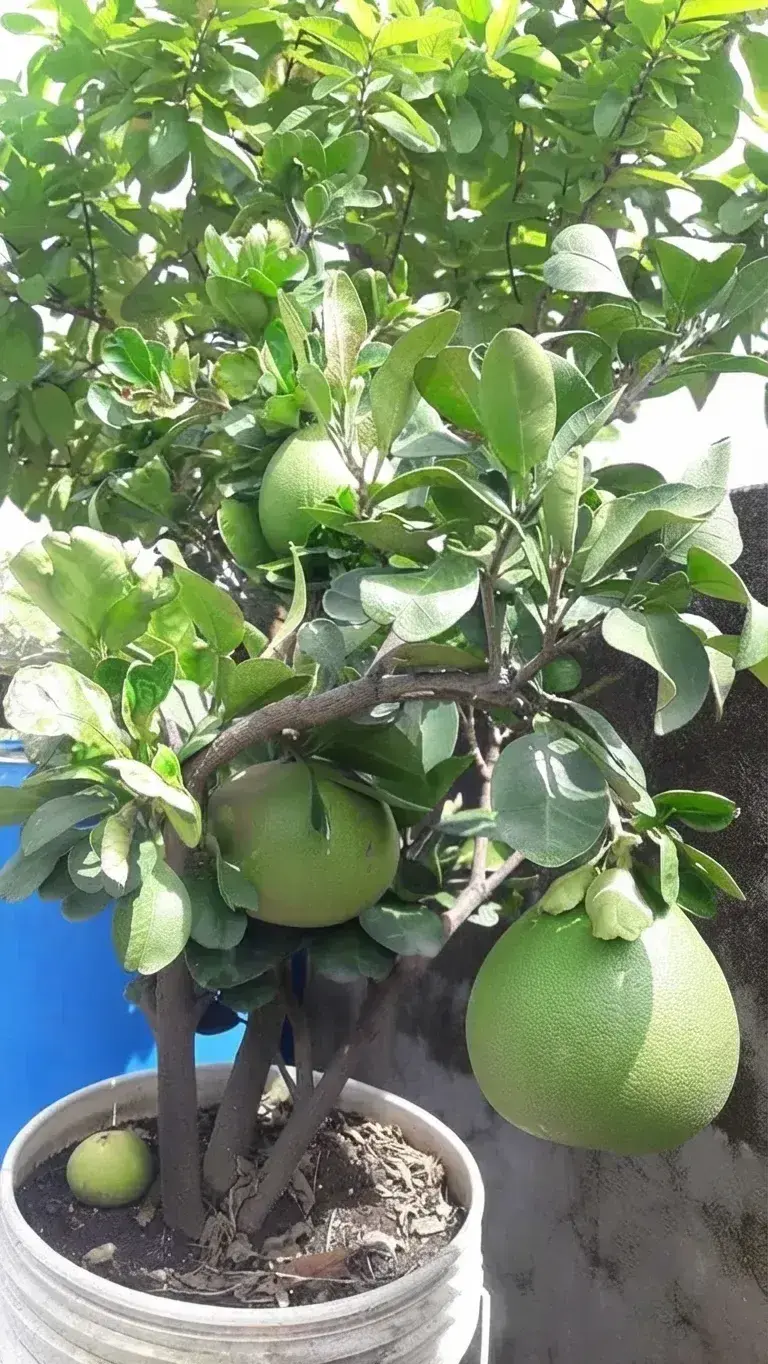


Seedless Pomelo Plant | Citrus maxima Seedless Grapefruit
🌿 About the Plant
The Seedless Pomelo Plant, commonly known in India as Jambura, is a citrus fruit plant valued for its large fruits, refreshing flavour and attractive evergreen foliage. Its botanical name is Citrus maxima, belonging to the Rutaceae family. Kew’s Plants of the World Online accepts Citrus maxima as the current botanical name and records its native range from Assam through Indo-China.
Pomelo is one of the important citrus fruit types grown and consumed in tropical and subtropical regions. It is sometimes sold or described commercially as a grapefruit-type fruit, but true pomelo and grapefruit are botanically different. Grapefruit is generally associated with the hybrid Citrus × paradisi, whereas pomelo is Citrus maxima.
This plant is particularly interesting for home gardeners who want to grow a distinctive citrus fruit tree in a spacious garden, backyard, farm, terrace garden or large container.
The “seedless” description refers to the marketed planting selection, but the exact cultivar of a nursery-supplied plant should be confirmed from the nursery’s plant material records. India does have a documented seedless pummelo variety, Pusa Arun, developed by ICAR-IARI; however, this product should not automatically be assumed to be Pusa Arun unless specifically identified as such.
🌱 Plant Characteristics
- Common Names: Pomelo, Pummelo, Jambura, Pamplemousse, Shaddock
- Botanical Name: Citrus maxima (Burm.) Merr.
- Family: Rutaceae
- Plant Type: Evergreen fruit tree
- Growth Habit: Bushy to spreading citrus tree
- Native Range: Assam to Indo-China
- Fruit Type: Large citrus fruit
- Suitable Climate: Tropical and subtropical conditions
- Sunlight: Full sun
- Soil: Fertile, deep and well-drained soil
- Home Garden: Suitable where sufficient space and sunlight are available
Kew describes pomelo as an evergreen tree or shrub with glossy foliage and fragrant flowers, while Indian horticultural guidance places pummelo among commercially important citrus crops.
🍃 Leaves & Plant Appearance
The plant develops attractive green, glossy citrus foliage that remains on the tree for most of the year. Mature plants can develop a broad, spreading canopy, making them useful not only for fruit production but also as an attractive feature tree in a larger garden.
Young plants supplied for home gardening will naturally be much smaller than mature trees. With proper nutrition, sunlight, watering and sufficient root space, the plant gradually develops stronger branches and a larger canopy.
Pomelo can become a sizeable tree if allowed to grow freely, so gardeners should plan the planting location before moving it permanently into the ground.
🌸 Flowers
Pomelo produces attractive fragrant white flowers, either singly or in clusters depending on the growth stage and plant. Citrus flowers are generally attractive to pollinating insects.
Flowering is influenced by plant maturity, temperature, water availability, nutrition, sunlight and overall plant health. A young nursery plant should therefore not be expected to flower immediately after planting.
🍈 Fruits
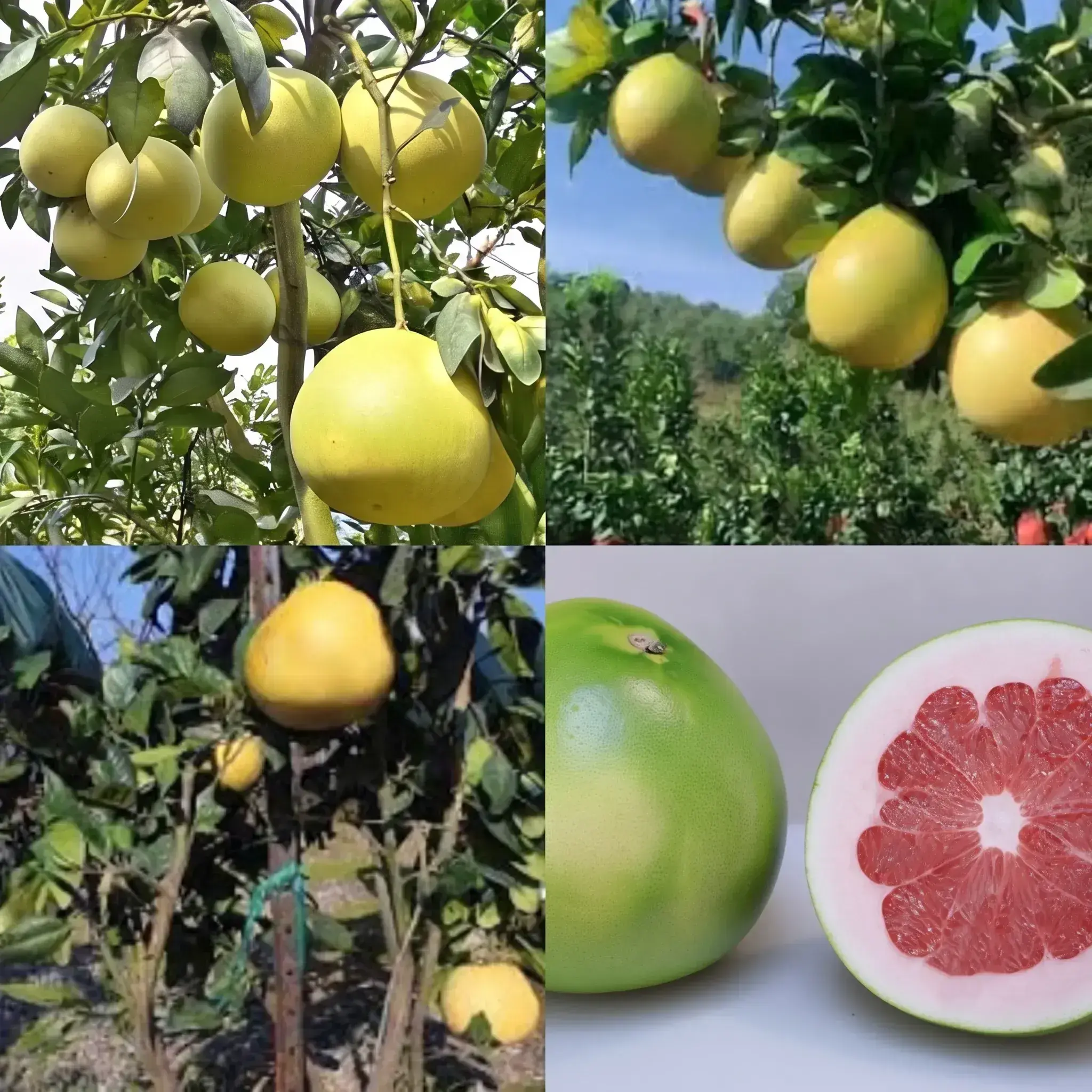
Pomelo is famous for its exceptionally large citrus fruits. Depending on the variety or selection, fruits may be round, flattened-spherical or somewhat pear-shaped, with a thick outer rind.
The edible interior consists of juicy segments enclosed by membranes. Flesh colour can vary among pomelo selections, including white, pale yellow and pinkish or reddish types. Indian pummelo varieties are broadly classified into white and pink/red aril types.
The flavour may range from sweet to sweet-acidic, with citrus aroma and varying levels of bitterness depending on the selection.
For a seedless selection, the fruit is particularly convenient for fresh eating because the absence or substantial reduction of seeds makes separating and consuming the segments easier. However, actual seed expression can vary depending on the specific plant material and pollination conditions.
🌱 Seedless Pomelo Information
Seedless pomelo is not simply a generic characteristic of every Citrus maxima plant. Specific selections have been developed for reduced or absent seeds.
A notable Indian example is Pusa Arun, developed by ICAR-Indian Agricultural Research Institute and released in 2020. IARI describes it as India’s first seedless white-fleshed pummelo mutant, with an average fruit weight of approximately 497 g, high juice recovery and low acidity.
Because nursery trade names can sometimes be broader than formally released cultivar names, the plant supplied under a general “Seedless Pomelo” name should be regarded as a seedless-marketed selection unless the exact cultivar is specified by the nursery.
☀️ Sunlight Requirements
Pomelo performs best with good direct sunlight.
For home cultivation:
- Provide around 6–8 hours of strong sunlight where possible.
- Choose an open location rather than a heavily shaded corner.
- Morning and afternoon sunlight are both beneficial.
- Avoid planting directly beside large trees that compete for sunlight and water.
- Plants grown with inadequate light may develop weak, elongated growth and reduced flowering and fruit production.
For container cultivation, place the pot in the brightest suitable outdoor location.
Indian horticultural guidance recommends sunny growing conditions for pummelo and notes that the crop performs best in warm climates.
💧 Watering
Pomelo prefers consistent moisture but does not tolerate prolonged waterlogging.
Water deeply when the upper layer of soil begins to dry rather than giving small amounts of water continuously.
During hot weather:
- Newly planted trees may require more frequent watering.
- Container plants generally dry out faster than ground-grown trees.
- Increase watering during periods of active growth and fruit development when required.
- Reduce watering during prolonged rainy periods.
Always ensure excess water can drain away quickly. Waterlogged soil can damage citrus roots and create conditions favourable to root problems.
🪴 Soil & Potting
The ideal growing medium should be fertile, deep, porous and well-drained.
A practical home-garden mixture can contain:
- Good-quality garden soil
- Well-decomposed organic manure or compost
- Cocopeat or another material that improves aeration
- Coarse sand or another drainage-improving component where required
Avoid heavy compacted soil that remains saturated after irrigation.
Recent Indian horticultural guidance recommends deep, well-drained fertile soil with approximately pH 5.5–7.5 for pummelo.
For a large container, use a pot with adequate drainage holes and enough volume to accommodate the developing root system. A larger container will generally be more appropriate as the tree grows.
🌱 Fertilizer & Nutrition
Pomelo is a long-lived fruit tree and benefits from regular nutrition rather than excessive fertilizer at one time.
Use:
- Well-decomposed compost or farmyard manure
- A balanced citrus fertilizer
- Micronutrients when deficiency symptoms are confirmed
- Organic amendments according to soil condition
Feed young plants lightly and regularly during active growth rather than applying excessive fertilizer.
As the plant becomes larger and approaches fruit-bearing age, its nutritional requirements increase. Fertilizer requirements also vary with soil fertility, plant age, tree size and cropping level.
Indian pummelo cultivation guidance recommends organic manure and split applications of inorganic fertilizers around the crop’s growth and flowering cycle.
🌼 Flowering & Fruit Development
Flowering and fruiting depend on:
- Plant age
- Genetic characteristics of the selection
- Sunlight
- Temperature
- Soil fertility
- Water management
- Root health
- Pruning
- General plant health
A nursery plant may require time to establish after transplantation before it begins producing significant flowers or fruits.
Fruiting is not guaranteed immediately after delivery and depends on plant age, variety, climate, sunlight, nutrition, water management and growing conditions.
A healthy, well-established plant grown under suitable conditions has a much better opportunity to flower and develop fruit than a stressed newly transplanted plant.
🏡 Home Garden Suitability
Seedless Pomelo is particularly suitable for:
- Large home gardens
- Backyard gardens
- Farmhouses
- Fruit gardens
- Kitchen gardens
- Orchard-style planting
- Large open plots
Because pomelo can eventually become a sizeable tree, it is better suited to gardens with adequate horizontal and vertical space than to very small balconies.
It can also become an attractive landscape plant because of its evergreen foliage and fragrant citrus flowers.
🪴 Container / Terrace Gardening
Pomelo can be maintained in a large container while young, making it possible for gardeners with limited ground space to grow the plant.
For container growing:
- Select a large, sturdy pot with drainage holes.
- Use a well-drained fertile growing medium.
- Place the plant where it receives strong sunlight.
- Water thoroughly but allow excess water to drain.
- Feed periodically with a suitable citrus fertilizer.
- Increase container size as the root system develops.
- Use pruning to maintain a manageable canopy.
However, container-grown pomelo generally requires more attention to watering, nutrition and root-space management than a tree planted directly into suitable garden soil.
✂️ Pruning & Maintenance
Pomelo generally benefits from sensible structural pruning rather than severe cutting.
Remove:
- Dead branches
- Broken branches
- Diseased growth
- Weak crossing branches
- Unwanted shoots emerging below a graft or bud union, if the plant is grafted or budded
Maintain an open and balanced canopy so that sunlight can reach the inner branches.
Avoid excessive pruning because heavy removal of healthy foliage can temporarily reduce the plant’s ability to produce energy for growth and fruit development.
🌳 Space Requirement
Pummelo is capable of becoming a large tree when grown under favourable conditions. Indian horticultural recommendations give approximately 8–10 m × 6–8 m spacing for conventional orchard planting depending on cultivar vigour and soil fertility, while closer planting can be used with appropriate training and pruning.
For a home garden, leave enough room around the plant for:
- Root development
- Canopy expansion
- Sunlight penetration
- Air circulation
- Watering
- Fertilizer application
- Future harvesting
- Routine pruning
The final size will vary considerably with cultivar, rootstock, soil, climate and management.
🌱 Propagation & Grafted Plant Information
Commercial citrus plants are commonly produced through vegetative propagation because it allows nurseries to multiply selected planting material more consistently than ordinary seed propagation.
Indian ICAR guidance identifies air-layering, budding and grafting as propagation methods for pummelo, with shield budding described as a standardized commercial method and Rangpur lime commonly used as a rootstock.
ICAR-CCRI has also documented advanced citrus propagation systems, including microbudding and grafting techniques for pummelo planting material.
If this particular nursery plant is grafted or budded, keep the graft/bud union above the soil surface after planting. Do not cover the union with soil or allow unwanted rootstock shoots to dominate the scion.
🍊 Harvesting
The harvesting season and fruit maturity period depend on the particular pomelo selection and growing region.
Harvest fruit only after it has developed its characteristic mature size, colour and flavour. Citrus fruits can remain on the tree for a period after reaching marketable maturity, but harvesting should be based on the characteristics of the particular cultivar.
Do not judge fruiting performance only by the first few months after planting. Young trees need time to establish their root and canopy systems.
🇮🇳 Growing in India
Pomelo is particularly relevant to Indian tropical and subtropical gardens. Kew records Citrus maxima as native from Assam through Indo-China and as introduced into several regions including India.
Current Indian horticultural guidance recommends warm, humid conditions, deep well-drained soil and protection from waterlogging and extreme environmental stress.
In hot Indian regions, maintain consistent irrigation during dry periods while ensuring the root zone drains properly. In areas receiving heavy monsoon rainfall, raised planting locations and good drainage are especially useful.
📦 Live Plant Delivery & Natural Variation
This is a live plant, so its appearance at the time of delivery may naturally differ from product photographs.
During transportation, the plant may experience temporary stress because of changes in:
- Light
- Temperature
- Humidity
- Air circulation
- Water availability
- Handling and transportation time
Minor leaf yellowing, temporary drooping, slight leaf shedding or small changes in appearance can occur after delivery. Plant height, leaf size, branching, stem thickness and canopy shape may also naturally vary between individual plants.
Product photographs are representative. The exact plant delivered may not look identical to the photographed specimen.
After receiving the plant, place it in a suitable bright location, water appropriately and allow it time to acclimatise before making major changes such as repotting or heavy pruning.
⚠️ Important Note
The name “Seedless Pomelo” describes the marketed fruit characteristic, but Citrus maxima includes many different forms and cultivars. A nursery plant should not be assumed to be the formally released Pusa Arun variety unless that identity is specifically confirmed.
Also, pomelo is not the same botanical species as grapefruit. Grapefruit is generally treated as Citrus × paradisi, while the plant described here is Citrus maxima. The term “seedless grapefruit” may therefore be used commercially to help customers understand the fruit type, but it should not be interpreted as the botanical identity of this plant.
🌱 Why Choose This Plant?
- Large and distinctive citrus fruit
- Seedless-type selection for easier fruit consumption
- Attractive evergreen foliage
- Fragrant citrus flowers
- Suitable for Indian tropical and subtropical conditions
- Excellent choice for a spacious home garden
- Can be maintained in a large container while young
- Suitable for fruit gardens and kitchen gardens
- Interesting addition for collectors of unusual citrus plants
- Can become both a productive fruit tree and an attractive garden feature
🌿 Botanical Information
Botanical Name: Citrus maxima (Burm.) Merr.
Family: Rutaceae
Genus: Citrus
Plant Type: Evergreen fruit tree
Common Names: Pomelo, Pummelo, Jambura, Shaddock, Pamplemousse
Native Range: Assam to Indo-China
Fruit: Large citrus fruit with thick rind and segmented juicy pulp
Flesh: White, pale yellow, pink or reddish depending on selection
Growing Habit: Spreading evergreen tree
Preferred Conditions: Warm climate, full sunlight and well-drained fertile soil
Kew’s Plants of the World Online currently accepts Citrus maxima as the botanical name and lists several older names, including Citrus grandis, as synonyms.
🔗 Botanical Information & Further Reading
- Kew Science – Plants of the World Online: Citrus maxima — Current botanical classification, distribution and taxonomic information.
- ICAR – Indian Horticulture: Pummelo cultivation and improved varieties — Indian information on climate, soil, propagation, planting and improved pummelo varieties.
- ICAR-IARI – Pusa Arun Pummelo — Official information on India’s seedless Pusa Arun pummelo.
- ICAR-IARI – Fruits & Horticultural Technology Achievements — IARI information on pummelo improvement and Pusa Arun.
- ICAR – Central Citrus Research Institute information — Information on citrus planting material and pummelo as a commercial citrus crop in India.
- RHS – Citrus maxima / Pummelo — Botanical description, cultivation and container-growing information.
- Kew Science – Citrus genus — Taxonomic information for the Citrus genus.
- RHS – Citrus × paradisi / Grapefruit — Useful comparison showing the botanical distinction between grapefruit and pomelo.
For More Information
Visit: Nursery-Plant.Com
For Contact Visit:Contact Us
For Shopping Visit: Shop Page


Reviews
There are no reviews yet.