Pomegranate Granada Variety Fruit Plant
🌿 About the Plant
The Pomegranate Granada Variety is a fruiting selection of Pomegranate (Punica granatum L.), commonly known in India as Anar or Anardana tree. Pomegranate belongs to the Lythraceae family. The species is widely cultivated in India and other warm, relatively dry regions for its attractive flowers and edible fruits. Kew recognises Punica granatum as the accepted botanical species.
Granada is a recognised pomegranate cultivar that originated in California. Reliable horticultural references describe it as a bud mutation of the cultivar ‘Wonderful’, introduced in 1966. Compared with Wonderful, Granada is known for earlier fruit maturity, darker red fruit colour and lower acidity. ICAR also describes Granada as an early-maturing exotic pomegranate variety with smaller fruit than Wonderful.
The term “high yielding” or “all time” should not be understood as a guarantee of continuous fruiting or a fixed yield. Actual production depends on the plant’s age, planting material, climate, sunlight, nutrition, irrigation, pruning, pollination and general plant health.
Granada can be an interesting choice for an Indian home garden, terrace garden with sufficient space, or suitable fruit-growing area where the plant receives plenty of sunlight and has well-drained soil.
🌱 Plant Characteristics
- Plant type: Fruit-bearing shrub or small tree
- Botanical name: Punica granatum L.
- Family: Lythraceae
- Common Indian name: Anar
- English name: Pomegranate
- Variety: Granada
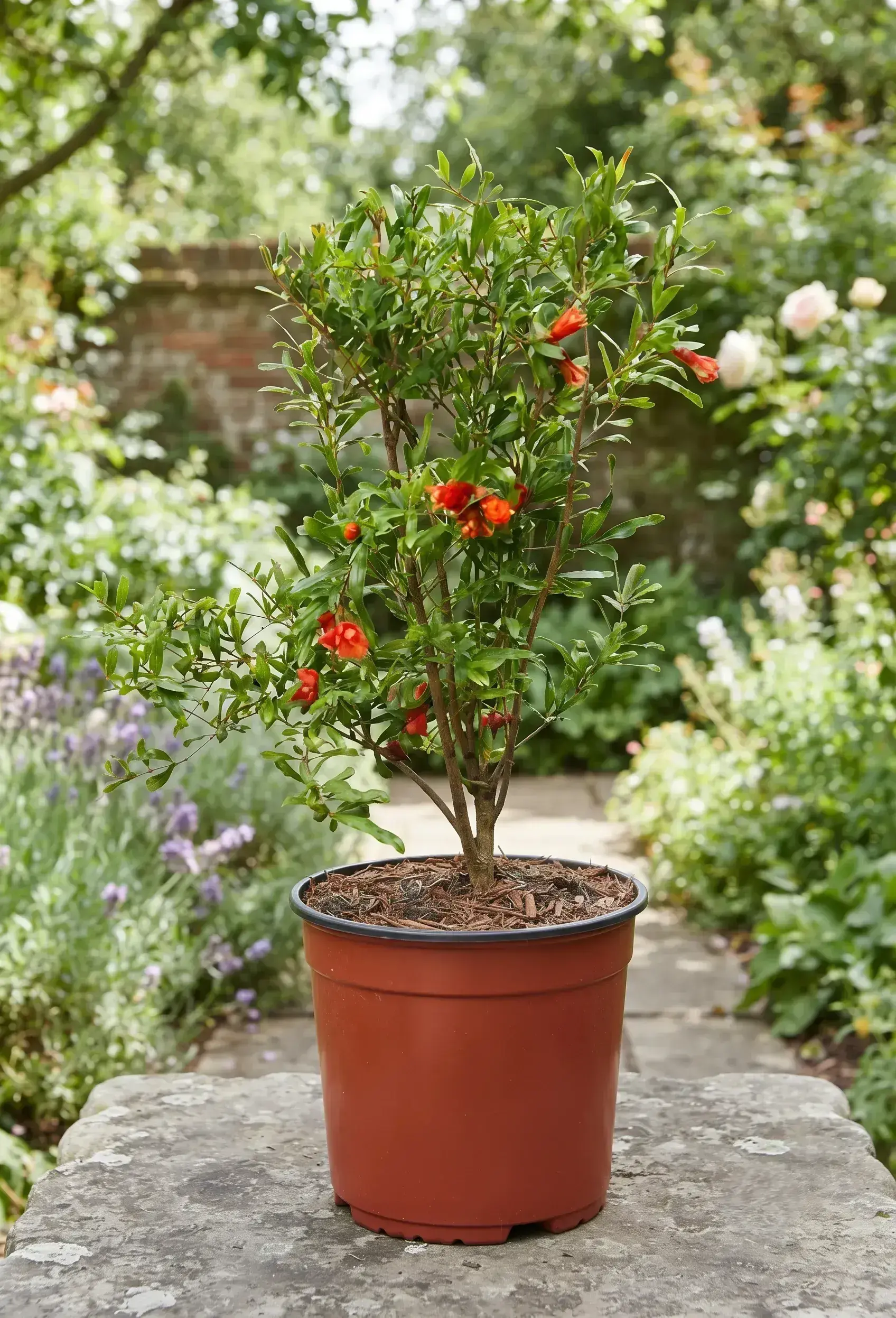
- Growth habit: Bushy, branching shrub/small tree
- Leaves: Small, smooth, green leaves arranged opposite or in clusters
- Flowers: Attractive red to orange-red flowers
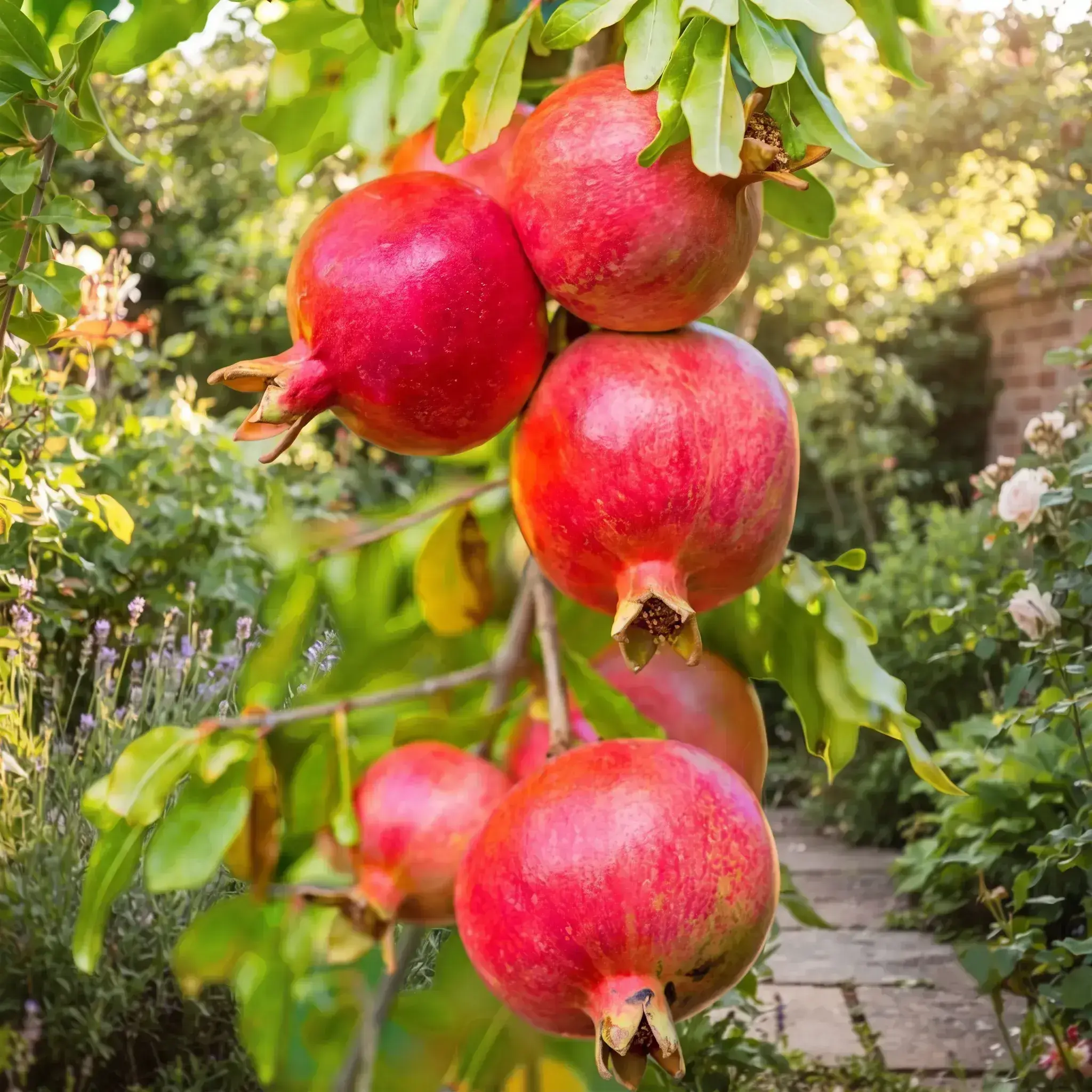
- Fruit: Round pomegranate with red to dark-red colour
- Fruit maturity: Granada is an early-maturing pomegranate compared with Wonderful under suitable conditions
- Uses: Fresh eating, juice and other culinary uses
Pomegranate plants can develop into substantial shrubs or small trees. Although a nursery plant may arrive compact, its long-term size should be considered before planting permanently.
🍎 Fruits
Granada is particularly known for its deep red to dark-red fruit colour. Horticultural references describe the fruit as similar to Wonderful but generally less tart, while ICAR notes that Granada has medium-hard seeds and matures earlier than Wonderful.
The fruit contains numerous juicy arils surrounding the seeds. Fruit quality can vary according to climate, maturity, irrigation, nutrition and the particular planting material supplied.
Important characteristics associated with Granada include:
- Deep red to dark-red fruit colour
- Red crown development
- Juicy edible arils
- Relatively lower acidity than Wonderful
- Medium-hard seeds according to ICAR
- Earlier maturity than Wonderful
- Suitable for fresh consumption and juice use
Granada is not an everbearing or continuously fruiting tree simply because it is sometimes marketed as an “all-time” Anar plant. Flowering and fruiting occur according to the plant’s growth cycle and local environmental conditions.
☀️ Sunlight Requirements
Pomegranate performs best with full sunlight. Kew notes that pomegranate grows in well-drained soils and sheltered positions with full sun.
For Indian growing conditions:
- Provide a location receiving several hours of direct sunlight each day.
- More sunlight generally supports healthy vegetative growth and fruit development.
- Avoid planting where buildings or large trees create heavy shade.
- A sunny terrace or open backyard can work when the container is sufficiently large and the plant can receive adequate sunlight.
- During very hot conditions, maintain adequate soil moisture without creating waterlogging.
Pomegranate generally performs better in warm conditions, but regional climate differences across India should be considered.
💧 Watering
Pomegranate is relatively drought-tolerant once established, but a fruiting plant still needs appropriate water for healthy growth and fruit development. TNAU notes that pomegranate is drought resistant and tolerant of salinity and alkalinity, while also emphasising suitable irrigation for cultivation.
Follow these practical steps:
- Check the top layer of soil before watering.
- Water when the soil has started to dry rather than following a rigid daily schedule.
- Give enough water to moisten the root zone thoroughly.
- Allow excess water to drain completely.
- Reduce watering when weather conditions are cool or the plant is receiving less sunlight.
- During hot and dry Indian weather, monitor container plants more frequently.
- Avoid repeatedly keeping the soil saturated.
Sudden changes in water availability can contribute to fruit cracking. University extension information notes that rapid water uptake after dry periods can cause the pomegranate rind to split, particularly around late-season rainfall.
🪴 Soil & Potting
Pomegranate can grow in a range of soils, but good drainage is important. TNAU recommends well-managed cultivation and reports that the crop can tolerate salinity and alkalinity; Kew also specifies well-drained soil as a suitable condition.
For a container-grown Granada plant, a practical potting mixture can contain:
- Garden soil
- Well-decomposed compost or vermicompost
- Cocopeat
- Coarse sand or another drainage-supporting material
The exact proportions do not need to be fixed for every garden. The important points are that the mixture should hold enough moisture for healthy growth while allowing excess water to escape.
Use a container with adequate drainage holes. Do not allow the pot to remain standing in collected water.
🌱 Fertilizer & Nutrition
Granada pomegranate benefits from balanced nutrition, particularly when grown for fruit production.
You can use:
- Well-decomposed farmyard manure
- Compost
- Vermicompost
- A suitable balanced fruit-tree fertilizer
- Micronutrients where a genuine deficiency is identified
Avoid excessive fertilizer, especially nitrogen, because very vigorous leafy growth is not necessarily the same as good fruit production.
For packaged fertilizers, always follow the manufacturer’s recommended dosage and application method. Container plants generally require more careful fertilizer management than plants growing in the ground.
🌼 Flowering & Fruit Development
Pomegranate produces attractive flowers followed by fruit when suitable flowers successfully develop into fruit. The plant’s fruit production is influenced by:
- Plant age and maturity
- Variety
- Sunlight
- Temperature
- Water availability
- Nutrition
- Pruning and training
- Flower and fruit retention
- Overall plant health
Granada is recognised as an early-maturing pomegranate variety, with ICAR reporting that it ripens about one month earlier than Wonderful under suitable production conditions.
However, this does not mean that every young nursery plant will fruit immediately after delivery.
Fruiting is not guaranteed immediately after delivery and depends on plant age, variety, climate, sunlight, nutrition, water management and growing conditions.
🏡 Home Garden Suitability
Granada can be suitable for:
- 🏡 Home gardens
- 🌳 Backyard gardens
- 🌱 Fruit gardens
- 🌾 Suitable orchard areas
- ☀️ Sunny outdoor spaces
- 🪴 Large-container or terrace gardens with adequate space
Pomegranate has long been cultivated as a fruit plant and can also be attractive because of its flowers and compact tree/shrub form. Kew records pomegranate as widely introduced and cultivated in India.
For humid or high-rainfall parts of India, careful drainage becomes especially important. In drier regions, irrigation management may become more important during prolonged dry periods.
🪴 Container / Terrace Gardening
Granada can be grown in a large container, particularly while the plant is young, but it should not be treated as a permanently miniature plant.
For terrace cultivation:
- Use a large, sturdy container with drainage holes.
- Choose a sunny location.
- Use a well-draining growing medium.
- Monitor soil moisture more frequently than ground-grown plants.
- Prune appropriately to maintain a manageable shape.
- Repot or refresh the growing medium when the root system becomes crowded.
- Make sure the terrace can safely support the weight of the container, soil and mature plant.
A container can restrict overall growth compared with open-ground planting, but it does not turn a naturally developing fruit tree into a permanently tiny plant.
✂️ Pruning & Maintenance
Regular maintenance helps maintain a manageable structure and encourages productive new growth.
Useful practices include:
- Remove dead, damaged or diseased branches.
- Remove weak or badly positioned shoots.
- Maintain an open and balanced canopy.
- Remove unwanted shoots emerging from the base.
- Remove rootstock shoots below a graft union if the supplied plant is grafted.
- Avoid excessive pruning that removes too much healthy productive wood.
TNAU notes that pomegranate fruits are borne on shoot growth emerging from mature wood and describes annual pruning practices to encourage new shoots.
🌳 Space Requirement
Do not select the permanent planting position based only on the small size of the nursery plant.
Pomegranate can develop into a sizeable shrub or small tree. Before planting in the ground, consider:
- Distance from walls
- Distance from buildings
- Available canopy space
- Root-zone space
- Access for pruning and harvesting
- Nearby utility lines
- Future shade
- Air circulation
For orchard-style planting, TNAU gives approximately 2.5–3 metres spacing for pomegranate under its cultivation recommendations. Local conditions, training system and planting objective can require different spacing.
🌱 Special Cultivation Notes
Granada is a specific pomegranate cultivar, not a separate botanical species. Its accepted botanical species is Punica granatum L.
The variety has a documented California horticultural history. UC agricultural sources describe Granada as an early-maturing variety, while ICAR lists it among exotic pomegranate varieties grown or evaluated for Indian conditions.
For commercial orchard planting, quality planting material is particularly important. ICAR cautions that pomegranate planting material can carry important diseases and recommends obtaining quality planting material from reliable sources.
📦 Live Plant Delivery & Natural Variation
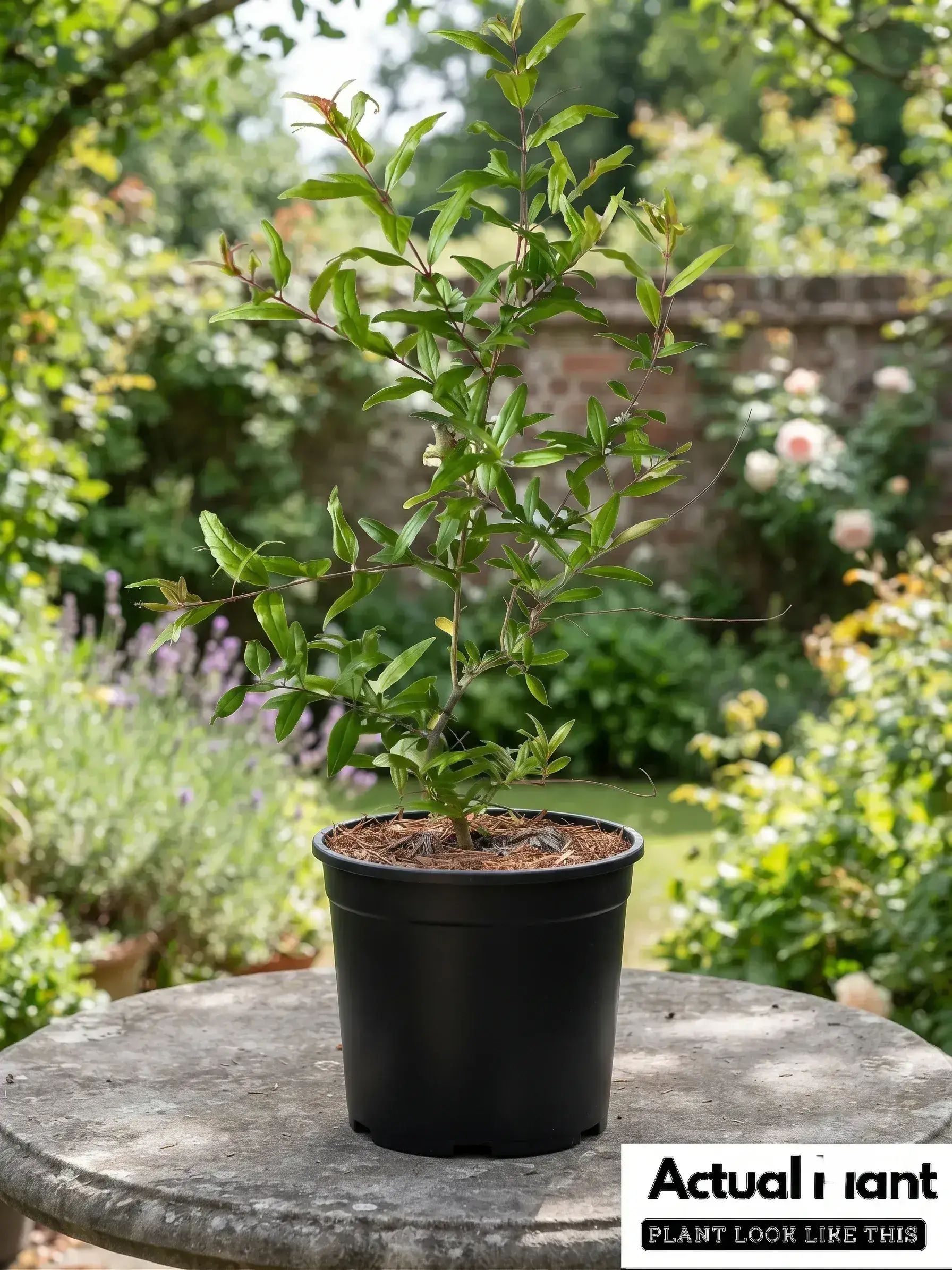
This is a live plant, so its appearance at delivery may differ naturally from the product photograph.
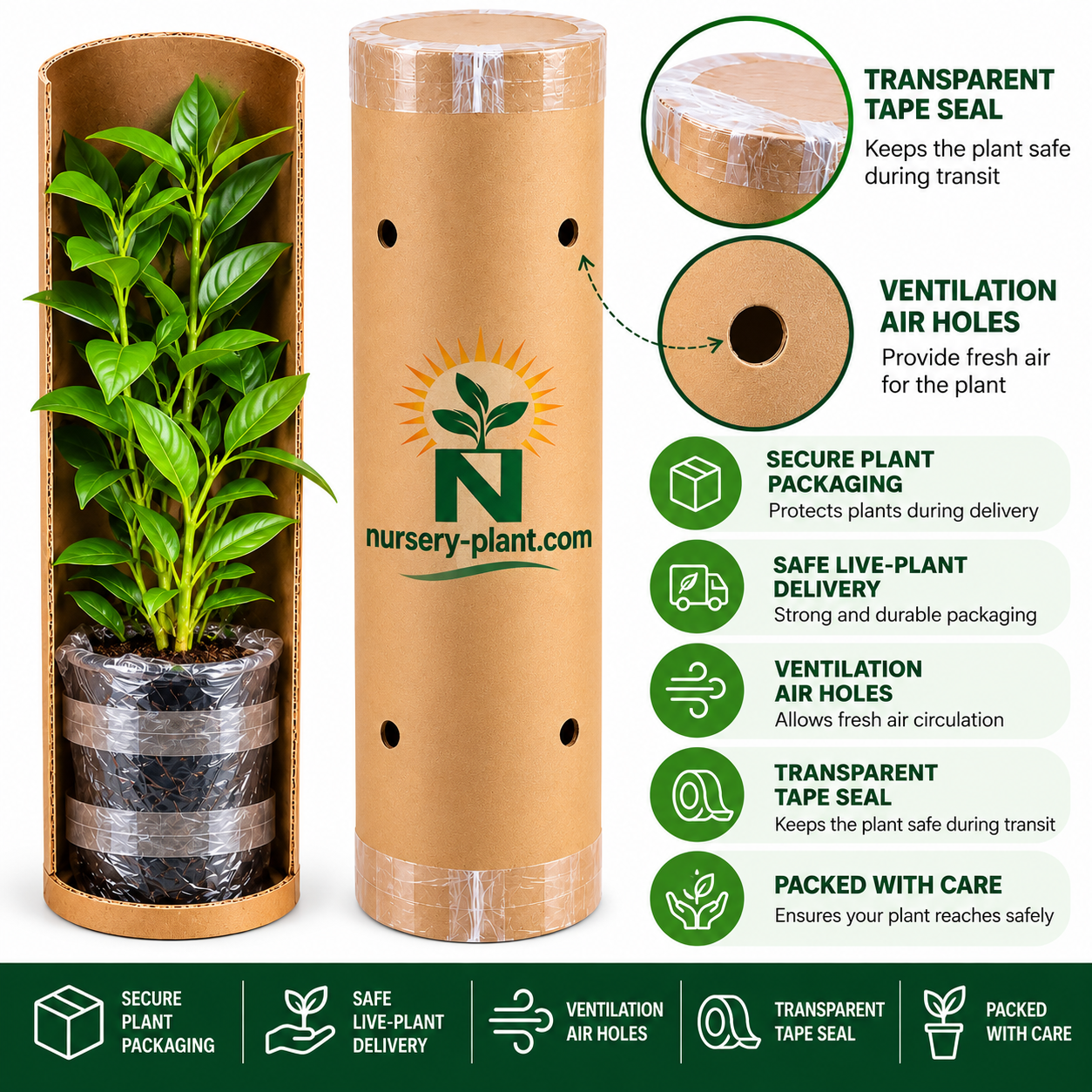
Depending on the season, plant age and transportation conditions, the plant may arrive with:
- Slight leaf yellowing
- Temporary leaf drooping
- Minor leaf shedding
- Different height
- Different leaf size
- Different stem thickness
- Different branching
- Temporary transportation stress
Changes in light, temperature, humidity and watering during shipping can temporarily affect the appearance of a live plant.
The supplied plant may not look exactly like the product photograph because live plants naturally vary in size, shape and growth stage.
After delivery, place the plant in a suitable location, acclimatise it gradually and maintain appropriate watering and sunlight.
⚠️ Important Note
The name “High Yielding” in the product title should be understood as a nursery/market description rather than a guarantee of a specific number of fruits or kilograms of production.
Similarly, “all time Anar” does not mean that the Granada pomegranate produces fruit continuously throughout the year. Granada is documented as an early-maturing cultivar, but flowering and fruiting depend on plant maturity and growing conditions.
The exact performance of an individual plant can vary according to propagation method, plant age, climate, soil, sunlight, irrigation, nutrition and maintenance.
Do not expect immediate fruiting from a newly delivered young plant.
🌱 Why Choose This Plant?
- 🍎 Attractive red to dark-red pomegranate fruits
- 🌿 Recognised Granada cultivar of Punica granatum
- ☀️ Suitable for sunny outdoor gardens
- 🌸 Attractive pomegranate flowers
- 🏡 Suitable for home gardens
- 🪴 Can be maintained in a sufficiently large container
- 🇮🇳 Can be grown in suitable Indian climatic conditions
- ⏰ Known for earlier maturity compared with Wonderful under suitable conditions
- 🌳 Useful as both a fruiting plant and an ornamental garden tree
🌿 Botanical Information
- Botanical Name: Punica granatum L.
- Family: Lythraceae
- Common Names: Pomegranate, Anar, Anardana
- Variety/Cultivar: Granada
- Plant Type: Fruit-bearing shrub/small tree
- Growth Habit: Bushy, branching shrub or small tree
- Fruit: Red to dark-red pomegranate with juicy arils
- Flower: Usually red to orange-red
- Native Range: The species is native from northeastern Türkiye through western and northern Pakistan; it is now widely cultivated and introduced in many regions, including India.
- Suitable Growing Conditions: Full sun, warm conditions and well-drained soil; local climate suitability should be considered.
🔗 Botanical Information & Further Reading
For verified botanical classification and accepted scientific naming, see Kew – Plants of the World Online for Punica granatum. Kew – Plants of the World Online: Punica granatum
For general plant characteristics, distribution and cultivation information, see Kew – Pomegranate. Kew – Pomegranate
For Indian pomegranate cultivation practices, varieties, soil, climate, irrigation and pruning guidance, see Tamil Nadu Agricultural University (TNAU). TNAU – Pomegranate Cultivation
For Indian research and production information specifically covering Granada, see the ICAR-Central Institute for Arid Horticulture technical bulletin. ICAR-CIAH – Production Technology of Pomegranate in Arid Region
For additional horticultural information on Granada and other pomegranate cultivars, see University of California Cooperative Extension. UC Cooperative Extension – Pomegranate Production
For cultivar characteristics including Granada’s early maturity and fruit characteristics, see Utah State University Extension. Utah State University Extension – Pomegranate, Fruit of the Desert
For More Information Visit: Nursery-Plant.Com
For Contact Visit:Contact Us
For Shopping Visit: Shop Page


Reviews
There are no reviews yet.