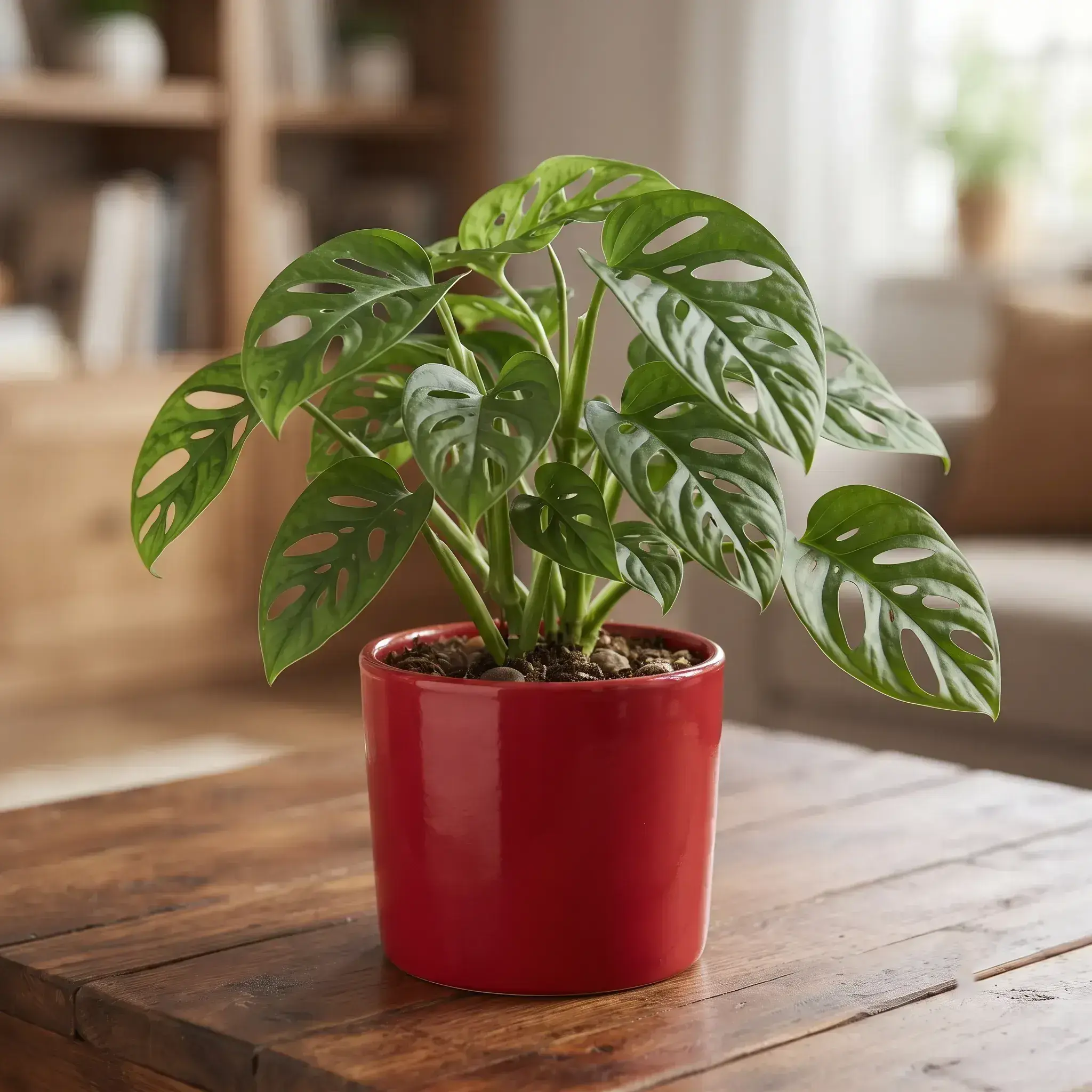
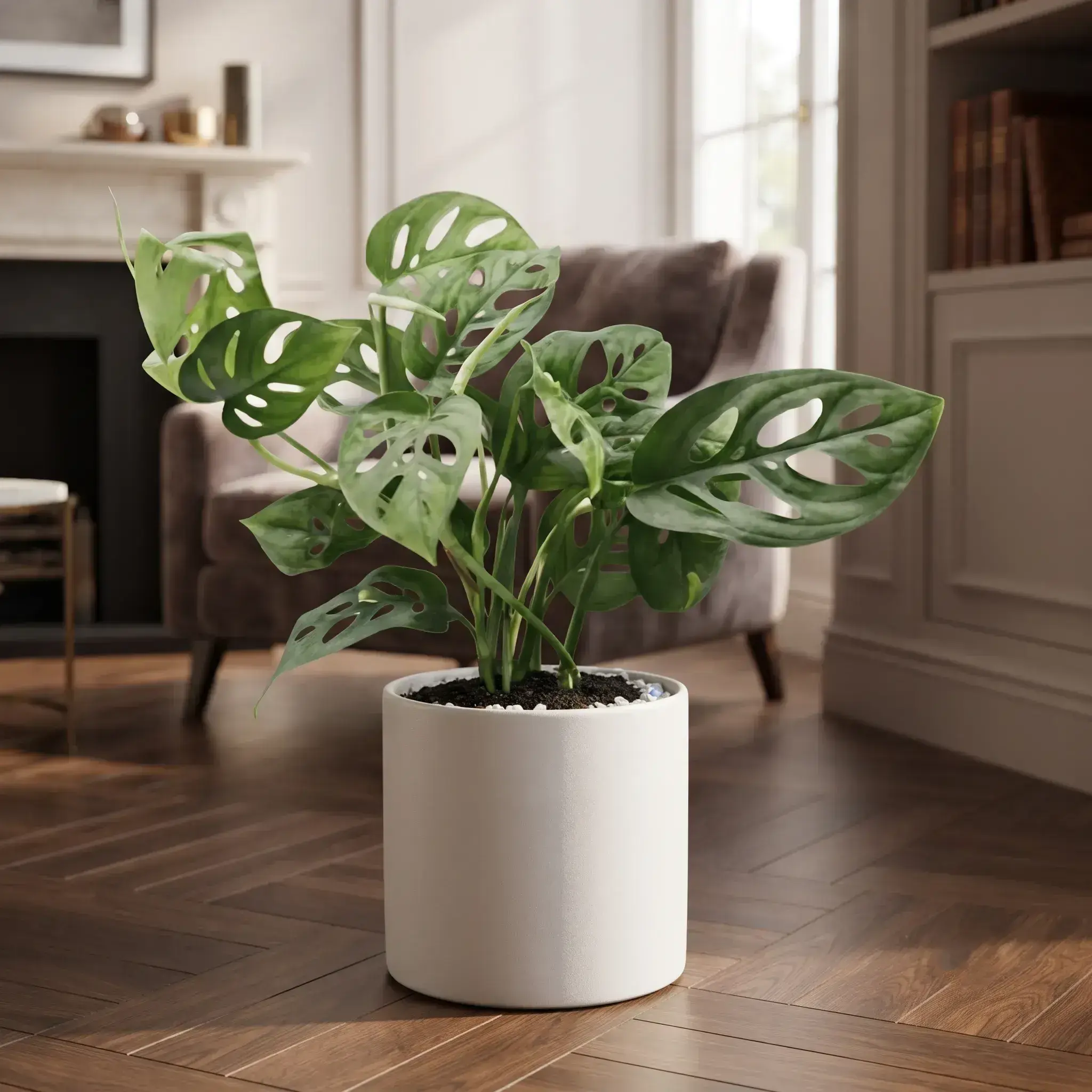
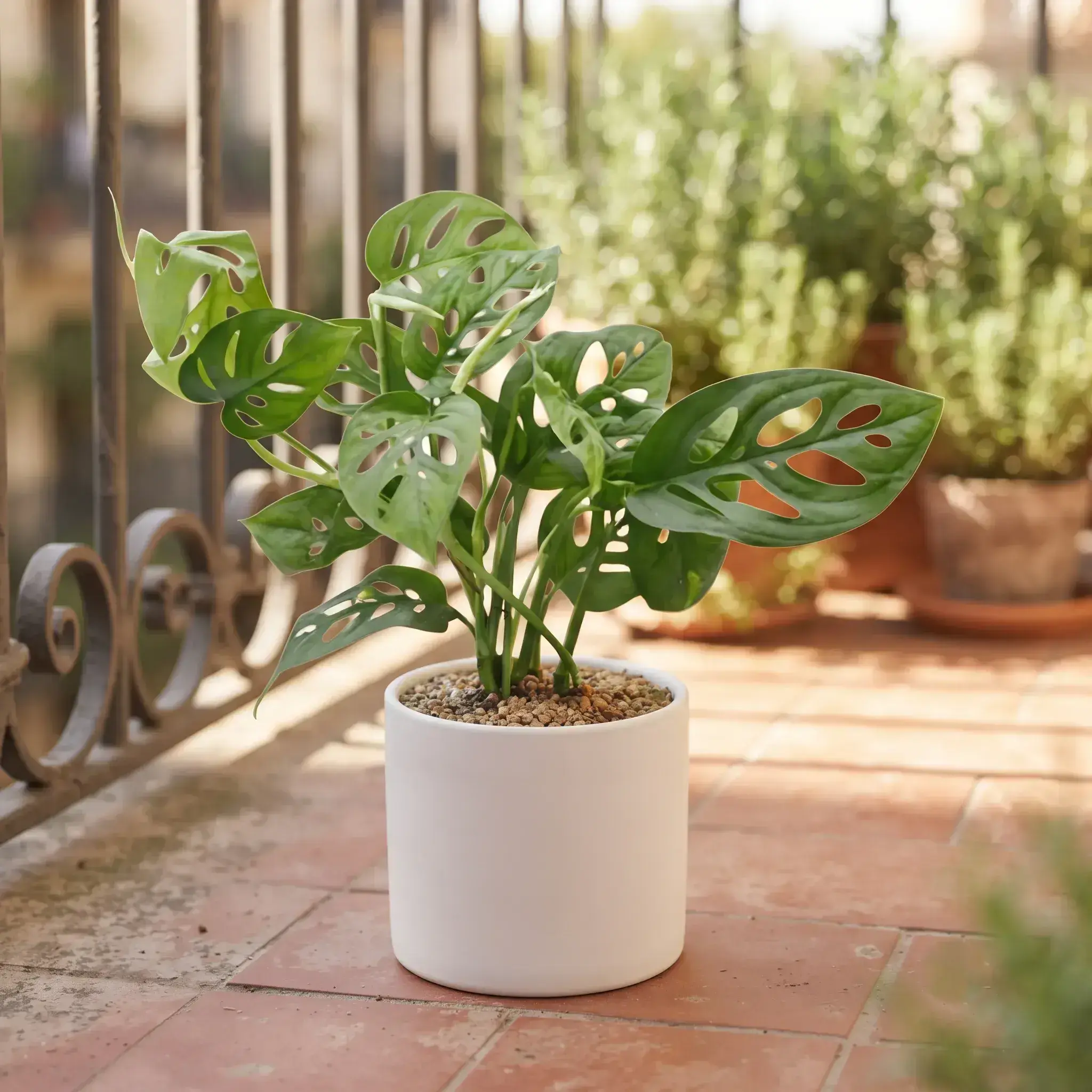

Broken Heart / Monstera Plant with Pot | Monstera deliciosa Live Indoor Swiss Cheese Plant for Home & Office
🌿 About the Plant
Monstera deliciosa, commonly known as the Swiss Cheese Plant, Monstera, Broken Heart Plant, Ceriman, Mexican Breadfruit and sometimes Split-leaf Philodendron, is a popular tropical foliage plant grown indoors and in warm outdoor gardens.
The plant belongs to the Araceae family and is a climbing or sprawling tropical plant native to parts of Mexico and Guatemala. Kew recognises Monstera deliciosa as an accepted species.
Its large, glossy green leaves are the main attraction. Mature leaves develop characteristic splits and natural holes called fenestrations, giving the plant its famous Swiss Cheese Plant appearance. Younger leaves may be much less divided, especially when the plant is still developing or growing in insufficient light.
This live plant with pot is suitable for adding a tropical, architectural look to homes, offices, balconies and other suitable indoor spaces.
🌱 Plant Characteristics
- Common Name: Monstera / Swiss Cheese Plant
- Popular Name: Broken Heart Plant
- Scientific Name: Monstera deliciosa Liebm.
- Family: Araceae
- Plant Type: Tropical evergreen climbing plant
- Native Range: Mexico to Guatemala
- Foliage: Large, glossy green leaves
- Growth Habit: Climbing or sprawling
- Light: Bright, indirect or filtered light
- Water: Moderate; allow part of the growing medium to dry before watering again
- Humidity: Moderate to high humidity is preferred
- Pot: Supplied with pot as stated in the product listing
- Primary Use: Indoor ornamental foliage plant
🍃 Attractive Large Green Leaves
The large leaves are the defining feature of Monstera deliciosa.
Young leaves are generally more intact, while mature leaves can develop deep splits and characteristic holes. This natural leaf development is called fenestration.
The amount of splitting and fenestration can vary according to plant maturity, growing conditions and light. RHS notes that younger plants and plants receiving poor light often produce fewer characteristic holes.
Therefore, a young plant may not immediately look exactly like a mature Monstera shown in photographs.
🌿 Why Are Monstera Leaves Perforated?
The holes and splits in mature Monstera leaves are known as fenestrations.
These are a natural characteristic of the species rather than damage caused by insects or disease.
RHS explains that fenestrations are associated with the plant’s adaptation to its tropical forest environment and help light reach lower portions of the plant.
If your young Monstera has mostly solid leaves, this does not necessarily mean there is a problem.
☀️ Sunlight Requirements
Monstera deliciosa prefers bright, indirect or filtered light.
A location near a bright window can work well, provided the plant is protected from intense direct sunlight.
Suitable locations can include:
- Bright living rooms
- Offices near suitable windows
- Bedrooms with adequate natural light
- Covered balconies
- Bright indoor corners
- East- or west-facing windows with filtered light
Strong direct summer sunlight can scorch Monstera leaves. On the other hand, very low light can reduce the development of characteristic leaf holes and may encourage weaker growth.
💧 Watering
Monstera prefers consistent but controlled watering.
A useful approach is:
- Check the upper portion of the growing medium.
- When it has dried to an appropriate depth, water thoroughly.
- Allow excess water to drain from the pot.
- Do not leave the pot standing in water.
- Allow the growing medium to dry somewhat before watering again.
RHS recommends allowing the compost to become almost dry before thorough watering and warns that prolonged wet conditions can cause root problems.
The exact watering interval will vary with temperature, humidity, pot size, soil type, plant size and season.
🪴 Soil & Potting
Monstera deliciosa prefers an open, well-drained growing medium.
RHS recommends a well-drained, slightly acidic compost for Swiss cheese plants and notes that poorly draining compost can lead to root rot.
A suitable home-garden mix should generally provide:
- Good drainage
- Good aeration
- Organic matter
- Moisture retention without remaining waterlogged
- Enough space for developing roots
Make sure the pot has suitable drainage holes.
🌱 Fertilizer & Nutrition
During active growth, Monstera can benefit from balanced plant nutrition.
RHS recommends a balanced liquid fertilizer during the growing period for Monstera deliciosa.
Avoid excessive feeding.
A practical routine is to:
- Use a suitable balanced fertilizer.
- Follow the fertilizer manufacturer’s dilution instructions.
- Feed during active growth when appropriate.
- Reduce feeding when plant growth slows.
- Avoid applying concentrated fertilizer to dry roots.
Healthy foliage depends on balanced nutrition along with appropriate light, water, temperature and root conditions.
🌡️ Temperature & Humidity
Monstera deliciosa is a tropical plant and prefers warm conditions.
RHS recommends approximately 18–25°C for growing Swiss cheese plants as houseplants.
The plant also appreciates humid air.
In dry indoor environments, humidity can be supported by:
- Grouping tropical plants together
- Using a suitable humidifier
- Keeping the plant away from very dry heat sources
- Using an appropriate pebble-tray arrangement
Avoid placing the plant directly beside radiators, heaters or strong sources of hot, dry air.
🪴 Container & Indoor Gardening
Monstera deliciosa is particularly suitable for container cultivation when provided with sufficient light and space.
It can be displayed in:
- Living rooms
- Offices
- Bedrooms
- Study areas
- Covered balconies
- Indoor garden corners
- Commercial interiors with suitable natural or artificial light
As the plant matures, it can become much larger than the supplied nursery plant. RHS lists mature Monstera deliciosa specimens at approximately 4–8 metres tall with a potential width of 1.5–2.5 metres under suitable conditions.
The supplied plant will naturally be much smaller than its mature potential size.
🌿 Climbing Growth & Support
Monstera deliciosa is a climbing plant.
As it grows, it can produce aerial roots and may benefit from a sturdy support such as:
- Moss pole
- Coir pole
- Plant stake
- Trellis
- Other suitable vertical support
Providing support can help guide the plant upward and create a more structured indoor display.
Do not force aerial roots into unsuitable materials or tie stems so tightly that normal growth is restricted.
✂️ Pruning & Maintenance
Regular pruning is not always necessary, but trimming can help manage the plant’s size and shape.
Remove:
- Severely damaged leaves
- Completely dead leaves
- Unwanted weak growth
- Growth that has become difficult to manage
Use clean pruning tools when cutting plant material.
Because Monstera can become large over time, occasional pruning may be useful in smaller homes and offices. RHS specifically notes that mature Swiss cheese plants can become very large but can be cut back when they begin to occupy too much space.
🌿 Cleaning the Leaves
Large Monstera leaves can collect household dust.
Gently cleaning the foliage with a soft, clean, damp cloth can help maintain its appearance.
Avoid harsh household cleaning chemicals, oils or unnecessary leaf-shine products.
Handle the leaves gently, especially young leaves that are still unfurling.
🌱 Propagation
Monstera deliciosa can be propagated through suitable stem or root-tip cuttings, and it can also be grown from seed. RHS lists stem cuttings, root tips and seeds among propagation methods.
For home gardeners, propagation from a healthy stem cutting containing an appropriate node is commonly used.
Successful propagation depends on the quality of the cutting, warmth, moisture, light and rooting conditions.
🌸 Flowers & Fruit
Mature Monstera deliciosa can produce a distinctive arum-type inflorescence consisting of a spadix surrounded by a spathe.
Under suitable conditions, the species can produce an aromatic fruit. The name deliciosa relates to the edible qualities of ripe fruit.
However, indoor plants are very unlikely to fruit under ordinary home conditions. RHS specifically notes that fruit production is extremely unlikely when the plant is grown as a houseplant.
Unripe Monstera fruit should not be eaten because it contains irritating compounds and is not considered safe before proper ripening.
🏡 Home & Office Suitability
Monstera deliciosa makes an attractive focal plant because of its large leaves and tropical appearance.
It can suit:
- Home living rooms
- Offices
- Reception areas
- Workspaces
- Study rooms
- Bright bedrooms
- Indoor plant collections
- Covered balconies
Its mature size should be considered before selecting a permanent location.
🌿 Air-Purifying Claim – Important Clarification
Monstera is sometimes marketed online as an air-purifying plant.
While plants can contribute to indoor greenery and natural plant processes, laboratory findings about houseplants should not be interpreted as meaning that one Monstera can replace proper indoor ventilation, filtration or pollution-control systems.
For healthier indoor air, maintain appropriate ventilation and use suitable air-cleaning equipment when required.
🐾 Pet & Child Safety
Monstera deliciosa is toxic to dogs and cats.
ASPCA identifies insoluble calcium oxalates as the toxic principle and reports symptoms such as oral irritation, intense burning and irritation of the mouth, excessive drooling, vomiting and difficulty swallowing.
Keep the plant away from pets and young children who may chew leaves or stems.
Wear gloves when handling the plant if you have sensitive skin, and wash your hands after significant contact with plant sap.
🌱 Space Requirement
Although the supplied plant may be compact, Monstera deliciosa can become a substantial climbing plant.
Provide:
- Sufficient vertical space
- Adequate room for leaves
- A stable pot
- Appropriate climbing support
- Enough distance from walls and furniture
Regular pruning can help control the size in indoor spaces.
⚠️ Common Growing Problems
Yellow leaves: May be associated with watering problems, poor drainage, root stress, ageing leaves or other growing conditions.
Brown leaf edges: Can occur with dry air, inconsistent watering or environmental stress.
Leaf scorch: May occur when the plant is exposed to intense direct sunlight.
Few or no holes: Young plants naturally produce less-fenestrated leaves; low light can also reduce fenestration.
Root problems: Often associated with excessively wet or poorly drained growing media.
Drooping: Can result from insufficient water, root problems or environmental stress.
Correct diagnosis requires considering the complete growing environment rather than assuming one symptom has one cause.
📦 Live Plant Delivery & Natural Variation
This is a live plant, so its appearance can naturally change during packing, transportation and acclimatisation.
You may notice:
- Slight leaf drooping after delivery
- Temporary yellowing of an older leaf
- Minor leaf damage from transport
- Slight leaf shedding
- Differences in plant height
- Differences in leaf size
- Different stem thickness
- Different branching or leaf count
- Changes in appearance after moving to a new environment
Changes in temperature, light, humidity and watering during transportation can temporarily affect the plant.
Product photographs are representative. The exact plant supplied may naturally differ from the photographed specimen.
The plant may also produce more or fewer fenestrated leaves depending on its maturity and growing conditions.
⚠️ Important Note
The supplied plant is a young nursery-grown Monstera, and its size and appearance can change as it grows.
The characteristic holes and splits may not be fully developed on younger leaves.
Do not place the plant in harsh direct sunlight immediately after delivery. Gradually acclimatise it to its new environment.
Avoid overwatering, especially immediately after transportation.
Keep away from children and pets because Monstera deliciosa contains insoluble calcium oxalates and is toxic if chewed or ingested.
🌱 Why Choose This Monstera Plant?
- Popular tropical foliage plant
- Attractive large green leaves
- Characteristic Swiss Cheese-style fenestrations
- Suitable for home interiors
- Suitable for offices and workspaces
- Attractive focal plant for bright rooms
- Suitable for container gardening
- Can be trained to grow vertically
- Appreciates warm and humid conditions
- Long-lived when properly maintained
- Excellent choice for tropical-style indoor décor
- Supplied as a live plant with pot as specified in the listing
🌿 Botanical Information
Scientific Name: Monstera deliciosa Liebm.
Family: Araceae
Genus: Monstera
Plant Type: Evergreen tropical climbing/hemiepiphytic plant
Native Range: Mexico to Guatemala
Common Names: Monstera, Swiss Cheese Plant, Ceriman, Mexican Breadfruit, Hurricane Plant, Cutleaf Philodendron
Growth Habit: Climbing or sprawling
Foliage: Large, glossy, green, deeply divided and perforated when mature
Light: Bright indirect or filtered light
Water: Moderate; avoid prolonged waterlogging
Humidity: Moderate to high preferred
Temperature: Warm conditions, approximately 18–25°C preferred for indoor cultivation
Potting: Open, well-drained growing medium
Use: Indoor ornamental foliage, office décor, tropical container gardening
Kew recognises Monstera deliciosa as an accepted species in the Araceae family and records its native range from Mexico to Guatemala.
🔗 Botanical Information & Further Reading
- Kew Science – Monstera deliciosa
- Royal Horticultural Society – Monstera deliciosa
- RHS – How to Grow Swiss Cheese Plants
- RHS – Swiss Cheese Plants Guide
- NC State Extension – Monstera deliciosa
- ASPCA – Swiss Cheese Plant Safety Information
🌿 Final Care Tip
For a healthy Monstera deliciosa, focus on bright filtered light, a well-drained growing medium, controlled watering, warmth and adequate humidity. Give the plant enough room to climb as it matures, and remember that the dramatic split and hole-filled leaves develop naturally with age and suitable growing conditions.
For More Information
Visit: Nursery-Plant.Com
For Contact Visit:Contact Us
For Shopping Visit: Shop Page


Reviews
There are no reviews yet.